
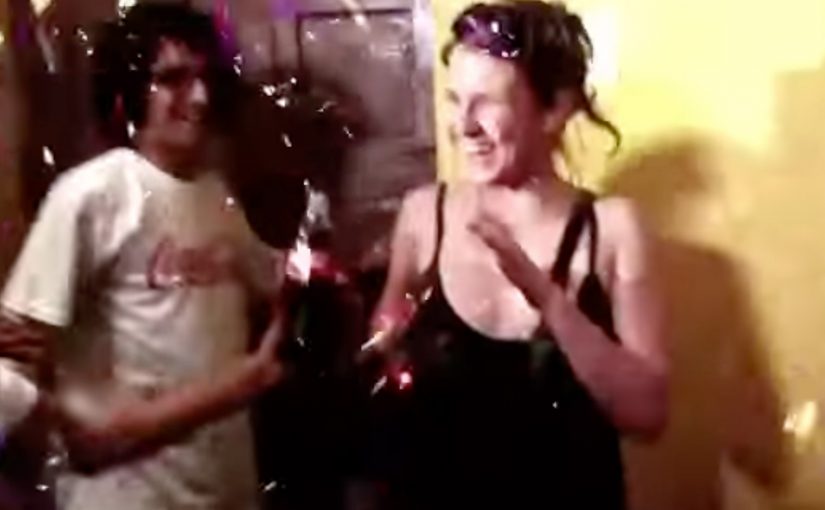
Coca-Cola: Wallet of Happiness Honesty Test

Coca-Cola: Wallet of Happiness Honesty Test

An honesty test on a crowded Lima street

As part of an experiment in a very crowded Lima district in Peru, Coca-Cola with their agency McCann Erickson deliberately left a wallet containing $100 on the street. With it they tested people’s honesty.

A $100 question, asked in public

The brilliance is how quickly the situation reads. Find the wallet. Notice the money. Decide what kind of person you want to be, with nobody asking you anything.

In social experiment storytelling, a simple moral trigger creates instant comprehension and invites viewers to project themselves into the decision. Here, a moral trigger means a moment that forces a right-versus-wrong choice without explanation.

In global FMCG brand storytelling, street-level honesty tests like this travel because they turn a private value into a public, watchable moment.

Why you keep watching

You are not just judging strangers. You are quietly measuring yourself against what you hope you would do. The real question is what you do when the right choice is clear, but no one is holding you accountable. That internal comparison is the engine of the film. Because the choice is legible and unprompted, viewers can run the same decision in their own head, which keeps them watching.

Extractable takeaway: If your mechanic makes viewers instantly ask “what would I do,” the story carries itself without narration.

What the experiment is trying to reveal

People’s honesty, observed in a real public setting through a simple, high-stakes trigger.

What to borrow from a public honesty test

  • Choose a mechanic that is universal and legible without narration. In this context, “mechanic” means the simple rule that generates the behavior you want to capture.
  • Keep production minimal so human reaction stays central.
  • Let the audience do the interpreting. A good social test creates its own debate.

A few fast answers before you act

What did Coca-Cola do in Lima?

They left a wallet containing $100 on the street in a crowded district to test people’s honesty.

Where did this take place?

In a crowded district of Lima, Peru.

Who created the campaign?

The post credits Coca-Cola and McCann Erickson.

Why does the film hook people so fast?

Because the dilemma is instantly legible: you see the wallet, notice the money, and immediately imagine what you would do.

What was the point of the experiment?

To observe how people would react when they found a wallet with money in a real-world public setting.

Prigat: User Generated Orange Juice

Prigat: User Generated Orange Juice

Prigat, a leading company in the Israeli fruit juice market, launched one of the more inventive Facebook mechanics of its era. It invited people to squeeze real orange juice by doing something absurdly simple. Smile at your webcam.

The idea was packaged as “User Generated Orange Juice (UGOJ).” A Facebook application that translated user participation into a physical outcome you could actually watch.

The mechanism: your smile triggers a real machine

A custom Facebook app developed by Publicis E-Dologic used webcam-based smile detection to trigger a real, oversized juicer. When the app detected a smile, it activated the juicer and squeezed fresh oranges. Users could watch the machine live 24/7, so the cause-and-effect was visible rather than implied.

Campaign coverage also described a personalization touch where the participant’s name appeared on the machine during use, and that the resulting juice was directed to a charity choice.

In social platform marketing, physical proof loops outperform abstract engagement prompts because they give people a reason to believe and a reason to share.

Why this lands

This works because it turns a universal emotion into a measurable input. Smiling is effortless, socially contagious, and camera-friendly. The live feed makes the outcome undeniable, and that “I did this” ownership nudges people to recruit friends so their smiles compound into more visible results.

Extractable takeaway: If you want participation at scale, connect a low-friction action to a real-world output that people can witness in the moment, then make sharing feel like extending the impact, not like promoting the brand.

What Prigat is really doing

The campaign turns Facebook from a place for liking into a place for doing. The real question is how to turn a passive social audience into a participant who can see, trust, and share the brand experience. This is stronger than a standard Facebook giveaway because the proof is built into the interaction itself. It converts attention into a visible production line, then uses the live stream as credibility and the smile photos as distribution. Prigat gets warmth by associating the brand with positive emotion and generosity, while the machine supplies a visible proof point that keeps the story believable.

What to steal from the Prigat participation loop

  • Design a simple input. The easier the action, the more likely people repeat it and recruit others.
  • Show the output live. A real-time feed reduces skepticism and increases share-worthiness.
  • Make participation legible. If the user can see their effect immediately, they trust the loop.
  • Attach a social good endpoint. A charity destination converts novelty into meaning.

A few fast answers before you act

What is “User Generated Orange Juice” (UGOJ)?

It’s a Facebook app activation where users smile at a webcam and trigger a real juicer that squeezes fresh oranges, visible via a live stream.

How does the smile activation work?

The app uses webcam-based smile detection to decide when to trigger the juicer. The user’s action becomes the on-switch.

Why include a 24/7 live view of the juicer?

It provides proof. People can watch the result of participation, which increases trust and makes the story easier to share.

What kind of results were reported?

Reported results include around 30,000 new likes, over 20,000 photos uploaded, and roughly 40,000 oranges squeezed.

What’s the key risk if you copy this concept?

Trust and privacy perception. You need clear, simple communication that the webcam is used only to detect the smile for the interaction, and that the experience is safe and transparent.

Jeep: Compass Remote Postcards

Jeep: Compass Remote Postcards

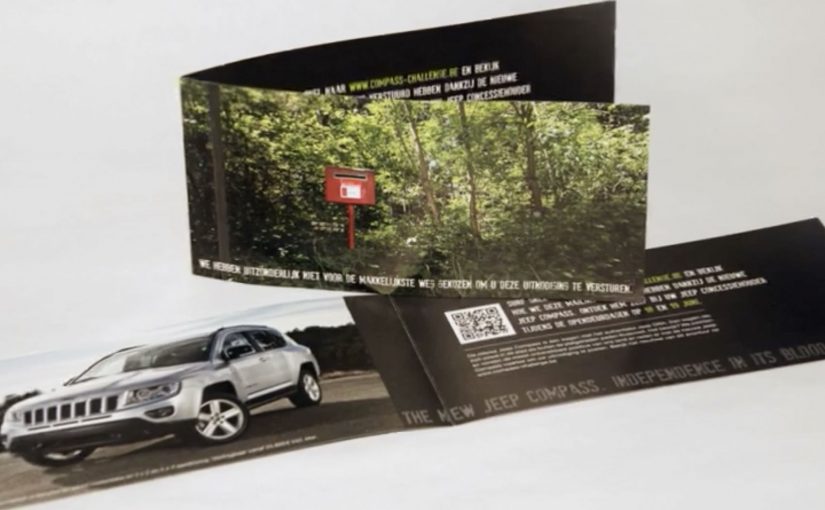
One of the oldest and most effective ways to sell a product is with a good demonstration. Leo Burnett Brussels takes that approach and gives it a fresh spin for the Jeep Compass by turning the demo into a journey people can follow.

Cameras are strapped onto a few Jeep Compasses, and the team sets out to find the most remote post locations they can. Direct mailers are then shipped from these far-flung places, pointing recipients to a site where they can follow the trip and see the Compass in action.

Remote postcards as proof, not promise

The mechanic is simple. Put the product in the environment that proves the claim, document it, then send a physical artifact from the place itself. The postcard becomes evidence that the vehicle actually got there, not just a line in a brochure.

In automotive marketing, demonstrations land best when the proof is embedded in the distribution, so the message and the evidence arrive together.

The real question is how to turn an off-road capability claim into proof people can hold, trust, and retell. This is stronger than a spec-led demo because the proof is built into the medium itself.

Why this lands

This works because it collapses storytelling and verification into one object. A postcard from a remote location is inherently credible. Add footage from the route, and the demonstration feels earned rather than staged, even for people who only skim the campaign.

Extractable takeaway: If your product benefit is “go anywhere” or “handle more,” make the medium carry the proof. Send something that could only exist if the product performed as claimed.

What the campaign is really optimizing for

Beyond awareness, this is built to move the vehicle into active consideration. It gives prospects a concrete reason to re-evaluate the vehicle, and it creates a narrative that sales teams and enthusiasts can retell without needing technical jargon or spec sheets.

How to adapt this demonstration pattern

  • Turn proof into an artifact. Physical mail can signal effort and credibility.
  • Design a followable journey. A route with checkpoints is easier to remember and share than a one-off stunt.
  • Keep the CTA tight. One action. Follow the trip. See the product perform.
  • Make the environment do the persuading. Terrain and remoteness communicate capability faster than copy.

A few fast answers before you act

What is the core idea of the Jeep Compass remote postcards?

Use real remote locations as the demonstration, then mail postcards from those locations and direct recipients to follow the journey and watch the vehicle perform.

Why use direct mail instead of only video?

A postcard from a remote post office feels like proof. It is a physical signal that the journey happened.

What makes this a product demonstration, not just content?

The route and the mailer are consequences of the capability claim. The campaign structure is built around showing the vehicle doing the work.

What kind of products benefit most from this pattern?

Products with a capability claim that is easy to show in the real world. Durability, reach, range, off-road, endurance, or access.

What’s the biggest risk if you copy this approach?

If the “proof” feels manufactured or the journey is hard to follow, the credibility advantage disappears. The checkpoints and documentation need to be clear.