Evian: Roller-skating Babies

Evian: Roller-skating Babies

A viral ad that hit Guinness-level scale

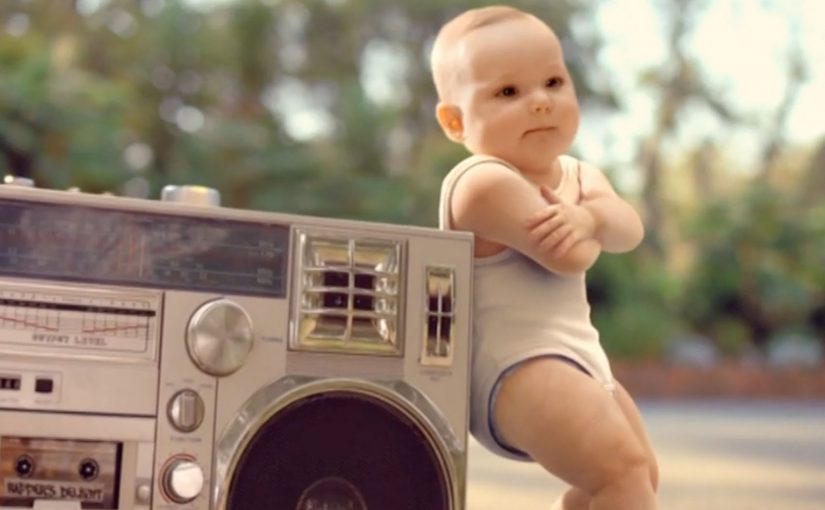
Evian’s “Roller-skating Babies” viral ad, created by Euro RSCG, has been recognised by the Guinness Book of Records as the most viewed online ad to date.

Adding up views for various versions of the ad across video sharing websites, the ad has got 45,166,109 views as of 9 November 2009.

How “viral” is engineered when the idea is instantly repeatable

The mechanism is concept compression. By concept compression, I mean reducing the whole hook to a phrase people can repeat accurately. “Roller-skating babies” is a one-line idea that travels intact. You do not need explanation, context, or a brand preamble to understand why you should click. Because the hook survives in one line, it removes explanation friction, which is why forwarding feels effortless.

Across global FMCG brands, the difference between “viral” and bought reach is whether people willingly forward the idea as social currency, a quick signal of taste or humour.

The real question is whether your idea can be retold in one line, so people share it as a signal, not as a favour.

Why it lands: novelty, craft, and the urge to pass it on

It works because it is strange enough to be worth sharing and polished enough to reward rewatching. The viewer gets an immediate payoff, then uses the link as a way to say, “you have to see this”.

Extractable takeaway: Shareability increases when the payoff arrives immediately and the idea can be recommended in a sentence without explanation.

The business intent: fame that feels earned, not placed

This is not a conversion mechanic. It is a reach and memorability play. The goal is to make the brand part of a piece of entertainment people choose to spread, so the exposure feels voluntary rather than interrupted.

What to steal if you want scale without buying it all

  • Build a one-sentence idea. If the concept cannot be repeated accurately in one line, it loses speed.
  • Design for sharing friction. The viewer should know what it is and why it is fun within seconds.
  • Make it rewatchable. Repeat viewing is a multiplier for social forwarding.
  • Measure across versions. If the asset spreads in multiple uploads, track the total footprint, not just one link.

A few fast answers before you act

What is Evian’s “Roller-skating Babies” in one sentence?

A highly shareable online film built on a single, instantly repeatable concept: babies roller-skating, executed with polished craft for rewatch value.

What is the core mechanism behind its scale?

Concept compression. The idea travels intact in a few words, so people can forward it as social currency without needing explanation.

Why does it land so reliably with viewers?

It combines novelty with high production value. The viewer gets an immediate payoff, then uses the link as a quick “you have to see this” recommendation.

What should marketers learn about measuring “viral”?

Track across versions and re-uploads. When a film spreads in multiple places, total footprint matters more than one canonical link.

What is the most transferable takeaway?

Build a one-line idea that is easy to retell, then execute it well enough that people want to rewatch and pass it on.

Coca-Cola: Velcro Posters for Grip Bottle

Coca-Cola: Velcro Posters for Grip Bottle

A bus-shelter poster you can literally grip

Here is another cool innovation at the bus shelters. Coca-Cola has come up with a new Grip Bottle which has a better grip for holding. To let people know they printed posters with Velcro on them and placed them in bus shelters in Paris to make people interact with the grip.

Here, “interact” means a simple touch that demonstrates the grip benefit on the spot.

The campaign was a big success as people were literally hooked on to the campaign and there was a 3.8% brand volume growth in France compared to 2007.

The campaign was created by Marcel in Paris, France.

The smartest part: the demo is the media

If the claim is “better grip,” then the fastest proof is to make you grip something. Velcro turns the poster into a hands-on argument.

In European urban transit shelters, people wait close enough to the media that touch-based demos are possible.

Why it sticks in your head

Bus shelters give you time. And touch beats talk. You do not just read about the benefit. You feel it while you wait, which makes the proof harder to ignore.

Extractable takeaway: If a benefit can be proven in one gesture, design the media so the gesture happens by default.

The business point

The real question is how to make a product claim self-evident in a few seconds.

When the proof fits inside the medium, demonstrate the benefit instead of explaining it.

Make the new Grip Bottle noticeable, and make the “better grip” benefit instantly understandable through interaction.

What to take from this

  • Tactile benefits: When the benefit is tactile, communicate it through touch, not explanation.
  • High-dwell placements: Use high-dwell environments, meaning places where people naturally wait, to earn interaction, not just impressions.
  • Simple mechanics: Keep the mechanic, meaning the action you ask people to do, simple enough to repeat at scale.

A few fast answers before you act

What was the Coca-Cola Grip Bottle campaign?

A bus-shelter activation in Paris promoting Coca-Cola’s Grip Bottle by using Velcro posters that encouraged people to interact with the grip.

Where did the campaign run?

It was placed in bus shelters in Paris, France.

What outcome did the post cite?

The post cited a 3.8% brand volume growth in France compared to 2007.

Who created the campaign?

The post credits Marcel in Paris, France.

Xbox Lips: Jukebox Turns Photos into Videos

Xbox Lips: Jukebox Turns Photos into Videos

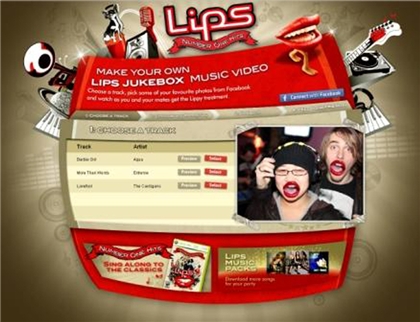
AKQA has taken Xbox Lips digital with the “Lips Jukebox” on Facebook, which enables users to transform their photos into music videos, in a bid to promote the new game “Lips Number One Hits”.

Xbox Lips Digital

The application is hosted at the Xbox website, and uses a combination of facial recognition technology and Facebook Connect functionality to enable people to choose a song and the photos they want to adapt from their profile before adding singing “Lips” to the faces and then creating the animated, personalized music video.

For social experience design, the winning pattern is simple: let people reuse what they already have, then return a share-ready artifact that feels personal without requiring effort.

Why this idea lands

This is a clean example of “personalisation as entertainment”, meaning it turns something people already have, their photos, into something people want to show, a personalised music video.

Extractable takeaway: If the input is already in the user’s profile and the output looks like finished entertainment, participation becomes a default choice rather than a deliberate one.

The real question is whether your experience returns something people are proud to share, not whether the underlying tech is impressive.

  • Low friction input. Your Facebook photos are already there.
  • High novelty output. Seeing faces “sing” creates instant curiosity and share value.
  • Product-fit promotion. A singing video experience naturally aligns with a music game.

Facial recognition as a feature, not a headline

The facial recognition is not presented as “tech for tech’s sake”. It is simply the enabling layer that makes the result feel surprisingly accurate and personal. Because the facial recognition runs behind the scenes, the experience feels effortless and personal, which makes people more likely to finish the flow and share the output.

This is the right way to use facial recognition in marketing: as invisible plumbing that serves the payoff.

In consumer product launches that rely on social sharing, remixing existing profile media into a finished asset is often the fastest path to reach without asking for extra effort.

What to take from this if you build social experiences

  1. Turn existing assets into new value. Users are more likely to participate when they can reuse what they already have.
  2. Make the output share-ready. The “end product” should be something people naturally want to post.
  3. Keep creation steps short. Selection, preview, publish. The loop should feel quick.
  4. Align the experience with the product promise. A music game promoted through a music-video maker feels coherent.

A few fast answers before you act

What is the Xbox Lips Jukebox?

It is a Facebook-connected experience that lets users transform their photos into animated, personalised music videos to promote “Lips Number One Hits”.

What technologies does it use?

It combines facial recognition with Facebook Connect so users can select songs and photos, then apply singing “Lips” to faces and generate a video.

Where is the application hosted?

It is hosted on the Xbox website.

Why does this work as game marketing?

It creates a playful, shareable output that matches the core theme of the game. Music and performance.

What is the transferable lesson?

When you can turn user content into entertainment with minimal effort, you can earn both engagement time and social sharing without heavy persuasion.