
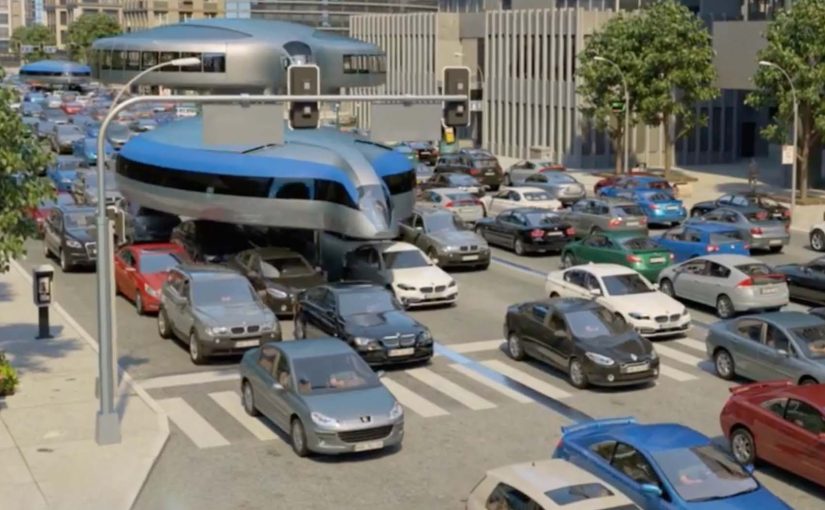
The Gyro Monorail

The Gyro Monorail

It is pretty clear we are not zipping around in flying cars anytime soon. So the pressure shifts back to the ground. How do modern cities expand public transportation as populations grow?

Turkish engineering firm Dahir Insaat believes it has an answer. The company and chief inventor Dahir Semenov argue that gyroscope-equipped vehicles can unlock a new approach to urban transit.

Here, a gyroscope is a spinning mass used to resist tipping, intended to keep the cabin upright on a single rail.

The real question is whether cities can add transit capacity without widening corridors.

What makes the “gyro monorail” idea compelling

A monorail is inherently space-efficient, but stability and ride confidence are always part of the mental model people have of “single rail” transport.

The promise of gyroscope stabilisation in this concept is straightforward. It aims to make a monorail-style vehicle feel stable and controllable even in compact, constrained city environments. If the gyro can keep the cabin level, the ride feels predictable, which is what earns trust for single-rail transport.

In dense, right-of-way-constrained cities, concepts like this live or die on throughput per meter of corridor.

Why this shows up now in future-transport thinking

When a city cannot easily add lanes or widen corridors, transport concepts often converge on two goals.

Extractable takeaway: When space is the constraint, the winning transport idea is the one that increases people moved without asking for more corridor.

  • Use less right-of-way per passenger moved.
  • Increase capacity without building entirely new infrastructure.

A gyro-based mono-track vehicle concept is attractive because it implies a narrower footprint than conventional rail while still signalling “mass transit,” not “one more car.”

Pressure-tests to steal before you buy the hype

The difference between an inspiring transport concept and a deployable system is usually not the visual design. It is the operating model.

This is an intriguing visualization, but without a credible safety case and maintenance model it remains a concept, not a plan.

  • Safety case and redundancy. What happens under failure modes.
  • Maintenance reality. Sensors, moving parts, calibration, and uptime.
  • Network integration. Stations, boarding flow, accessibility, evacuation.
  • Total cost per passenger-km. The number that decides scale.

A few fast answers before you act

What is “The Gyro Monorail” in this post?

A future-transport concept from Turkish engineering firm Dahir Insaat and inventor Dahir Semenov, centred on gyroscope-equipped vehicles.

What problem is it trying to address?

It addresses how modern cities expand public transportation as populations grow, without relying on flying-car fantasies.

What is the core proposal?

Use gyroscope-equipped vehicles as a proposed answer for future public transportation.

What should leaders pressure-test first?

Safety and redundancy. Maintenance and uptime. Integration into stations and operations. Total cost at scale.
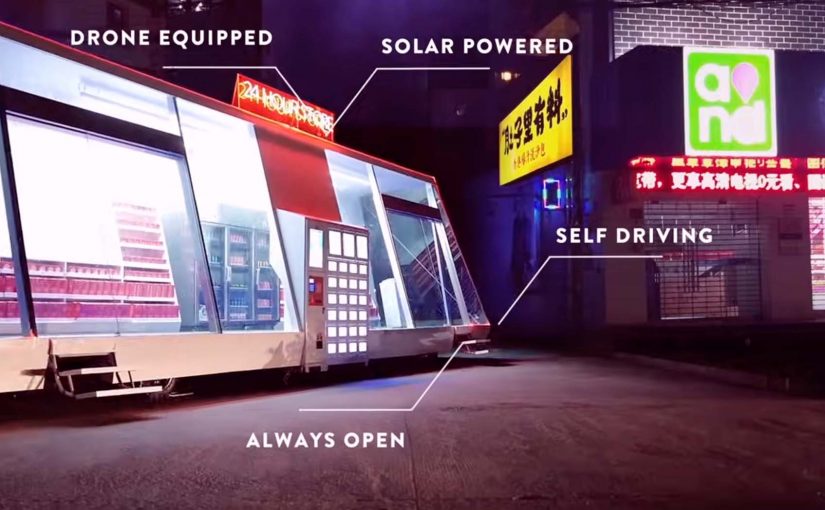
The Moby Mart

The Moby Mart

Every parking space becomes a 24-hour store. The Moby Mart is designed to turn ordinary parking spots into always-on retail. Roughly the size of a small bus, it carries everyday products such as snacks, meals, basic groceries, and even shoes. To use it, you download an app, register as a customer, and use your smartphone to unlock the doors. Here, “always-on” means open around the clock without staff on site.

The idea is in trial mode. The store is undergoing trials in Shanghai through a collaboration between Swedish startup Wheelys Inc and China’s Hefei University. For now, the trial prototype is stationary, based permanently in a car park. But the company says it is working with technology partners to develop the self-driving capability, as shown in the video.

The mechanism behind the parking-space store

The mechanism is app-gated access plus self-service. Entry, selection, payment, exit. When that first unlock step feels safe and effortless, an unattended unit starts to feel like normal retail, not a gimmick.

In urban convenience retail, reducing the distance and time between intent and purchase is often the real differentiator.

The real question is whether you can move retail to the moment of demand without breaking trust, support, and replenishment.

If the access and “this worked” confirmation are not rock-solid, mobility and novelty will not save the experience.

What this concept makes tangible

This lands because it reframes “location” as something you can deploy and operate, not just something you lease and staff. The store becomes infrastructure, and the app becomes the front door.

Extractable takeaway: When you make access the first experience, trust and operations become part of the product, not back-office details.

Retail flips from “go to store” to “store comes to you”

The provocation is simple. If the unit can be deployed anywhere, then proximity becomes a variable you can design, not a constraint you accept.

Friction reduction becomes the product

The app unlock and self-service flow compresses the journey. Entry, selection, payment, exit. Less waiting, less staffing, less handoff.

Mobility creates new placement logic

A store on wheels changes what “location strategy” means. Instead of long-term leases, the unit can be positioned where demand spikes, or where fixed retail is uneconomical.

What to copy from Moby Mart

  • Start with a familiar format. People immediately understand a convenience store. That lowers cognitive load.
  • Make access the first experience. App unlock is the “moment of truth.” If that step is seamless, everything downstream feels modern.
  • Design for unattended trust. Clear rules, clear prompts, and a clear “this worked” confirmation prevent anxiety in a staffless space.
  • Prototype the operating model early. Mobility, restocking, and support are not secondary. They are the offering.

A few fast answers before you act

What is the Moby Mart?

A bus-sized, staffless, mobile convenience store concept that aims to turn parking spaces into 24-hour retail, accessed via a smartphone app.

How do customers use it?

They download an app, register, and unlock the doors with their phone to shop inside.

Where is it being tested?

It is undergoing trials in Shanghai through a collaboration between Wheelys Inc and China’s Hefei University.

Is it already self-driving?

The trial prototype is stationary in a car park. The company says it is working with partners on self-driving capability.

What is the core lesson for marketers and innovators?

Move the experience to the moment and place of demand. Then design the access, trust, and operations as the real product.

The Day Shazam Forgot

The Day Shazam Forgot

Alzheimer’s Research UK partners with Shazam and does something deliberately uncomfortable. It gives the app the symptoms of Alzheimer’s. You use Shazam as you normally would, but the experience starts to break in ways that mirror memory loss. It is a hard-hitting way to feel, in a small moment, what daily struggle can look like.

The insight behind the campaign is about who needs to be reached. Most people associate Alzheimer’s with late life, but the disease can affect people as young as 40. The post cites over 40,000 people under 65 living with dementia in the UK.

The point is education through friction

This does not try to persuade with claims or statistics alone. It turns education into a lived interaction. Shazam is familiar and fast. Making it unreliable becomes the message.

The real question is how to make a misunderstood condition felt in a way that stays with people after the interaction ends.

This is a strong use of product behaviour because the disruption teaches rather than distracts. The intent here is public education, not app utility.

Why the Shazam choice is strategic

Shazam already sits in a high-frequency behaviour loop. By behaviour loop, this means a repeated habit people perform in real-life moments with very little effort or planning. That makes it a powerful carrier for a message about everyday disruption, because it arrives inside everyday life rather than as a separate awareness film.

Extractable takeaway: If you want people to understand a condition that is easy to distance or abstract away, place the message inside a familiar action so the disruption explains the reality better than a claim alone.

In consumer-facing digital experiences, familiar habits are often the best place to make a hard message land because the contrast is felt immediately.

What to take from this if you build digital experiences

  • Simulate a small part of the experience, not just the outcome, when the condition itself is hard to explain.
  • Put the message inside a familiar behaviour, so the contrast is instantly felt.
  • Use disruption sparingly and intentionally, so the discomfort has a purpose and does not turn into irritation.

A few fast answers before you act

What is “The Day Shazam Forgot”?

A Shazam partnership campaign that simulates Alzheimer’s symptoms to give users a direct, hard-hitting insight into memory loss.

Who is the campaign trying to educate?

A younger audience that may assume Alzheimer’s only affects people in late life.

What key fact reframes the audience assumption?

The disease can affect people as young as 40. The post cites over 40,000 people under 65 living with dementia in the UK.

What is the core creative technique?

Turning a familiar app experience into a controlled failure state, so the message is felt rather than only read.

Why use Shazam instead of a separate awareness film?

Because Shazam already lives inside everyday moments, the disruption arrives where memory lapses would feel personally relevant rather than abstract.