
Volkswagen: BlueMotion Roulette

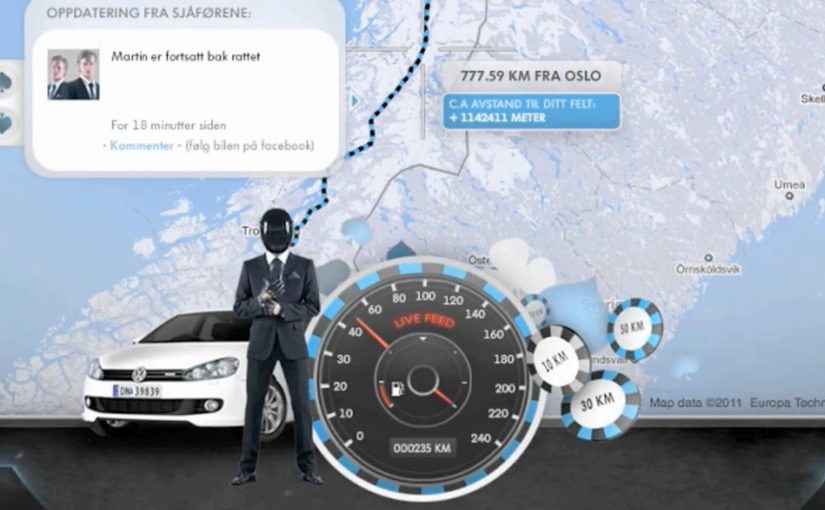
Volkswagen has turned the E6, often described as the Norwegian equivalent to Route 66, into a real-time online game of roulette using Google Maps and Street View.

TRY/Apt from Oslo devised the game to highlight the main feature of the new Golf BlueMotion, its low fuel consumption, in a meaningful and memorable way.

By “roulette”, Volkswagen literally meant dividing the E6 into thousands of map “slots” and asking people to bet on the exact spot where a fully tanked Golf BlueMotion would finally run out of fuel. Each person could place only one guess. If the car stopped on your chosen spot, you would win it.

Why the mechanic forces learning

The one-guess rule is the underrated design choice. If you only get one bet, you do not throw it away casually. You start researching. How efficient is the car, really. How far could it realistically go. What kind of driving conditions matter. The game turns “I saw an MPG claim” into “I tried to estimate a real outcome.”

The real question is how far it will go in real conditions when you only get one chance to be right.

This is a smart way to market efficiency because it turns a fuel-consumption spec into a public, falsifiable outcome people can debate, predict, and verify.

That is the brand win. You are not pushing information at people. You are pulling them into the proof.

In automotive efficiency marketing, a technical number only becomes persuasive when people can translate it into distance, time, and a story they want to test.

What made it stick beyond the stunt

Published campaign results describe close to 50,000 people placing bets, with roughly the same number visiting the site on the day of the drive. The car reportedly kept going for 27 hours and came to a halt about 1,570 km north of Oslo, turning a fuel-consumption spec into a distance people can picture. Even better. There was a real winner. The reporting names Knud Hillers as the person who picked the precise spot where the car finally stopped.

Extractable takeaway: If you want a spec to travel, turn it into a single, answerable public question, then design one constraint that forces participants to estimate, not just watch.

Steal this from BlueMotion Roulette

  • Convert a spec into a prediction. People remember what they estimate, not what they are told.
  • Limit participation to raise intent. One guess makes research feel rational.
  • Make the proof public. A live run creates shared tension and shared conversation.
  • Build the story around a single question. “How far can it really go” is the whole campaign.

A few fast answers before you act

What is BlueMotion Roulette?

BlueMotion Roulette is an interactive Volkswagen campaign that turns a real highway into a map-based betting game. People guess where a Golf BlueMotion will run out of fuel on one tank. If they guess correctly, they win the car.

Why use Google Maps and Street View for this?

Because it makes the “distance” claim tangible. The map gives precision, context, and credibility, and it lets people choose an exact location rather than a vague number.

What makes the one-guess rule so effective?

It increases commitment. If you only get one bet, you are more likely to look up facts and make a reasoned estimate, which forces deeper engagement with the product story.

What is the biggest risk with a live proof mechanic?

If the outcome is unclear or disputed, the proof collapses. The run, the rules, and the documentation of the final stopping point all need to be transparent and easy to understand.

What should you measure for a campaign like this?

Participation volume, repeat visitation on “event day”, social conversation during the live window, and whether people can correctly retell the mechanic and the proof outcome afterward.

#The8N8 Twitter Campaign

A celebrity tweets a question about the new Nokia N8. You spot the clue, follow the celebrity, and race to reply with the correct answer before everyone else. Do it fast enough, and you earn the follow-back. Repeat until you have eight.

The brief. Launching the Nokia N8 on Twitter

Wunderman Buenos Aires is given the task to launch the new Nokia N8 smart phone. They create a Twitter-based activation campaign called #The8N8. Here, “activation” means a participatory game on Twitter, driven by clue tweets and timed replies.

The real question is whether you can turn product features into a race people choose to replay.

This is a strong Twitter launch mechanic because it forces people to learn features under time pressure, while making the reward publicly visible.

How it works. Clues, speed, and follow-backs

  • Nokia enlists top celebrities to tweet questions, clues, and features of the phone.
  • Users find the clues, follow the celebrity, and respond correctly in the fastest time.
  • The reward is the celebrity following the user back.
  • The first eight people to get eight celebrities to follow them back win the new Nokia N8.

In consumer electronics launches on fast-moving social platforms, attention windows are short and social proof is a primary currency.

Why the follow-back works

By making the reward a follow-back from a celebrity, the mechanic converts speed and accuracy into instant social proof, which is why participants keep replaying the hunt.

Extractable takeaway: When you attach a visible status reward to answering product-feature clues fast, you can make launch messaging feel like a game instead of an ad.

Results. Reach and follower growth

The campaign is reported to reach 300,000 Twitter users. It is also reported to increase Nokia’s fan base on Twitter and Facebook by over 100%.

How to reuse the mechanic in a launch

  • Turn features into clues. Write prompts that translate key features into quick, answerable questions.
  • Make speed the differentiator. Keep the rule simple. First correct reply earns the follow-back.
  • Keep the reward visible. A follow-back is public, so the prize doubles as social proof.
  • Use a clear finish line. “Eight follow-backs” makes progress legible and creates urgency.

A few fast answers before you act

What is #The8N8?

A Twitter-based activation by Wunderman Buenos Aires to launch the Nokia N8.

What do participants actually do?

They follow participating celebrities, answer their clue tweets correctly, and do it faster than others to earn follow-backs.

What is the win condition?

Be among the first eight people to get eight celebrities to follow you back.

What are the reported outcomes?

Reported reach of 300,000 Twitter users and reported fan base growth on Twitter and Facebook by over 100%.

What is the transferable mechanic?

Turn product messaging into a speed-based game that rewards social proof. Here, that social proof is the follow-back.

NikeID Loop: Sneaker Customization Concept

Here is another interesting concept coming out of Miami Ad School, this time for Nike.

Since Nike has a huge range of sneakers, it’s next to impossible to try each one of them at the store. In fact, it’s not even possible to find them all at the store.

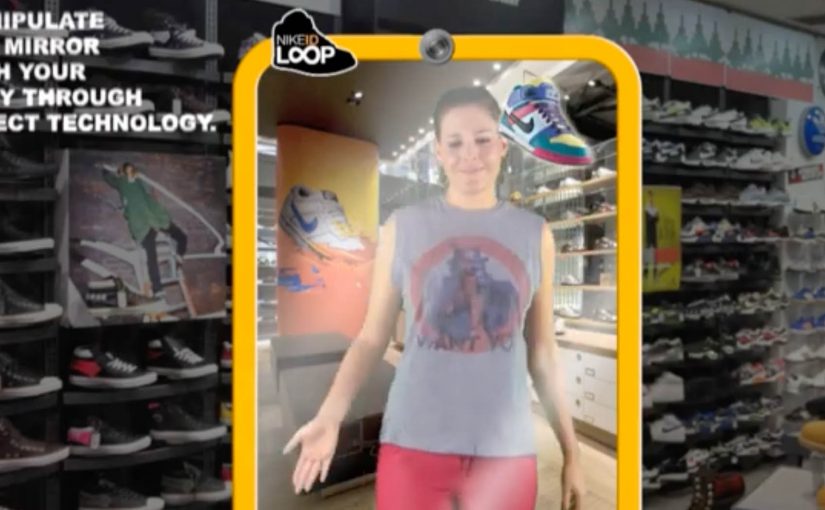
So a unique interactive mirror using Microsoft’s Kinect technology was created to customize the sneakers on the user’s feet. This way, one could try on every pair of Nike sneakers ever made in record time.

The core problem this concept tackles

Retail has a physical constraint. Shelf space. Inventory. Time. Nike’s catalog depth makes “try everything” impossible, even in flagship stores.

This concept flips the constraint by moving variety from physical inventory into a digital layer, while keeping the try-on moment anchored in the body. By “digital layer” here, I mean a live overlay that swaps variants in the mirror without needing physical stock. Your feet. Your stance. Your movement.

The real question is how you let shoppers explore more options without turning the store into a warehouse or the decision into homework.

Why the mirror mechanic is powerful

Because the mirror tracks movement and renders variants instantly, it keeps the try-on believable in motion, which is what makes fast switching persuasive instead of gimmicky.

Extractable takeaway: When you can add choice in software while preserving an embodied try-on moment, you reduce assortment friction without reducing confidence.

  • It keeps context real. You see the shoe on you, not on a product page.
  • It compresses decision time. Rapid switching creates a new kind of “browsing”.
  • It turns discovery into play. The experience is inherently interactive, which increases dwell time.
  • It reduces inventory friction. The store can showcase breadth without stocking breadth.

In retail environments where shoppers want high-confidence fit and style decisions in minutes, embodied digital try-on can expand perceived assortment without expanding stock.

What this implies for customization and personalization

NikeID is already about making a product feel personal. A Kinect-style mirror extends that by making customization immediate and visual, which can increase confidence before purchase.

This kind of embodied customization is worth betting on, because it makes breadth feel real without demanding more shelf space.

The concept also suggests a future where “catalog” becomes a service layer. The physical store is the stage for decision-making, not a warehouse for options.

What to take from this if you run retail CX

  1. Start with the constraint. Space and assortment are physical limits. Digital can expand them.
  2. Keep the experience embodied. Seeing a product on yourself is stronger than seeing it on a screen.
  3. Design for speed. Rapid iteration can become a feature, not a compromise.
  4. Make the output actionable. The experience should flow naturally into saving, sharing, or ordering.

A few fast answers before you act

What is the NikeID Loop concept?

It is a Miami Ad School concept for Nike that uses an interactive mirror and Microsoft Kinect technology to let users customize and “try” different Nike sneakers on their feet digitally.

What problem does it solve in stores?

It addresses the fact that Nike’s full range of sneakers cannot be stocked or tried in one location, by shifting variety into a digital interface.

Why use Kinect or motion tracking?

Motion tracking lets the system align the visual shoe to the user’s feet in real time, keeping the experience believable as people move.

Is this a product or a concept?

In this case, it is presented as a concept coming out of Miami Ad School, showing a possible direction for interactive retail.

What is the transferable lesson?

If you can remove physical constraints through an embodied digital layer, you can increase choice, speed, and confidence without expanding inventory.