Nas.com: Photo to Full-Funnel Marketing

Nas.com: Photo to Full-Funnel Marketing

From lead capture to full-funnel self-service

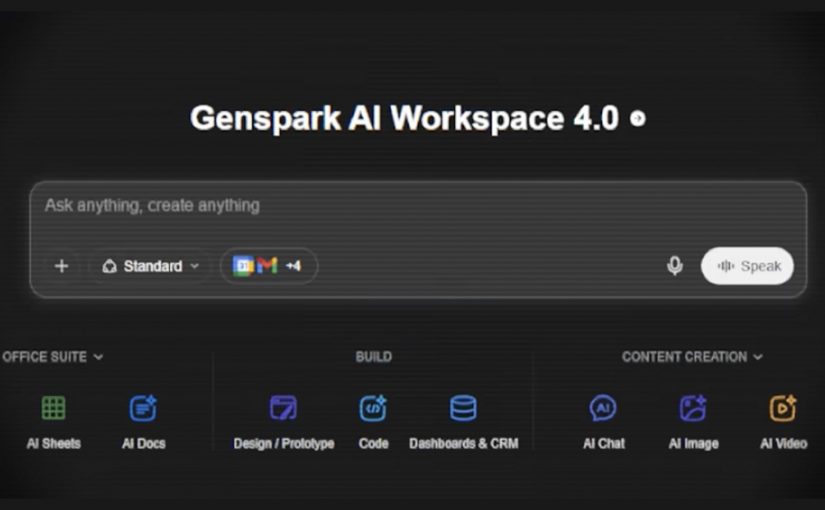
In December, I used Nas.io as an example of AI shrinking one specific acquisition job: describe the offer, generate a simple lead-capture page, and give a non-technical user a working front door to demand. Four months later, the proposition is materially bigger and rebranded as Nas.com, which now presents a workflow that starts with a photo and expands into storefront setup, listing creation, marketing content, ad creation, and customer acquisition support from the same system.

The mechanism is more important than the brand story. Nas describes onboarding from a prompted idea or photo, then layers in content generation for visuals, ads for campaign creation, lead discovery, and direct outreach, so the user is not just building a page but moving from product image to market-facing execution inside one operating environment. Its own documentation frames that environment as the place to create products, set up the website, run marketing tools, and manage the business in detail.

That is a meaningful expansion from their narrower self-service example from December.

It lands because it compresses several steps that normally sit across separate tools and handoffs. The same workflow helps a user move from product image to storefront, assets, and first activation steps, which is exactly what the live demo below shows.

What Nas is really signaling

What Nas is really signaling is a photo-to-market self-service workflow in which a simple image or prompt triggers page creation, asset generation, activation setup, and early demand capture inside one platform.

That is the important shift. The story is no longer that AI can make content. The more important move is that work which normally sits across separate tools and specialist queues, storefront setup, creative production, ad launch, lead discovery, and outreach, is being compressed into one connected operating layer. On Nas’s own marketing assets, the promise is clear: build the store, generate the listings and content, help with marketing, and move directly into customer acquisition from the same environment. That same positioning is paired with a scale claim that 350,000 people across 150+ countries are already selling on the platform.

Enterprise teams should treat this as an operating-model signal about how marketing work will increasingly be expected to function.

The real question is whether your brand, content, CRM, and commerce stack can let non-technical teams do the equivalent safely, quickly, and with governance.

No serious enterprise is going to replace its CMS, PIM, DAM, CIAM, consent layer, analytics stack, or media controls with a creator platform. That would miss the point. The real enterprise implication is expectation shift. Once people see more of the path from offer to activation compressed into one guided flow, they stop accepting ticket queues, repeated re-entry, and tool switching as normal for work that should already be semi-automated.

Why this matters for consumer experience platforms

For enterprise teams, this is less about storefront software and more about workflow design. A consumer experience platform only becomes commercially useful when it can turn brand intent into live, measurable market activity without making every step depend on specialist mediation.

That is why the Nas example matters. It does not just simplify creation. It pulls creation and activation closer together. The page, the assets, the ad setup, the lead discovery, and the outreach logic sit near each other in the same operating layer. That proximity matters because every extra handoff slows launch speed, raises coordination cost, and makes self-service impossible in practice.

This is where many large organisations are still weak. They may own all the component systems, but the systems do not behave like one usable operating model for non-technical teams. Capability exists. Flow does not.

What the enterprise should copy, and what it should not

The lesson is not to let anyone prompt anything. The lesson is to package complexity behind automated, governed workflows.

That means approved prompts, approved source data, brand-safe templates, channel rules, claims controls, embedded legal checks, human review thresholds, role permissions, and measurement wired into one non-technical, low-friction flow. If that wiring is missing, self-service becomes rework, inconsistency, and compliance debt dressed up as speed.

The practical target is not more AI content. The target is governed prompt-enabled execution across the journey, asset creation, landing-page setup, product-page enrichment, lead capture, paid activation, and performance measurement, all with clear ownership and auditability built in.

The move to make now

If you run a consumer experience platform, start by choosing one repeatable workflow where speed matters, governance is manageable, and value is visible. Product-detail enhancement, campaign landing pages, local paid-social creative, and email variant creation are better starting points than broad AI transformation programmes because they force workflow clarity, ownership, and measurable outcomes.

Takeaway: remove tech complexity and enable brand teams to create and activate their own assets through AI prompts inside governed workflows now, or be ready to play catch-up when competitors make this level of self-service feel normal.


A few fast answers before you act

Is Nas.com just another storefront builder?

No. Nas is positioning the product more broadly than storefront hosting. Its own marketing assets describe store setup plus content generation, ad launch, lead discovery, and outreach from the same environment.

What is the most important shift in this example?

The shift is that creation and activation are being compressed into one guided workflow, which reduces the gap between having something to sell and being able to put it in front of demand.

Is this fully automatic marketing?

No. The help documentation describes tools that simplify creation, ad setup, lead finding, and outreach, but the user still chooses goals, reviews outputs, and decides what to run.

What should enterprise teams copy first?

Copy the workflow logic first. Pick one repeatable use case where a non-technical team should be able to move from idea to approved market output with minimal handoffs.

What has to be true for this to work in an enterprise?

You need approved data sources, prompt guardrails, template logic, review thresholds, permissions, and measurement embedded in the workflow, not bolted on later.

Why act now instead of waiting?

Because once this interaction model becomes normal outside the enterprise, internal teams will stop accepting fragmented execution models as inevitable. The firms that win will be the ones that hide complexity without giving up governance.

KitKat: The Slooowest Vending Machine

KitKat: The Slooowest Vending Machine

I have covered dozens of unique vending machines over the years. The last one was as far back as 2018, when Ford used a car vending machine in Guangzhou, China. Now fast forward to 2026 and KitKat has successfully reimagined waiting time at a regular vending machine into the brand experience itself.

When a break brand faces a speed problem

KitKat’s reported premise is simple. In a culture of compressed attention, even the break is getting shortened. So the brand in Hyderabad, India took one of the most convenience-coded retail objects possible, a vending machine, and used it to restage “Have a Break” as something you feel, not just something you read. The activation was developed by VML India and VML Netherlands and brought to life with Delhi-based production house The Other Half.

That setup matters because vending machines normally stand for speed, utility, and instant gratification. KitKat flipped that expectation on purpose. Instead of using the machine to remove waiting, it used the machine to make waiting visible, memorable, and unmistakably on-brand.

How KitKat turned waiting into the product demo

Instead of dropping a bar in seconds, the transparent machine sends it through a miniature sequence inspired by everyday Indian life, including a toy train, a Ferris wheel, a truck ride, a river journey, and a festive procession. Reported timings make the contrast do real work. A normal vending machine interaction is framed at about three seconds. This one stretches the moment to around three minutes.

That matters more because the machine sat inside one of Hyderabad’s busiest commercial hubs, where speed is the default behavior and pausing is the unusual act.

The mechanism works because the extra time is not dead time. It is branded time, which turns delay into attention and makes the promise of a break tangible before the product is even consumed.

The smart part is that the machine does not merely slow the transaction. It choreographs the delay. That is why the pause feels closer to a scenic reward than a service failure.

Why the stunt lands harder than a normal activation

This is the rare activation where added friction strengthens the brand instead of weakening it.

KitKat wins here by using deliberate friction. Deliberate friction is an intentional pause or extra step added to an experience so the brand can increase attention, memory, or meaning instead of just reducing effort.

Most friction in customer experience is accidental and expensive. It comes from broken UX, poor orchestration, slow service, or unclear process. KitKat does the reverse. The pause is visibly intentional, visibly crafted, and tightly linked to a long-established brand promise, which is why reported reactions centered on watching, smiling, lingering, and sharing instead of irritation.

There is also a crowd mechanic at work here. The machine is slow enough to create curiosity, visual enough to hold attention, and simple enough for bystanders to understand within seconds. That combination turns one person’s purchase into a shared piece of theatre.

Where the business value actually sits

The enterprise lesson is not that brands should slow down checkout, navigation, or service recovery. The real question is where speed is hygiene and where tempo is part of the value exchange.

For consumer experience platforms and MarTech teams, that translates into a cleaner operating rule. Keep utility moments brutally fast, such as search, payment, account access, and complaint handling. But in moments tied to ritual, reveal, education, reward, sampling, or branded storytelling, controlled pacing can sometimes do more commercial work than raw speed because it increases attention, recall, and distinctiveness.

The business intent here is not transaction efficiency. It is brand encoding. KitKat is defending a recognizable promise in a category where faster is easy to copy, but a meaningful pause is harder to own.

That is the part many teams miss. Brand platforms do not become durable because they are repeated in copy. They become durable when the operating design of the experience makes the promise physically true.

How deliberate friction can strengthen a break brand

Deliberate friction only works when three conditions hold. The pause must express the brand idea, the consumer must understand why it exists, and the wait must be short enough and crafted well enough to feel rewarding rather than defective. Break any one of those rules and the same device becomes irritation, not experience design.

Add friction only when it makes the promise more tangible than speed would. If the delay is not visibly on-brand, clearly signposted, and tightly controlled, it is not experience design but bad service.


A few fast answers before you act

What is KitKat’s Slooowest Vending Machine?

It is a reported experiential installation in Hyderabad that turns a snack vending machine into a three-minute miniature journey, so the wait itself becomes the break.

Why does the idea work?

It works because the delay is visibly intentional and tightly tied to KitKat’s break positioning, so the pause feels like the product experience rather than a machine malfunction.

What is the operator lesson?

Speed is not the only KPI. In selected touchpoints, controlled pacing can increase attention, memory, and brand fit more effectively than pure efficiency.

Where should brands not copy this?

Do not add friction to utility-heavy moments like payment, login, navigation, or complaint handling, where speed and clarity are the promise.

What should CX and MarTech teams measure if they test a similar move?

Measure dwell time, completion rate, abandonment, recall, sharing, and whether the experience strengthened the brand association you intended to encode.

Škoda & Citroën: Fixing Mobility Friction

Škoda & Citroën: Fixing Mobility Friction

The journey is now part of the product

This is not the first time a car brand has moved into adjacent safety or wellbeing territory.

What makes these two examples stronger is that they do not feel random. Škoda and Citroën are both dealing with small but consequential failures around the trip itself, not trying to invent a new category for the sake of it. That is a more credible stretch because the problem sits close to how the brand is already experienced.

What Škoda and Citroën are really addressing is mobility friction. Mobility friction is the small but consequential failure around a journey that changes safety, comfort, or control without changing the vehicle itself.

One brand is tackling external awareness around cyclists and pedestrians. The other is tackling in-car stress for pets. Different use cases, same underlying move. Both are extending the brand promise into the part of the journey where the consumer actually feels the problem.

Škoda and the new urban safety gap

Škoda starts with a simple failure. Standard bike bells are easier to miss when pedestrians are wearing active noise-cancelling headphones, or ANC, so the company worked with the University of Salford to identify a narrow 750 to 780 Hz band that cuts through ANC more effectively and built DuoBell around that finding. Škoda says the product also uses a second resonator and an irregular strike pattern to make the alert harder for ANC systems to suppress.

That line of thinking fits a brand whose history began with bicycles and that still maintains a visible connection to cycling today.

This lands because the fix is practical, easy to explain, and directly tied to a real safety failure on the street.

Škoda also has the stronger proof layer here. The idea is backed by publicly available Salford research, and Škoda reports that testing showed pedestrians wearing ANC headphones gained up to 22 metres of additional reaction distance when DuoBell was activated.

This is the right kind of adjacent product move for an automotive brand.

Citroën and comfort beyond human passengers

Citroën starts from a different failure. For many pets, the car is not a neutral space. It is a stressful one. The Calm Diffuser is designed to release calming pheromones during the journey so the ride feels less anxious for dogs and cats. Citroën frames the device as an extension of its comfort promise to everyone on board, including pets.

That is why the idea works. Citroën is not leaving its lane here. It is widening a promise it already owns.

The brand logic matters more than the object itself. Citroën has long tried to make comfort a differentiator, and Calm Diffuser extends that positioning from human occupants to pet occupants. That is a small move on paper, but it reflects a larger shift in how consumers define who the journey is for.

What enterprise teams should notice

The real question is whether the brand is removing a journey failure consumers already feel, in a way that fits a promise it already owns.

That is not just a creative decision. It is an operating model decision. Teams need to know where friction shows up, which audience feels it most, which brand promise gives permission to act, and whether the answer belongs in product, service, content, partnership, or commerce. That is where consumer experience platforms and MarTech matter, because they help surface repeated friction, validate demand, segment relevance, and scale the explanation layer across touchpoints instead of treating each move as a one-off stunt.

The commercial upside is bigger than the product itself. The stronger capability is learning how to identify adjacent consumer problems early, prove that they matter, and translate brand promise into something operational and useful.

What mobility brands should take from this

The lesson is not that every automotive brand now needs a side product. The lesson is that adjacent innovation works when it removes a nearby failure in the journey, reinforces an existing promise, and can be supported across owned touchpoints, retail, CRM, and service.

The takeaway is clear. The brands that win these moves will not be the ones that look most inventive. They will be the ones that make the journey measurably safer, calmer, or easier in ways the business can actually support.


A few fast answers before you act

What is Škoda DuoBell?

Škoda DuoBell is a bicycle bell designed to be more detectable to pedestrians wearing ANC headphones. Škoda developed it with the University of Salford to respond to rising cyclist and pedestrian risk in dense urban settings.

What makes DuoBell different from a normal bike bell?

Škoda says DuoBell was tuned around a 750 to 780 Hz band that can cut through ANC more effectively than a conventional bell, with additional sound design choices to improve detectability.

What is Citroën Calm Diffuser?

Calm Diffuser is Citroën’s in-car device designed to release calming pheromones for pets during travel. Citroën presents it as a way to make journeys more comfortable for all passengers, including pets.

Why does Calm Diffuser fit Citroën so well?

It fits because Citroën has long treated comfort as a core brand promise. Calm Diffuser extends that promise from human occupants to pet occupants without feeling forced.

Why do these two launches matter beyond novelty?

They matter because they show a more disciplined way to extend a brand. Instead of chasing spectacle, both ideas target a specific friction point around the journey and connect the solution back to a promise the brand already owns.