Yamaha: Coast

A TV spot built around one clean optical trick

A neat optical illusion by Clemenger BBDO Adelaide for the TV ad.

How it works: perception as the hook

The mechanism is simple. The viewer’s brain tries to resolve what it is seeing, then the illusion “clicks” and the ad earns a second look. That moment of resolution does the heavy lifting. It buys attention without shouting for it.

In mass-reach brand communication, perceptual puzzles can act as a fast attention magnet because they create a micro-challenge the viewer wants to complete.

Why it lands: the viewer completes the experience

Optical illusions work because they recruit the viewer’s pattern recognition. You are not just watching. You are solving. That tiny sense of participation creates a stronger memory trace than a standard montage of claims.

The business intent: make the brand feel smart and premium

Using a clean visual device signals confidence. It suggests craft, control, and intelligence. The brand benefits from the association: if the ad is clever and precise, the product inherits some of that perceived quality.

What to steal for your next “simple but sticky” creative idea

  • Use one primary device. A single clear trick beats three competing ideas.
  • Design for the “click” moment. Structure the reveal so the viewer feels the resolution, not just sees it.
  • Keep the frame uncluttered. Illusions need visual discipline to land quickly.
  • Let craft do the persuasion. A well-executed device can communicate confidence better than copy.

A few fast answers before you act

What is the core creative idea in “Yamaha: Coast”?

A TV spot built around a single optical illusion that creates an “aha” moment and earns a second look through perceptual surprise.

What is the core mechanism?

A perceptual puzzle. The viewer’s brain tries to resolve what it is seeing, and the moment the illusion “clicks” becomes the engagement engine.

Why do optical illusions increase attention?

They create a micro-challenge the viewer wants to complete. That small participation moment makes the experience more memorable than a standard claim-led montage.

What is the business intent of using a clean visual trick?

To signal craft and confidence, and transfer a sense of intelligence and premium precision from the ad to the brand.

What is the most transferable takeaway?

Use one primary device, design for a clear “click” moment, and keep the frame disciplined so the effect lands instantly.

Coca-Cola: Velcro Posters for Grip Bottle

A bus-shelter poster you can literally grip

Here is another cool innovation at the bus shelters. Coca-Cola has come up with a new Grip Bottle which has a better grip for holding. To let people know they printed posters with Velcro on them and placed them in bus shelters in Paris to make people interact with the grip.

The campaign was a big success as people were literally hooked on to the campaign and there was a 3.8% brand volume growth in France compared to 2007.

The campaign was created by Marcel in Paris, France.

The smartest part: the demo is the media

If the claim is “better grip,” then the fastest proof is to make you grip something. Velcro turns the poster into a hands-on argument.

Why it sticks in your head

Bus shelters give you time. And touch beats talk. You do not just read about the benefit. You feel it while you wait.

The business point

Make the new Grip Bottle noticeable, and make the “better grip” benefit instantly understandable through interaction.

What to take from this

  • When the benefit is tactile, communicate it through touch, not explanation.
  • Use high-dwell environments to earn interaction, not just impressions.
  • Keep the mechanic simple enough to repeat at scale.

A few fast answers before you act

What was the Coca-Cola Grip Bottle campaign?

A bus-shelter activation in Paris promoting Coca-Cola’s Grip Bottle by using Velcro posters that encouraged people to interact with the grip.

Where did the campaign run?

It was placed in bus shelters in Paris, France.

What outcome did the post cite?

The post cited a 3.8% brand volume growth in France compared to 2007.

Who created the campaign?

The post credits Marcel in Paris, France.

Xbox Lips: Jukebox Turns Photos into Videos

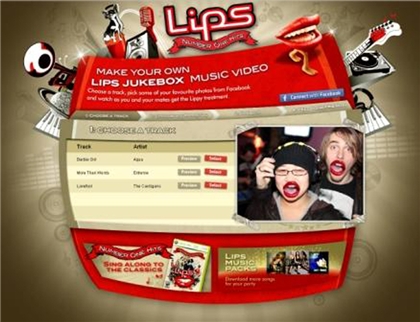
AKQA has taken Xbox Lips digital with the “Lips Jukebox” on Facebook, which enables users to transform their photos into music videos, in a bid to promote the new game “Lips Number One Hits”.

Xbox Lips Digital

The application is hosted at the Xbox website, and uses a combination of facial recognition technology and Facebook Connect functionality to enable people to choose a song and the photos they want to adapt from their profile before adding singing “Lips” to the faces and then creating the animated, personalized music video.

In social experience design, the winning pattern is simple: let people reuse what they already have, then return a share-ready artifact that feels personal without requiring effort.

Why this idea lands

This is a clean example of “personalisation as entertainment”. It takes something people already have, their photos, and turns it into something people want to show, a personalised music video.

  • Low friction input. Your Facebook photos are already there.
  • High novelty output. Seeing faces “sing” creates instant curiosity and share value.
  • Product-fit promotion. A singing video experience naturally aligns with a music game.

Facial recognition as a feature, not a headline

The facial recognition is not presented as “tech for tech’s sake”. It is simply the enabling layer that makes the result feel surprisingly accurate and personal. The user focus stays on selecting a song, picking photos, and getting a finished video worth sharing.

What to take from this if you build social experiences

  1. Turn existing assets into new value. Users are more likely to participate when they can reuse what they already have.
  2. Make the output share-ready. The “end product” should be something people naturally want to post.
  3. Keep creation steps short. Selection, preview, publish. The loop should feel quick.
  4. Align the experience with the product promise. A music game promoted through a music-video maker feels coherent.

A few fast answers before you act

What is the Xbox Lips Jukebox?

It is a Facebook-connected experience that lets users transform their photos into animated, personalised music videos to promote “Lips Number One Hits”.

What technologies does it use?

It combines facial recognition with Facebook Connect so users can select songs and photos, then apply singing “Lips” to faces and generate a video.

Where is the application hosted?

It is hosted on the Xbox website.

Why does this work as game marketing?

It creates a playful, shareable output that matches the core theme of the game. Music and performance.

What is the transferable lesson?

When you can turn user content into entertainment with minimal effort, you can earn both engagement time and social sharing without heavy persuasion.