

World’s Toughest Job: The Fake Interview Reveal

World’s Toughest Job: The Fake Interview Reveal

A job listing almost nobody wanted

Do you have what it takes to handle the World’s Toughest Job? Mullen, an advertising agency in Boston, posted a fake “Director of Operations” job for one of their clients online and in newspapers. The paid placement reportedly generated over 2.7 million impressions, but only 24 people applied.

Those applicants were invited to a video conference where the role was explained in blunt terms: more than 135 hours per week, constant mobility, tight coordination, and nonstop communication. There are no breaks, no holidays, and no pay.

The mechanic: recruiting theatre as storytelling

Here, “recruiting theatre” means using the rituals and pressure of a job interview as the storytelling device. The film uses a familiar structure, a job interview, then pushes the requirements until the audience’s common sense kicks in. Because the “candidate” reactions are captured live on webcam, the escalating demands feel real, not scripted, and the viewer keeps watching to resolve the tension.

At the end, the campaign reveals what this “Director of Operations” role is actually describing, and the entire job spec snaps into focus.

In mass-market brand storytelling, the faux-recruitment format is a fast way to make hidden work visible and comparable.

Why it lands

It borrows credibility from the hiring process. When you hear “job requirements,” you naturally evaluate fairness, compensation, and sustainability. By deliberately breaking those expectations, the spot forces a reassessment of what society normalizes and undervalues, then uses the reveal to turn discomfort into appreciation.

Extractable takeaway: If your message is about undervalued effort, put it into a framework people already use to judge value, then let the contrast do the persuasion instead of a lecture.

What the client is buying

This is not just a feel-good twist. It is a reframing device designed to change how people talk about a role, and to prompt a concrete action immediately after the emotional peak. The “job interview” wrapper also makes it highly shareable because viewers can describe it in one sentence without spoiling the whole experience.

The real question is whether your audience needs more information, or a sharper frame that makes overlooked value impossible to ignore.

How to Reframe Invisible Work

  • Start with a believable premise. Familiar formats reduce skepticism and earn attention fast.
  • Escalate with specificity. Numbers, constraints, and tradeoffs make the situation feel tangible.
  • Use real-time reactions as proof. Authentic surprise is a stronger asset than polished dialogue.
  • Time the reveal after tension peaks. The moment of resolution is where people decide to share and act.

A few fast answers before you act

What is the “World’s Toughest Job” campaign format?

A fake job listing leads to webcam interviews where the role is described as extremely demanding with no pay. The film then reveals what the role is actually referring to.

Why does the job interview structure work so well?

Viewers already know how to judge jobs. When the requirements become unreasonable, it triggers an instinctive fairness check, which makes the reveal feel earned.

What is the key mechanic in one line?

Use a credible real-world frame, escalate expectations, capture real reactions, then deliver a reveal that reframes the entire premise.

What makes this shareable beyond the initial audience?

The premise is easy to summarize, the tension holds attention, and the payoff feels emotionally decisive, which motivates sharing.

What should a brand borrow from this without copying it?

Translate an abstract truth into a familiar evaluation framework, then let the audience reach the conclusion themselves.
Coca-Cola: Give a Coke, Be Santa

Coca-Cola: Give a Coke, Be Santa

A vending machine that asked you to choose who you are

The strongest holiday ideas turn seasonal sentiment into a simple action people can take in public. Coca-Cola’s holiday vending machine is a clean example of that move.

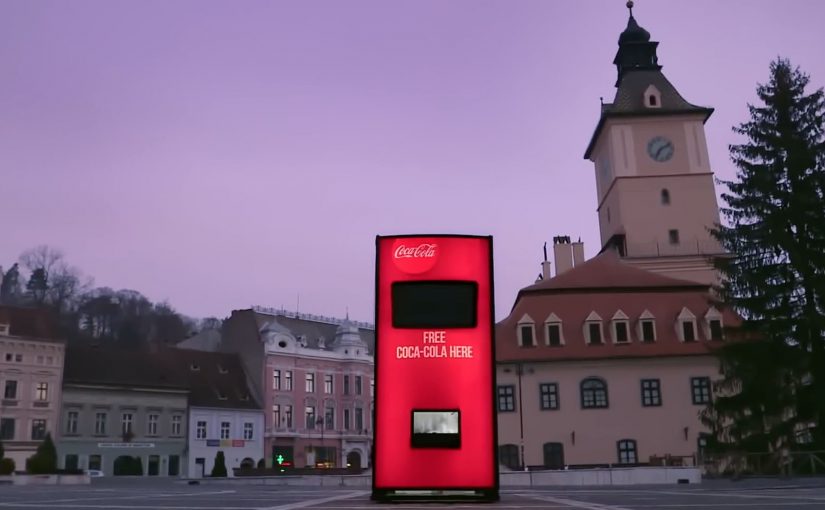
Coca-Cola wanted to bring out the Santa in everyone. So for the 2013 holiday season, they created a special vending machine that prompted users to either get a free Coke or give a free Coke.

The two-button mechanic that made sharing the story

If the user chose a free Coke, the machine quickly dispensed the drink for the user to enjoy.

However, if the user decided to share, then the machine did something a little more special. Watch the video below to find out.

In high-traffic FMCG retail settings, a binary choice lets a brand value show up as behavior in seconds.

Why “give” feels better than “get” in December

The psychology here is straightforward. A free product is nice, but it is forgettable. A choice that reflects identity is sticky.

Extractable takeaway: If you want a value like generosity to travel, put it into a visible choice where the “better self” option is easy to pick and easy to witness.

By putting “give” and “get” side by side, the machine turns a small decision into a moment of self-image and social proof, meaning other people can see the choice and validate it. During the holidays, people want to see themselves as generous, and they want to be seen that way by others.

The business intent behind bringing out the Santa

The intent is not simply distribution.

The real question is whether your brand promise can be expressed as a choice people are proud to make in public.

This is a stronger holiday move than a message-only campaign because it makes the value legible and repeatable at the point of interaction.

Coca-Cola uses the vending machine to translate a brand promise into behavior. The brand is associated with warmth and sharing because the consumer enacts it, not because the brand claims it.

How to reuse this give-or-get choice design

  • Turn values into a choice. Make the brand idea something people can do, not just hear.
  • Reward the “better” behavior. If sharing is the story, make sharing the more memorable path.
  • Keep the interaction instantly legible. Two clear options beat complex instructions in public spaces.
  • Design for a public moment. When others can witness the decision, the story travels faster.

A few fast answers before you act

What did Coca-Cola build for the 2013 holiday season?

A special vending machine that offered users a choice: take a free Coke or give a free Coke.

What was the core mechanism?

A simple two-option prompt. Choosing “get” dispensed a Coke immediately. Choosing “give” triggered a more special outcome.

Why does the “give” option matter so much?

Because it turns a freebie into an identity moment. People remember what they chose, and others can witness it.

What business goal did this support?

Making Coca-Cola’s holiday positioning feel real by linking the brand to a visible act of sharing, not just a message about sharing.

What is the main takeaway for brands?

If you want to own a value like generosity, design an interaction where people can demonstrate that value in the moment.

Amazon Dash: When Commerce Becomes a Button

Amazon Dash: When Commerce Becomes a Button

A tiny button that quietly changes how buying works

When Amazon introduces Dash, it does not look like a revolution. No screens. No interfaces. No checkout flow.

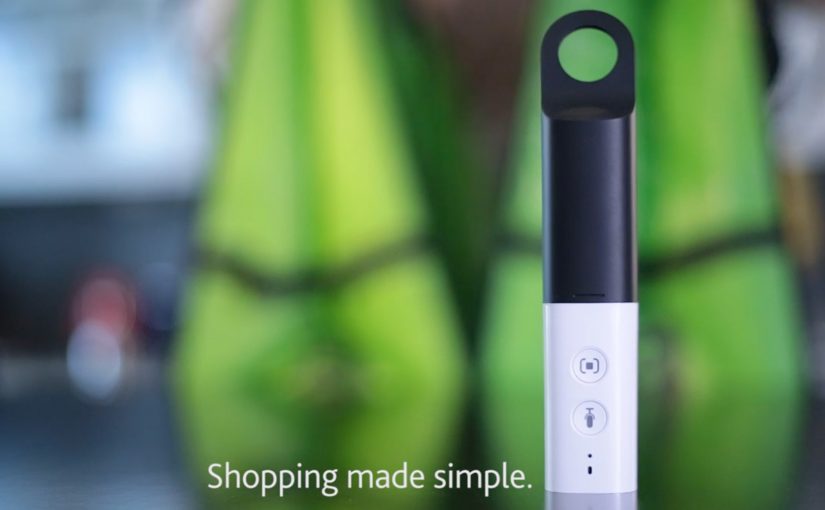
Just a small physical button. One press. Reorder complete.

At first glance, Amazon Dash can feel like a gimmick. But in practice, it signals something more fundamental. A deliberate attempt to remove shopping itself from the act of buying.

What Amazon Dash does in the home

Amazon Dash, often described as the “Dash Button”, is a physical, Wi-Fi-connected button linked to a specific household product. Detergent. Coffee. Pet food. Batteries.

You place it where the need happens. On the washing machine. Inside a cupboard. Near the dog food bowl.

When you run out, you press the button. Amazon handles the rest.

No browsing. No comparison. No cart. No second thought.

Intent compression is the point, not the plastic

The button is not the story.

The real shift is intent compression. By intent compression, I mean collapsing need recognition, product choice, payment, and fulfillment into one trigger that requires almost no thought.

The real question is what happens to brand choice when reordering stops being a decision and becomes a reflex.

Dash is not a gimmick. It is a blueprint for default-setting commerce.

In replenishment categories like household essentials and other repeat-purchase goods, the winner is the brand or platform that becomes the default reorder, not the one that wins the next search.

Why “no interface” feels so good

Dash works because it removes cognitive load at the exact moment people are most willing to simplify. When a household runs out, the goal is not discovery. It is restoration. A one-press action fits the habit loop. Trigger, action, relief.

Extractable takeaway: If you can remove steps at the moment of need, you do not just improve conversion. You reshape behavior, because people repeat what feels effortless and reliable.

That same mechanism explains why Dash can feel uncomfortable. Accidental orders. Reduced price transparency. Loss of conscious choice. The discomfort is the point, because it reveals the boundary of how much control people will trade for frictionless convenience.

What Amazon is really buying with Dash

Dash compresses multiple steps. Need recognition. Product selection. Payment. Fulfillment. Into a single physical action.

Seen from that angle, Dash is less about buttons and more about locking demand upstream, before competitors even enter the consideration set.

Dash is also a learning system. It teaches Amazon about behavior, habit formation, replenishment cadence, and reorder economics, because the “moment of truth” becomes measurable and repeatable.

A signal to brands, not just consumers

For brands, Amazon Dash carries a subtle but powerful message.

If you win the button, you win the household. If you lose it, you disappear from the moment of need.

Traditional branding competes on shelves and screens. Dash shifts the battlefield into kitchens and cupboards. Physical presence becomes digital dominance.

Distribution is no longer only about visibility. It is about defaultness. Defaultness here means being the preselected choice a household reorders without revisiting the decision.

What to steal if you are not Amazon

The logic behind Dash is bigger than the hardware. Commerce keeps moving toward fewer decisions, fewer interfaces, more automation, and stronger platform pull.

  • Design for replenishment moments. Identify “run out” triggers and reduce the steps required to restore.
  • Compete for the default. Build experiences that make the second purchase easier than the first.
  • Make the trade-off explicit. Add lightweight safeguards (clear confirmations, simple cancellations, price-change visibility) so convenience does not feel like a trap.
  • Instrument the habit loop. Measure time-to-reorder, reorder frequency, and churn as first-class signals, not just conversion.
  • Protect trust. If the experience becomes invisible, reliability becomes the brand.

Sometimes, the future of shopping is just a button on a wall. The bigger story is what happens when buying becomes infrastructure.


A few fast answers before you act

Is Amazon Dash “just a button”?

No. It is a button plus an operating model that turns reordering into a near-automatic behavior.

What does “intent compression” mean in this context?

It means collapsing multiple steps. Recognize need, choose product, pay, and fulfill. Into one trigger with minimal deliberation.

Why does Dash matter even before voice becomes mainstream?

It proves the “no interface” ambition using a simple physical shortcut. It removes friction without needing new user behavior like talking to a device.

What is the strategic advantage for Amazon?

Dash moves competition upstream by capturing repeat demand before a shopper compares alternatives. That makes loyalty structural, not persuasive.

What is the core risk for brands?

If replenishment becomes default-driven, brands that are not the default become invisible at the moment of need, even if awareness is high.

What is the consumer downside, and what mitigates it?

The downside is reduced price awareness and accidental orders. Mitigations are clear confirmations, transparent price-change cues, and easy reversibility.