
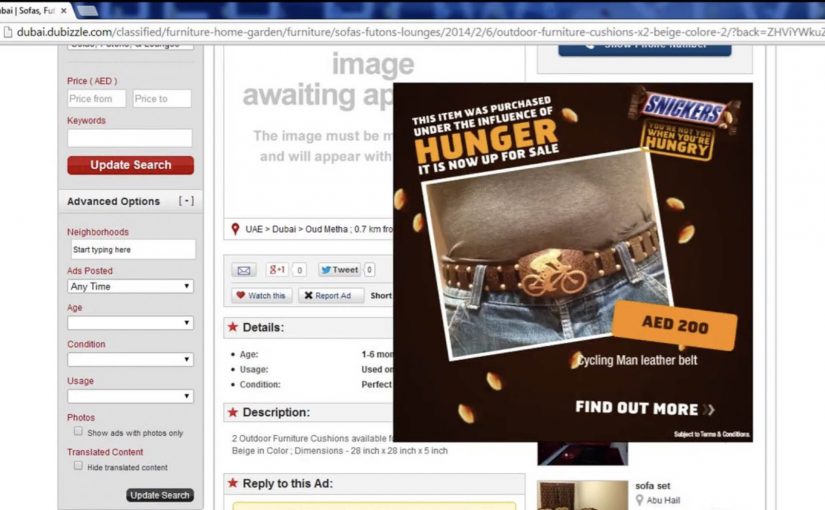
Snickers: Hungry Purchase Resale

The global Snickers platform “You’re not you when you’re hungry” has generated plenty of buzz. To extend it in Dubai, and make the downside of hunger feel more real, Impact BBDO created “Hungry Purchase Resale”.

The insight is simple. During big sales, people often buy things they later regret. Snickers pins these shopping bloopers on hunger and, in partnership with Dubizzle.com, lets shoppers upload the items they want to sell straight into Snickers branded banners that appear on the site’s homepage. Clicking the banner takes people directly to the classified listing so the item can be sold on.

Turning regret into a media unit

The clever bit is that the ad is not just an ad. It becomes a functional resale slot that people actually want, because it helps undo a mistake. This is the stronger move, because utility gives the audience a reason to use the format, not just notice it.

In high-velocity retail environments, the best digital ideas piggyback on existing intent surfaces, meaning the places where people are already ready to browse, compare, or buy, then give people a reason to interact that is bigger than “engage with our brand”.

The real question is how to turn a brand platform into a useful action inside the exact behavior it is commenting on.

Why it lands

The better approach here is to make the platform behave like a service, not a message. The audience is already on a classifieds site to browse, compare, and transact. By turning remorse into a shareable listing, the campaign earns attention inside the exact behavior it is commenting on.

Extractable takeaway: If your brand truth is behavioral, do not just illustrate it. Build a mechanic that lets people enact it in a familiar environment, and make the brand the enabler of a useful outcome.

What the results are described to show

Campaign reporting describes over 200 submissions in a week. It also describes the interactive banners achieving a click-through rate almost five times the industry standard, with 80% of posted items sold the same day.

What commerce teams should steal from this

  • Make the ad do a job. Utility beats persuasion when attention is scarce.
  • Put the idea where intent already exists. Classifieds, marketplaces, and search are “ready-to-act” contexts.
  • Let users supply the proof. Real submissions and real listings create credibility you cannot script.
  • Keep the action one-step. Upload, appear, click, sell. No extra hoops.

A few fast answers before you act

What is “Hungry Purchase Resale”?

It is a Snickers activation in Dubai where shoppers can upload regretted purchases into Snickers branded homepage banners on a classifieds site, linking directly to the resale listing.

What is the core insight behind it?

People often make irrational purchases during sales and later regret them. The campaign frames hunger as the trigger for those mistakes.

Why partner with a classifieds site?

Because it is where resale intent already lives. The campaign becomes actionable in-context instead of being a standalone brand message.

What makes the idea feel credible?

It routes real items from real people into a real marketplace flow, so the audience can see behavior, not just hear a claim.

How can another brand replicate the pattern?

Choose a partner platform that already hosts the behavior you are talking about, then build a simple mechanic that turns your brand message into a useful action.
Carlsberg: Happy Beer Time

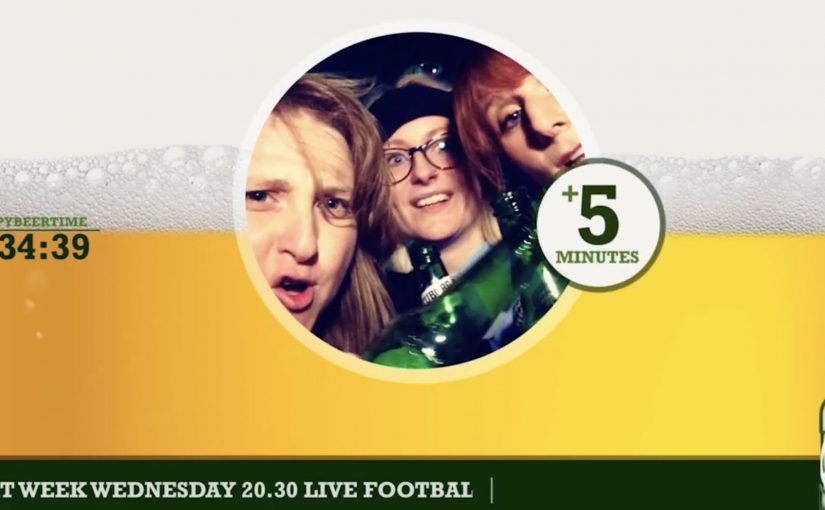
Nowadays people like to go out, take photos, and share them on Instagram. Carlsberg, together with the Danish agency Konstellation, puts a social twist on the well-known concept of happy hour by turning every post into more discounted time for the whole bar.

A happy hour that gets longer when the bar posts together

The mechanic is simple and highly visible. Guests snap an Instagram photo and tag it with the venue name and #HappyBeerTime. Each successfully tagged photo extends a shared countdown on the bar’s screen, which keeps discounted beer available for everyone while the clock keeps moving.

In on-trade environments, meaning bars and restaurants, the strongest promotions convert shared participation into a shared, immediate reward that the whole room can see.

What makes the mechanism work in a real bar

  • One clear lever. Post with the right tags. Add time.
  • Progress is public. A live countdown on a screen turns the promotion into a collective game.
  • Reward is communal. Everyone benefits from every post, so the behaviour spreads naturally.
  • Distribution is built in. The bar gains organic visibility through guests’ own feeds.

The real question is whether your incentive creates a room-level feedback loop fast enough that people feel their action changes the moment.

Why it lands

This activation aligns with what people already do on a night out. Take photos. Share moments. The difference is that the sharing changes the environment in real time. That makes the incentive feel playful rather than purely transactional.

Extractable takeaway: If you want participation at scale inside a venue, use a reward the entire room experiences together, and make the progress visible so the crowd recruits itself.

What the brand is really buying

On the surface, it is discounted beer for longer. Underneath, it is repeat purchase pressure at the point of sale, plus a stream of user-generated content tied to specific venues and nights. The bar gets word-of-mouth promotion. Carlsberg gets social proof linked to a real-world occasion.

A quick note on “Happy Hour 2.0”

“Happy Hour 2.0” is the idea of extending a happy-hour window through a simple trigger, instead of relying on a fixed start and end time. Budweiser was earlier to pioneer this Happy Hour 2.0 concept in August 2012. Carlsberg’s twist is connecting the extension mechanic directly to social posting behaviour.

Proof that the idea travelled beyond a one-off

The concept drew broader industry attention, including recognition in Danish award circuits and international festival shortlists. That matters because it signals the mechanic is legible. It is easy to explain, easy to copy, and easy for people to participate in without training.

Steal the shared countdown loop

  • Keep the action atomic. One photo and two tags beats a multi-step flow.
  • Design the room-level feedback loop. The screen is not decoration. It is the social engine.
  • Set guardrails early. Decide how you handle off-brand or inappropriate posts, and communicate it.
  • Make the reward feel immediate. “Add time now” beats “collect points later”.
  • Measure uplift, not just posts. Treat UGC as a means. The goal is incremental sales and dwell time.

A few fast answers before you act

What is Happy Beer Time in one sentence?

It is a bar promotion where Instagram posts tagged with the venue name and #HappyBeerTime extend a shared happy-hour countdown, keeping discounted beer available for longer.

Why does “time” work as the reward?

Time is instantly understood, visibly shared, and emotionally tied to the night out. Adding minutes feels like progress the whole room experiences together.

What makes this different from a standard hashtag campaign?

The hashtag is not just for awareness. It is a trigger that changes the real-world environment in real time, which makes posting feel consequential.

What can go wrong operationally?

If tagging rules are unclear, people will not participate. If moderation is absent, inappropriate content can surface. If the reward lags, the loop breaks.

What should you measure in a pilot?

Participation rate, post volume per hour, time extended per session, sales uplift during the activation window, and whether dwell time increases without margin loss exceeding targets.

Samsung Display: Display Centric World

A near-future that blends text and screens

Text, video, audio and several other interaction types become a common part of media. Everything blends between the visual and the textual and back again. We are surrounded with multi-touch media that uses highly engineered displays and companion technologies.

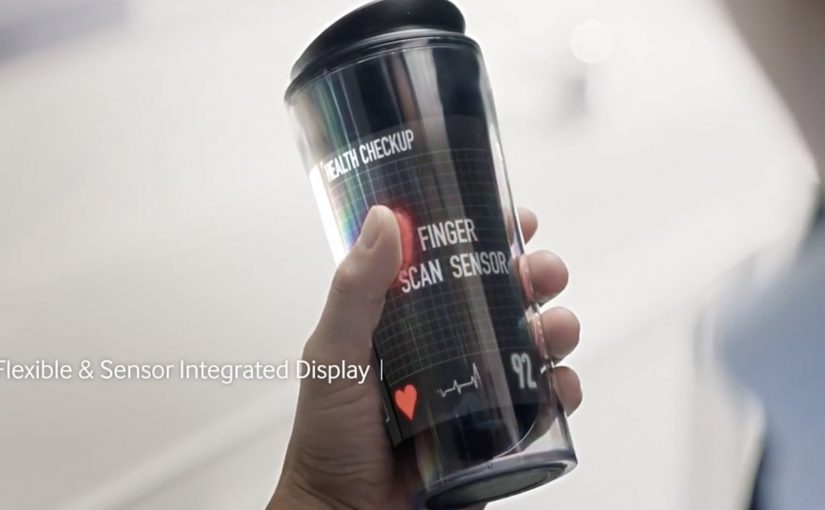
Samsung Display created the video below to share its vision of the future and to show how its panels could be implemented across consumer and enterprise markets.

What the film is really selling

The premise is not “better screens.” The premise is “more surfaces become screens.” Here, a display-centric world means a world where screens become the default surface for access, guidance, and collaboration across daily tasks. The film repeatedly puts interactive display surfaces into everyday moments. Cafés, classrooms, retail, commuting, and healthcare all become scenarios where information appears in place, on demand, and in the exact format that fits the situation.

Samsung Display originally presented this concept film as part of its Analyst Day 2013 narrative. The message is clear. When displays get thinner, lighter, and more flexible, the interface stops being a device and starts being the environment.

In consumer electronics and enterprise IT, display surfaces are becoming the default interface between data, services, and people.

Why it lands

Vision films work when they turn a technology roadmap into felt moments. Here, the “wow” is not a single gadget. It is the continuity of interaction. You move between surfaces without re-learning the interface, and information follows you in a way that feels natural rather than like a series of app launches. It works because repeated interaction across familiar settings makes the future feel less like a prototype and more like a habit.

Extractable takeaway: The fastest way to make an emerging technology believable is to show the same interaction pattern repeated across multiple contexts, until it reads like an everyday habit.

The hidden dependencies behind a display-centric world

A world full of screens implies a stack of enabling layers that the film only hints at. Sensors to understand context. Identity and handoff to move work between surfaces. Content designed for glance, touch, and collaborative viewing. And a trust model that makes people comfortable when “the room” is also an interface.

The real question is what workflows get simpler when the display is no longer tied to a single endpoint. If you watch it as an enterprise leader, that is where the real productivity story starts.

What to borrow from Samsung’s interface vision

  • Prototype interactions, not products. A single interaction pattern shown in five contexts communicates strategy better than five unrelated gadgets.
  • Make “handoff” the hero. The magic is continuity. Show how content moves between surfaces and people without friction.
  • Design for groups, not just individuals. Many enterprise use cases are collaborative. Surfaces that support shared viewing and shared input are the point.
  • Pressure-test trust. If your interface becomes ambient, you need explicit cues for privacy, control, and intent.

A few fast answers before you act

What is “Display Centric World” by Samsung Display?

It is a concept film that imagines a near-future where interactive displays are embedded into many everyday surfaces, making screens a pervasive interface rather than a single device.

What is the core idea the film communicates?

That as display tech becomes thinner, lighter, and more flexible, the interface shifts from dedicated hardware to the surrounding environment, with consistent multi-touch interaction across contexts.

Why do these “future vision” videos matter for brands and enterprises?

They translate a technology roadmap into concrete usage scenarios, which helps teams align on what to build, what to partner for, and what behaviors they are trying to create.

What are the key dependencies a display-centric world requires?

Context sensing, identity and handoff, content designed for multiple viewing distances and collaboration, and a trust model that makes ambient interfaces feel safe and controllable.

What is the most transferable lesson for product teams?

Build and communicate around repeatable interaction patterns and seamless handoffs. Products change quickly, but interaction habits scale across devices and surfaces.