
Pepsi Max: Human Loop

Pepsi Max: Human Loop

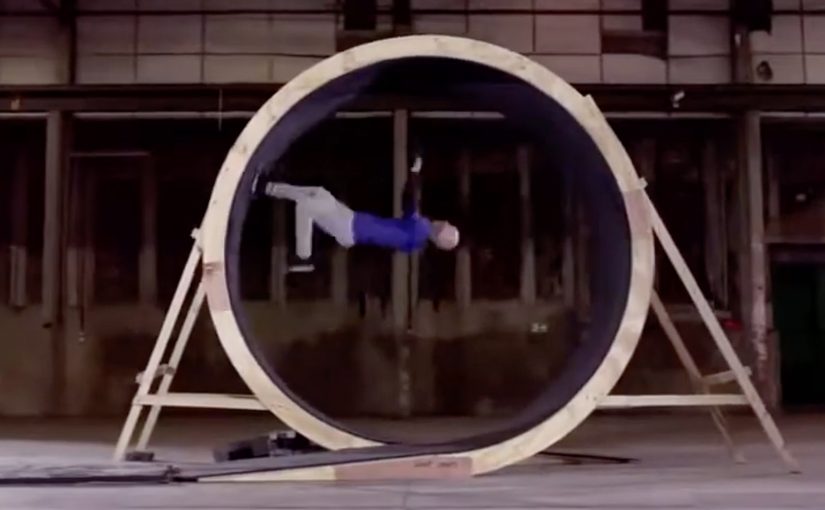
Last year, Pepsi Max for its ongoing #LiveForNow campaign created an unbelievable bus levitation stunt. Now continuing this “unbelievable feats and experiences” brand positioning, they challenged daredevil stuntman, Damien Walters to do another unbelievable stunt for them. Here, positioning means the single promise the brand wants people to remember and retell.

Pepsi Max provided Damien with a human-sized loop-the-loop in an abandoned warehouse and then got him to defy gravity for them…

In global FMCG marketing, stunts like this earn value when they reinforce an existing brand platform, not when they try to create one from scratch.

Why this stunt fits the brand

The mechanism is simple. A clearly defined physical challenge, executed by credible talent, makes the “unbelievable” promise feel real because the payoff is visible without narration.

Extractable takeaway: If your positioning is a claim, design one repeatable moment that functions as proof, then film it so the viewer can verify it without explanation.

  • It commits to the promise. “Unbelievable” is not a line here. It is the product.
  • It is instantly legible. You understand the challenge in one second, then you watch to see if it is possible.
  • It is built for replay. Stunts invite rewatching, pausing, and sharing because people want to verify what they saw.

How to make the stunt behave like proof

The real question is whether your brand promise can be proven in one obvious moment on camera.

This kind of spectacle earns its keep only when it is a direct proof point for an ongoing platform, not a disconnected attempt at “random viral”.

If your positioning is about experiences, you need executions that behave like proof. This kind of spectacle works when the idea is simple, the talent is credible, and the payoff is visible without explanation.

  • Make the promise behave like proof. If positioning is about experiences, the execution should demonstrate it, not describe it.
  • Keep the idea simple and the payoff visible. The viewer should understand the challenge instantly and see the outcome without explanation.
  • Use credible talent, then shoot for replay. Stunts invite rewatching, pausing, and sharing when people want to verify what they saw.

A few fast answers before you act

What is Pepsi Max “Human Loop”?

It is a Pepsi Max #LiveForNow stunt featuring Damien Walters attempting a human-sized loop-the-loop setup inside an abandoned warehouse.

Why does a loop-the-loop stunt perform so well in video?

The challenge is obvious, the risk feels real, and the outcome is visually conclusive, which makes it highly shareable.

What is the core pattern behind this kind of campaign?

Make the brand promise measurable in one moment, then capture it cleanly so the viewer does not need context to understand it.

How do you keep stunts from feeling like “random viral”?

Anchor them to an ongoing brand platform, use consistent talent and tone, and make each execution feel like a credible next chapter.

When should you avoid a stunt-led proof moment?

Avoid it when the idea cannot be understood instantly, the talent is not credible, or the execution does not ladder up to an ongoing brand platform.
Toyota: Try My Hybrid

Toyota: Try My Hybrid

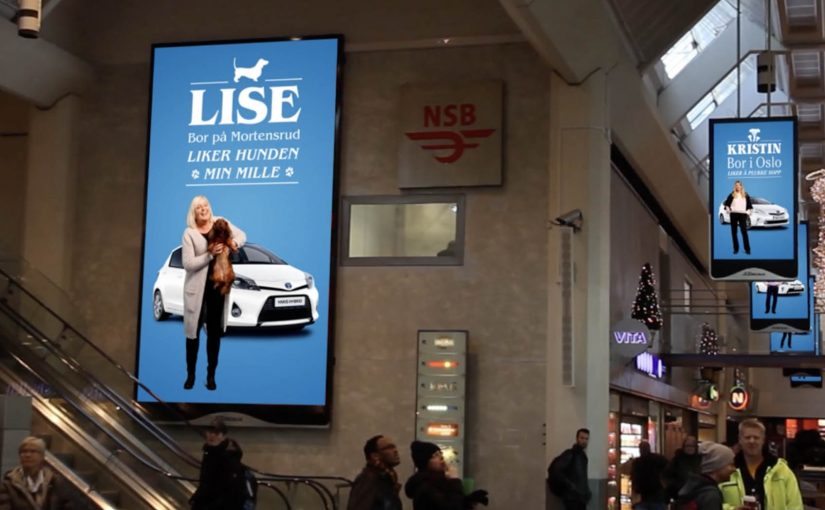
Toyota in Norway is doing really well on loyalty and customer satisfaction, but it is struggling to recruit new customers.

So instead of having salespeople persuading new buyers, Toyota lets satisfied Hybrid owners offer test drives to prospects. A web and mobile service makes it easy for owners. For no money. To let strangers, neighbours and friends, and friends of friends via Facebook test drive their Hybrid.

Turning owners into the dealership

The mechanic is simple and trust-led. That means the trust comes from the owner-host relationship rather than from Toyota’s sales script. Prospects find nearby Hybrid owners and request a test drive. Owners opt in, schedule, and host the drive. The conversation is the product, because it is grounded in lived experience rather than sales script.

In automotive marketing where trust is the bottleneck, peer-to-peer test drives can outperform sales-led persuasion.

Why it lands

It removes the two biggest barriers to a first drive. Social friction and credibility. The prospect gets a low-pressure introduction, and the owner gets to play the proud expert. That dynamic changes what the test drive feels like. It becomes a neighbourly recommendation, not a pitch. The social graph component also matters, because “friend of a friend” is often the sweet spot where curiosity meets safety.

Extractable takeaway: If your current customers are genuinely satisfied, build a structured way for them to host the first experience. Let trust carry the conversion, and let technology simply remove coordination friction.

What Toyota is really solving

This is an acquisition problem disguised as a community service. Toyota already has strong satisfaction. The real question is how that satisfaction becomes low-friction acquisition before a prospect ever enters a showroom. Toyota is right to treat owner advocacy as the front end of acquisition, not as a soft loyalty add-on. The challenge is that satisfaction does not automatically translate into new buyers at scale. This service turns satisfaction into a repeatable, measurable funnel step. Discovery, booking, drive, and then consideration. Without needing more showroom persuasion.

What brands can steal from Try My Hybrid

  • Make the first experience owner-led. Use real users as the proof layer.
  • Design for “near me”. Proximity is the simplest trust signal after reputation.
  • Use social adjacency carefully. Friends of friends can unlock trial without feeling like a cold lead.
  • Keep incentives optional. Pride and helpfulness can outperform cash when satisfaction is real.
  • Instrument the pipeline. Treat hosted trials as a trackable acquisition channel, not PR.

A few fast answers before you act

What is “Try My Hybrid” in one sentence?

A web and mobile service that lets prospective buyers book test drives with real Toyota Hybrid owners instead of salespeople.

Why does the owner-led test drive feel more persuasive?

Because it is grounded in lived experience. The host can answer questions with real usage context, which increases credibility and reduces sales resistance.

What makes the social layer important?

It helps prospects find a trustworthy host through proximity and social adjacency, which lowers hesitation versus a fully anonymous test drive.

What is the biggest operational risk?

Reliability and safety. If scheduling fails, hosts no-show, or the process feels risky, trust breaks and the program collapses.

How can a non-automotive brand apply the same model?

Turn your happiest customers into opt-in hosts for the first experience, then build a lightweight system to match prospects to hosts and remove coordination friction.

Bud Light: Ian Up for Whatever

Bud Light: Ian Up for Whatever

Super Bowl ads are the miniature version of the film industry. There is huge money involved and brands are torn between creating something new and noteworthy or falling back on established formulas.

So for its 2014 Super Bowl commercial, Bud Light throws in a stack of famous faces including Arnold Schwarzenegger, Don Cheadle, and Minka Kelly, plus one unsuspecting “normal guy” called Ian Rappaport. The story is built as a rapid escalation. One small choice becomes a night that keeps getting stranger, bigger, and more unbelievable.

A stunt disguised as a spot

The mechanism is simple and ruthless. A regular guy is offered a Bud Light and asked if he is “up for whatever’s next”. Then the ad turns into a filmed chain reaction of increasingly absurd moments, reported as captured with hidden-camera choreography rather than traditional performance. The celebrity cameos are not decoration. They are the accelerant that keeps raising the stakes.

In US mass-reach advertising, Super Bowl spots act as high-budget cultural moments where brands compete on surprise, talk value, and rewatchability.

Why it lands

This works because it behaves like a dare the viewer can imagine accepting. The idea is not “Bud Light tastes better”. The idea is “your night can go anywhere”. Ian is the audience proxy, so every escalation feels like it is happening to you, not to a paid spokesperson.

Extractable takeaway: When you want a broad audience to share your story, give them a single, relatable choice at the start, then let that choice trigger visible escalation. The audience should understand the rule in one sentence and predict the next beat, then still be surprised by the size of the payoff.

What Bud Light is buying with this format

The real objective is platform reset, meaning one mass-reach moment that makes a positioning line feel newly believable. The real question is whether the brand feels like the trigger for spontaneity or just the label attached to it. Bud Light gets this right because the brand behaves like the trigger for the entire experience, not a sponsor bolted on afterward. “Up for Whatever” is a positioning line that needs proof, not repetition. This spot supplies proof by turning the brand into the permission slip for spontaneity, and by using celebrity not as endorsement but as narrative fuel.

What to steal from Bud Light’s escalation playbook

  • Cast the audience, not a hero. Use an everyperson lead so the fantasy feels attainable.
  • Make escalation the structure. A clear upward curve keeps attention better than a clever line alone.
  • Use fame as a plot device. Cameos should change the situation, not just decorate the frame.
  • Anchor the brand to the first decision. If the brand is the trigger, it earns credit for the whole ride.

A few fast answers before you act

What is “Ian Up for Whatever”?

It is Bud Light’s 2014 Super Bowl commercial built around a regular guy, Ian Rappaport, who gets pulled into a celebrity-filled night after agreeing to be “up for whatever’s next”.

What is the core creative mechanism?

Hidden-camera style escalation. One small choice triggers a chain of increasingly surprising moments, reinforced by celebrity cameos.

Why does the “normal guy” casting matter?

It makes the audience project themselves into the situation. The fantasy becomes “this could happen to me”, not “this is happening to a spokesperson”.

What does the ad actually sell?

Positioning. Bud Light as the beer that fits whatever happens, rather than a functional product claim.

How can a brand replicate the pattern without copying the stunt?

Start with one relatable choice, design a clear escalation curve, and ensure each beat is a consequence of the choice, not a random sequence of gags.