Heineken Departure Roulette En Route

Heineken Departure Roulette En Route

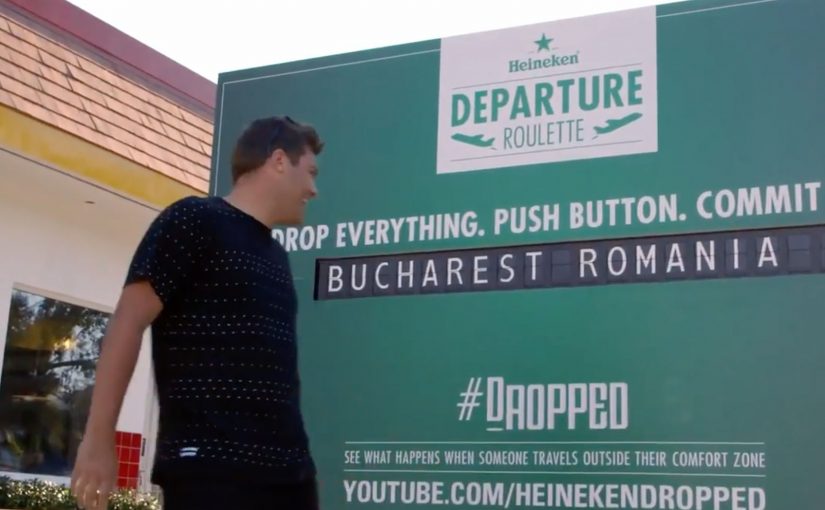
Heineken spots the tweets. Then they make them real. People watch the original Departure Roulette stunt and post the inevitable line on Twitter: “I’d press the button.” Heineken takes that public intent seriously. They track down a few of the people who tweet about wanting to play. Then they offer them the chance to play Departure Roulette on the spot. Real time, real commitment, no rehearsal.

If you want the backstory first, the original Departure Roulette activation sets the frame: a physical roulette board at JFK Terminal 8. One red button. Press it and you accept a new destination immediately. Read about the original here.

What “En Route” gets right: it turns social intent into action

The smartest part of this follow-up is not the surprise. It is the mechanism. Heineken treats social conversation as a live signal of willingness, not just commentary. Here, “social intent” means an explicit public statement like “I’d press the button,” not passive engagement. By acting on that signal fast enough to feel connected, the brand turns curiosity into a credible story of commitment.

Extractable takeaway: When people declare intent in public, treat it as an opt-in trigger. Respond fast with a real commitment moment, and make the decision itself the content.

The real question is whether you can turn “I’d do that” intent into a real commitment fast enough to feel causal, while keeping consent and safety airtight.

If you cannot deliver the commitment reliably in real time, you should not run this pattern.

It rewards declared intent in public

A tweet is a lightweight commitment. Heineken upgrades it into a real decision. The gap between “I would” and “I did” becomes the content.

It closes the loop from earned media to owned experience

The original stunt earns attention. The follow-up re-enters the stream where that attention lives. Social becomes a trigger for a real-world activation, not just a distribution channel.

It stays consistent with the campaign’s core promise

Departure Roulette is about spontaneity and courage. The follow-up keeps the same proposition, just delivered to a different moment and audience.

In global consumer brands running real-time social and experience programs, the advantage comes from turning explicit public intent into a safe, opt-in moment of commitment.

What to measure beyond views

  • Intent volume. How many people explicitly say they would do it.
  • Conversion rate. Percentage of selected participants who actually commit when approached.
  • Time-to-response. How quickly you move from trigger to activation.
  • Amplification quality. Replies and quote-posts that debate “would you do it,” not just “nice video.”
  • Brand linkage. Whether the audience repeats the core idea (spontaneity, adventure), not just the prank.

Risks and guardrails that matter

  • Consent and privacy. Do not approach people in a way that feels extractive. Keep it clearly opt-in.
  • Safety and duty of care. High-stakes travel stunts need hard boundaries, support, and contingencies.
  • Credibility. The offer must be unquestionably real, or the story collapses into suspicion.
  • Operational readiness. The logistics are the product. If ops fail, the story turns.

How to reuse this pattern without copying the stunt

  1. Define the “press the button” moment. Pick one unmistakable action that proves intent.
  2. Listen for explicit triggers, not vague sentiment. Look for “I would,” “I want,” or “If you did this I’d…” rather than likes alone.
  3. Respond fast enough that it feels connected. If the follow-up arrives too late, it reads like a promotion, not a story.
  4. Make the commitment real, but safe. Build constraints on timing, eligibility, logistics, and consent.
  5. Capture the decision, not just the reward. The moment of choice is the asset. The prize is the justification.

A few fast answers before you act

What is Departure Roulette En Route in one line?

It is a social-powered follow-up where Heineken turns “I’d press the button” tweets into a real-world chance to do exactly that.

Why does it spread?

Because it stages a high-stakes, relatable decision in public: keep your plan, or choose the unknown.

What is the reusable strategy?

Treat public intent as a trigger for action. Then deliver a real experience that proves the brand promise.

What is the minimum viable version for a brand without travel budgets?

Reward declared intent with an immediate upgrade: surprise access, exclusive drop, instant appointment, or fast-track service.

Where does this go wrong fastest?

When it feels like surveillance, or when the logistics do not deliver on the promise.

Cornetto: Love Plane

Cornetto: Love Plane

A couple tweets a love message with a hashtag, and a few minutes later it appears on a banner flying over the beach. Cornetto’s Love Plane turns summer flirting into public media, with the sky as the timeline.

A Twitter feed you can read in the air

Summer is the season of crazy, unexplainable romances. Cornetto launches the Love Plane in Spain and attaches a Twitter-based banner feed to it.

The mechanism: hashtag in, banner out

People who want to declare their love both online and in the sky tweet using the hashtag #cornettoskytweet. The most popular tweets are then painted on the banner and flown over the beach. To keep things moving, the banner creative is changed every 15 minutes.

In European FMCG summer activations, a simple real-time mechanic can turn social posting into a shared public moment that people notice even if they are not online.

Why this lands

This works because it upgrades a small, personal gesture into something you cannot ignore. A tweet becomes physical, scarce, and time-bound, which raises the perceived stakes and makes participation feel like a mini event rather than just another post.

Extractable takeaway: If you want social participation at scale, convert digital inputs into a visible, time-boxed output in the real world, so the reward is public and immediate, not buried in a feed.

What Cornetto is really doing

Cornetto is smart to make participation public instead of leaving the interaction inside Twitter. The brand is borrowing the emotional energy of summer romance and using it to create a repeatable content loop. By a repeatable content loop, this means each new tweet can create another visible banner moment and another round of attention.

The real question is how a brand turns disposable social chatter into a public moment people want to trigger and watch.

People supply messages. The campaign outputs spectacle. Onlookers become an audience. Participants become distributors.

What summer activation teams should steal

  • Make the reward unmistakably public. Participation feels bigger when others can witness it.
  • Use a simple popularity rule. “Most popular tweets win” is easy to understand and easy to compete in.
  • Keep the cadence fast. Refreshing every 15 minutes creates urgency and repeat attention.
  • Match channel to emotion. Romance works when the output feels bold, not subtle.

A few fast answers before you act

What is the Cornetto Love Plane?

It is a plane flying over beaches with a banner that displays selected tweets, turning social posts into a public sky message.

How do people participate?

They tweet a message using the hashtag #cornettoskytweet. The most popular tweets are selected to appear on the banner.

Why change the banner every 15 minutes?

Frequent updates create urgency and make the activation feel live, which encourages repeated participation and attention.

What does this communicate about the brand?

That Cornetto “owns” summer romance moments, and that the brand can turn small gestures into shared experiences.

What is the main operational risk with this idea?

Moderation and logistics. You need tight filtering for messages, plus reliable production timing so the “real-time” promise holds.

Lexus Trace Your Road: life-sized racing game

Lexus Trace Your Road: life-sized racing game

To promote its new high-performance hybrid car, Lexus, together with Saatchi & Saatchi Italy, creates “Trace Your Road”, an experiential event featuring Formula 1 driver Jarno Trulli.

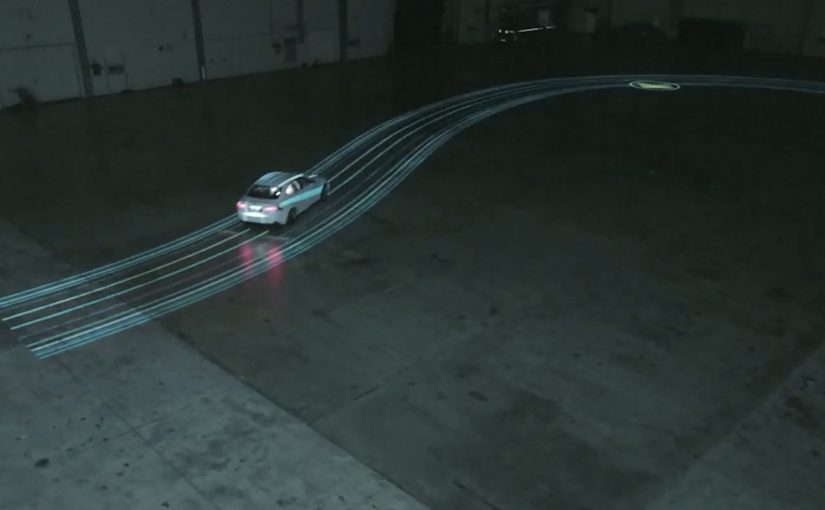
Ten Lexus fans are selected from hundreds of applicants on Lexus’ Facebook page. Each winner rides in the passenger seat of the hybrid while Trulli drives, and the passenger “draws” the course on an iPad. That path is projected onto the floor of an aircraft hangar using special projectors, while a custom high-resolution infrared (IR) camera system tracks the car’s position in real time.

How the experience works

The format is a life-sized driving game with the audience literally designing the track. The event flow is built around three moving parts.

  • Live track creation. The passenger traces a route on the iPad, creating spontaneous turns, straights, and corners.
  • Real-world projection. The route appears at scale on the hangar floor, so the “racetrack” becomes a physical space.
  • Real-time tracking. An IR camera system follows the car so penalties and scoring can be applied accurately.

What makes it competitive, not just cinematic

Trulli’s driving is put to the test as he attempts to follow the improvised paths at speed. Penalty points are given when the car goes outside the projected route or touches the hangar walls. The goal is to hit seven selected touch points in the quickest time, and the fan with the best score wins.

In automotive launches and premium brand marketing, turning a test drive into a participatory game makes performance feel experienced, not explained.

The real question is whether your launch makes the product truth the win condition, not just the headline.

Why it lands: performance becomes legible

Hybrid performance can be hard to dramatize without slipping into numbers. Because the passenger-designed route and visible penalty rules force precision, control and handling become legible without a spec sheet, while the story stays human through the passenger’s real-time choices and Trulli’s visible skill.

Extractable takeaway: When you can turn a product claim into a rule set with visible penalties, the audience understands it instantly and the content becomes inherently shareable.

What Lexus proves with “Trace Your Road”

The brand is not only saying “this car performs”. It is staging a situation where performance is the only way to succeed. This is a stronger way to market performance than listing specs, because it forces the car to prove itself under constraints. The experience also rewards participation: winners influence the outcome, spectators understand the rules instantly, and the filmed content has a clear narrative arc.

Make the claim playable: launch moves worth copying

  • Let the audience shape the challenge. When participants create the rules in real time, attention spikes because outcomes are unpredictable.
  • Translate product claims into constraints. Handling, control, and precision become visible when the environment punishes mistakes.
  • Build a scoring model people can explain. Simple penalties and a clear finish condition make the story travel.
  • Use tech as infrastructure, not the headline. Projection and tracking matter most when they disappear into the experience.

A few fast answers before you act

What is Lexus “Trace Your Road”?

It is an experiential event where a passenger draws a racetrack on a tablet and the route is projected onto a hangar floor, while Jarno Trulli drives a Lexus hybrid along that path in real time.

How is the racetrack created and shown?

The passenger traces the course on an iPad, and the design is projected at scale onto the floor using multiple projectors so the track becomes a physical space to drive in.

How does the system know if the car stayed on the route?

A custom high-resolution IR camera tracking system monitors the car’s position against the projected route so penalties can be applied when it leaves the path.

What makes this more than a one-off stunt?

The format produces repeatable rounds, clear scoring, and a strong spectator story, which makes it easy to capture as a campaign film and behind-the-scenes content.

What is the main lesson for experience design?

Make the product truth the win condition. When success requires the product’s strengths, the message feels demonstrated rather than claimed.