
Lupine: The Brightest Online Ad

A magazine you can only read in the dark

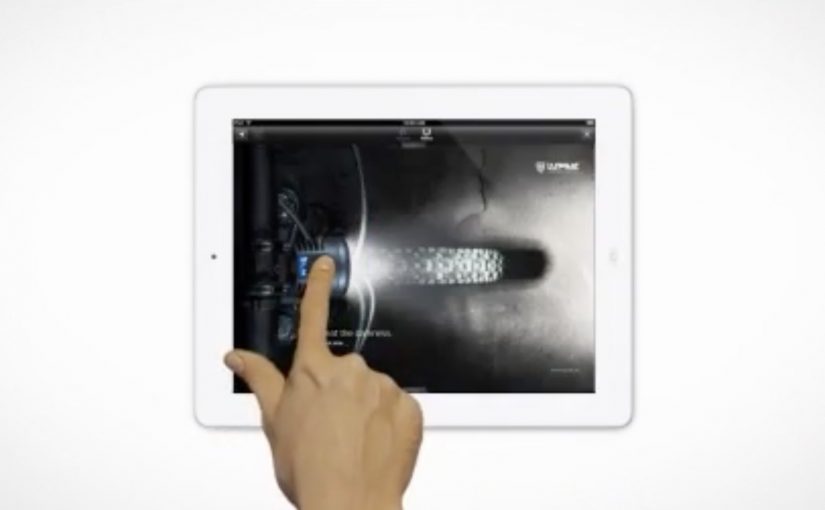
Publicis Germany created a cross-promotion for Lupine’s bike lighting system with BIKE Online Magazine that turns product use into the gatekeeper of content.

Subscribers could only read the magazine if they switched on a Lupine bike lamp. That simple constraint forces 100% attention onto the lamp because it is literally the way into the content. When readers shared the idea on social networks, their post distributed a link to a sneak preview where the lamp “illuminated” only a small part of the magazine. To read the full issue, users were prompted to order a trial subscription.

Click here to watch the video on the AdsSpot website.

The mechanic that makes it work

This is a clean attention trade. You get the content, but only if you demonstrate the product’s purpose in the moment you want to consume it. The campaign combines a physical trigger (the lamp) with a digital reward (magazine access), then uses sharing to distribute a constrained teaser that naturally pushes people toward the trial subscription step.

In enthusiast categories, tying media access to product behavior is a reliable way to turn curiosity into a demonstration people complete without being asked twice.

Why it lands

It does not ask you to “notice” a product. It makes the product the condition for progress. That flips advertising from interruption to utility, and it also reframes the lamp from a spec-sheet item into a felt experience: bright enough to read, controllable enough to focus, and instantly associated with the moment cyclists actually need light.

Extractable takeaway: When a product’s value is experiential, build a rule that forces the audience to experience it in context, then let sharing distribute a teaser that proves the rule rather than describing it.

What Lupine is buying with the stunt

The immediate goal is obvious: attention and trial subscriptions. The deeper goal is mental availability. The real question is how to make product use inseparable from the value people already want. Once “light equals access” is planted, the lamp is no longer a commodity accessory. It becomes the enabler of something people already value, and that is a stronger buying cue than another brightness claim.

The execution is also the kind of idea awards juries like because the medium and the message are welded together. It is listed with awards recognition including Cannes Lions Mobile Lions Bronze (2013) and The One Show Interactive Merit (2014).

What to borrow from Lupine’s access rule

  • Make the product the permission slip. If you can gate a valued experience with the product’s real function, you remove the need for persuasion copy.
  • Ship a “teaser mode” for sharing. Constrain the preview so it demonstrates the idea, then let curiosity do the rest.
  • Pick a partner with built-in habit. BIKE readers already have a reason to open the magazine. Your job is to attach your product to that routine.
  • Keep the conversion step aligned. Trial subscription is consistent with “try it to unlock it.” Anything more complex would break the spell.

A few fast answers before you act

What is “The Brightest Online Ad” for Lupine?

It is a cross-promotion with BIKE Online Magazine where the magazine is only readable when a Lupine bike lamp is switched on, turning product use into the mechanism for accessing content.

Why does “lamp-gated reading” create 100% attention?

Because the lamp is not adjacent to the content. It is the condition for seeing it. The user must interact with the product to continue.

What role does social sharing play in the concept?

Sharing distributes a constrained preview that demonstrates the idea while withholding the full experience, which naturally pushes interested people toward the trial subscription prompt.

What’s the transferable principle for other brands?

When your product’s value is best understood through use, make it the enabler of something the audience already wants, and let the enabling action become the message.

What would be the common failure mode of copying this?

Gating something people do not care about, or adding friction that feels punitive. The gate must feel like a fair trade, not a trap.

IKEA Klippbok

IKEA Australia wanted to create a utility that IKEA customers could regularly use to help inspire them in their home. So they created an iPad app called Klippbok (Swedish for “scrapbook”) that gave users access to IKEA products all year round. With easy-to-use design functionality, users were able to mix and match IKEA products and create collages, swatchbooks (material and color sample sets), roomsets (simple room mockups) and more.

Making inspiration feel hands-on, not aspirational

The mechanism is straightforward. You drag IKEA products into a blank canvas, experiment with combinations, and build a visual “plan” you can refine over time. It takes the part people enjoy most in-store, imagining how it could look at home, and makes it repeatable on a device. Because the output is something you can revisit and refine, the interaction is more likely to earn repeat use.

In retail marketing, the strongest “always-on” utilities are the ones that turn browsing into making.

By “always-on utility”, I mean a tool customers can use between campaigns, not a one-off catalogue drop.

Why the scrapbook metaphor is the right UX

Calling it a scrapbook is not just a name. It sets expectations. This is playful, remixable, and personal. That framing lowers the pressure of “designing a room” and replaces it with “trying ideas”, which is a much easier behavior to sustain. This framing choice is the right move when the goal is repeatable inspiration, not a single perfect plan.

Extractable takeaway: If your tool makes “show someone” the natural next step, build sharing into the flow, because that social loop turns a private utility into a brand platform.

Business intent: stay present between store visits

Klippbok’s real job is frequency. Instead of only showing up when a catalogue drops or when someone is already planning a store run, the app gives IKEA a year-round touchpoint that keeps products in consideration while customers are still forming preferences.

The real question is whether your utility gives customers a reason to return when they are not yet in buy mode.

Reported outcomes and craft credits

The app was created by The Monkeys and built by Nomad. In industry reporting around the work, Klippbok is credited with roughly 53,000 downloads across 100+ countries and reaching number two in the Australian iTunes Lifestyle category.

What to steal if you want customers to return regularly

  • Turn your range into a creative system. Let people assemble, not just browse.
  • Design for quick wins. Fast collages beat perfect room planners for repeat usage.
  • Make sharing a native next step. If “show someone” is easy, your users do your distribution.
  • Build for year-round relevance. Inspiration tools age better than campaign landing pages.

A few fast answers before you act

What is Klippbok, in plain terms?

Klippbok is an IKEA iPad app that lets people create mood boards, collages, swatchbooks, and roomsets using IKEA products, so they can plan and experiment with home ideas.

Why does an inspiration app matter for a retailer like IKEA?

Because the purchase journey is rarely one session. If you can keep customers playing with ideas between store visits, you stay in the consideration set longer and influence what ends up on the shopping list.

What is the key mechanism that drives engagement?

Drag-and-drop creation. The user is making something of their own, not consuming content, which increases time spent and makes sharing more likely.

What is the biggest mistake with “catalogue as app” launches?

Copying print into a screen. The app has to behave like a tool, not a PDF, or it will not earn repeat use.

How do you measure whether an inspiration app is working?

Return frequency, creation rate, share rate, and the percentage of users who save or revisit projects. If you can connect it, track downstream indicators like store visits or product adds-to-list after app sessions.

AR in 2013: Three Retail-Ready Examples

Augmented Reality in 2013: when the real world becomes the interface

With smartphones and tablets becoming part of our everyday life, we also see more augmented reality apps mixing the virtual and the real world in 2013. Here are some examples from ARworks that recently caught my eye.

Audi Singapore Showroom app

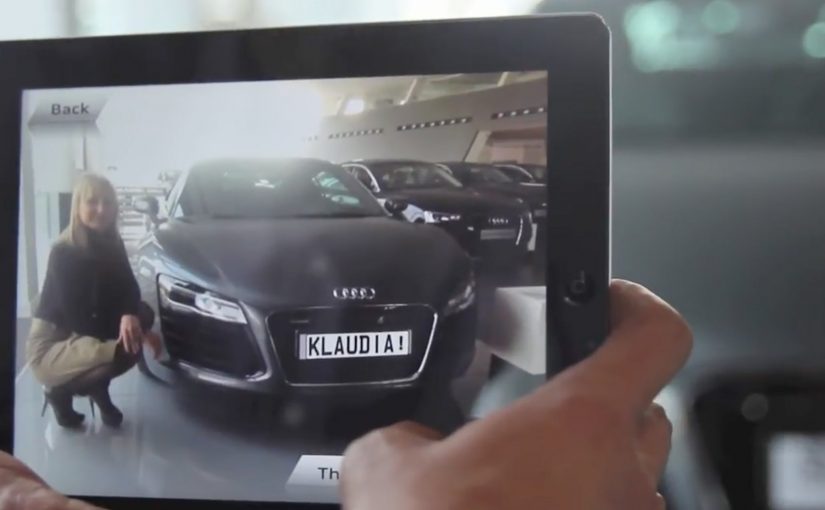
For the opening of their biggest showroom in South-East Asia, Audi created AR experiences that allowed visitors to fly around the showroom building without actually boarding a plane, or drive the Audi R18 race car around Singapore at full speed without the risk of getting a ticket. What’s more, they even allowed visitors to personalize their individual license plates and then take photos with the car.

Dakar race in a shopping mall

A real Dakar desert racecourse was built for the new Opel Mokka on a 4mtrs long table that was placed in a shopping mall. Visitors could use the provided iPads to race against time and each other. The results were then shared on Facebook, and the weekly and overall winners received various prizes.

Christmas Ornament Sling

Deutsche Telekom, for their Christmas promotion, developed an iPad app where visitors could throw virtual Christmas ornaments containing their personal message onto a huge Christmas tree erected in a mall. A successful hit to one of the real ornaments on the tree lit it up through an integrated server application.

The pattern across all three: AR turns “watching” into doing

None of these examples treat AR as a gimmick. Each one uses the device as a bridge between curiosity and action. You explore a building. You race a course. You aim a message at a real tree. The screen stops being a place to consume. It becomes a tool to participate.

In retail and shopper environments, augmented reality works best when it turns a physical setup into a simple, repeatable action loop for the visitor.

The real question is whether your AR layer gives the visitor a simple verb and a payoff worth repeating.

Why retail is the natural habitat for AR

Retail already has the ingredients. Footfall, dwell time, and physical objects that can anchor the experience. AR simply adds a layer of viewer control. The visitor decides where to look, what to try, and what to share. This works because the physical anchor keeps the choice set small, so the device can turn curiosity into a low-friction action with an immediate outcome.

Extractable takeaway: AR earns its keep when the physical setup stays simple and the device turns it into a repeatable action that produces a visible outcome worth sharing.

What’s really being built here

These are not “apps.” They are engagement machines, meaning they turn a physical setup into an interaction loop with a reward and an easy share path. Each one creates a clear reason to interact, a clear reward for completing the action, and a clear path to share or repeat. That is how you turn novelty into behavior.

Four retail-ready AR mechanics to copy

  • Anchor it physically. Anchor the experience to a physical object people can gather around. A showroom, a tabletop course, a tree.
  • Give the visitor a simple verb. Fly, drive, race, sling. Actions beat features.
  • Design a tangible payoff. A photo, a score, a lit ornament. Make the outcome tangible.
  • Make sharing a by-product. Make sharing a natural by-product of the activity, not a forced button at the end.

A few fast answers before you act

What makes these 2013 AR examples feel “ready” for real audiences?

They are built around clear actions and clear rewards. The device is used to do something in the physical environment, not just view an overlay.

Which devices are central to these activations?

Tablets and phones are the delivery mechanism. The examples explicitly reference iPads and handheld devices for the AR interaction.

What role does sharing play in these concepts?

Sharing is tied to the activity. Photos with the car, results shared on Facebook, and personal messages sent as virtual ornaments.

What is the common mechanic across the three examples?

The camera-enabled device acts like a controller that links a real-world setup to a virtual experience, giving the viewer control over exploration and interaction.

How do you keep AR from feeling like a gimmick?

Make the overlay serve a real action and a visible outcome. If the visitor can do something concrete and see a result that is worth showing, the experience stops being novelty and starts being behavior.