
SAS: Up for Grabs on Facebook

To promote a million-seat fare sale, Scandinavian Airlines (SAS) and Crispin Porter + Bogusky Stockholm ran a Facebook competition where fans could “grab” a free trip. The ask was visual and dead simple, and it turned participation into the media.

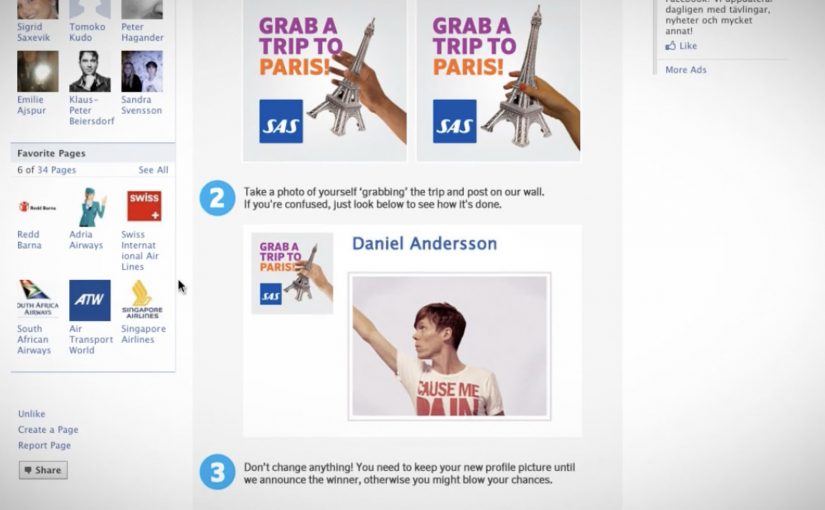
Fans changed their profile picture into a custom “Up For Grabs” image, then posted a matching photo on the SAS Facebook wall where they physically “grabbed” the trip. Every entry looked like an ad, and every ad looked like a friend.

The mechanic that turns fans into distribution

The campaign’s mechanism was a two-step loop. First, replace your profile image with a branded frame that signals you are “in”. Second, publish a playful photo on the brand wall that demonstrates the concept, grabbing the prize. That wall then becomes a live gallery of social proof, with each new post re-selling the fare sale in a more human way than a banner ever could.

In airline marketing, promotions that convert participation into shareable images can outperform price-only fare announcements.

Why it lands

It turns an abstract offer into a physical gesture. “Grab a trip” becomes something you can perform, photograph, and show. The profile-picture switch is a light commitment that broadcasts intent, and the wall post is a public performance that invites imitation. The momentum comes from visibility, because the more entries you see, the more “normal” it feels to join.

Extractable takeaway: When you need scale fast, design one participation artifact that doubles as an ad unit, and make the action easy enough that people will copy it without instructions.

What the shutdown reveals about the strategy

The campaign was reportedly against Facebook promotion terms, and it was shut down. That ending is part of the story, because it highlights the tightrope of social-first promotions. The creative is built on a behavior Facebook historically restricts for contest entry, asking people to publish specific content as a condition of participation, even if the idea is clever and the buzz is real.

The real question is whether the participation mechanic can spread the offer without depending on a platform behavior that can be switched off overnight.

The stronger strategic read is that the creative idea is right, but the distribution mechanic is too dependent on borrowed platform rules.

What to steal for your own launch

  • Make the entry format the message. If the entry itself demonstrates the offer, you get free repetition of the proposition.
  • Use a low-friction first step. Profile-picture frames and templates work because they are fast and socially legible.
  • Design a single visual trope. “Grabbing” is a trope anyone can reproduce, and that consistency creates a recognizable feed.
  • Build compliance in from day one. If the mechanic depends on prohibited platform behaviors, plan a compliant alternative before launch.

A few fast answers before you act

What is the core idea of Up for Grabs?

A Facebook contest where fans change their profile picture to a branded frame and post a “grabbing the trip” photo on the SAS wall to compete for a free flight.

Why does the profile-picture step matter?

It turns participation into persistent visibility. The frame signals “I am in”, and it spreads through everyday browsing without requiring an additional media buy.

What made the campaign travel beyond the SAS page?

Each entry was both participation and promotion. When fans changed their profile picture and posted a matching photo, the fare sale moved into personal networks instead of staying inside brand media.

Why was it shut down?

It was reportedly closed for violating Facebook promotion rules by conditioning entry on specific platform actions, such as posting photos on the wall.

How do you keep the upside without the platform risk?

Keep the visual template and the “grab” trope, but move the submission mechanic to a compliant entry flow, then allow optional sharing that is not required to participate.
Spanair: Unexpected Luggage

On December 24th the flight from Barcelona to Las Palmas arrived close to midnight. 190 people were flying while everyone else celebrated Christmas Eve. Spanair decided to do something special for those 190 passengers.

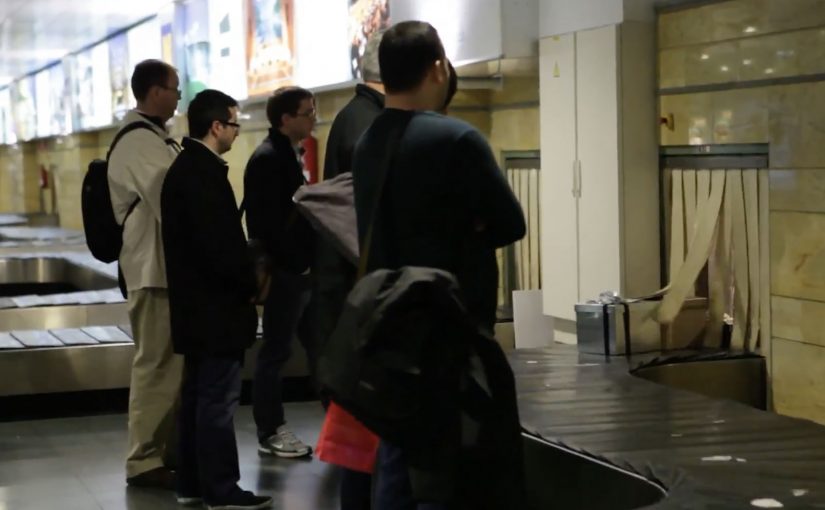
Instead of a routine wait at baggage claim, the luggage carousel delivered an unexpected sight. Wrapped gifts came down the belt before the suitcases did, turning a tired, end-of-day moment into a shared surprise.

How the baggage-claim surprise is engineered

The mechanic is as physical as it gets. Move the brand moment to the one place every passenger must stand still. Then use the carousel as the reveal device, with gifts replacing the expected flow of bags long enough for the crowd to realize something has changed.

In European airline marketing, the most memorable “service stories” are often built from small interventions in unavoidable touchpoints, where emotion is already high and attention is captive.

Why it lands

It respects the situation. Christmas Eve travel is already loaded with absence, fatigue, and sacrifice. The surprise works because it does not ask passengers to do anything new. It simply changes what the moment means, and it does so in front of everyone, so the reaction becomes collective rather than private.

Extractable takeaway: If you want a brand moment to feel generous rather than promotional, place it inside an unavoidable friction point, and make the reveal about relief and recognition, not about brand messaging.

What Spanair is really buying

This is “customer experience” as media. The spend is focused on a small number of people, but the output is a story that travels because it is easy to retell and easy to believe. A luggage belt of gifts is visual proof, not a claim.

The real question is how to turn a routine service touchpoint into proof that people will remember and retell.

What to steal for your own service brand

  • Use captive moments. Baggage claim, check-in lines, boarding queues, and waiting rooms are attention-rich environments.
  • Let the environment do the talking. When the space changes, you do not need much copy.
  • Design for group emotion. Collective reactions create social permission to film, share, and talk.
  • Make the proof unmistakable. If the story can be doubted, it will not travel far.

A few fast answers before you act

What is the core idea of Unexpected Luggage?

Surprise passengers at baggage claim by swapping the expected luggage moment for a gift reveal, turning a routine wait into a shared holiday experience.

Why does baggage claim work so well as a stage?

Everyone must be there, everyone is watching the same thing, and the carousel is already a natural reveal device. That makes the surprise instantly legible.

What makes this feel authentic instead of gimmicky?

The gesture fits the context. It acknowledges what it means to travel on Christmas Eve and gives something back without requiring participation or performance from passengers.

What is the biggest risk when copying this approach?

If operations are not tight, the surprise turns into delay and frustration. The moment must feel like relief, not disruption.

Does this only work for airlines?

No. The same pattern can work in any service setting with a captive, shared wait, as long as the intervention fits the moment and does not create extra friction.

KLM: Suitcase Art Project

How do you communicate attractive prices when people are bored of tactical campaigns and ignore yet another “deal” message? KLM answers that by making the price story behave like culture instead of advertising.

Turning fares into a city-wide art moment

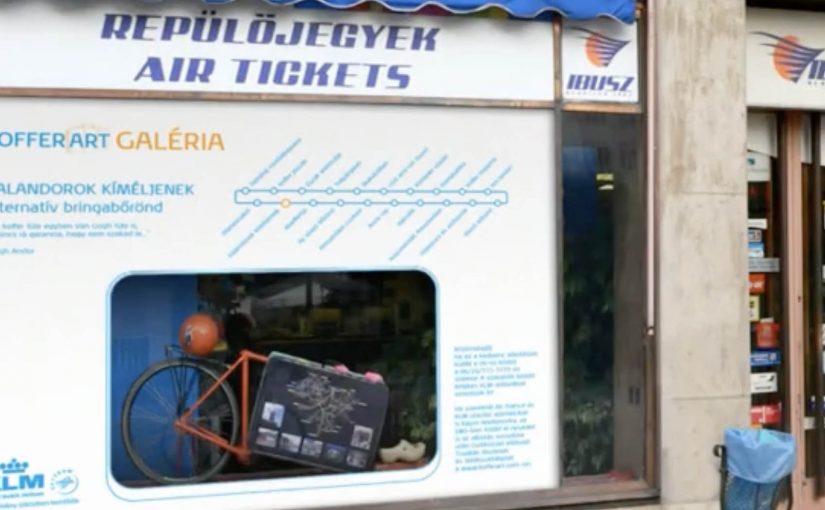
KLM and Leo Burnett Budapest invite Hungary’s most talented young artists to create artworks inspired by KLM destinations, then place those works around the city so the environment itself becomes an urban gallery. The result is described as a tactical campaign that people treat like an event.

The mechanism: destination inspiration, public display, social talk value

Mechanically, the work shifts “price communication” into a set of visual anchors that are easier to notice, photograph, and discuss than conventional fare banners. Instead of asking audiences to care about numbers first, it earns attention through craft, then lets the brand and destinations ride that attention. Because the visual anchors are built to be noticed and shared, the offer benefits from social talk value instead of competing for banner attention.

In European travel marketing, reframing a tactical offer as a public experience can restore attention without changing the offer itself.

Why it breaks through when tactical work gets ignored

Most price-led creative competes in the same visual language: small type, disclaimers, urgency cues. Art flips the hierarchy. It gives people a reason to stop that is not the price, then makes the price message feel like a discovery rather than an interruption. This is a stronger play than trying to out-urgency every other fare banner.

Extractable takeaway: When your message is tactical by nature, earn the first second with something people would choose to notice, then let the offer land as the payoff.

What KLM is really buying

The business intent is not only incremental ticket consideration. It is mental availability. By mental availability, I mean being the brand that comes to mind in a destination or booking moment without needing a hard sell. KLM shows up as a brand that puts something into the city, not just a brand that takes attention out of it. That association can make the next tactical message feel less disposable.

The real question is whether your next “deal” message can earn attention before it asks for action.

Steal this when deal messages get ignored

  • Wrap the tactical truth in a non-tactical container. Put the deal inside a format people would choose to engage with.
  • Design for public visibility. If it looks good in the street, it travels further online with less paid support.
  • Use craft to earn the first second. Attention is the gate. Price can come second.
  • Make the brand additive. The activation should feel like it contributes to the audience’s day, not like it interrupts it.

A few fast answers before you act

What is the Suitcase Art Project in one line?

A fare communication idea that uses destination-inspired artworks displayed across the city, turning a tactical message into a cultural moment people want to notice and share.

What problem is it solving for KLM?

Banner blindness and fatigue around price-led messaging. It creates attention through art first, then lets the offer benefit from that attention.

Why does “art in public space” help price communication?

Because it changes the viewer’s mindset from “being sold to” into “discovering something”. That shift makes the message more memorable and less ignorable.

What is the most transferable principle?

If your message is inherently tactical, change the format and context so people approach it with curiosity instead of resistance.

What can you do if you cannot run a city-wide activation?

Use the same pattern at a smaller scale. Create one distinctive artifact people would still choose to photograph or share, then let the offer ride the attention that artifact earns.