
The future of Augmented Reality

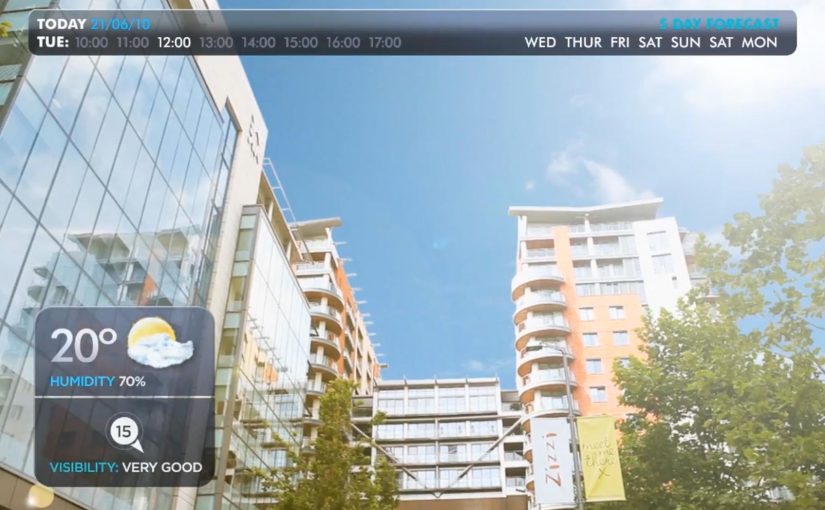
You point your phone at the world and it answers back. In Hidden Creative’s video, a mobile device scans what’s around you and returns live, on-the-spot information. The same AR layer lets you preview change before you commit to it, by virtually rearranging furniture or trying colours in a real space.

Utility AR: the phone becomes a real-time lens

The value is not “wow.” It is utility. The device behaves like a real-time lens you can use in the middle of a decision:

  • Scan surroundings and get contextual information immediately.
  • Overlay objects into physical space to plan renovations or layout changes.
  • Configure colours virtually before making real-world changes.

What the mechanic actually is

At its simplest, the camera feed becomes the interface. The device recognises elements in the scene, then anchors relevant information and virtual objects to the real world so you can act on what you see. When overlays reliably “stick” to reality, the experience stops feeling like a gimmick and starts behaving like a tool you can trust.

In consumer retail and home-improvement scenarios, AR becomes habitual only when it works predictably across devices and requires near-zero setup beyond opening the camera.

Why this kind of AR lands

People do not adopt AR because it is impressive. They adopt it when it reduces uncertainty in a moment that matters, like “Will this fit?”, “Will this look right?”, or “What is this thing in front of me?”. Campaign AR often optimises for novelty. Everyday AR has to optimise for reliability, speed, and repeatability.

Extractable takeaway: If AR does not reduce a real decision into a faster yes or no, it will stay a one-off experience, even if engagement looks great in the first week.

The real question is standardisation, not creativity

Augmented Reality is already active in brand campaigns around the world, mainly because it creates high engagement and talk value. Yet it still does not play an everyday role in most people’s lives because the experience is fragmented across ecosystems.

Before daily-life AR becomes normal, platform owners and developers need to standardise the experience across their ecosystems. Apple, Google, and Microsoft/Nokia each move in their own direction, and the result is fragmentation.

By “a standard AR experience,” I mean a consistent base layer for recognition, anchoring, lighting, scale, and interaction patterns so users do not have to relearn AR every time they switch apps or devices.

One master app vs. an app store full of one-offs

Right now the app stores are cluttered with many Augmented Reality apps, each doing a slice of the job. One cross-platform “master app,” or at least a consistent base layer, is a plausible starting point for making AR feel like an always-available capability instead of a novelty download.

The stance: AR becomes mainstream when it is treated like a standard capability layer, not a series of isolated one-off apps.

What to steal for your next AR decision

  • Design for repeat use. Pick a high-frequency decision moment, not a “shareable” moment.
  • Reduce setup friction. If the experience needs a special download for a single task, adoption will stall.
  • Make reliability visible. Use cues that show tracking and anchoring are stable so users trust what they see.
  • Define the base layer you depend on. Be explicit about which platform capabilities you require and what breaks without them.

A few fast answers before you act

What does the Hidden Creative video demonstrate?

It shows a phone scanning a real environment, returning contextual information in real time, and overlaying virtual objects into the scene for practical tasks like planning and previewing changes.

What is the core AR mechanic described here?

The camera feed becomes the interface. The device recognises the scene and anchors information or objects to it so the overlay stays aligned with the real world while you move.

Why does AR still feel like a campaign tool in most cases?

Because many AR experiences optimise for novelty and short-term engagement, not for reliability and repeat use. Fragmentation across platforms also prevents a consistent everyday habit.

What does “a standard AR experience” mean in practice?

It means consistent behaviour across devices and apps for recognition, anchoring, scale, lighting, and interaction patterns so users do not have to relearn AR each time.

What is meant by a “base layer” or “master app” for AR?

A shared foundation that reduces fragmentation. Instead of dozens of one-off AR apps, users get a consistent AR capability that multiple experiences can plug into.

What is the simplest next step if a brand team wants AR to drive real adoption?

Target one repeatable decision moment and design the experience to work quickly and predictably with minimal setup. If it does not reduce uncertainty, it will not become a habit.
Disney Appmates. The next toy revolution

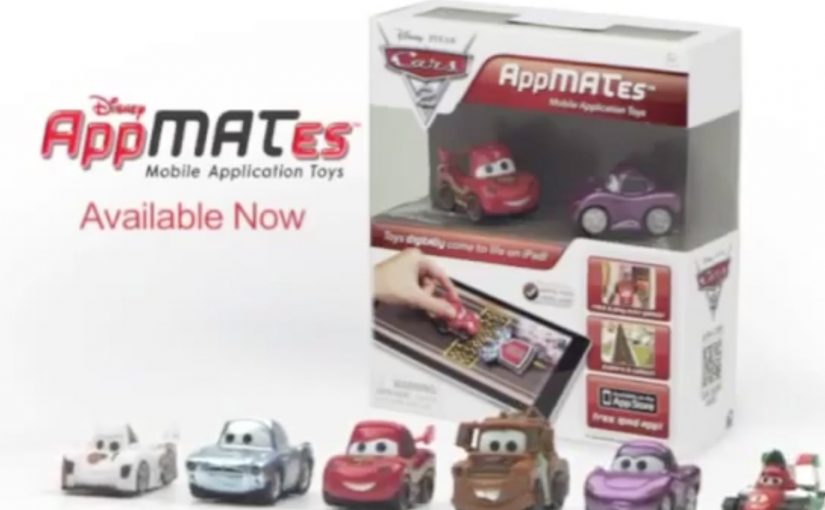
Disney recently announced a new line of toys called Disney Appmates. These new toys and the iPad work in tandem to create a very new age play experience. Featuring the likenesses of characters from Cars 2, the Appmates are miniature figures with special sensors mounted on the bottom. The sensors work with the Cars 2 Appmates app to identify each figure when put against the iPad screen.

The Apple and Disney Stores will start selling Lightning McQueen, Tow Mater, Finn McMissile, and Holley Shiftwell in October. Francesco Bernoulli and Shu Todoroki will be launched in November and will be made available exclusively through the Apple Store.

What is actually new here

The interesting shift is not “toys plus an app.” It is the iPad becoming part of the physical play space. The figure is not only a character. It becomes an input. Place it on the screen, and the app recognizes it and reacts. That is a different play loop than tapping icons, or watching a video, or playing a standalone game. Here, play loop means the repeated sequence of placing a figure, getting a reaction, and continuing the experience through the object itself. That works because turning the toy into the input collapses the gap between physical play and digital response, which makes the interaction feel immediate and intuitive.

In kids’ entertainment and licensed merchandise, the scalable opportunity is not a one-off app but a repeatable toy-to-screen system that sells both characters and ongoing play.

Why this lands beyond novelty

This is an early but strategically important shift from screen play to object-based interaction. The real question is whether the screen stays the destination, or becomes the stage for a physical product system that can expand one character at a time.

Extractable takeaway: When the physical object becomes the interface, each new character can work as both merchandise and feature unlock, which makes the product line easier to extend without rebuilding the core experience.

Why the Cars 2 character lineup matters

The character list makes the product strategy visible. Lightning McQueen, Tow Mater, Finn McMissile, and Holley Shiftwell anchor the launch. Francesco Bernoulli and Shu Todoroki extend the line later. The Apple Store exclusive adds a distribution edge for a toy that is, by definition, tied to an iPad experience. It is a simple way to turn character collecting into repeat purchases inside the same iPad-led system.

What to steal for toy-to-screen experiences

  • Make the physical object the input device. The figure becomes the controller, not an accessory.
  • Keep identification effortless. Recognition on contact avoids pairing and keeps play fast.
  • Use characters as modular content units. Each figure is a new capability that expands the same base app.
  • Distribute where the audience already buys the ecosystem. Selling via Apple and Disney channels reinforces the iPad-first play pattern.

A few fast answers before you act

What are Disney Appmates?

A line of toys designed to work with an iPad to create a combined physical and digital play experience.

How do the toys interact with the iPad?

The miniature figures have sensors mounted on the bottom, which the app uses to identify each figure when placed on the iPad screen.

Which characters are part of the initial release?

Lightning McQueen, Tow Mater, Finn McMissile, and Holley Shiftwell.

What comes next?

Francesco Bernoulli and Shu Todoroki extend the lineup and are described here as Apple Store exclusives.

What is the transferable pattern?

Use physical objects as modular inputs, so collecting characters expands the experience without changing the core platform.

AR Cinema: London Movie Scenes on iPhone

Turn London into a living movie map

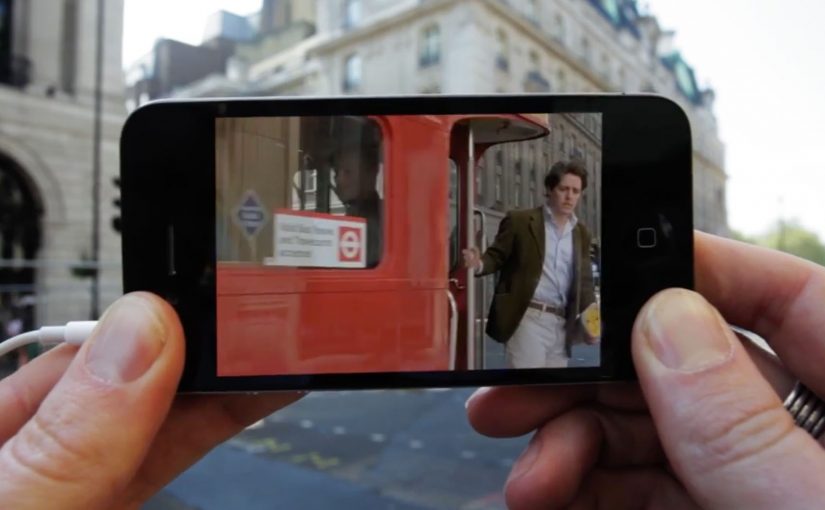
The Augmented Reality Cinema app for the iPhone allows you to walk around London and discover all the places where movies have been shot. Just point your iPhone in the direction of a sweetspot, and get a replay of the movie scene that was shot there. Here, a “sweetspot” is simply a nearby filming-location marker the app points you to.

The app is currently a work in progress prototype. But if and when it does see the light of day, I am sure it will make a great gizmo for all the movie buffs out there.

The magic is not AR. It is time travel

The clever part is the juxtaposition. You stand in the real location. Then you pull the filmed moment back into that exact space. That overlap between “here” and “then” is what makes the concept feel instantly shareable and instantly fun. The AR layer should stay secondary. The scene is the hero.

City exploration experiences land best when they turn real-world wandering into a lightweight mission with an instant payoff.

In European city tourism and cultural discovery, experiences like this work when they reward curiosity without changing how people naturally move.

The real question is whether you can make a place feel different in ten seconds, with one gesture, without breaking the walk.

Why this fits the way people explore cities

It turns wandering into a mission without forcing a route. You move naturally, and the city rewards curiosity with a scene. That is a strong mechanic for tourists and locals alike because it makes discovery feel personal.

Extractable takeaway: If your experience can turn “I am here” into “I was there” with a single action, the user will do the sharing for you.

What this prototype is really aiming for

A new kind of location-based entertainment. Part guided walk, part trivia, part nostalgia. Built around the simplest action. Point. Watch. Move on.

Steal this pattern for AR city walks

  • Real place first. Anchor the experience to real places people already want to visit.
  • One gesture unlocks payoff. Give the user one simple gesture that unlocks the payoff. Point and replay.
  • Use “before vs now” contrast. Use “before vs now” contrast as the hook. It creates emotion without heavy storytelling.

A few fast answers before you act

What does the Augmented Reality Cinema app do?

It lets you walk around London, point your iPhone toward a location “sweetspot,” and replay the movie scene filmed there.

Is the app available?

The post describes it as a work-in-progress prototype.

Who is it for?

Movie buffs and anyone who enjoys exploring film locations while walking the city.

What is the core mechanic?

Location-based discovery paired with an AR replay that overlays a movie scene onto the real place where it was shot.

Why does this feel like “time travel” rather than AR?

Because the payoff is the filmed moment mapped back onto the real location, so you experience “here” and “then” at the same time.