Augmented Reality: Hyperlinking the real world

Augmented Reality: Hyperlinking the real world

A French company called Capturio turns a t-shirt into a business card. You point your phone at what someone is wearing, and the “link” is the fabric itself. No QR code required.

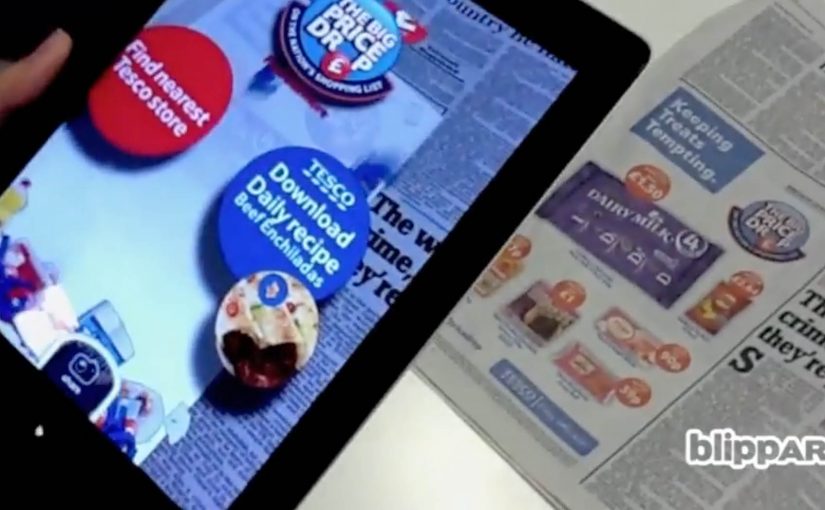
Right after that, Blippar in the UK takes the same idea to printed images. A newspaper page, poster, or pack becomes the trigger. The result is a 3D augmented reality overlay that appears on-screen the moment the image is recognised. Again, no QR code.

From visible codes to recognition triggers

QR codes get put to good use in countless innovative projects. But the drift is towards technology that produces similar results without visible codes. QR codes are not “dead”. Recognition-based triggers win whenever you can control the surface and want the interaction to feel seamless.

How “invisible links” work in practice

Capturio’s concept is simple. The physical object becomes the identifier. A t-shirt behaves like a clickable surface in the real world.

Blippar applies the same pattern to print. Image recognition here means matching what the camera sees to a known reference image so the system can anchor content to that surface.

The interaction is straightforward:

  1. Download a custom app, in this case the Blippar app.
  2. Scan a Blippar-enabled printed image, identifiable by a small Blippar logo, using an iPhone, iPad, or Android device.
  3. Start interacting with the augmented reality 3D overlay on the screen.

In India, Telibrahma uses the same approach to increase experiential engagement for brands via traditional media like newspapers and posters.

In consumer marketing and retail environments, this pattern turns owned surfaces into low-friction entry points for digital experiences.

Why recognition beats visible codes

A visible code is a visual tax. It signals “scan me”, but it also interrupts design and can feel bolted-on. When the surface itself becomes the trigger, the mechanism and the message align. The scan feels like discovery, not compliance. That mechanism is exactly why this pattern tends to spread once teams see it work in the wild.

Extractable takeaway: If you want people to scan, remove the decision point. Make the object itself the identifier, and make the reward immediate.

The bigger idea is not the novelty of 3D overlays. It is that physical surfaces become links. Clothing, posters, newspaper pages, packaging, storefronts. Anything that can be recognised can behave like a gateway to content, commerce, or interaction.

What this unlocks for brands

This is useful when you need a bridge from “attention” to “action” without adding friction. It can turn traditional media into a gateway for:

  • Content. Rich product stories, demos, or tutorials that do not fit on-pack or on-page.
  • Commerce. A route into product detail and purchase flows from packaging or print.
  • Interactivity. Lightweight games, utilities, or experiences that create repeat engagement.

What to steal for your next activation

  • Pick a surface you own. Packaging, print, or wearable assets work best when distribution is in your control.
  • Make the trigger legible. Even without a QR code, users need an affordance like a small mark, instruction, or demo.
  • Design the “first 5 seconds”. Recognition must lead to an immediate payoff, or people will not try twice.
  • Decide what success means. Share, sign-up, repeat use, or store visit. Do not ship without one primary metric.

A few fast answers before you act

What does “hyperlinking the real world” mean here?

It means using image recognition and augmented reality so physical objects like shirts, posters, and print behave like clickable links without QR codes.

Which companies are the concrete examples in this post?

Capturio (France), Blippar (UK), and Telibrahma (India).

How does Blippar work at a high level?

Download the app, scan a Blippar-enabled image marked with a small Blippar logo, then interact with a 3D AR overlay on-screen.

Is this actually “the end” of QR codes?

No. QR codes remain useful. But recognition-based triggers are often preferred when you want the surface to stay clean and the interaction to feel seamless.

What types of media does this apply to?

Newspapers, posters, packaging, and other printed or visual surfaces that can be reliably recognised by a camera.

What should you measure first if you try this?

Start with activation rate, meaning how many people who see the surface actually trigger the experience. Then track the next action, such as shares, sign-ups, or clicks into commerce.
Airwalk: The Invisible Pop-Up Store

Airwalk: The Invisible Pop-Up Store

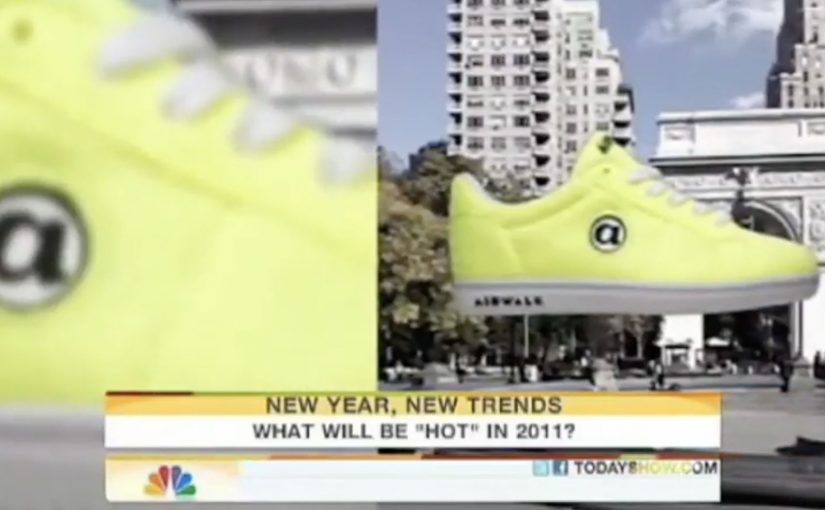
GoldRun and Young & Rubicam have created what is billed as the world’s first invisible pop-up store. Here, “invisible” means the storefront is an AR layer that only appears on a phone at specific GPS coordinates.

Sneakerheads and skaters visit the virtual store at Washington Square Park in NYC and Venice Beach in LA. You show up, look through the phone, and the drop reveals itself.

A pop-up you cannot see until you are there

The mechanism is a location-based AR layer. The product is GPS-linked to specific places, so access is earned by presence, not by refreshing a webshop.

Instead of browsing shelves, people “capture” the virtual sneaker in the app and unlock a purchase path. The retail action is still commerce, but the pre-commerce moment is play.

In youth culture launches where scarcity and scene credibility matter, location-based drops create stronger heat than broad e-commerce blasts.

Why this lands with sneaker culture

This is not just novelty AR. It taps into three instincts that already exist in sneaker communities:

Extractable takeaway: When scarcity is the story, make the constraint experiential (where, when, who) so fans can earn access and retell the effort.

  • Scarcity: limited runs feel meaningful when access is constrained.
  • Proof of effort: being there becomes part of the story and the status.
  • Social retell: the experience is easy to describe and easy to show.

The “invisible store” framing also upgrades the idea from a promo to a cultural moment. It makes the drop feel like an event that happened, not a product that launched.

The business intent under the stunt

Airwalk gets a high-impact relaunch without paying for traditional retail real estate. The brand borrows the authenticity of parks and beaches, then turns those places into distribution.

The real question is whether you can make showing up part of the product value, not just the marketing.

That matters because it makes the product and the environment inseparable. The sneaker is not simply “for” skaters and surfers. It appears where they actually are.

Launch moves from geo-locked pop-ups

  • Make access physical, even if the product is bought digitally.
  • Turn scarcity into a mechanic, not a banner headline.
  • Design a one-sentence retell, for example “the store only exists at two spots.”
  • Pick locations that already signal the brand, so the setting does some of the messaging work.

A few fast answers before you act

What is an “invisible pop-up store” in practical terms?

It is a temporary retail experience that exists only through a phone interface at specific real-world coordinates. No physical store build is required.

What is the core mechanic that drives participation?

Geo-fenced discovery. People must travel to a location to reveal the product, then complete an action in-app to unlock purchase.

Why not just sell the shoes online normally?

Because the launch is the marketing. Turning purchase access into a hunt creates earned attention, social proof, and a stronger sense of drop culture than a standard checkout flow.

What are the biggest risks with this approach?

Friction and disappointment. If the experience is hard to access, unstable on devices, or feels unfair due to distance, enthusiasm flips quickly.

What should a brand measure to know if it worked?

Location visits, completion rate from “found” to purchase, time-to-sell-out, and the volume and quality of organic sharing that shows people proving they were there.

IAA 2011: Walk of Innovations

IAA 2011: Walk of Innovations

I was at the IAA 2011 this Saturday, and I got a glimpse of our automobile future. It felt awe-inspiring. Almost all electric. Fully computerized. Interactive dashboards and even window displays.

But while I looked at the cars with amazement, I kept a close look out for innovative implementations of “today’s” cutting-edge technologies. I was curious to see how car makers use touch displays, social media, QR codes, and augmented reality to engage visitors at such a massive event.

Here, augmented reality means a phone-triggered digital layer added on top of a physical object or display.

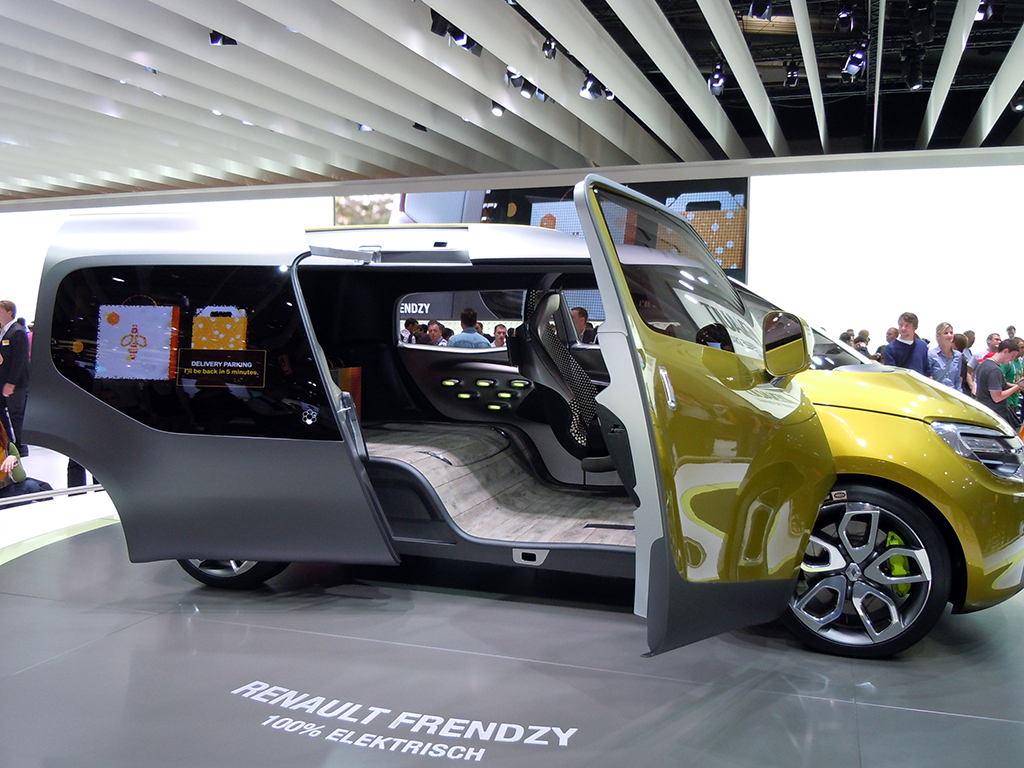
Renault Frendzy. 100% Electric

Here is a quick photo report of what I found interesting and innovative at the show.

Volkswagen

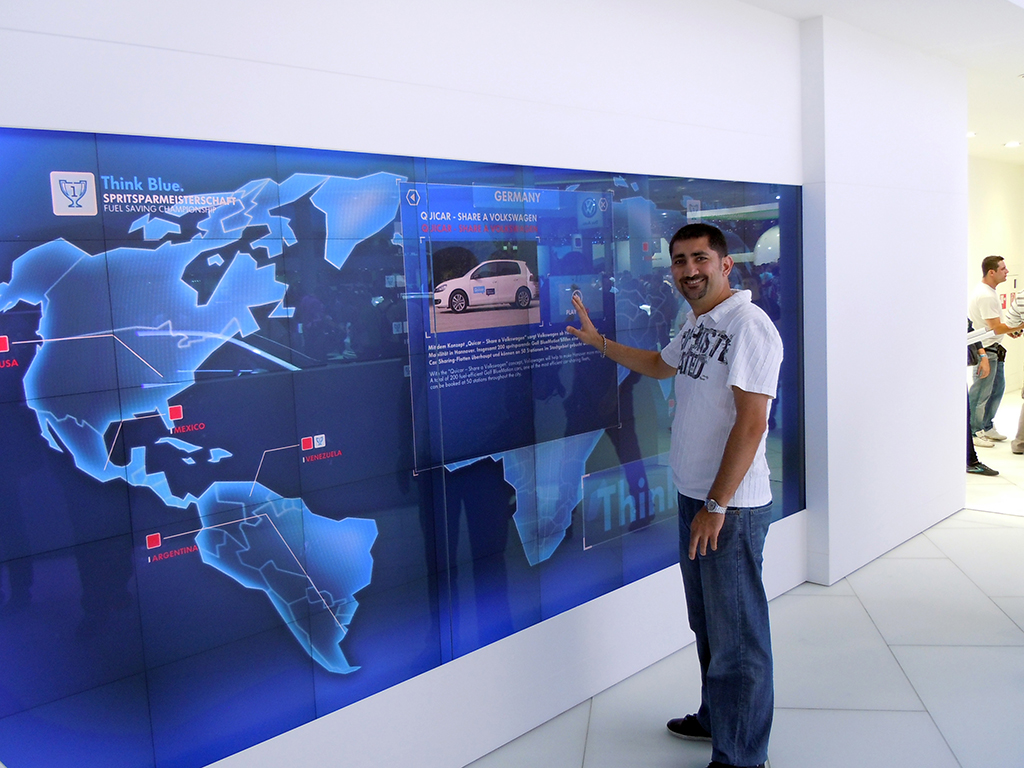
Volkswagen Interactive Motion Display

The Volkswagen BlueMotion technology was presented through a huge motion-based interactive display. Visitors did not need to touch the display. They used various gestures to navigate through the menu options.

Renault

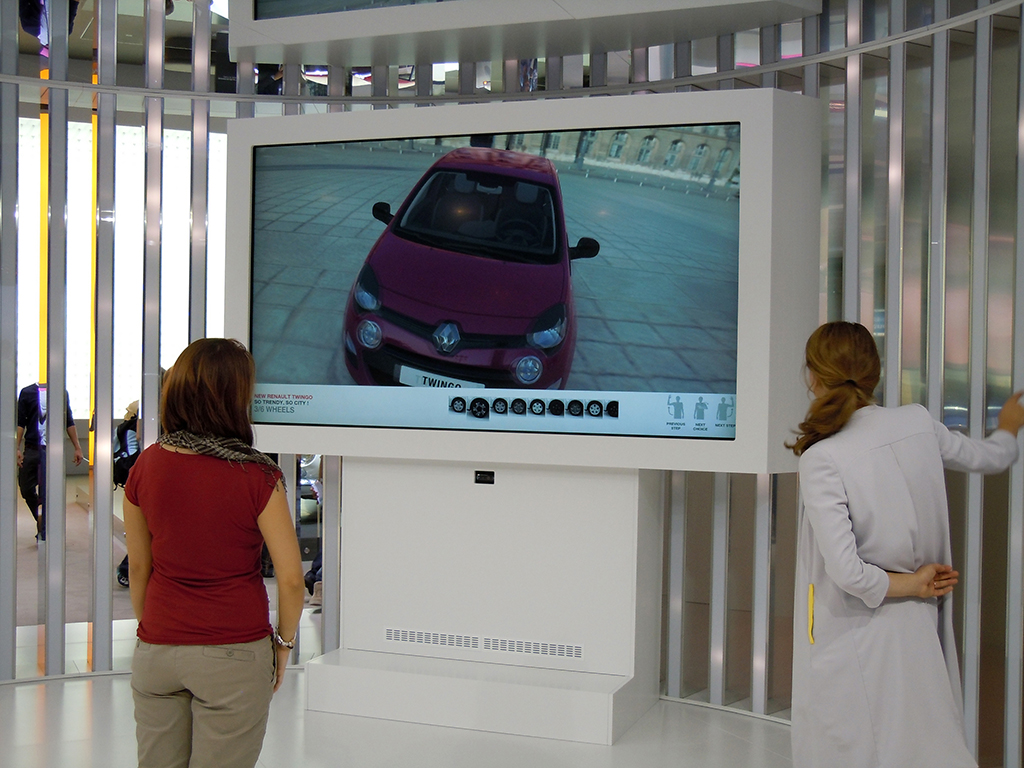
Renault Twingo

Visitors used the motion-based interactive display to learn more about the Renault Twingo. They could also change the colors of the model and watch demo videos.

Hyundai

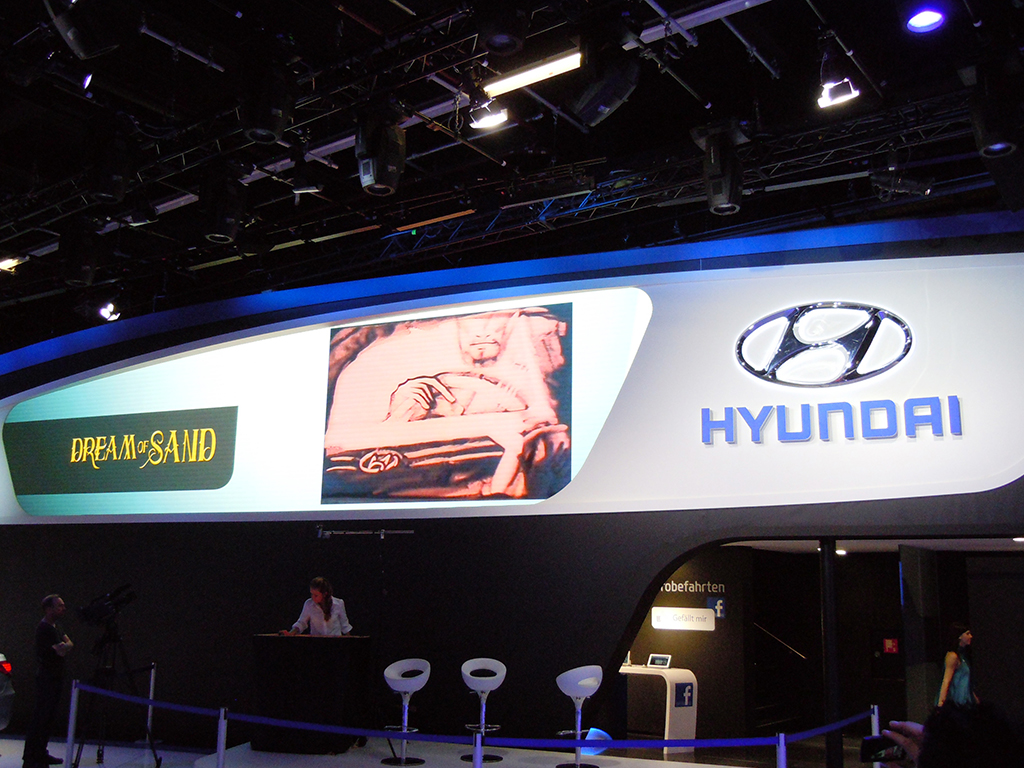
Dream of Sand

The main draw at the Hyundai stall was the “Dream of Sand” show by Svetlana Goncharenko and Natalya Netselya, who created vivid pictures in real time using sand.

Hyundai was also one of the only car brands trying to connect the stand with Facebook. Visitors needed to “Like” the Facebook page in order to be part of a lucky draw that gave them a chance to drive a Hyundai dream car. Important details like the fan page URL and contest information were not visible, or not easily accessible.

Skoda

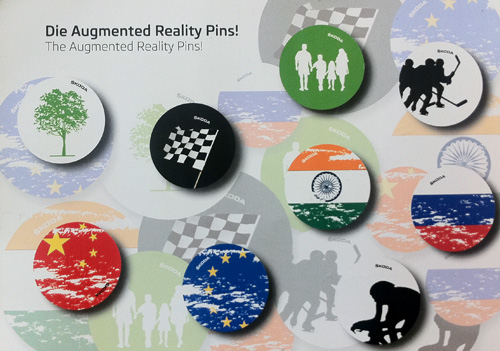
Skoda Augmented Reality Pins

Skoda gave visitors augmented reality pins. The Junaio AR app was used to scan the pin and activate the augmented reality. Most of the pins were gone by the time I got there, so I scanned the info card instead. It did not trigger the 3D surprises that the pins would, but it did offer a set of regional videos.

Citroën

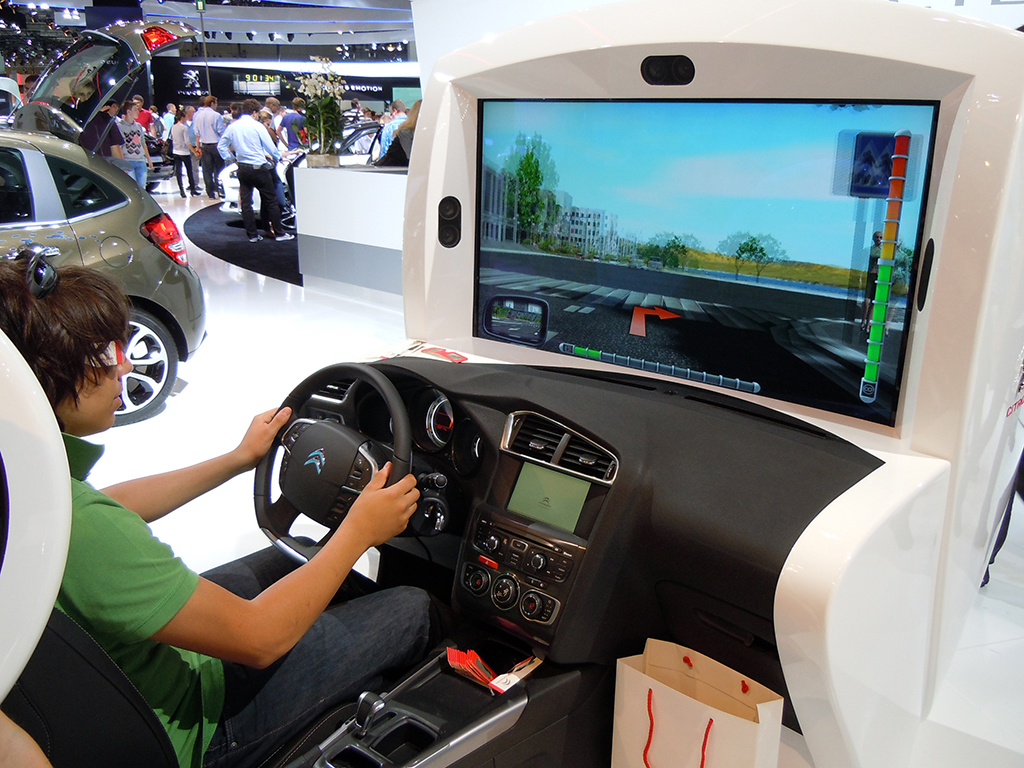
Citroen Eco Drive

At the Citroën Eco Drive simulator, visitors could take the car for a 3D test drive.

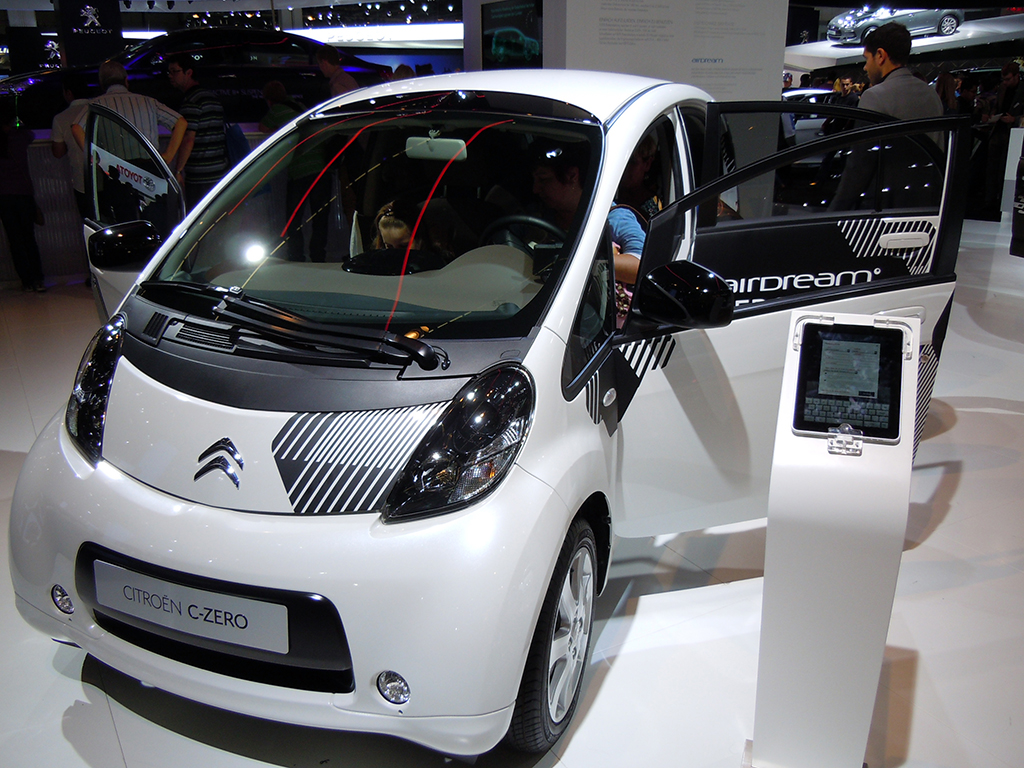
Citroen C-Zero

iPads were used by many car manufacturers to interactively share model specifications, videos, brochures, and to take automated enquiries from high-potential buyers.

Opel

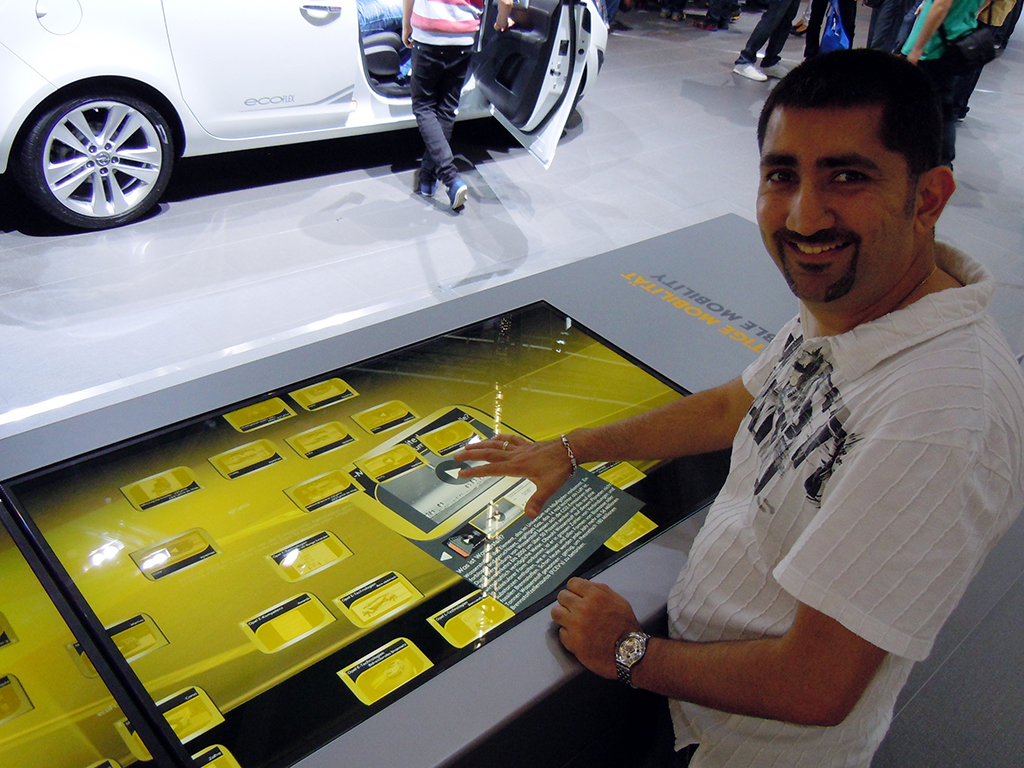
Opel Microsoft Surface setup

Opel used Microsoft Surface technology to share information about its cars. This was my first live experience with Surface. It worked much like the Apple touch interface, even though it did not feel as sensitive and smooth.

Ford

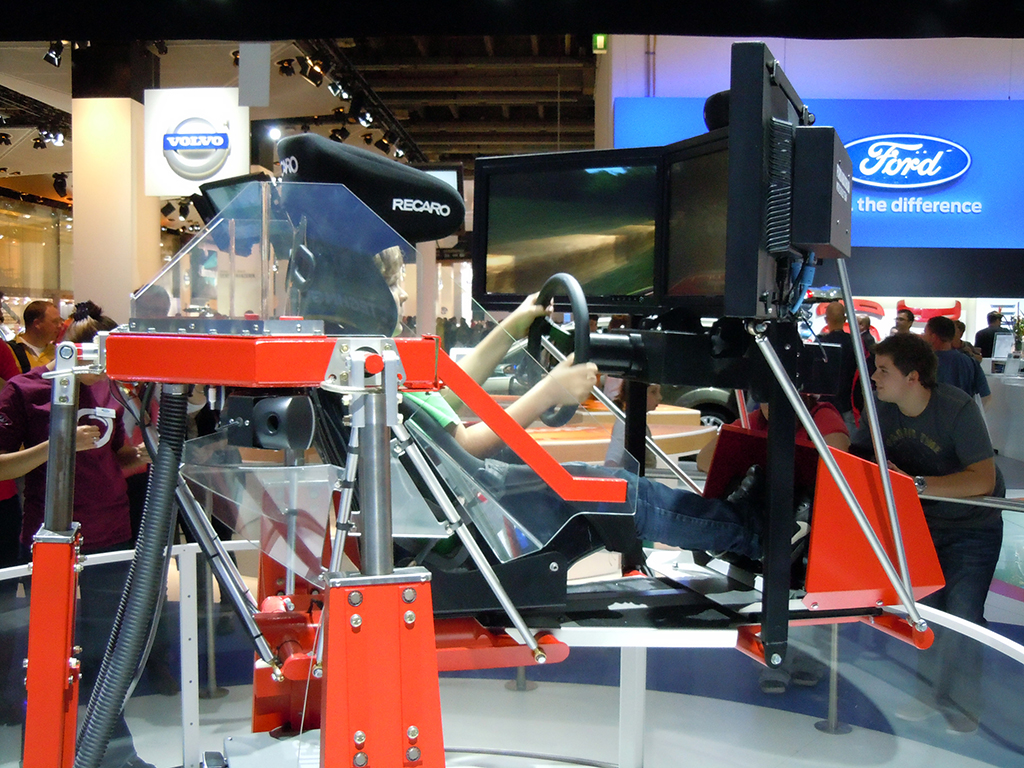
Ford Simulator

Ford, like Citroen and Volvo, set up a car simulator at its stand.

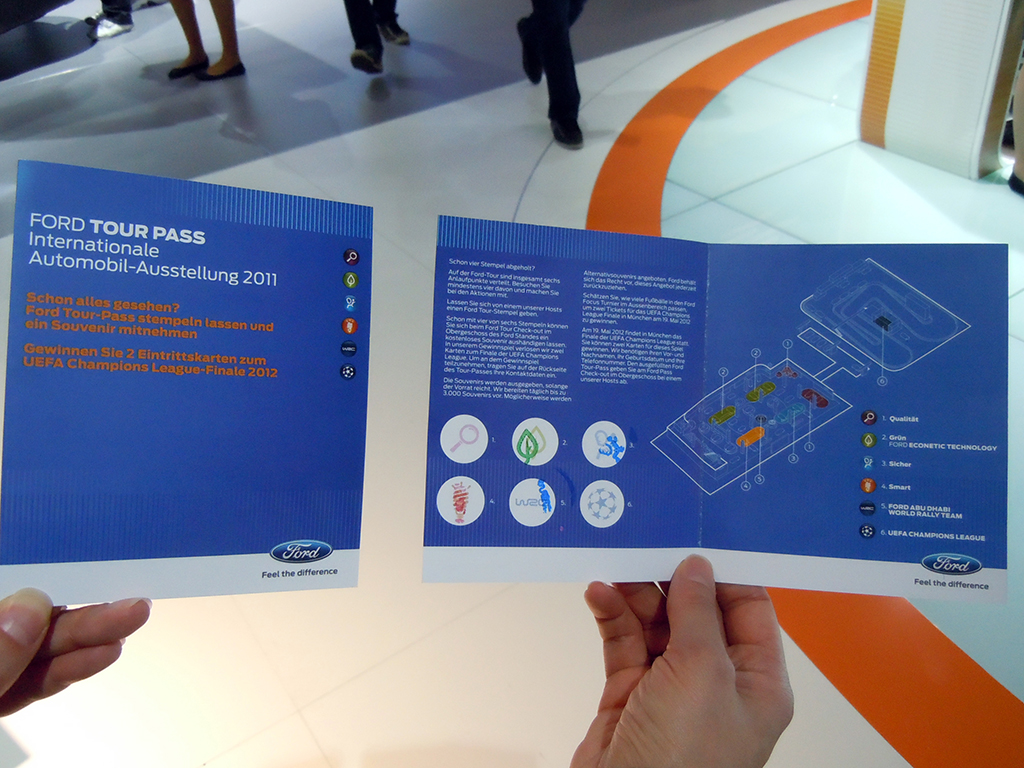
Ford Stamps

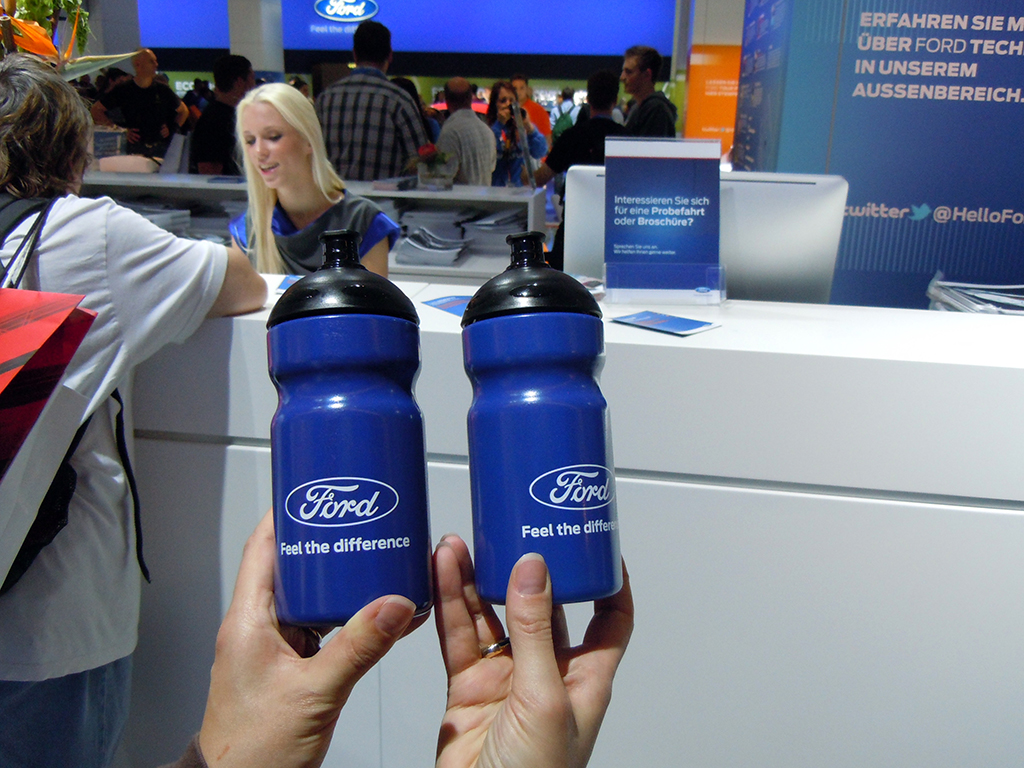
They also engaged visitors with a small “collect the stamps” game. The game made visitors go to each section of the Ford stand, correctly answer some easy questions related to the car and technology, collect the stamps, and get Ford-branded water bottles. Visitors could also play further and win two tickets for the UEFA Champions League Final in 2012.

Ford Bottles

Chevrolet

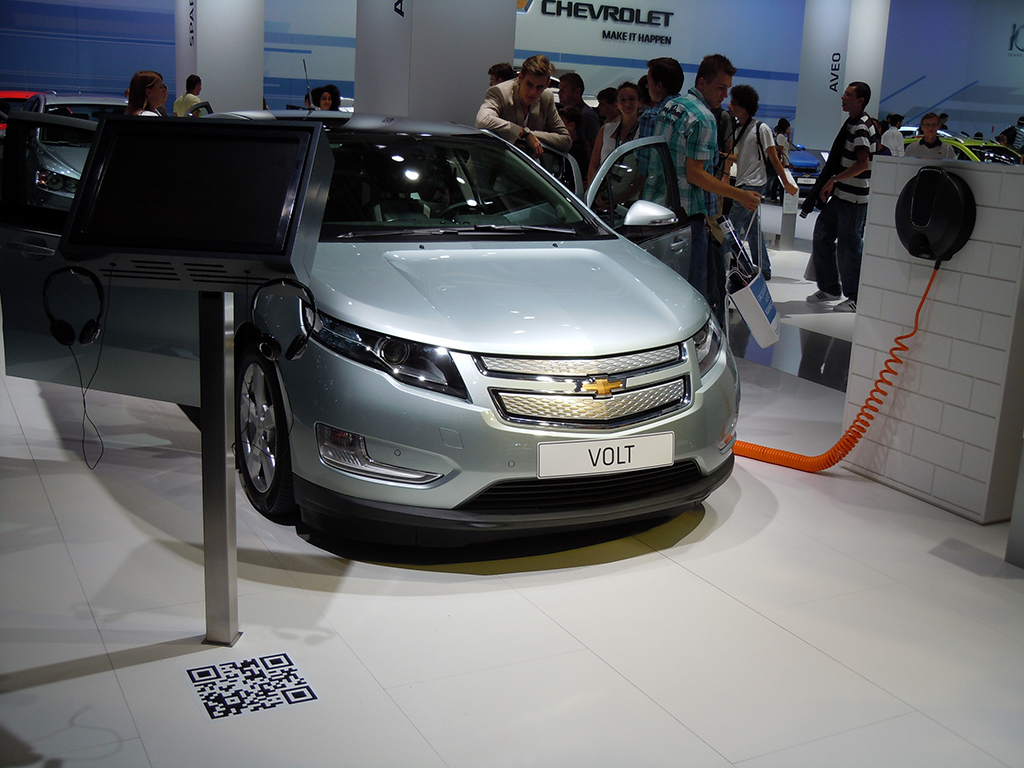
Chevrolet Volt

Visitors could scan the QR code on the floor to view a short Chevrolet Volt specs video.

Volvo

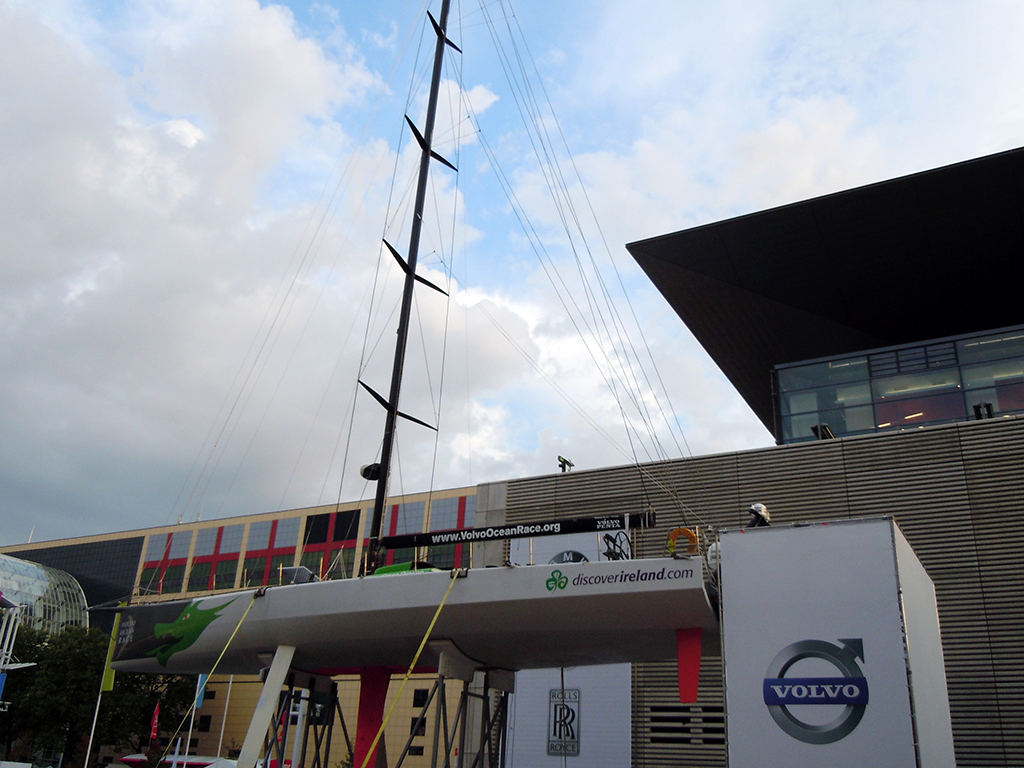
Volvo Sailing

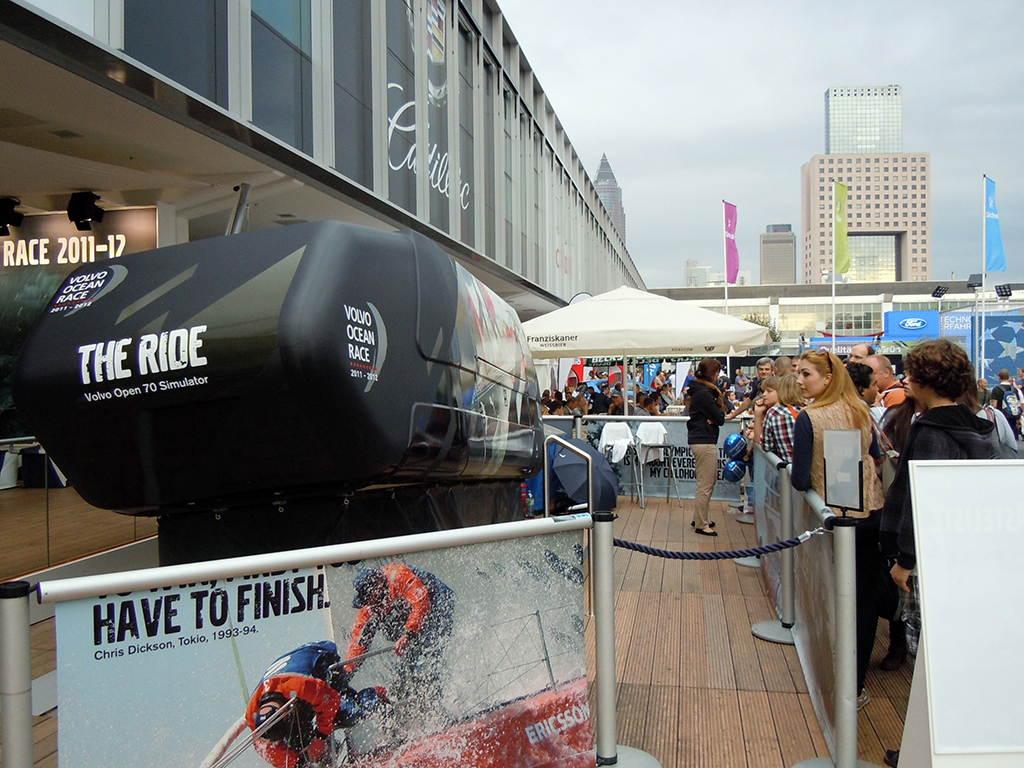
The Volvo Open 70 Simulator gave visitors a first-hand experience of what the Volvo sailing team goes through when they go sailing in the ocean.

Volvo Sailing Simulator

On taking the ride I slid steeply from left to right on the seat. There was also non-stop wind blowing on my head, with regular splashes of water. It created a strong 4D-style experience. By 4D-style, I mean the simulator added physical effects like motion, wind, and water to the visual ride.

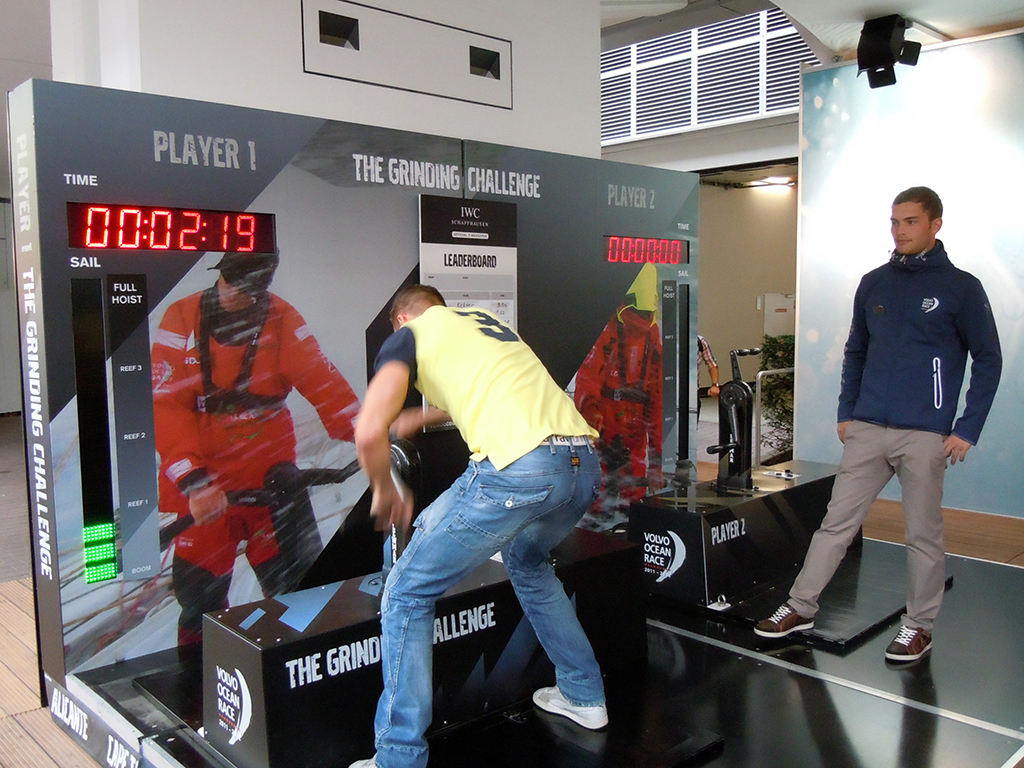
Visitors could also try to hoist a virtual sail. On my second attempt I hoisted the sail in 12.3 seconds. The current record was set at 9.03 seconds by one of the previous visitors.

Volvo Sail Hoisting

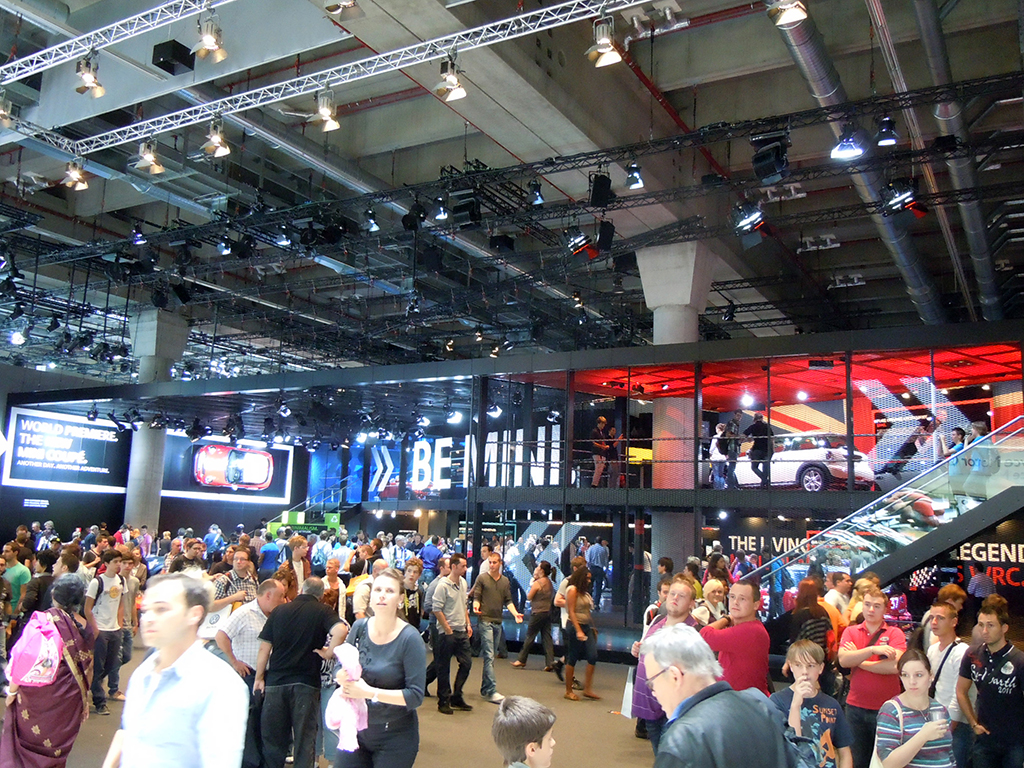
Mini Cooper

Mini Cooper stand overview

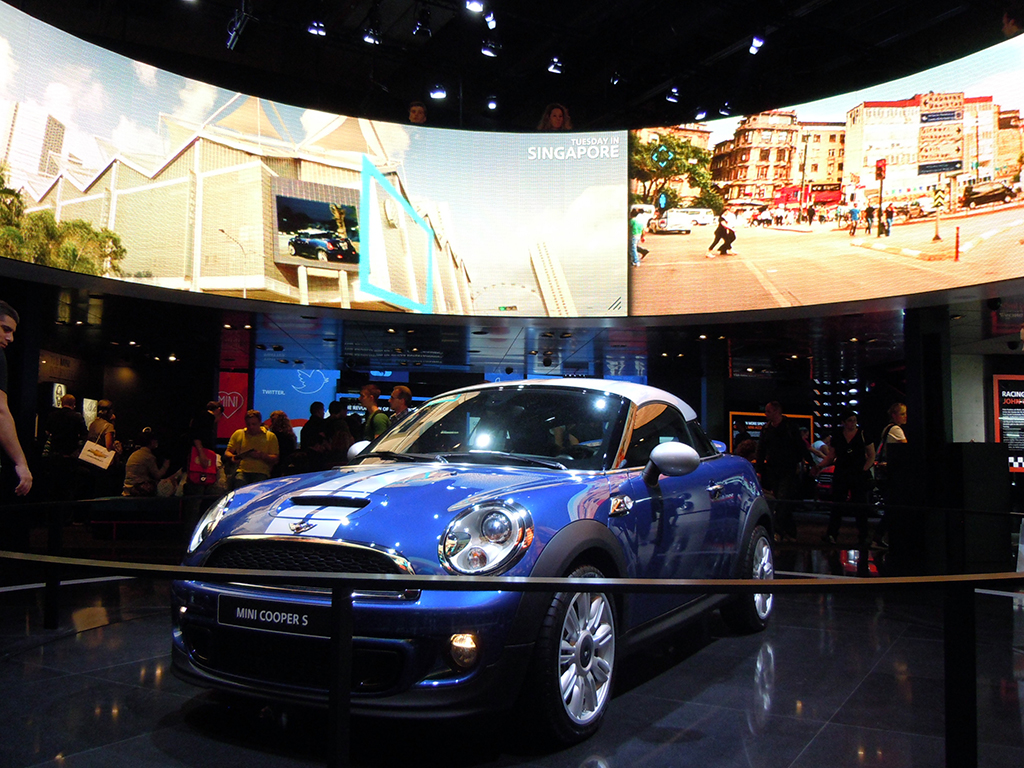
I really enjoyed visiting the Mini Cooper stand. The displays were amazing. A beautiful Mini surrounded by a bright circular display appeared as one entered the stand.

Mini Display

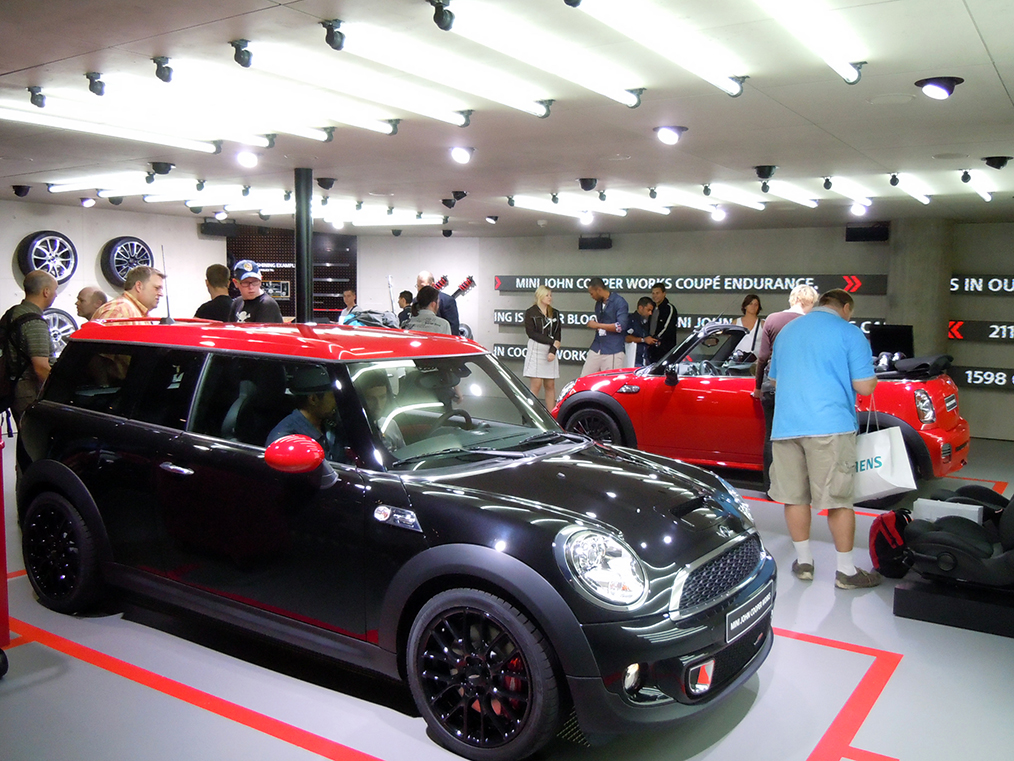
Minis in multiple colors were on display with various digital displays across the walls.

Mini Cooper multiple cars and wall displays

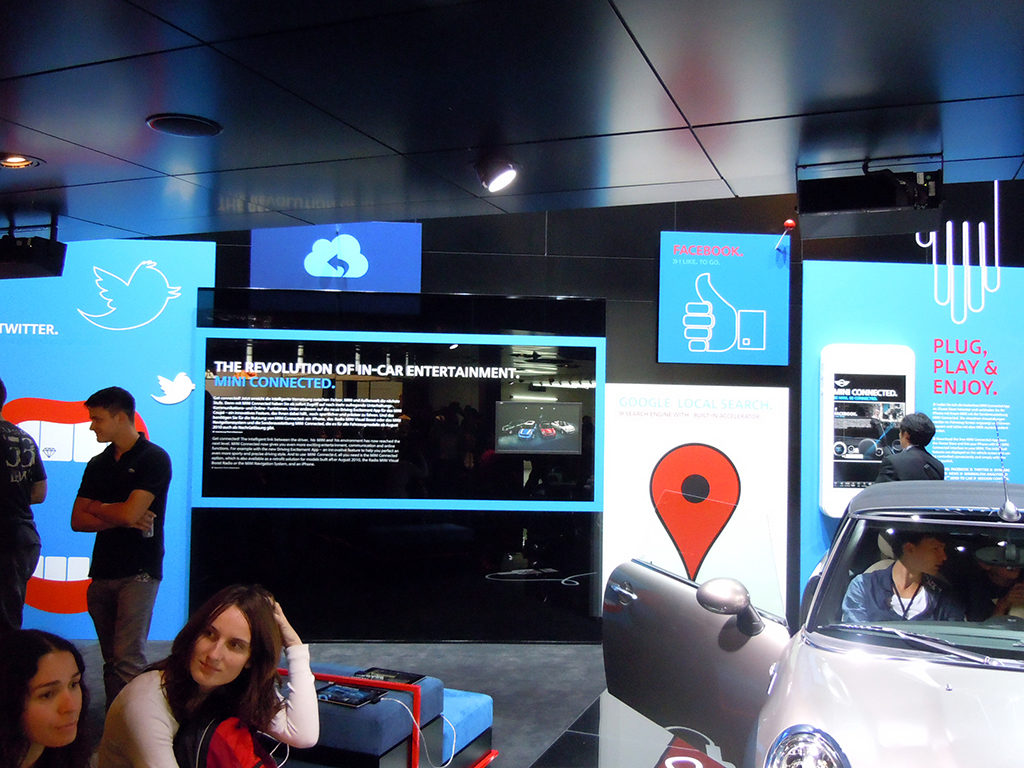
They also showcased their new iPhone app for the car, positioned as the intelligent link between the driver and the Mini. The app claimed to help the driver perfect a more sporty and precise driving style.

Mini iPhone App

I also spotted Lancia, Fiat, and Alfa Romeo promoting their iPhone apps via simple leaflets.

Mini Souvenirs

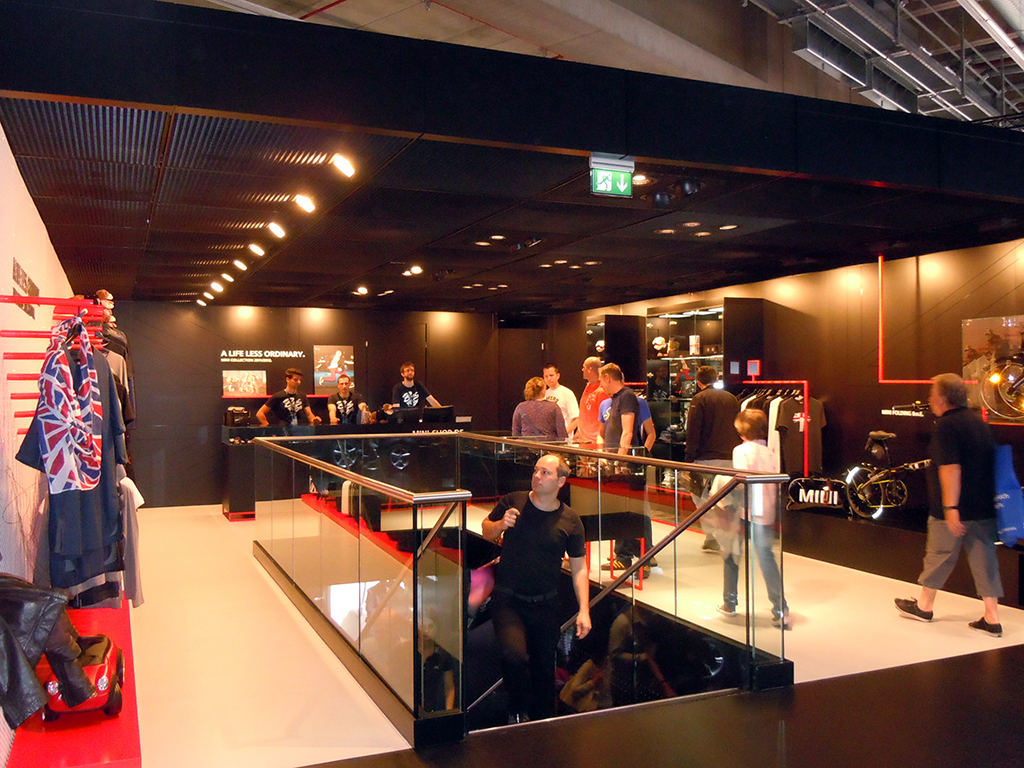
A souvenirs section greeted visitors on the first floor of the stand.

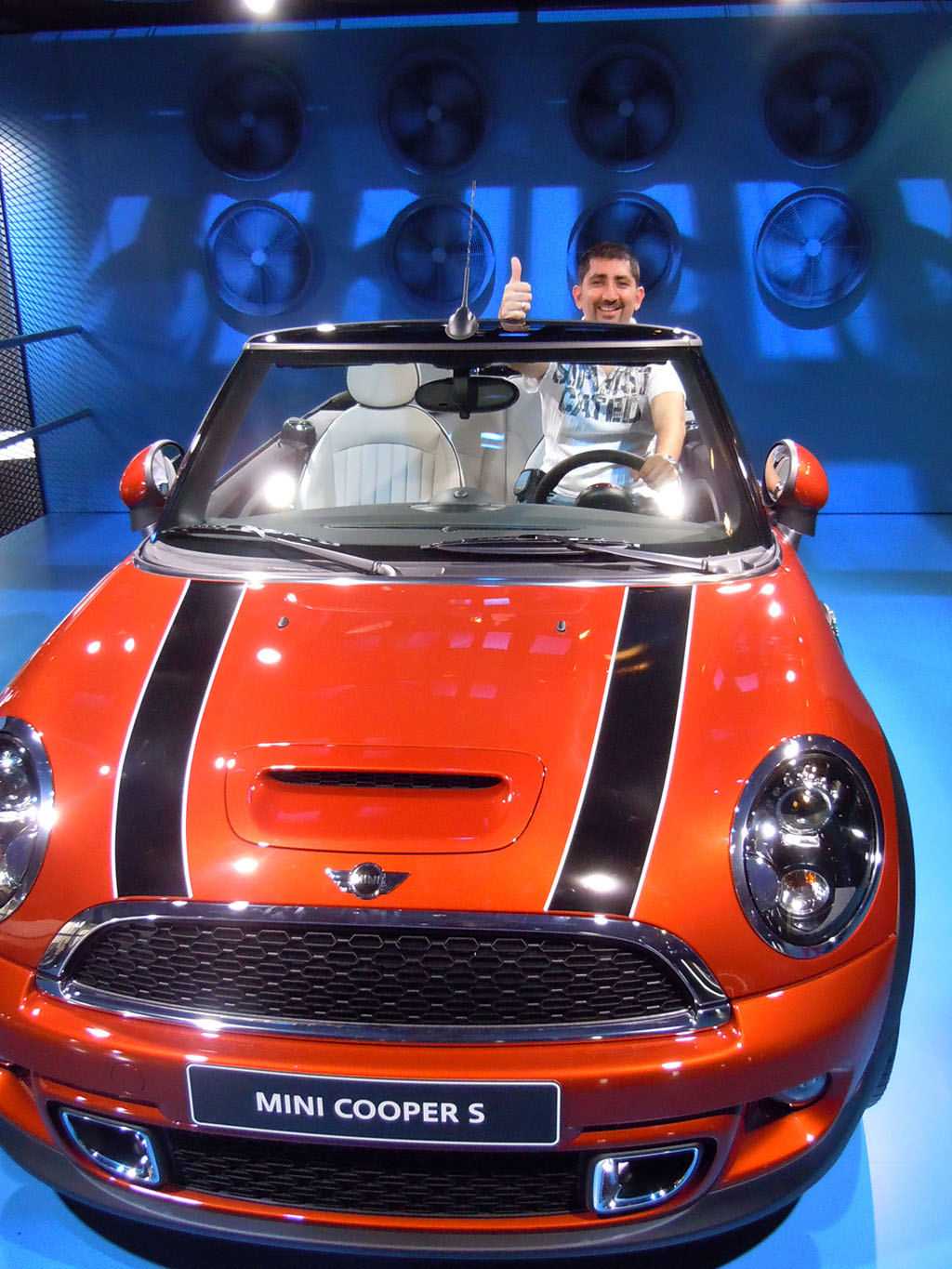
Got my Mini

In the end I got to drive my own Mini!

BMW

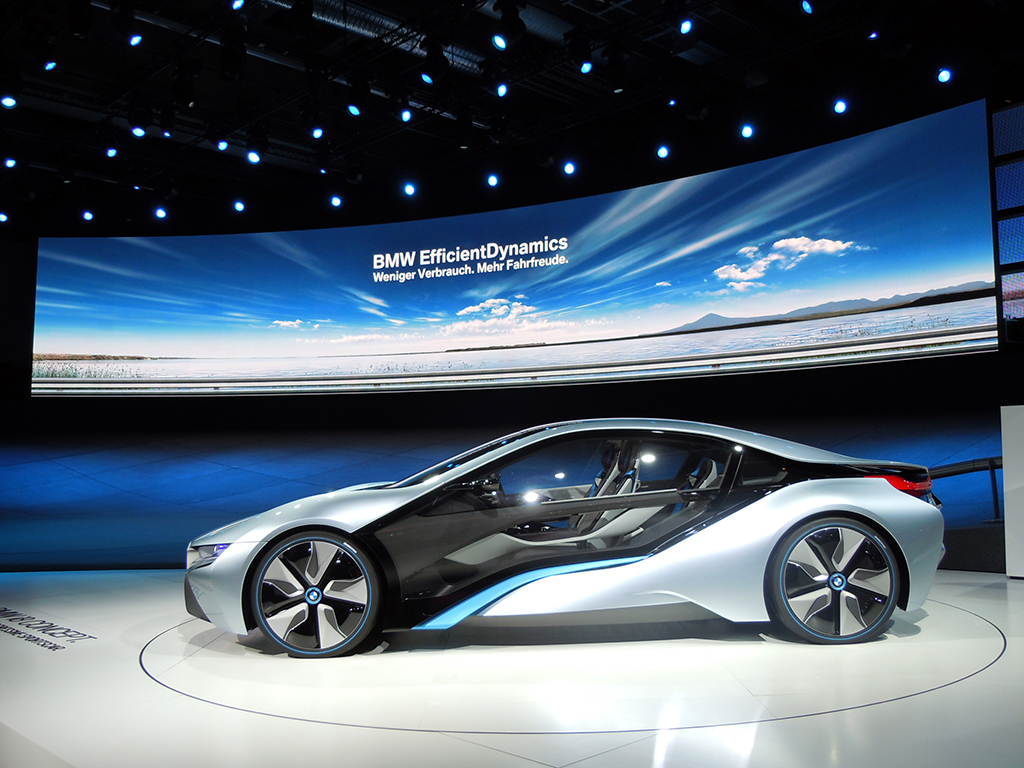
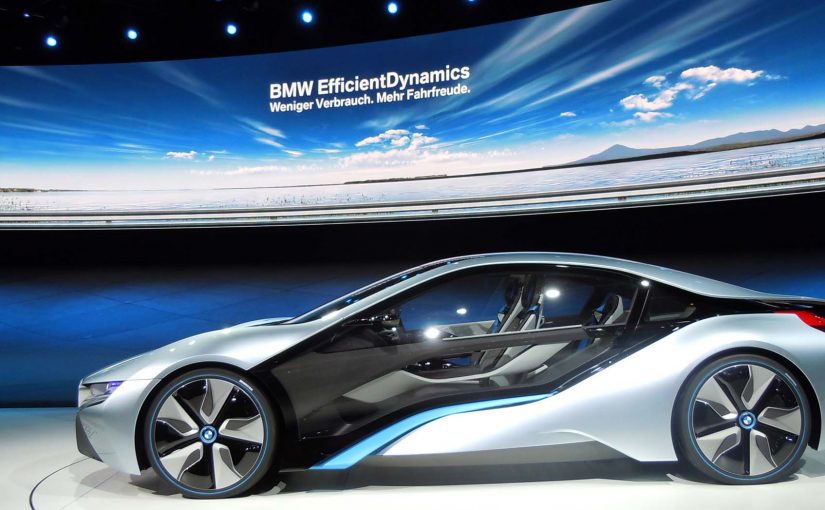
BMW. Mission Impossible Ghost Protocol car

The BMW stand was the biggest in terms of size and digital displays. Two of the most stunning concept cars from IAA were here. The car from the photo above appears in the Hollywood blockbuster “Mission Impossible: Ghost Protocol.”

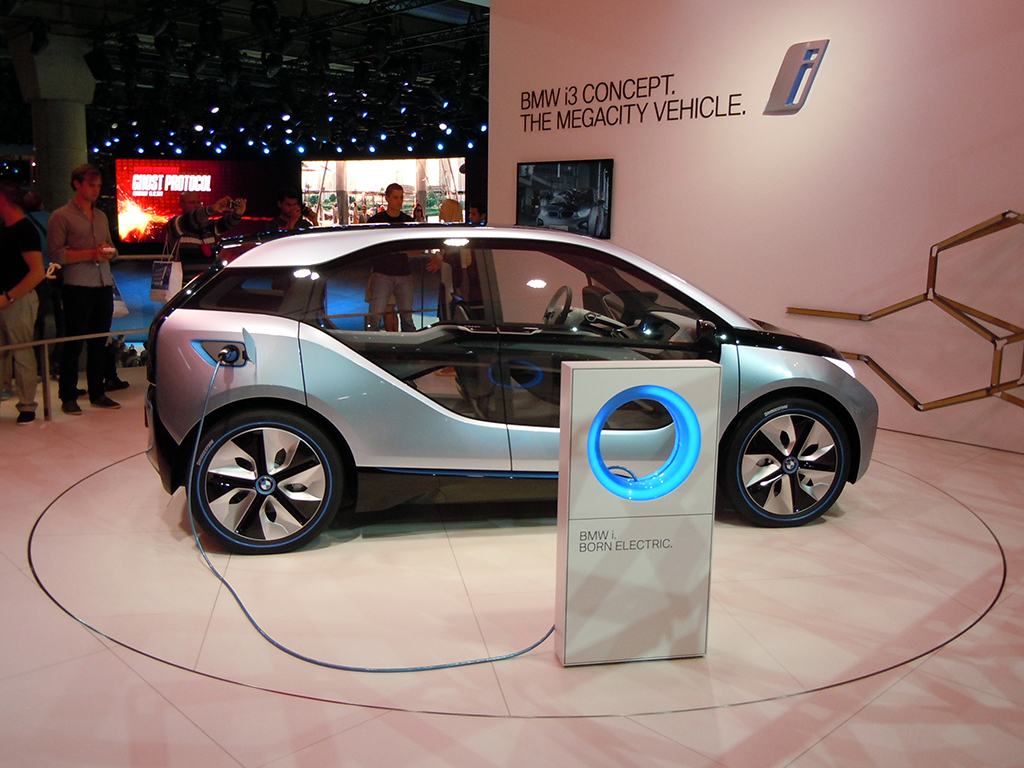
BMW i3 Concept

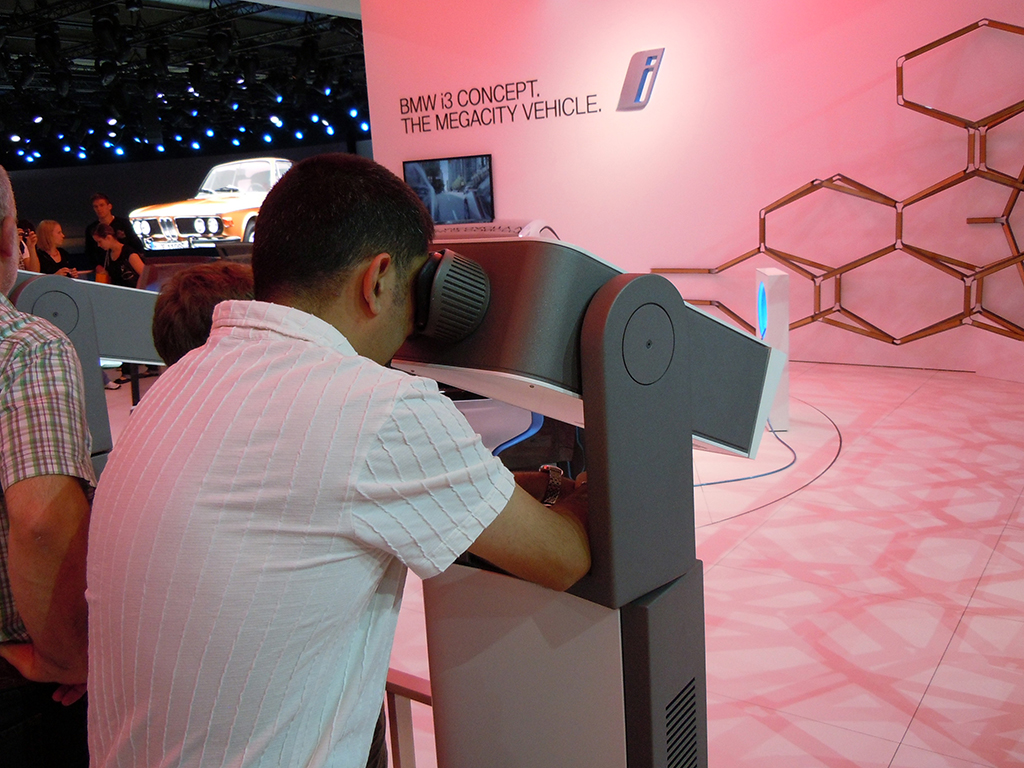
At the BMW i3 Concept city car area, I found an interactive telescope through which I could watch videos and product demos. To select a video, I had to move the telescope around and point it at what I wanted to play.

BMW i3 Concept Presentation via Interactive Telescope

Why the most memorable stands worked

The strongest activations turned product messaging into something visitors could do, not just watch. That worked because a gesture, a simulator ride, a scan, or a simple challenge gave the innovation a clearer mental hook and made the brand easier to remember after the show.

Extractable takeaway: At live events, technology earns its keep when it simplifies the story into one obvious action that visitors can try for themselves.

At large automotive trade shows, brands win attention by turning passive footfall into small, guided acts of participation.

The real question is not whether a stand looks futuristic, but whether the technology gives visitors a clear reason to interact, learn, and remember.

The best stands used technology as participation, not decoration.

Closing note from the show floor

I spent seven hours at IAA. It was totally awesome. The only car stalls I could not visit were those of Mercedes and Audi. There were simply too many people crowding those stands, and if I had waited, I would have missed at least half of what else I saw during my time there.

I look forward to the next Internationale Automobil Ausstellung in two years. Till then, this is Sunil signing off from IAA 2011.

What event teams can steal from IAA 2011

  • Make innovation physical. The strongest stands gave visitors something to do, whether that meant gesturing at a screen, taking a simulator ride, scanning a code, or testing a device.
  • Reward exploration. Ford’s stamp mechanic turned stand navigation into a simple game with a visible payoff.
  • Remove friction from participation. When key details are hard to find, as with Hyundai’s Facebook activation, the idea loses force.

A few fast answers before you act

What is this post?

A photo report of IAA 2011, focused on practical uses of touch, motion control, social mechanics, QR codes, and augmented reality on brand stands.

What is the single strongest engagement pattern across stands?

Interactive interfaces that pull visitors into exploration. Motion-based screens, simulators, and hands-on experiences that create a reason to stay.

Which activations stand out most?

Volkswagen’s gesture-based BlueMotion display. Volvo’s Open 70 sailing simulator with wind and water. Ford’s stamp-collection game that drives exploration.

Where does mobile show up most clearly?

Brands promote iPhone apps via leaflets and app demos, plus iPads used widely for specs, videos, and lead capture.

What is the practical takeaway for event experience design?

If you want people to engage at scale, make the interaction obvious, physical, and rewarding. Then make the next step easy to find.