
Renault Clio: The Silent Song Contest

Renault Clio: The Silent Song Contest

People are known to let loose and sing like crazy in their cars. For the launch of the new Renault Clio, Belgian agency Boondoggle turned that familiar behaviour into a Facebook game.

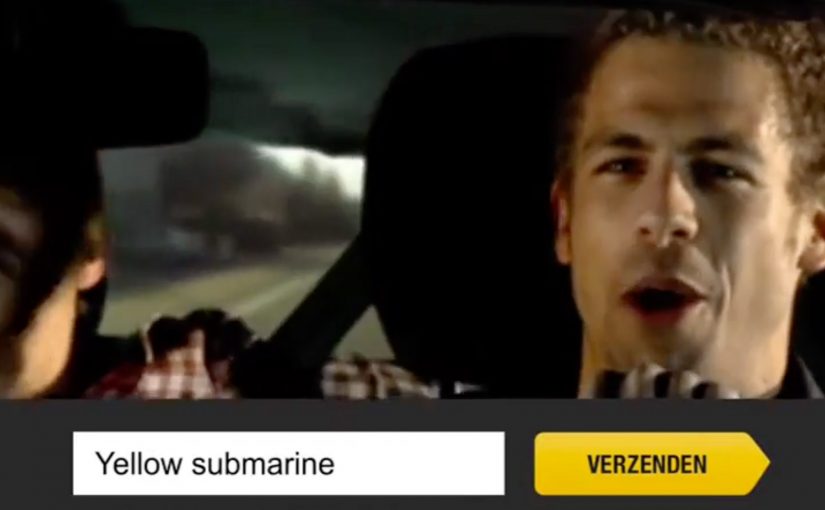
A series of online videos were posted on Facebook featuring different Clio drivers singing, with one twist. The sound was removed. To participate, players had to lip-read and guess the correct song as quickly as possible. The player with the most correct guesses at the end of the promotion won the Clio.

A game built from a behaviour people already recognise

The mechanic works because the setup is instantly relatable. Everyone has seen someone singing in a car, or has done it themselves. Muting the audio transforms that everyday scene into a puzzle, and Facebook becomes the scoreboard.

In automotive launch campaigns, lightweight interactive games can keep attention longer than a standard film because they invite repeated attempts rather than one passive view.

Why it lands

It hits a sweet spot between simple and sticky. The barrier to entry is low. You watch a clip and take a guess. Yet the experience rewards skill and speed, which makes it competitive. The silence is also a smart creative constraint. It forces focus, and it makes the guessing moment feel earned.

Extractable takeaway: If you want repeat engagement, take a common behaviour, remove one expected element, and turn the gap into a game people can get better at.

What Renault is really trying to get from Facebook here

The prize is a Clio, but the real objective is frequency. A contest format encourages people to come back for new clips, compare scores, and share with friends to test who can guess faster. That creates repeated brand exposure without needing repeated media spend.

The real question is whether your launch needs one memorable view or a repeatable reason for people to come back and compete.

What to copy from the Silent Song Contest

  • Start from a human truth. Real behaviour makes the concept self-explanatory.
  • Use a constraint as the hook. Muted audio is not a limitation. It is the game engine.
  • Design for replay. Multiple clips and a cumulative score drive repeat visits.
  • Keep the action atomic. Watch, guess, score. No multi-step friction.
  • Reward skill, not luck. Competitive mechanics feel fairer than random draws.

A few fast answers before you act

What is the Silent Song Contest in one sentence?

A Facebook game for the Renault Clio where players watch muted videos of drivers singing, lip-read to guess the song quickly, and compete on total correct answers to win the car.

Why does removing sound make the idea stronger?

Removing sound turns a normal singing clip into a puzzle. The missing audio forces attention and makes the guess feel earned and shareable.

What makes this work on Facebook specifically?

This works on Facebook because the clips are easy to watch, comment on, and share, and the contest format benefits from people returning as new videos appear.

What is the biggest execution risk?

If clips are too hard, people quit. If too easy, they get bored. Difficulty needs to be tuned so most people feel progress over time.

What should you measure beyond video views?

Repeat participation rate, average guesses per user, completion rate across the series, share rate, and whether the campaign shifts launch awareness and consideration.
Chevrolet: Then & Now

Chevrolet: Then & Now

As a way to celebrate turning 100, Chevy creates a spot titled “Then & Now” that shows people staying connected to iconic moments, locations, and Chevrolet vehicles as if those moments are with them right there, right now.

A simple device that does the heavy lifting

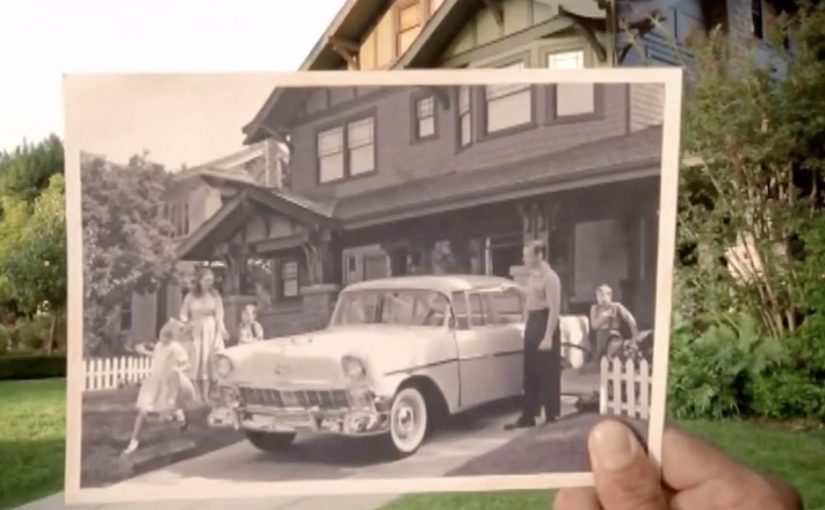
The mechanism is beautifully restrained: vintage photographs of Chevrolets and the people around them are held up to the camera in the exact same locations today, aligning past and present into a single frame.

In automotive heritage storytelling, the fastest way to communicate longevity is to make time visible with a device that needs almost no explanation.

In heritage-heavy categories, anniversary storytelling lands best when it helps the audience locate their own memories in the present, not when it asks them to admire the brand.

Why it lands emotionally

The film does not argue that the brand matters. It shows that memory matters, and lets the vehicles sit naturally inside that truth. The hand-held photos are the emotional bridge. They make nostalgia feel personal, not corporate.

Extractable takeaway: If you can make time visible with one repeatable in-scene device, you can earn nostalgia without turning the work into a corporate victory lap.

The business intent behind the sentiment

A centennial can easily become self-congratulation. This avoids that trap by focusing on the audience’s continuity. The brand is the thread that runs through people’s lives, places, and rituals, rather than the subject demanding applause. The real question is whether your anniversary work makes the audience feel time passing in their own life, not whether it proves you have been around. Anniversary work should prioritize the audience’s continuity over brand self-congratulation.

Transferable moves for anniversary work

  • Choose one visual metaphor and commit. One repeatable device beats a collage of “greatest hits”.
  • Let people be the hero. Heritage feels earned when the customer’s life is the storyline.
  • Use restraint as a quality signal. Minimal copy and slow pacing can make the work feel more truthful.
  • Anchor the past in the present. Showing the same place now keeps nostalgia from drifting into museum mode.

A few fast answers before you act

What is “Then & Now” in one line?

A centennial film that aligns vintage Chevrolet photos with the same real-world locations today to show continuity across generations.

What is the core creative mechanism?

Hand-held historical photographs matched precisely to present-day scenes, creating a single frame that contains both time periods.

Why does this approach work for anniversary advertising?

It makes time visible instantly, and it ties the brand to lived memory rather than to corporate milestones.

What should you avoid in centennial storytelling?

Avoid making the milestone the hero. If the audience cannot see their own continuity in the work, the film risks reading like self-congratulation.

What is the most transferable takeaway?

If you can show the passage of time with one simple, repeatable device, you can tell a heritage story without overexplaining it.

Volkswagen Beetle: Juiced Up

Volkswagen Beetle: Juiced Up

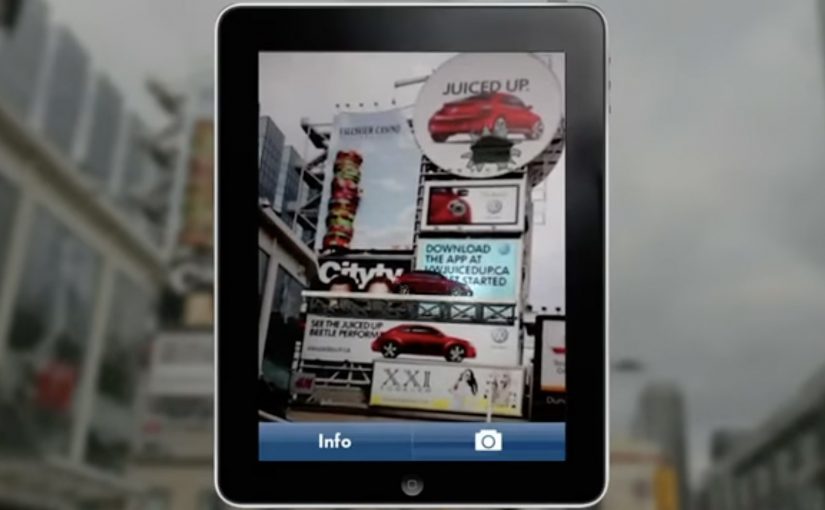
A billboard looks normal until you point your phone at it. Then the Beetle “juices up” into a 3D scene that spills out of the frame, turning a static poster into something you can explore.

That is the twist behind Volkswagen’s Beetle “Juiced Up” launch, created with Red Urban. Traditional out-of-home placements like billboards and bus shelters double as augmented reality markers. Download the custom app, scan the printed ad, and a 3D experience unlocks on your screen.

An AR marker is a printed visual pattern that a camera can recognize. When the app detects it, it anchors digital 3D content to the real-world poster so the animation appears to sit on top of the physical ad.

The best out-of-home work turns “I noticed it” into “I did something with it”, without asking people to learn a new behaviour.

Why AR markers work so well in out-of-home

Out-of-home already has the two things AR needs. Scale and repetition. People pass the same placements multiple times, which makes it easier for curiosity to build. Once someone scans, the experience feels like a hidden layer you only get if you engage. In global consumer brands running large-scale launches, out-of-home works best when it functions as a repeated trigger, not a one-time impression. A revamp is hard to communicate through copy alone. A 3D reveal makes the “newness” feel more tangible, even if the viewer only plays for a few seconds.

Extractable takeaway: Treat the physical placement as the interface. Make the first scan feel like the poster is “unlocking”, and keep the payoff immediate so the viewer control feels effortless.

What this launch is really optimizing for

This is not just about feature education. It is about reframing the Beetle’s personality and making the redesign feel more assertive and contemporary. The real question is whether your out-of-home is only a reminder, or a trigger that rewards interactivity. The app is a proof device, meaning it proves “this is different” by behaving differently than a normal poster campaign. This approach is worth doing only when the interaction reinforces the product story, not when it is novelty for its own sake.

What to steal for your next OOH-led activation

  • Make the trigger obvious. A single prompt, scan here, is enough. Let the payoff do the persuasion.
  • Anchor the interaction to the medium. If it is out-of-home, the phone should feel like a lens on the poster, not a separate experience.
  • Keep the first moment fast. If the 3D reveal does not land immediately, the novelty collapses.
  • Design for “I have to show you”. The best activations create a demo impulse that spreads in person.

A few fast answers before you act

What is “Volkswagen Beetle: Juiced Up”?

It is an out-of-home launch activation where Volkswagen posters and billboards act as AR markers. A dedicated mobile app unlocks a 3D Beetle experience when viewers scan the ads.

Why use AR markers instead of a standard QR code?

Markers make the poster itself the interface. That keeps the experience visually seamless, and it helps the 3D content feel physically attached to the real ad.

What is the main benefit of this approach for a product revamp?

It makes “newness” experiential. A 3D reveal can communicate attitude and redesign energy faster than a feature list.

What is the biggest practical risk with AR OOH?

Friction. If the app install and scan flow is slow, most people will not complete it. The reward has to justify the effort quickly.

What is the simplest way to improve completion rates?

Reduce steps and increase immediate payoff. Clear instruction at the poster, fast recognition, and an instant 3D moment that feels worth showing to someone else.