

Mirakl Santa Quits

A Christmas brand film made with generative AI

Mirakl, the ecommerce software and marketplace platform provider, has launched a Christmas campaign built around a 60-second brand film titled “Santa Quits”. The creative twist is not the plot. It is the production method.

The film was created with AiCandy Australia. Mirakl describes every character and scene as AI-generated, then shaped into a finished narrative through human creative direction and filmmaking craft.

Santa quits, the world panics, and an elf restarts operations

In the film, Santa resigns under modern seasonal pressure, triggering worldwide protests as people demand Christmas be saved. The resolution is deliberately on-theme. An elf restarts the operation using “agentic commerce” powered by Mirakl Nexus, restoring gift delivery in time for Christmas Eve.

Here, “agentic commerce” means software-driven agents that can search, decide, and execute commerce workflows across systems under defined guardrails, with humans setting policy and handling exceptions.

When the plot is the product truth

The real question is how a B2B commerce platform proves it is built for an agent-driven future without hiding behind abstract slides and buzzwords. This film answers by turning the operating model into the story: seasonal demand overwhelms legacy operations, then an agentic system orchestrates recovery.

By using generative AI to produce the film while telling a story about AI-powered commerce, Mirakl makes the medium itself part of the evidence, which is why “agentic commerce” lands as an operating model rather than a feature label.

In global B2B ecommerce infrastructure categories, credibility comes from showing how your system holds together when pressure spikes and timelines are non-negotiable.

Why this lands as B2B marketing

For marketers, the move is not “AI-made ad”. It is alignment. Message and medium point to the same idea: when expectations become impossible, throwing more people and more dashboards at the problem stops working. You need infrastructure designed for AI-assisted execution, not just human effort at higher speed.

Extractable takeaway: A B2B brand film earns attention when it behaves like a systems demo, showing what breaks under stress, what orchestrates the fix, and what customers can reliably expect.

The production lesson: AI changes the economics of craft

AiCandy’s claim is not that AI makes creativity optional. It is that AI filmmaking can deliver cinematic work faster and on tighter budgets, as long as human direction stays in charge of narrative, tone, and finishing. That mirrors Mirakl’s product posture: automation scales execution, while humans define intent and manage exceptions.

What to steal from this campaign

This is a smart B2B move because it turns a future-facing concept into a concrete failure mode and a concrete recovery path. If you reduce it to “AI-made brand film”, you miss the strategic structure.

The film works because it connects three things into one coherent story:

  • A familiar cultural moment (Christmas pressure).
  • A clear operational failure mode (the system cannot scale).
  • A product truth (agentic commerce needs infrastructure).

Copy the system, not the gimmick. Make your narrative demonstrate the future you are selling. Then make the medium reinforce the message.


A few fast answers before you act

What is “Mirakl Santa Quits”?

“Santa Quits” is a Mirakl Christmas campaign built around a 60-second brand film. Mirakl positions it as a story about seasonal commerce pressure and how agentic commerce can restore operations at scale.

Who created the film and how was it produced?

The film was created with AiCandy Australia. Mirakl states that characters and scenes were produced via generative AI, then shaped into a finished narrative through human creative direction and filmmaking craft.

What does “agentic commerce” mean in this context?

In this story, agentic commerce refers to software-driven agents that can execute commerce operations with a degree of autonomy, such as coordinating tasks and workflows to restart and run delivery operations under defined guardrails. In the film’s narrative, an elf uses agentic commerce powered by Mirakl Nexus to restore gift delivery.

Why is this campaign notable for marketers?

Mirakl uses AI to tell a story about AI-powered commerce, aligning message and medium. It is also a concrete example of generative AI being used for a brand film, paired with human creative direction, to reach a cinematic outcome under real constraints.

What’s the real business point behind the “Santa Quits” story?

The plot frames seasonal demand as an operational stress test. The resolution suggests that automation and agentic systems can restart and scale commerce operations quickly, restoring reliability when timelines are non-negotiable.

What is a practical way to apply this idea without making “AI theatre”?

Start with one high-frequency content format and define clear quality criteria and approval checkpoints. Then measure cycle-time, cost, and consistency. If you cannot show repeatable outcomes, you are experimenting, not building a scalable capability.
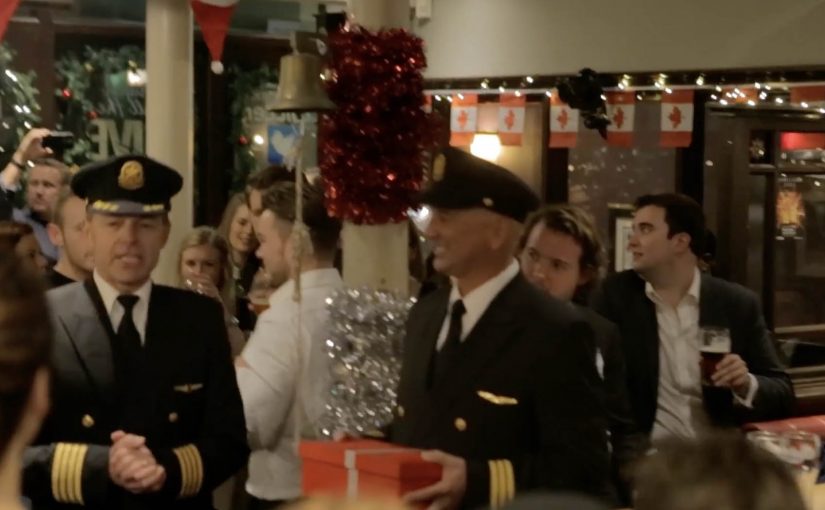
Air Canada: Gift of Home for the Holidays

It’s that time of the year again. This is my last and very Christmassy post for the year.

Since Christmas is the season of giving, Air Canada decided to spread a little love to unsuspecting Canadians at a local bar in London. Two Air Canada pilots talked to several Canadians about how they would not make it home this holiday season, and then announced they would be giving everyone in the bar a very special gift.

What happened next will make you wish you were there for this moment.

How the surprise is staged

The setup is intentionally low-key. Start with a real conversation in a normal place, then pivot to an unexpected announcement that turns empathy into action. The bar setting does the work of making it feel unproduced, and the pilots do the work of making it feel credible. That combination matters because low production cues reduce skepticism and make the reveal feel earned rather than engineered.

In travel brands, “getting home for the holidays” is one of the few emotional promises that translates across cultures without explanation.

Why this lands

This works because the tension is familiar and the payoff is immediate. You can feel the disappointment of not getting home, and you can feel the release when the gift arrives. The brand is not explaining values. It is demonstrating them through a human moment that people recognise as real. The real question is whether the emotion feels earned by the brand’s actual role. It does, because helping people get home is the airline promise in its most human form.

Extractable takeaway: If you want an emotional story to travel, start with a universally understood problem, keep the setup believable, and make the brand’s role an enabling action rather than a slogan.

What travel brands can borrow

  • Use a natural setting. Familiar environments lower skepticism fast.
  • Make the “turn” simple. Conversation, reveal, gift. No complicated mechanics.
  • Let real people carry the scene. Authentic reactions beat scripted lines.
  • Anchor to a seasonal truth. Holidays come with shared emotional stakes that do not need heavy copy.

Until 2015. Ramble over and out.


A few fast answers before you act

What is the core idea of this Air Canada holiday activation?

A surprise moment in a London bar where Air Canada pilots speak with Canadians about not making it home for the holidays, then reveal a special gift.

Why does the bar setting matter?

It makes the interaction feel everyday and believable, which strengthens the emotional payoff when the surprise lands.

What is the campaign really selling?

More than routes or fares, it sells reassurance. The feeling that the airline helps you get to the people that matter.

What is the transferable pattern for other brands?

Build a simple, credible setup around a universal tension, then resolve it with a concrete act that only your brand can enable.

What’s the biggest risk with “surprise and delight” campaigns?

If the setup feels staged or the brand role feels performative, the emotion collapses. Believability is the asset.

WestJet Christmas Miracle: Spirit of Giving

A purple-clad virtual Santa appears on a screen and asks residents of Nuevo Renacer what they want for the holidays. The requests are simple, specific, and deeply practical.

WestJet follows up last year’s Christmas Miracle with “Spirit of Giving”, created with Canadian charity Live Different. Instead of surprising passengers at baggage claim, the airline takes the idea to a community near Puerto Plata in the Dominican Republic, then documents the moment those wishes are handed back at a Christmas party.

The earlier film was reported to go viral and pass 36 million YouTube views. This follow-up is described as pulling strong early attention too, with view counts climbing quickly in its first days online.

The mechanism: ask, commit, deliver

The creative device is a clean three-step loop. First, the “virtual Santa” invite makes wishes safe to share. Second, WestJet commits to fulfilment, not vouchers. Third, the reveal turns a list of needs into a communal celebration, with WestJet employees and Santa presenting items that were requested.

That loop works because specific requests and visible fulfilment turn generosity into proof, which makes the story credible on camera and in conversation.

In airline brands where differentiation is hard to sustain through functional claims alone, a repeatable giving platform can build distinctiveness through emotion, participation, and earned reach.

Why it lands

This works because the surprise is not random. It is personalised, visible, and delivered in public, which makes the generosity feel real rather than performative. The setting also matters. A whole community receives together, so the story becomes collective, not one tearful individual moment.

Extractable takeaway: If you want a feel-good campaign to travel, anchor it in specific asks from real people, then make fulfilment the hero action, so the audience can retell the story as a fact, not an ad.

What WestJet is really buying

At face value, it is seasonal warmth. Strategically, it is continuity. The real question is whether a holiday stunt can become a brand behavior people expect and remember. WestJet turns “Christmas Miracle” into a platform, not a one-off. The brand signal shifts from “we did a nice thing” to “this is what we do”, which is how recurring campaigns earn trust and expectation.

What to steal from WestJet’s giving platform

  • Keep the ask interface simple. A single question beats a complex participation mechanic.
  • Make fulfilment concrete. Items, not messages, so impact is legible on camera and in conversation.
  • Use employees as proof. When staff show up, it reads as culture, not just media spend.
  • Design a platform, not a stunt. Recurrence builds memory faster than novelty alone.

A few fast answers before you act

What is “Spirit of Giving”?

It is a WestJet holiday campaign made with Live Different in which residents of Nuevo Renacer share gift wishes with a virtual Santa, then receive those items at a community celebration.

How does it connect to the original Christmas Miracle?

It uses the same core promise, personalised giving captured on camera, but shifts the stage from passengers to a partner community, making the brand story about community impact rather than travel surprise.

What is the key creative mechanism?

A low-friction request moment, followed by a high-credibility delivery moment. The gap between the two is where anticipation and emotion build.

Why does the “virtual Santa” device matter?

It creates permission. People can state real needs without feeling awkward, and the audience immediately understands the format without explanation.

What is the biggest way campaigns like this fail?

When the giving looks staged or extractive. If participants feel like props, the emotional payoff turns into skepticism. Consent, dignity, and specificity are non-negotiable.