
Coca-Cola: The Happy Flag

Coca-Cola: The Happy Flag

Airports in Denmark have a simple tradition. People welcome arrivals with flags.

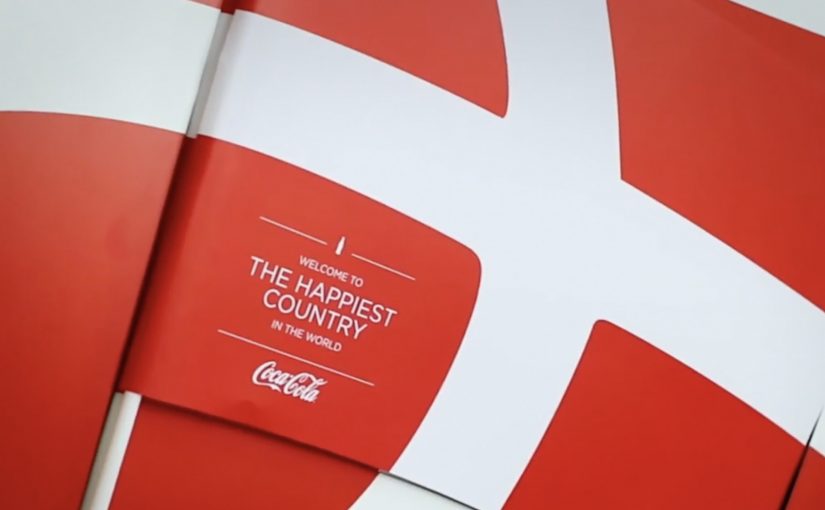
Coca-Cola takes a small cultural detail and turns it into a physical interaction. After a discovery that the Danish flag can be seen inside the Coca-Cola script, the brand brings that idea to Denmark’s biggest airport and makes the flag literally tearable from the logo.

The mechanism is a special poster where passers-by can take small Danish flags straight from the Coca-Cola mark, so even people who arrived without a flag can still join the welcome.

A logo that becomes a utility

This is not a poster that asks you to look. It is a poster that gives you something to do. The brand symbol becomes a dispenser. The action is obvious, the reward is immediate, and the result is visible in the room as more people start waving flags. For out-of-home, participation beats passive exposure when the action is effortless.

In global consumer brand portfolios, small rituals scale when you turn them into simple, repeatable behaviors that people are happy to perform in public.

The real question is whether your most recognizable cue can become a public action people do instinctively, not a message they merely notice.

Why it lands in an airport

Airports are full of waiting and scanning. A physical action breaks the autopilot, and the output is social. Because the poster turns the logo into a one-step flag source, the first few waves appear fast and trigger imitation. You do not keep a flag to yourself. You wave it. That makes the message travel without needing an additional media buy.

Extractable takeaway: When your brand asset is already recognizable, turn it into a useful object inside a real-world ritual. Utility creates permission. Participation creates memory.

The intent behind the “happiness” frame

The story is designed to borrow from Denmark’s “happiest country” reputation as described in various rankings and conversations, then translate that abstract label into something concrete. Here, “happiness” is framed as a warmer, more participatory welcome, not a vague claim. A warmer welcome. More flags in more hands. More people involved.

Moves to borrow for participatory out-of-home

  • Start with a local ritual. Find a behavior people already do gladly, then amplify it.
  • Make the interaction self-explanatory. If someone needs instructions, the moment dies.
  • Use a brand asset as the mechanism. When the logo is the tool, branding feels natural, not pasted on.
  • Design for public visibility. The best output is something others can see and copy instantly.

A few fast answers before you act

What is Coca-Cola’s “The Happy Flag” idea?

It is an airport poster activation where people can tear off Danish flags from the Coca-Cola logo, so more arrivals can be welcomed with flags even when greeters did not bring one.

What is the core mechanism that makes it work?

A familiar brand mark is redesigned as a dispenser. The logo becomes a physical utility, and the action produces a visible social signal in the space.

Why is an airport a strong place for this?

The environment already contains anticipation, reunions, and cameras. A simple, shareable gesture fits the emotional context and spreads through imitation.

How can brands adapt this pattern?

Pick a recognizable asset, connect it to a real-world ritual, and redesign it into a simple object people can use. Then make the output visible so participation recruits more participation.

What is the main failure mode to watch for?

If the action is not instantly obvious or the utility runs out quickly, participation collapses and the installation becomes a normal poster. Design the interaction, replenishment, and visibility so the first wave of use is effortless.
Coca-Cola: Chok Chok

Coca-Cola: Chok Chok

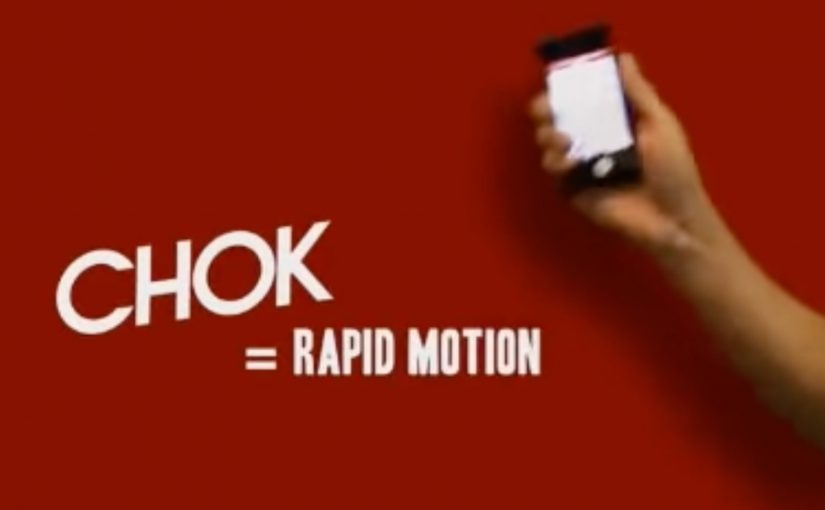
Mobile and creative thinking can come together to create really compelling marketing campaigns. In this example, Coca-Cola Hong Kong created a “Chok Chok” mobile app that turned the viewer’s smartphone into a remote control for their TV ad.

To collect the Coca-Cola bottle caps that appeared on the TV screen, viewers had to swing their phones when the ad came on. Those who successfully managed to swing and collect were instantly rewarded with prizes that included cars, sports apparel, credit card spend value, travel coupons and movie tickets.

As a result the campaign was seen by 9 million people and the app got over 380,000 downloads.

The real question is whether your second-screen idea creates a one-step action people can do instantly when the media moment appears.

For those wondering, the bottle cap collection was enabled through the audio signal of the ad, which triggered the application and synced the user’s motion with the ad. The accelerometer in the phone was also used to assess the quality of the motion. Together they were used to catch the bottle caps virtually.

However as far as I know, Honda in the UK was the first to pioneer this kind of an interactive TV ad, even though it did not receive results like Coca-Cola.

In mass-reach consumer campaigns where TV attention and smartphone use overlap, audio-synced interactivity can turn a passive spot into a short participation window.

Why this works so well

It works because it gives the viewer control in a way TV usually does not. Here, “viewer control” means one deliberate physical action that directly drives what you get from the ad. Because the ad’s audio triggers the app and the accelerometer judges motion quality, the “catch” feels causally tied to the on-screen moment instead of feeling random.

Extractable takeaway: If you want participation in real time, design a one-second action that maps cleanly to an on-screen event, then make the feedback and reward immediate.

  • Viewer control is the hook. The ad is not just watched. It is “played” through a simple physical action.
  • Timing creates urgency. You have to act when the ad is live, which turns media time into a moment of participation.
  • Feedback is immediate. You swing, you collect, you win. The loop is easy to understand and easy to repeat.

Steal this second-screen loop

Start with a single, unmistakable behavior the viewer can do in one second. Then use a reliable synchronization trigger (here, the ad’s audio) and a sensor input (here, the accelerometer) to connect the phone action to what happens on screen. This is the right level of interactivity for broadcast media: simple action, obvious timing, instant payoff.

  • One-second action. Choose a gesture the viewer can do immediately when the spot starts.
  • Reliable sync trigger. Use a broadcast-carried signal to trigger the experience, such as the ad’s audio.
  • Sensor validation. Use the phone sensor input to assess whether the action quality is good enough to “count”.
  • Immediate feedback. Keep the loop legible: swing, collect, win.

A few fast answers before you act

What is Coca-Cola “Chok Chok”?

It is a Coca-Cola Hong Kong mobile app that synchronizes with a TV ad and lets viewers swing their phones to collect on-screen bottle caps for prizes.

How did the app sync with the TV ad?

The app used the audio signal of the ad as the trigger, then aligned the on-screen moments with the user’s motion so “collection” happened at the right time.

What role did the accelerometer play?

The accelerometer assessed the quality of the swinging motion, helping determine whether the viewer “caught” the bottle caps virtually.

What is the main takeaway for interactive TV and second-screen work?

Make participation effortless, tie it to a tight timing window, and reward the action immediately so the viewer feels impact in the moment.

Coca-Cola: The Sing For Me Machine

Coca-Cola: The Sing For Me Machine

As part of its global “Open Happiness” campaign, Coca-Cola has set up interactive vending machines in various parts of the world. In Singapore, consumers could hug for a Coke. In Korea, they could dance for a Coke.

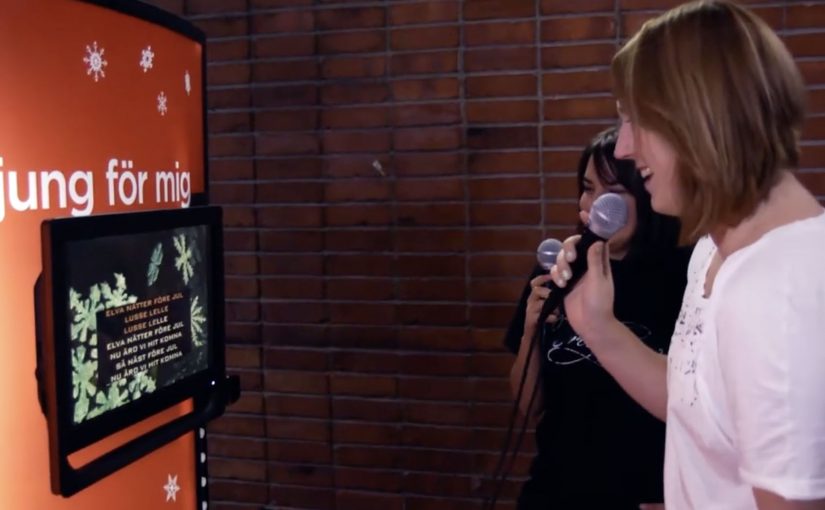
And now in Stockholm they can sing for a Coke. The vending machine has been placed at the Royal Institute of Technology with the sign “Sing For Me” in the front.

When sampling becomes a public performance

The mechanism is simple: the machine replaces money with a human gesture. That “gesture for reward” model means the action itself becomes the price of entry. Dance moves in one market. A song in another. The reward is immediate, and the moment is automatically social because other people can see it. That swap works because it turns a private purchase into a visible act, giving the crowd a reason to watch, react, and join in.

In global FMCG sampling and brand experience work, “gesture for reward” machines turn distribution into participation by design.

The real question is whether the action is easy enough to trigger participation without making people shut down in public. The smart part of this format is not the free Coke, but the public behavior it creates around the sample.

Why it lands

This works because it makes the brand promise legible without explanation. A vending machine is normally transactional and forgettable. A performance-triggered machine is a small event, and the crowd reaction becomes part of the product. The setting helps too. A campus is full of friends, cameras, and people willing to try a slightly silly thing in public.

Extractable takeaway: If you swap payment for a simple public action, you turn sampling into a story people can witness, film, and retell. That social proof travels farther than the product ever could on its own.

The machine is one of a number of Happiness Machines Coca-Cola has deployed around the world since 2009.

What to borrow from performance sampling

  • Pick one obvious trigger: the instruction must be understood in one glance.
  • Make the reward instant: the dispense moment is the emotional payoff.
  • Design for bystanders: the format should recruit a crowd naturally.
  • Localize the gesture: keep the same principle, but choose a culturally comfortable action.
  • Capture reactions: real laughs and hesitation are the proof that the idea works.

A few fast answers before you act

What is the “Sing For Me” machine?

It is a Coca-Cola vending machine that dispenses a free Coke when people sing to it, turning a product handout into a public, participatory moment.

Why does “sing for a Coke” work as a mechanic?

Singing is visible and socially contagious. Once one person does it, others gather, react, and often try it themselves.

How is this connected to the broader “Happiness Machine” idea?

It follows the same pattern: replace payment with a feel-good interaction, then let real reactions become the distribution layer.

Where does this format work best?

High-footfall environments with social density, like campuses, events, malls, and transit hubs, where bystanders quickly become an audience.

What is the biggest risk with performance-for-reward activations?

If the action feels embarrassing or culturally off, participation drops. The trigger must feel playful, safe, and easy to attempt in public.