
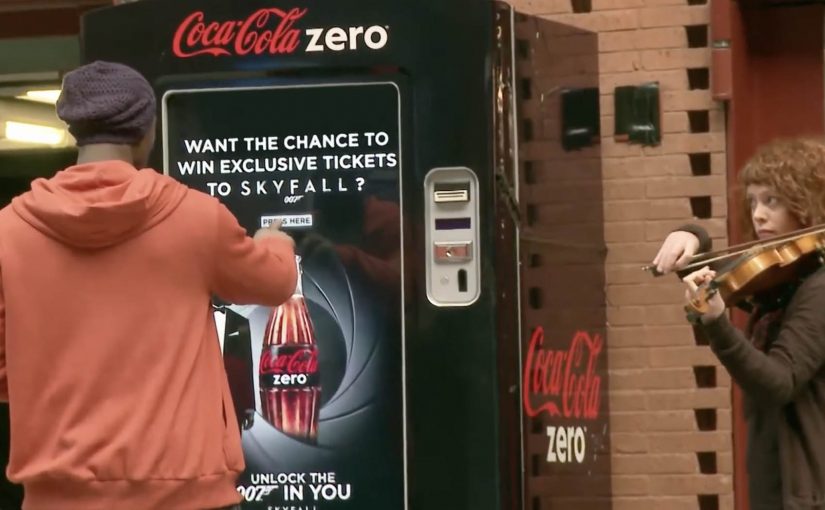
Coke Zero: Unlock the 007 in You

Coke Zero: Unlock the 007 in You

At Antwerp Central Station, Coke Zero challenges unsuspecting passengers to unlock the 007 in them for a chance to win exclusive tickets for the new James Bond movie Skyfall.

The catch is simple. The tickets aren’t free. You have to earn them by going the extra mile and completing the challenge in under 70 seconds.

A station takeover that turns waiting time into play

The setup is built for instant comprehension. A public space. A clear prize. A visible timer. A single instruction: move fast and stay cool.

That clarity matters. In a busy station, you do not have time to explain a brand story. You need a trigger that people understand in one glance and a mechanic that draws a crowd.

The mechanic: a timed “prove you’re 007” sprint

The experience is a countdown challenge. You step in, the clock starts, and you run a sequence of quick tasks designed to test speed, coordination, and composure. Finish within 70 seconds and you win.

This works because the timer turns a movie fantasy into visible stakes that both participants and bystanders can understand instantly.

In high-traffic transit hubs, timed challenges can turn waiting time into a shareable brand moment.

Why it lands: it makes the fantasy feel physical

Bond is not just a character. It is a posture: calm under pressure. The campaign translates that posture into something you can demonstrate with your body, in public, with a deadline.

Extractable takeaway: If your brand borrows meaning from a cultural icon, make the audience perform the meaning in a simple, timed ritual. A clock plus a visible finish line converts “cool story” into “I can do this”.

The station setting also does the work. People already have a reason to be there. The activation adds a burst of purpose to an otherwise idle moment, and the crowd reaction becomes part of the reward.

The business intent: earn attention that travels beyond the station

This is not a subtle idea. It is designed to be watched. Spectators gather, phones come out, and the experience becomes content. Even for people who do not play, the brand still wins a memorable association: Coke Zero equals fast, bold, and game-for-a-challenge.

The real question is whether you can turn borrowed cultural meaning into a public ritual people want to attempt and others want to watch.

What to steal from this timed station challenge

  • Start with a single rule: one sentence that explains how to win.
  • Use an obvious constraint: a countdown is the fastest way to create stakes.
  • Make it watchable: design for a crowd, not just the participant.
  • Reward participation, not perfection: the attempt should feel fun even if people fail.
  • Keep the prize culturally aligned: the reward should match the fantasy you are selling.

A few fast answers before you act

Why do timed challenges work so well in public spaces?

A timer creates instant stakes and makes the outcome easy to understand for both players and spectators. That clarity is what pulls a crowd in seconds.

What’s the core psychological hook in this activation?

It turns identity into action. You are not told to “feel like 007”. You are invited to prove it under pressure.

What should you measure for a stunt like this?

Footfall around the installation, participation rate, completion rate, average watch time for spectators, social shares per participant, and earned media pickup.

What’s the biggest execution risk?

Friction. If onboarding takes too long or rules are unclear, people will not step in. In transit environments, attention is short and drop-off is ruthless.

How do you adapt this idea without a movie tie-in?

Anchor the challenge to any role people want to inhabit: “be the expert”, “be the fastest”, “be the calm one”. Then translate that role into a simple timed sequence with a visible finish line.
Coca-Cola: FM Magazine Amplifier

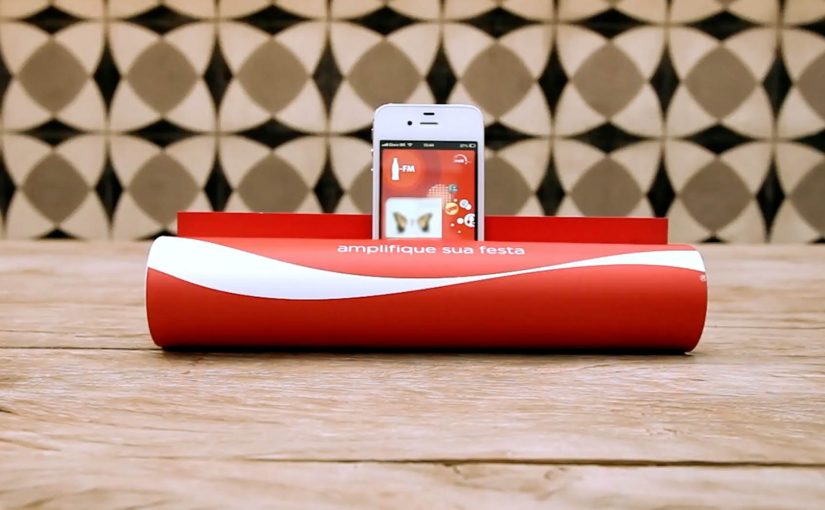
Coca-Cola: FM Magazine Amplifier

Coca-Cola to promote its FM app in Brazil allowed readers of the Capricho magazine to simply roll up the magazine and transform it into a portable amplifier for their iPhones. All the readers had to do was insert the iPhone into the spot indicated and tune into the Coca-Cola FM application. By “portable amplifier” here, I mean passive acoustic amplification from rolled paper, not electronics.

Why this is clever

The idea turns print into a functional accessory. No electronics. No QR-code dependency. Just smart physical design that rewards curiosity and makes the app the natural next step. Because the rolled magazine forms a simple acoustic horn, it directs the phone’s speaker output and makes the sound feel louder right away.

Extractable takeaway: When a piece of media becomes a working object, the “ad” turns into a demo and the digital step feels inevitable.

  • One simple action. Roll the magazine, insert the iPhone, hit play.
  • Instant utility. Louder sound is a real, immediate benefit.
  • Media becomes product. The magazine is not only a channel. It is the device.

In global consumer brands, analog-to-mobile bridges like this help when you need an obvious path into an app without adding new tech.

What to learn from it

This is a strong reminder that “mobile activation” does not always need a screen-first mechanic. When you can create a physical trigger that is obvious and satisfying, you reduce friction and increase shareability. People demonstrate it to others because it is surprising, and because it works.

The real question is how to make the next mobile step feel like a continuation of what people are already doing in the moment.

The strongest activations put physical utility first and let the app be the immediate follow-on.

  • Start with utility. Give people a benefit they can feel instantly, then invite the app as the next step.
  • Design one obvious move. Keep the interaction to a single action people can copy and demonstrate.
  • Make it easy to show. If it reliably “works”, people will hand it to someone else and replay the moment.

A few fast answers before you act

What is the Coca-Cola FM Magazine Amplifier?

It is a Capricho magazine execution in Brazil designed to be rolled into a tube that passively amplifies iPhone audio, used to promote the Coca-Cola FM app.

Why does a paper amplifier work at all?

The rolled shape acts like a simple acoustic horn, directing and concentrating the phone’s speaker output so it sounds louder.

What makes this effective as an app promotion?

The app is not advertised as a feature list. It is experienced. The physical utility creates a reason to open the app immediately.

What is the transferable pattern?

Turn media into a usable object, then connect that object to a single, obvious mobile behavior that completes the experience.

Coca-Cola Hilltop Mobile Ad

Coca-Cola Hilltop Mobile Ad

In March I had written about Google’s advertising experiment where they set out to re-imagine and remake some of the most iconic ad campaigns from the 1960’s and 1970’s with today’s technology.

During these experiments the iconic Coca-Cola “Hilltop” ad campaign was re-imagined. Fulfilling the promise of the original ad, special vending machines were created that allowed users to instantly send a Coke around the globe to unsuspecting recipients.

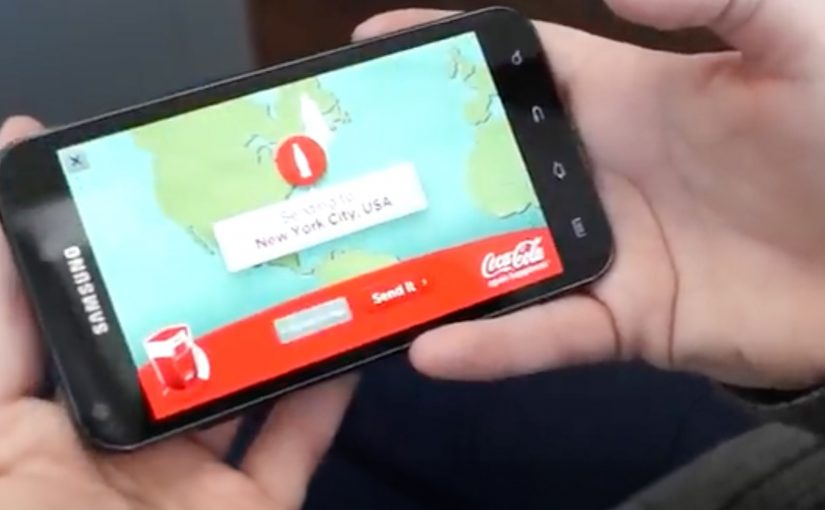
Now the whole experience has been taken onto mobile and can be experienced through the Google AdMob network, across iOS and Android devices. Viewers can now truly ‘Buy the World a Coke’ with just a few taps on their mobile phones.

What changes when “Hilltop” moves to mobile

The original re-imagining leaned into physical surprise. A vending machine became a global gifting interface. Moving that same promise into an AdMob-delivered mobile experience changes the distribution model completely. Instead of waiting for someone to encounter a special machine, the interaction can show up wherever people already spend time on their phones.

That is the real upgrade here. Not just “mobile as a smaller screen,” but mobile as a friction-reducer for participation. A few taps can replicate the core gesture. Sending a Coke to someone else. Without requiring a specific location, a specific moment, or a special install. It works because mobile removes the location and setup barriers that made the vending-machine version memorable but limited.

In global brand portfolios, the scalable opportunity is turning a famous campaign promise into a simple action people can complete wherever they are.

The real question is not whether a classic ad can be remade for mobile, but whether its core promise becomes easier to act on.

Why this is more than a nostalgic remake

Remaking a classic can easily turn into pure tribute. The stronger move here is not the tribute. It is the translation of the original promise into a faster, more repeatable action. What keeps this one relevant is that it tries to honor the original promise with a modern mechanic. Here, the mechanic is the simple user action itself: send a Coke to someone else in a few taps.

Extractable takeaway: If you want a campaign to travel, design one action that people can complete quickly and understand instantly, then let the story emerge from participation rather than explanation.

What to borrow for your next mobile campaign

If you are planning mobile work right now, this points to a few practical moves:

  • Design for one clear action. In this case, sending a Coke. Everything else is supporting detail.
  • Make sharing native to the mechanic. Gifting is inherently social and inherently repeatable.
  • Use mobile distribution for scale. An ad network can turn a niche experience into a widely reachable one, without relying on a single physical activation.

A few fast answers before you act

What is the Coca-Cola Hilltop Mobile Ad?

It is a mobile version of the re-imagined “Hilltop” campaign experience, delivered through Google’s AdMob network across iOS and Android devices.

How does this relate to Google’s advertising experiment?

It extends the re-imagining of iconic 1960’s and 1970’s campaigns, taking the Coca-Cola “Hilltop” concept from the experiment into a mobile execution.

What was the original re-imagined mechanic?

Special vending machines were created that allowed users to instantly send a Coke around the globe to unsuspecting recipients.

What is the key user promise in the mobile version?

That viewers can “Buy the World a Coke” with just a few taps on their mobile phones.

Why is the mobile move important?

It shifts the experience from a location-based activation to scalable distribution. Participation becomes possible anywhere, not only where a special vending machine exists.