
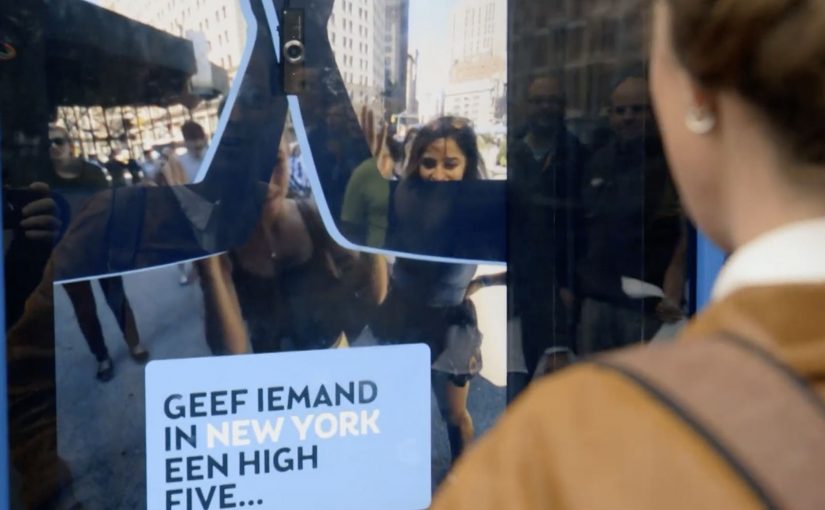
KLM: Live High Five

On 28 August, KLM connects hundreds of people in Amsterdam and New York via a live interactive video display, letting strangers on the streets of two cities come face to face.

It echoes the kind of “city to city” street connection seen before, such as the French railway (SNCF) linking Lyon and Brussels.

How the high five contest works

The twist is competitive: the connected pairs are asked to high five each other through the screens. For every successfully timed high five, participants win two tickets to New York or Amsterdam.

In global travel marketing, adding a clear participatory mechanic, meaning a simple action anyone can attempt without instruction, turns a “nice moment” into a repeatable behavior people recruit others into.

Why a high five is the right interaction

A high five is universally understood and visually obvious at distance. It is also time-bound, which creates tension. People lean in. They coordinate. They try again. That retry loop, the quick cycle of attempt, miss, adjust, and try again, is where energy builds and the crowd becomes part of the content.

Extractable takeaway: Pick an interaction that is instantly readable to bystanders, time-bound, and designed to invite visible retries. That is how the crowd becomes the amplification.

What KLM is really buying here

This is a route brand idea, meaning a story that makes a specific connection between two places feel tangible, disguised as play: KLM makes the transatlantic connection feel immediate, human, and winnable. The real question is whether your activation makes distance feel collapsible in under five seconds. This is the right kind of public interactivity when your promise is connection between places. The prize is valuable, but the real asset is the public proof that the brand can engineer connection between two cities in a way passers-by can instantly grasp.

Patterns to borrow for your own city-scale activation

  • Use one gesture everyone knows. The simpler the action, the more strangers will attempt it without instruction.
  • Add a timing challenge. Time-based coordination creates drama and repeat tries.
  • Make the reward match the story. Here, tickets reinforce the “two cities” premise.
  • Design for crowds. The best interactions are legible to bystanders, not just participants.

A few fast answers before you act

What is KLM Live High Five in one line?

A live video street installation connecting Amsterdam and New York where timed high fives between cities unlock travel tickets.

What is the key mechanism?

Two public screens link strangers in real time, then convert the connection into a simple, repeatable contest action.

Why does the high five mechanic work so well?

It is universal, physical, and instantly readable. The timing requirement creates suspense and encourages repeated attempts.

What is the biggest execution risk?

If timing feedback feels laggy or unclear, people stop retrying. The interaction needs instant, visible confirmation so the crowd stays invested.

What is the transferable lesson?

If your idea is “connection”, make people physically coordinate across distance and reward the moment with a prize that matches the narrative.
Media Markt “Money Trucks”

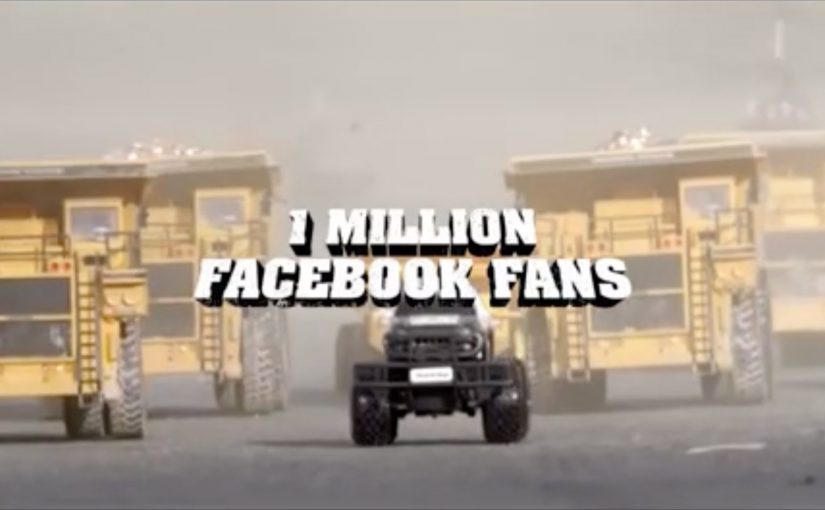
A security team clears the street in a quiet neighborhood. Neighbors step outside. Then a tiny convoy rolls in. 193 miniature “money trucks”, each loaded with 1-cent coins, drives up to the winner’s home and unloads one million cents into a growing pile in the driveway. It is a cash delivery staged like a movie scene, except the payoff is real.

The idea in one line

Celebrate a social milestone by turning “one million” into a physical spectacle people can watch, share, and retell.

What Media Markt does to mark 1 million Facebook fans

Over the last couple of years I have seen a handful of brands reach the 1 million fans milestone. To celebrate, most of them create really nice and innovative thank-you videos. A good example is Tic Tac “Likes” Matt. Media Markt hits the same milestone, but takes a very different route. It turns the number into a physical stunt people can watch, share, and retell.

Media Markt on reaching 1 million fans on Facebook launched a contest: “How many small trucks do you need to transport 1,000,000 cents?” The activation was created by Ogilvy & Mather Frankfurt.

The business intent is simple: turn a fan milestone into participatory attention that travels beyond the Facebook page itself.

How the campaign plays out

Step 1. Start with a guess that feels simple and sticky

The mechanic is deliberately basic: one question, one number, one prize framed as a million small units. It is easy to participate, and easy to share.

Step 2. Make the prize physically absurd

The winner does not receive a bank transfer. She receives €10,000 as 1-cent coins, delivered using the exact number of miniature trucks the contest asks people to estimate.

Step 3. Turn delivery into content

The delivery is filmed as a “cash-in-transit” moment: security clearing streets, convoy arriving, coins dumped into a heap. The documentation becomes the story asset that travels beyond Facebook.

In retail and mass-market marketing, milestone campaigns travel further when the audience can see the scale in the real world, not just read the number on a screen.

The numbers that make it feel “earned”

  • The correct answer is 193 trucks.
  • The winner is in Saßmicke (western Germany), and the stunt is played as a neighborhood event, not a private handover.

Why it works

This works because the mechanic turns an abstract fan count into a visible, countable spectacle people can grasp in seconds.

Extractable takeaway: If a brand milestone matters to you, convert it into a physical event with one simple unit people can instantly understand and retell.

It converts an online number into a physical reality

“One million fans” is abstract. One million coins is instantly legible, and the convoy makes the number feel even bigger.

The stunt is engineered for repeatable media beats

Announcement. Guessing phase. Winner selection. Convoy “journey” updates. Final delivery video. The campaign creates multiple moments people can follow, not one single post.

It is brand-consistent in one glance

Electronics retail competes in a world of deals and hype. This behaves like a deal, but acts like a story. The spectacle fits the loud, “big gesture” brand posture without needing product claims.

The deeper point

The real question is how to turn a passive social milestone into a public event people want to witness and retell.

This is a better move than another thank-you video because it makes participation and spectacle do the distribution work.

If you want people to care about a community milestone, do not announce the number. Stage the number. Make it participatory, then make the payoff visual enough that the community wants to distribute it for you.

How to stage a milestone people retell

  • Turn a milestone into a game: “1 million fans” becomes a concrete challenge with one guessable number.
  • Make the prize a proof object: Delivering “1 million cents” as physical trucks makes the claim visual and press-friendly.
  • Use a single, memorable unit: “Cents” is simple. People instantly understand the scale without explanation.
  • Let the reveal be the content: The answer plus the delivery moment is the story, not a brand speech.
  • Design for retelling: If someone can summarize it in one sentence, it will travel.

A few fast answers before you act

What is the campaign mechanic?

A Facebook contest asks fans to guess how many miniature trucks are needed to transport one million cents.

What is the actual prize?

€10,000 delivered as 1,000,000 one-cent coins, transported by 193 miniature trucks.

Why does the “193 trucks” detail matter?

Because it closes the loop. The answer is not just “correct”. It becomes the logistics and the spectacle of the payout.

Who creates the campaign?

Ogilvy & Mather Frankfurt.

What is the reusable pattern?

Turn a social milestone into a simple prediction game, then make the reward delivery so visual that it becomes the main distribution asset.

MINI: Fan the Flame

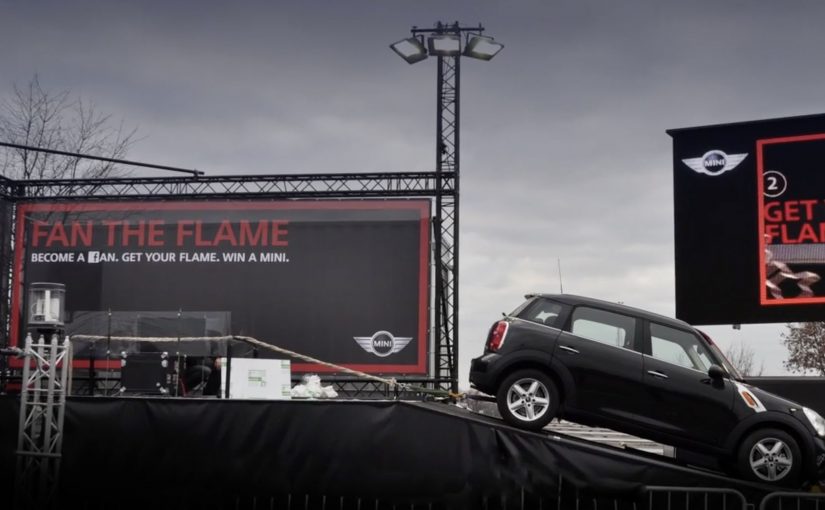
MINI, together with TBWA\Agency.com, creates a social spectacle to grow the fan base for its newly launched Facebook page in Belgium and Luxembourg.

The setup is as physical as it gets. A MINI Countryman is attached to a thick rope in the parking lot of the Brussels Motor Show, with a burner placed beneath the rope. Facebook fans are encouraged to remotely trigger the burner and shoot flames at the rope. A webcam broadcasts the scene 24×7, and the fan whose flame ultimately breaks the rope wins the MINI Countryman.

Why this is a “like” campaign people actually talk about

Most fan-growth ideas are transactional: click like, get content. This one makes the click feel consequential. Each interaction is a tiny act of sabotage against a real-world object, with a visible scoreboard outcome. The page is not just where the brand posts. It is the control panel for the event. This is the better pattern when you need fast fan growth without training people to expect freebies.

Extractable takeaway: If you want people to talk, make the social action change a visible system, then let the audience verify progress live.

The mechanism: remote control plus live proof

Mechanically, the campaign combines three ingredients: a simple trigger (fan action), a physical system (rope and flame), and continuous proof (the live webcam). The webcam is crucial because it converts a remote interaction into trust. People can see that something is actually happening, continuously, with no editing.

In European automotive social campaigns, linking digital participation to a live physical outcome is one of the fastest ways to create earned attention, meaning people talk and share without paid amplification, beyond the fan base itself.

What the prize is really doing

The real question is whether your social channel is just a feed, or a place where the audience can change something that matters in real time.

The MINI Countryman is not only incentive. It is also the symbol. The closer the rope gets to breaking, the more the prize feels “reachable”, which keeps people checking back and telling friends to join. The prize turns time into tension.

What to copy for your next live activation

  • Make the interaction visible. Live video proof makes remote participation feel real.
  • Use a simple mechanic with cumulative progress. People return when they believe their action contributes to a final outcome.
  • Put the brand in the role of facilitator. The page becomes the place where something is happening, not just the place where posts appear.
  • Design for suspense. A slow-burn system creates anticipation and repeat visits.

A few fast answers before you act

What is “MINI Fan the Flame” in one line?

A live contest where Facebook fans remotely trigger flames to burn through a rope holding a MINI Countryman, with the fan who breaks it winning the car.

Why does the webcam matter?

It provides continuous proof that the event is real and progressing, which sustains trust and repeat engagement.

What behavior is this campaign optimizing for?

Fan acquisition plus repeat visits. The tension mechanic encourages people to return and recruit others.

What is the transferable lesson for other brands?

If you want scale, connect digital actions to a visible physical outcome and design the system so progress builds suspense over time.

What is the minimum viable version of this mechanic?

Combine one clear trigger, one physical system that visibly changes, and one always-on proof stream so participants can verify progress without edits.