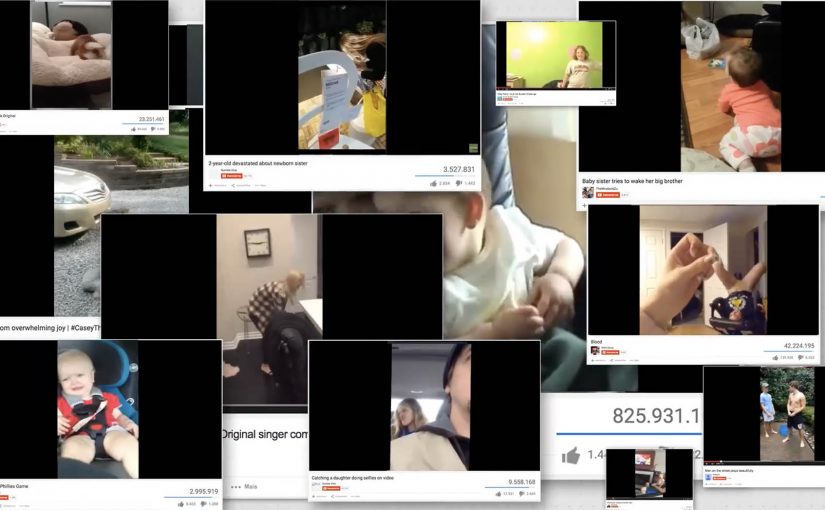
Videos that are recorded vertically and then posted online generally end up with black bars on either side. Lots of viewers find that wasted space annoying. So JWT Brazil came up with the “Black Bar Donation” campaign, which lets creators donate those bars to NGOs that need help promoting themselves.
On the campaign microsite, people select a vertical video to upload, tag it with the NGO of choice, and then publish it directly to their own channel with the NGO messaging living inside the black bars.
Turning a formatting mistake into donated media
The idea is neat because it starts from a real irritation. The bars are normally dead space. Here they become a donation surface that travels with the content, wherever the video gets shared or embedded. By “donation surface,” I mean a fixed, consistently visible part of the frame reserved for the NGO message. The “media spend” is created from a mistake people already make every day.
The mechanism: creator-led distribution with a cause payload
Traditional NGO awareness depends on buying reach or earning press. This flips the model. Creators supply the distribution. The campaign supplies the insert. Here, the “cause payload” is the NGO message container that sits in the bars and stays consistent across creator videos. NGOs receive a consistent message container that rides along with user-generated video. This is a stronger pattern than producing yet another standalone PSA, because it turns creator distribution into donated inventory.
The real question is whether your cause message can hitchhike on creator distribution instead of demanding attention on its own.
It also gives creators a low-effort way to feel helpful. Upload once, choose a cause, publish. No new platform to build an audience on. No complicated call to action.
In digital marketing where attention is scarce, the smartest cause campaigns repurpose existing media waste into useful inventory without asking audiences to change their habits.
Why the “black bars” frame is a strong creative device
The bars work because they are visually stable. They sit outside the main video action, so the NGO message does not compete with the creator’s content. At the same time, the contrast is impossible to miss because the bars are solid, empty shapes that viewers are already staring at.
Extractable takeaway: When you can transform a widely repeated user error into a benefit for someone else, you get scale through behaviour, not through budget.
A pattern for scale without media spend
- Find a ubiquitous waste surface. Dead space, downtime, defaults, leftovers. Anything people already produce at scale.
- Make contribution feel effortless. One clear action, one clear outcome. No learning curve.
- Keep the creator’s content intact. Add value around it, not on top of it.
- Design for portability. The message should travel with the asset as it gets re-shared.
- Make the intent obvious. Viewers should instantly understand that the added space supports a cause.
A few fast answers before you act
What is “Black Bar Donation” in one sentence?
It is a campaign that repurposes the black side bars on vertical videos as donated ad space for NGOs, so the NGO message travels with the video when it is published and shared.
Why does this work better than a normal PSA video?
Because it piggybacks on content people already choose to watch. The NGO message becomes part of the viewing frame, not an interruption users try to skip.
What makes this campaign scalable?
The supply is user behaviour. As long as creators keep shooting vertical video and uploading it, the campaign has new “inventory” to convert into donated space.
What is the biggest risk with this model?
Quality control and brand safety. If the creator video is problematic, the NGO message can end up adjacent to content it would never choose intentionally.
How would you adapt this idea for other platforms or formats?
Look for other consistent “frame” areas that do not disrupt the core content. Then build a simple creator workflow that lets people attach a cause payload without editing tools.