
Spanair: Unexpected Luggage

Spanair: Unexpected Luggage

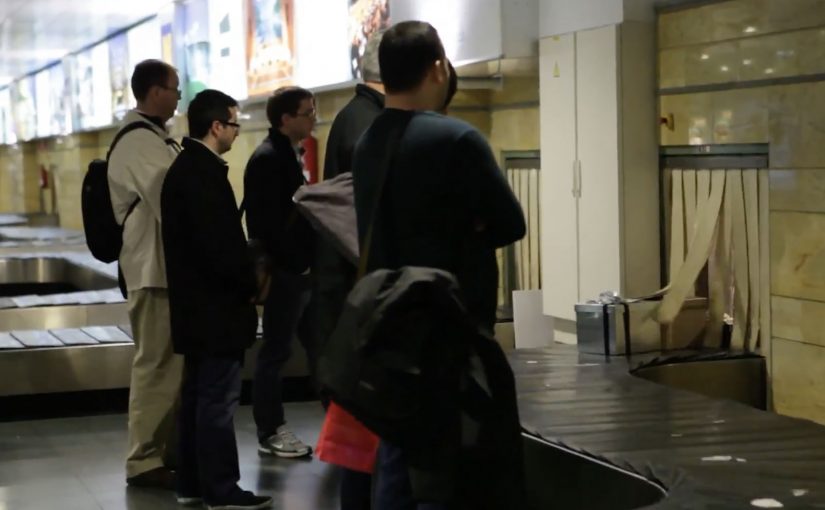
On December 24th the flight from Barcelona to Las Palmas arrived close to midnight. 190 people were flying while everyone else celebrated Christmas Eve. Spanair decided to do something special for those 190 passengers.

Instead of a routine wait at baggage claim, the luggage carousel delivered an unexpected sight. Wrapped gifts came down the belt before the suitcases did, turning a tired, end-of-day moment into a shared surprise.

How the baggage-claim surprise is engineered

The mechanic is as physical as it gets. Move the brand moment to the one place every passenger must stand still. Then use the carousel as the reveal device, with gifts replacing the expected flow of bags long enough for the crowd to realize something has changed.

In European airline marketing, the most memorable “service stories” are often built from small interventions in unavoidable touchpoints, where emotion is already high and attention is captive.

Why it lands

It respects the situation. Christmas Eve travel is already loaded with absence, fatigue, and sacrifice. The surprise works because it does not ask passengers to do anything new. It simply changes what the moment means, and it does so in front of everyone, so the reaction becomes collective rather than private.

Extractable takeaway: If you want a brand moment to feel generous rather than promotional, place it inside an unavoidable friction point, and make the reveal about relief and recognition, not about brand messaging.

What Spanair is really buying

This is “customer experience” as media. The spend is focused on a small number of people, but the output is a story that travels because it is easy to retell and easy to believe. A luggage belt of gifts is visual proof, not a claim.

The real question is how to turn a routine service touchpoint into proof that people will remember and retell.

What to steal for your own service brand

  • Use captive moments. Baggage claim, check-in lines, boarding queues, and waiting rooms are attention-rich environments.
  • Let the environment do the talking. When the space changes, you do not need much copy.
  • Design for group emotion. Collective reactions create social permission to film, share, and talk.
  • Make the proof unmistakable. If the story can be doubted, it will not travel far.

A few fast answers before you act

What is the core idea of Unexpected Luggage?

Surprise passengers at baggage claim by swapping the expected luggage moment for a gift reveal, turning a routine wait into a shared holiday experience.

Why does baggage claim work so well as a stage?

Everyone must be there, everyone is watching the same thing, and the carousel is already a natural reveal device. That makes the surprise instantly legible.

What makes this feel authentic instead of gimmicky?

The gesture fits the context. It acknowledges what it means to travel on Christmas Eve and gives something back without requiring participation or performance from passengers.

What is the biggest risk when copying this approach?

If operations are not tight, the surprise turns into delay and frustration. The moment must feel like relief, not disruption.

Does this only work for airlines?

No. The same pattern can work in any service setting with a captive, shared wait, as long as the intervention fits the moment and does not create extra friction.
Daffy’s: The Undressing Room

Daffy’s: The Undressing Room

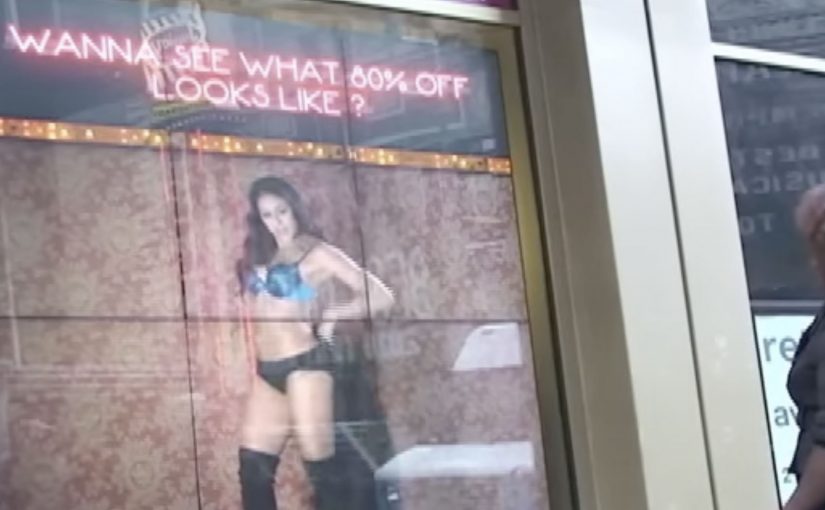
You are walking past a Daffy’s store window in Manhattan and it looks like a fashion show has moved onto the street. Models are inside the display. A crowd is outside. And the public is controlling what happens by text message.

Daffy’s is a fashion retailer from NYC. For their fall fashion launch, they created a street-level event that blended window shopping, a fashion show, and an interactive peep show, meaning passers-by could text outfit requests to models inside while the exchange played out publicly on the glass, to create live interaction from hundreds of passers-by for an entire day and night.

The idea was simple. Put great-looking models in the window with items from the new range. Ask the public at street level to text a special number for each model, requesting specific items to try on and then change out of. Each message was projected onto the store window, letting the crowd follow the conversation, while the models used phones to interact with people on the street.

That shift from window to stage is what turns a shopfront into a live media channel when footfall competes with endless distractions.

Why the mechanism pulls a crowd

The mechanism is a tight loop. You text. Your message appears publicly. The model responds with an immediate, visible action. That creates instant feedback, plus social proof, because everyone can see that participation changes the experience.

Extractable takeaway: When participation is public and the response is immediate, bystanders become an audience because they can see cause and effect in real time.

It also turns fashion into a game with a scoreboard you can read. The projected message stream makes the crowd feel like a single audience, not scattered individuals passing by.

In high-traffic retail corridors, the format works best when the interaction loop is visible to everyone, not just the person who texts.

What Daffy’s is really buying

This is not just “engagement” for its own sake. It is earned attention at street level, then a shareable story that travels beyond the location. The activation is designed to make people stop, watch, talk, and tell others to come over.

The real question is whether you are designing for fast, visible participation that creates social proof, or just staging a spectacle.

This pattern is worth copying only when you can keep the loop tight and keep people safe once the crowd forms.

According to Daffy’s communications, more than 1,500 text messages were received between 6:00 p.m. and 9:30 p.m., and the event was suspended twice by NYC police due to crowd overflow impacting pedestrian and vehicle traffic.

Practical takeaways for interactive storefronts

  • Make the audience the controller. Participation should change something real, not just “send a message”.
  • Project the input publicly. Visibility creates social proof and gives bystanders a reason to join.
  • Design for fast feedback. The shorter the gap between action and response, the bigger the crowd gets.
  • Let the store be the medium. If the window is already the brand’s stage, use it as one.

A few fast answers before you act

What was Daffy’s “Undressing Room”?

A storefront window event where passers-by texted requests to models inside the window, and the messages were displayed publicly so the crowd could follow along in real time.

Why does projecting messages onto the window matter?

It turns private participation into a public feed. People see that the experience is live, and that others are actively shaping it, which increases curiosity and crowd growth.

What’s the core interaction design pattern here?

Public input plus immediate physical response. The text is the trigger. The window action is the payoff.

What makes this more effective than a normal fashion show?

Viewer control. People do not just watch. They influence what happens, and that makes them more likely to stay, share, and bring others.

What’s the biggest operational risk with this kind of activation?

Crowd control. If the moment works, it attracts more people than a normal storefront can safely handle, so permits and on-site management matter.

Kit Kat: Jesus Loves Kit Kat

Kit Kat: Jesus Loves Kit Kat

When a bite turns into a “sighting”

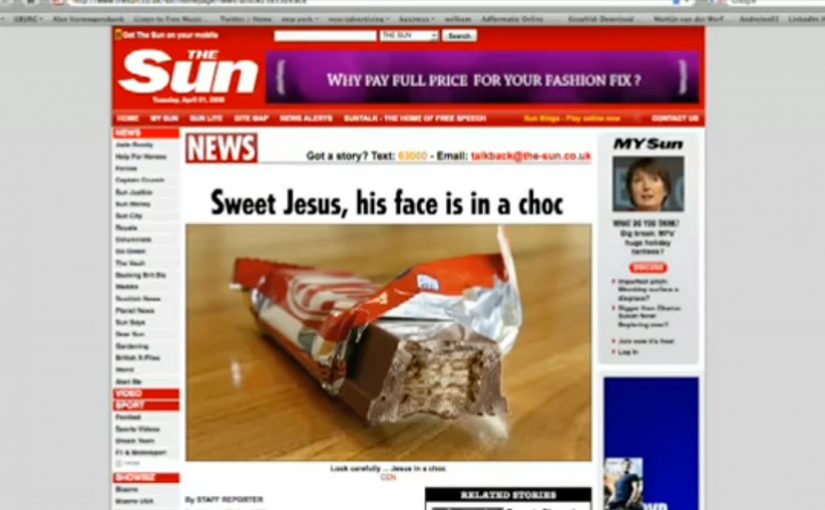
Every so often the internet latches onto a “miracle” story. This one starts with a simple, everyday moment. Someone takes a bite of a Kit Kat, and suddenly the bite pattern is framed as a face. Cue the inevitable question. Is it real, or is it just our brains doing what they always do with patterns?

Either way, the punchline lands immediately because the brand line is already waiting for it. Jesus loves Kit Kat. Have a break. Have a Kit Kat.

The stunt behind the headline

The mechanism is a simple one. Take a familiar cultural pattern. The “miraculous sighting” story. Then attach it to an everyday object and let curiosity do the distribution work.

In European FMCG marketing, low-budget PR seeding, meaning you plant the story with a few publishers to trigger pickup, can outperform paid media when the story is easy to retell and the brand cue, the unmistakable product signal inside the joke, is inescapable.

In this case, the campaign is described as being kick-started by sending a tip to major Dutch news sites about a “Jesus face” discovered in a bitten Kit Kat, complete with “proof” photos. Once the story lands, the audience spreads it for free, partly to react, partly to mock, and partly to forward the joke. That works because the audience is invited to judge the “realness” and repeat the brand line while they do it.

Why it lands: the audience writes the punchline

It works because the viewer instantly knows what to do with it. “Is it real” is the hook. “Obviously not” is the release. Then the slogan becomes the comment section fuel, because “Have a break” and “Give me a break” are ready-made responses that keep repeating the brand.

Extractable takeaway: If you use a familiar “sighting” format, design the sharing loop so people repeat the brand line as they debate whether it is “real”.

What the brand is really buying

The real question is whether the stunt forces a repeatable brand line, not whether anyone believes the “sighting”.

This is not persuasion. It is memory and talk value, meaning the worth of being talked about. The goal is to force a moment of attention in a low-involvement category, then lock the attention to a slogan people already know well enough to quote without effort.

Steal the “sighting” shape for earned reach

  • Use a story shape people already recognise. Familiar formats travel faster than “new idea” explanations.
  • Make the brand cue inseparable from the joke. If the gag works without the product, you are funding entertainment, not brand recall.
  • Design for repeatable phrasing. The best hooks come with a built-in line people will type in their own words.
  • Know the risk. Hoax-style PR, where you let people briefly wonder if it is real, can backfire if your category depends on trust, seriousness, or institutional credibility.

A few fast answers before you act

What is happening in “Jesus Loves Kit Kat”?

A playful “sighting” style story frames a bitten Kit Kat as if it reveals a face, and the curiosity and debate around it drives sharing.

What is the core mechanism?

PR seeding plus a familiar meme-like story format. People click to judge it, then share to react, mock, or pass along the joke.

Why does this kind of story travel fast?

Because it is easy to retell and invites opinion. The audience becomes the distributor by arguing about whether it is “real”.

What is the brand risk to watch?

Hoax-style hooks can backfire in categories where trust and seriousness matter. The technique needs category-fit and tone discipline.

What is the most transferable takeaway?

If you use a cultural format people already recognise, make sure the brand cue is inseparable from the punchline, otherwise the joke outlives the brand.