
Andes Beer: Friend Recovery

Andes Beer: Friend Recovery

Following the success of the Andes Teletransporter in 2009, and its reported Grand Prix win at the 2010 Cannes Lions festival, Andes, the No. 1 beer from Argentina’s Andean region, is back with another invention designed to keep friends together for longer.

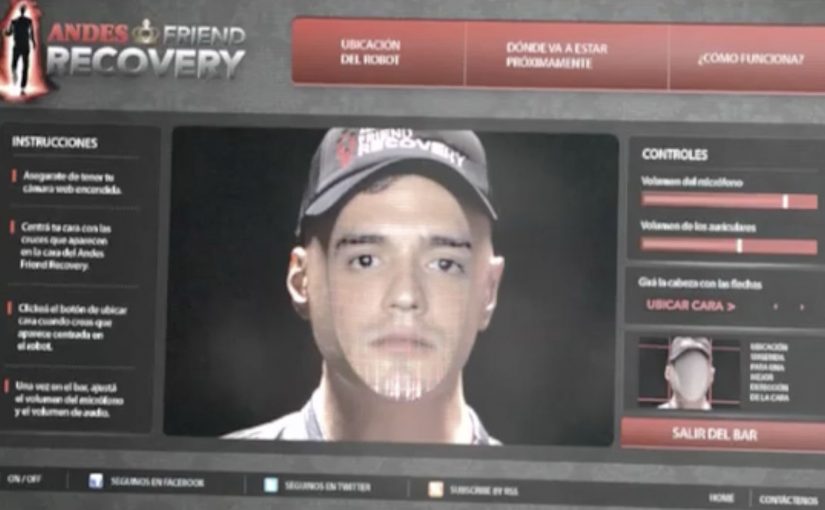
Andes Friend Recovery (AFR) is a telepresence robot with human features, installed in key bars in Mendoza. The pitch is deliberately simple. You can be “present” at the bar with your friends while still being physically somewhere else, taking care of whatever obligations pulled you away.

A bar table that comes with a remote seat

The mechanism is a dedicated AFR table in a bar, plus a robot that becomes your stand-in. Your friends start the session at the table. You authenticate remotely, map your face via webcam, and your live presence appears at the bar through the robot.

This is a physical version of “status update.” Instead of telling friends you will join later, you join now, with viewer control over a real viewpoint and a real conversation happening in real time.

In social, venue-led categories, the easiest growth lever is reducing the friction that ends the occasion early.

The real question is whether you can make “I can’t make it” feel like a solvable problem at the table, not a polite apology in a text thread.

Why the trick works

The appeal is not robotics. It is social continuity. AFR treats friendship as an appointment you should not have to cancel just because you are temporarily stuck elsewhere, and it makes the solution tangible enough to demo in one minute. Because the mechanism turns absence into a visible, physical stand-in, the group gets a concrete reason to keep the occasion going instead of wrapping it up.

Extractable takeaway: When your brand benefit is “more time together,” do not talk about it in slogans. Build a mechanism that removes the one blocker that ends the moment, then make that mechanism visible and easy to explain so people spread it for you.

How it works

  1. Your friends go to a bar and sit at the Andes Friend Recovery table.
  2. They ask for a password which is sent to you via an SMS, while you fulfil your boyfriend duties.
  3. Wherever you are you log in to the AFR page and use the webcam to map your face.
  4. Then you appear at the bar via the Andes Friend Recovery robot.

The numbers the case story leans on

AFR is described as being installed across major bars in Mendoza during October and November 2010. In that period, the campaign is reported to have driven over 2 million website visits, with around 5,000 “recovered” friends.

Friend Recovery moves worth borrowing

  • Remove the exit friction. Target the one blocker that ends the occasion early, then design the experience to neutralize it.
  • Make the mechanism instantly demoable. If the benefit is “more time together,” a visible, one-minute explanation travels further than a slogan.
  • Keep the framing playful. Anchor the joke in friendship and social continuity, not in teaching deception, so the stunt does not backfire.

A few fast answers before you act

What is Andes Friend Recovery?

It is a bar activation using a telepresence robot so a person can appear at a bar table remotely via webcam while being physically somewhere else.

What is the core mechanic that makes it feel “real”?

Two-way presence. Your face and voice show up at the table, and your friends interact with a physical avatar in the bar, not just a chat window.

Why does this count as experiential marketing, not just a film idea?

Because the primary value is delivered by a real installation in real bars. The video is the distribution layer, but the product is the experience.

What makes a stunt like this risky for the brand?

Tone and social framing. If it feels like a “how to lie” tutorial, it can backfire. It works best when it stays in playful exaggeration and focuses on friendship, not deception.

What should you measure if you try a “remote seat” activation?

Track whether the mechanism extends time together (session length and repeat use) and whether the demo travels (views, shares, and visits), then compare results to normal nights without the installation.
XS4ALL: Tonga Time

XS4ALL: Tonga Time

Switching internet providers in the Netherlands is often a time-consuming business, which is exactly why many people prefer not to switch at all.

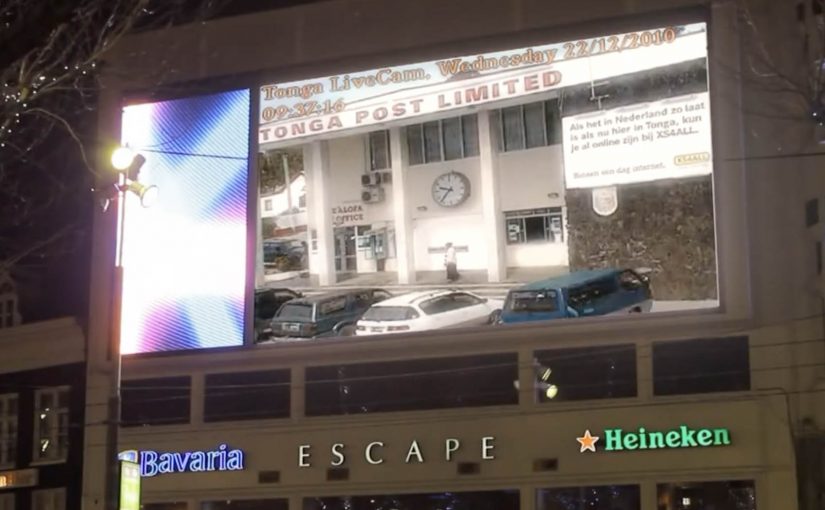
XS4ALL sets out to change that with a promise that sounds almost like a hack. A connection in one day. The campaign idea is framed as “Tonga: Where Time Begins”. Order your connection at 11am Tonga time, and you can have it installed before it is 11am Netherlands time on the same day.

Putting “one day” on a clock

To make the promise tangible, Ogilvy Amsterdam erects a billboard on the Tonga post office. Alongside the billboard, a clock shows the local time in Tonga, described as being about 11 hours ahead of the Netherlands. The clock turns the claim into a visible countdown. Tonga is already “tomorrow”, so the installation can happen “today”.

The real question is not whether XS4ALL can claim speed, but whether it can make that claim feel believable before people experience the service. The strongest move here is turning service logistics into something viewers can verify in one glance.

In telecom markets where switching friction creates inertia, the fastest way to sell speed is to make the time advantage physically visible, not just verbally promised.

Why it lands

The idea works because it uses a real-world fact as the proof mechanism. Time zones are non-negotiable, so the promise borrows credibility from geography, not copywriting. The billboard and the clock also do something important. They take a service promise that feels abstract and make it photographable, retellable, and easy to understand in one glance.

Extractable takeaway: When your differentiator is speed, anchor it to a constraint the audience already trusts, then build a single physical artifact that turns the claim into a visible demonstration.

How to turn speed into visible proof

  • Make the promise measurable. A clock beats a tagline when the benefit is time.
  • Borrow credibility from a fixed reality. Geography, physics, rules, and infrastructure can outperform persuasion.
  • Create a shareable proof object. A single photo should communicate the idea without explanation.
  • Translate operations into a story. “Installed in one day” becomes a narrative people can repeat.

A few fast answers before you act

What is the core idea of “Tonga Time”?

Use Tonga’s head-start time zone to demonstrate that XS4ALL can deliver a new connection within a day, and make that promise tangible with a public clock and billboard.

Why choose Tonga for this message?

Because it is positioned as “where time begins”, so it provides a simple, memorable way to explain how the installation can happen before the Netherlands reaches the same clock time.

What does the clock add that a normal billboard cannot?

It turns a claim into a live reference. People can see the time difference and understand the “within one day” logic immediately.

What is the main risk of using time zones as proof?

If the exact time difference changes seasonally or is reported inconsistently, the concept still holds, but the numeric detail can be challenged.

When is this pattern most useful?

When you are selling speed or responsiveness, and you can tie the benefit to a trusted external constraint that makes the claim feel undeniable.

Spanair: Unexpected Luggage

Spanair: Unexpected Luggage

On December 24th the flight from Barcelona to Las Palmas arrived close to midnight. 190 people were flying while everyone else celebrated Christmas Eve. Spanair decided to do something special for those 190 passengers.

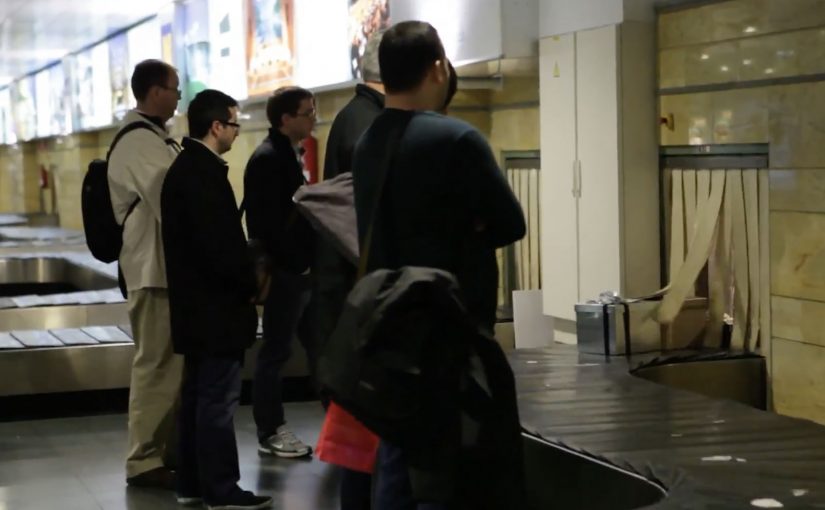
Instead of a routine wait at baggage claim, the luggage carousel delivered an unexpected sight. Wrapped gifts came down the belt before the suitcases did, turning a tired, end-of-day moment into a shared surprise.

How the baggage-claim surprise is engineered

The mechanic is as physical as it gets. Move the brand moment to the one place every passenger must stand still. Then use the carousel as the reveal device, with gifts replacing the expected flow of bags long enough for the crowd to realize something has changed.

In European airline marketing, the most memorable “service stories” are often built from small interventions in unavoidable touchpoints, where emotion is already high and attention is captive.

Why it lands

It respects the situation. Christmas Eve travel is already loaded with absence, fatigue, and sacrifice. The surprise works because it does not ask passengers to do anything new. It simply changes what the moment means, and it does so in front of everyone, so the reaction becomes collective rather than private.

Extractable takeaway: If you want a brand moment to feel generous rather than promotional, place it inside an unavoidable friction point, and make the reveal about relief and recognition, not about brand messaging.

What Spanair is really buying

This is “customer experience” as media. The spend is focused on a small number of people, but the output is a story that travels because it is easy to retell and easy to believe. A luggage belt of gifts is visual proof, not a claim.

The real question is how to turn a routine service touchpoint into proof that people will remember and retell.

What to steal for your own service brand

  • Use captive moments. Baggage claim, check-in lines, boarding queues, and waiting rooms are attention-rich environments.
  • Let the environment do the talking. When the space changes, you do not need much copy.
  • Design for group emotion. Collective reactions create social permission to film, share, and talk.
  • Make the proof unmistakable. If the story can be doubted, it will not travel far.

A few fast answers before you act

What is the core idea of Unexpected Luggage?

Surprise passengers at baggage claim by swapping the expected luggage moment for a gift reveal, turning a routine wait into a shared holiday experience.

Why does baggage claim work so well as a stage?

Everyone must be there, everyone is watching the same thing, and the carousel is already a natural reveal device. That makes the surprise instantly legible.

What makes this feel authentic instead of gimmicky?

The gesture fits the context. It acknowledges what it means to travel on Christmas Eve and gives something back without requiring participation or performance from passengers.

What is the biggest risk when copying this approach?

If operations are not tight, the surprise turns into delay and frustration. The moment must feel like relief, not disruption.

Does this only work for airlines?

No. The same pattern can work in any service setting with a captive, shared wait, as long as the intervention fits the moment and does not create extra friction.