
Spanair: Unexpected Luggage

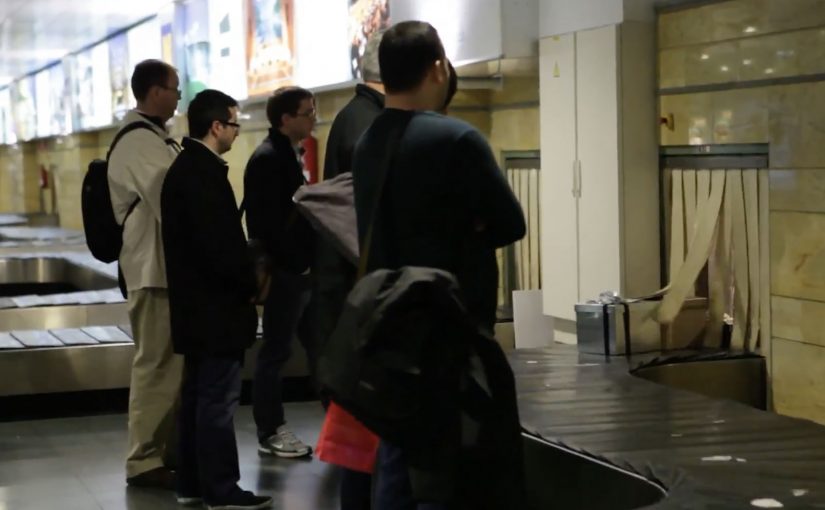
On December 24th the flight from Barcelona to Las Palmas arrived close to midnight. 190 people were flying while everyone else celebrated Christmas Eve. Spanair decided to do something special for those 190 passengers.

Instead of a routine wait at baggage claim, the luggage carousel delivered an unexpected sight. Wrapped gifts came down the belt before the suitcases did, turning a tired, end-of-day moment into a shared surprise.

How the baggage-claim surprise is engineered

The mechanic is as physical as it gets. Move the brand moment to the one place every passenger must stand still. Then use the carousel as the reveal device, with gifts replacing the expected flow of bags long enough for the crowd to realize something has changed.

In European airline marketing, the most memorable “service stories” are often built from small interventions in unavoidable touchpoints, where emotion is already high and attention is captive.

Why it lands

It respects the situation. Christmas Eve travel is already loaded with absence, fatigue, and sacrifice. The surprise works because it does not ask passengers to do anything new. It simply changes what the moment means, and it does so in front of everyone, so the reaction becomes collective rather than private.

Extractable takeaway: If you want a brand moment to feel generous rather than promotional, place it inside an unavoidable friction point, and make the reveal about relief and recognition, not about brand messaging.

What Spanair is really buying

This is “customer experience” as media. The spend is focused on a small number of people, but the output is a story that travels because it is easy to retell and easy to believe. A luggage belt of gifts is visual proof, not a claim.

The real question is how to turn a routine service touchpoint into proof that people will remember and retell.

What to steal for your own service brand

  • Use captive moments. Baggage claim, check-in lines, boarding queues, and waiting rooms are attention-rich environments.
  • Let the environment do the talking. When the space changes, you do not need much copy.
  • Design for group emotion. Collective reactions create social permission to film, share, and talk.
  • Make the proof unmistakable. If the story can be doubted, it will not travel far.

A few fast answers before you act

What is the core idea of Unexpected Luggage?

Surprise passengers at baggage claim by swapping the expected luggage moment for a gift reveal, turning a routine wait into a shared holiday experience.

Why does baggage claim work so well as a stage?

Everyone must be there, everyone is watching the same thing, and the carousel is already a natural reveal device. That makes the surprise instantly legible.

What makes this feel authentic instead of gimmicky?

The gesture fits the context. It acknowledges what it means to travel on Christmas Eve and gives something back without requiring participation or performance from passengers.

What is the biggest risk when copying this approach?

If operations are not tight, the surprise turns into delay and frustration. The moment must feel like relief, not disruption.

Does this only work for airlines?

No. The same pattern can work in any service setting with a captive, shared wait, as long as the intervention fits the moment and does not create extra friction.
Tele2: Giant Phone

Tele2 is launching a new offer that sounds technical on paper. Fixed telephony delivered through the mobile network. In plain terms, that means a home-phone style service carried over the mobile network instead of a traditional fixed line. The fastest way to make that believable is to let people use it like a normal landline.

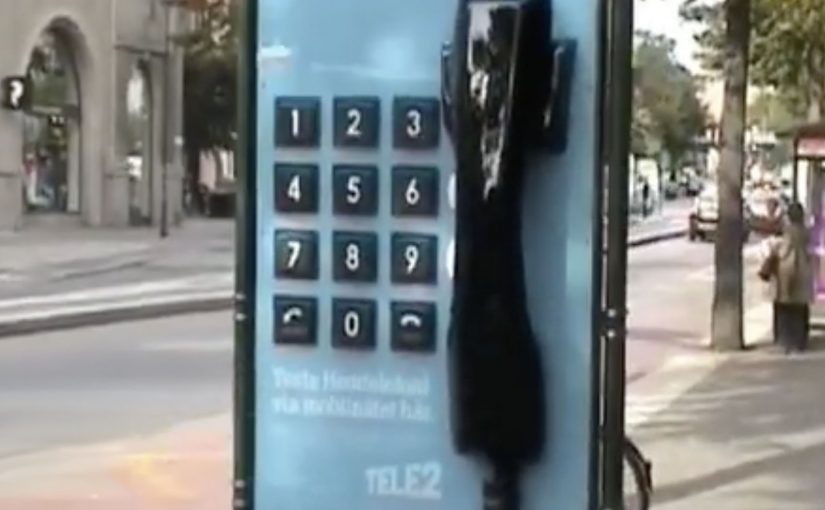
So Forsman & Bodenfors builds giant, working phones in Sweden’s three biggest cities. Passersby can pick up the handset and call whoever they want for free, whether that is a friend, a taxi, or the first number that comes to mind.

To keep the street theatre alive, Tele2 occasionally calls the giant phones. Whoever answers at that moment wins a prize.

The giant-phone mechanic

The mechanic is a physical demo of a simple promise. A “home phone” style service that rides the mobile network behaves exactly like the thing people already understand: pick up, dial, talk. The oversized installation does two jobs at once. It acts as out-of-home media you cannot ignore, and it removes friction by turning product education into a one-step trial.

In technical product launches, the most reliable shortcut to trust is an immediate, public, hands-on trial that converts jargon into a familiar behavior.

Why the simplicity message sticks

This works because the audience does not have to believe a claim. They verify it themselves in seconds. The scale makes it socially safe to participate, because the act of “trying it” is also the entertainment. The prize-call twist adds intermittent reward, which keeps attention and creates a reason to stay nearby a little longer.

Extractable takeaway: When your value proposition is hard to explain, design a live interaction where the user completes the core promise in one obvious action, then let the environment do the storytelling.

What Tele2 is really selling

The obvious message is “it’s easy.” The real question is whether the new delivery model feels familiar enough to trust. The deeper message is “it’s close enough to the old thing that switching feels low-risk.” The activation reframes a potentially abstract network feature as continuity: you still have a phone experience, just delivered differently.

Launch lessons from the giant-phone demo

  • Prototype the promise. Build a demo that behaves like the old habit, even if the technology underneath is new.
  • Make the demo the media. If the unit cannot be ignored, you buy awareness and comprehension with the same spend.
  • Keep participation effortless. “Pick up and call” beats any explanation panel.
  • Add a timed trigger. A random callback, reward, or live moment gives people a reason to linger and talk about it.

A few fast answers before you act

What was Tele2 trying to prove with the giant phones?

That its fixed-telephony offer delivered over the mobile network feels as straightforward as a traditional landline. You pick up a handset, dial, and it works.

Why use giant phones instead of a standard street team?

The scale creates instant attention and makes the demo impossible to miss. It also turns the product trial into a public spectacle that others notice and join.

What makes this an effective “technical product” launch pattern?

It replaces explanations with verification. A user experiences the core benefit directly, which reduces skepticism and increases recall.

How does the prize-call element help the concept?

It creates anticipation and a reason to stay engaged, while adding a simple narrative hook people can repeat to others.

Where does this approach work best today?

Any launch where the promise is “this new infrastructure behaves like the old familiar thing,” such as networks, payments, or connected services that need trust before adoption.

BMW Motorrad: Flash Projection

German ad agency Serviceplan was given the challenge to turn young potential motorbikers into fans of BMW Motorrad by staging the brand in an unseen and fascinating way.

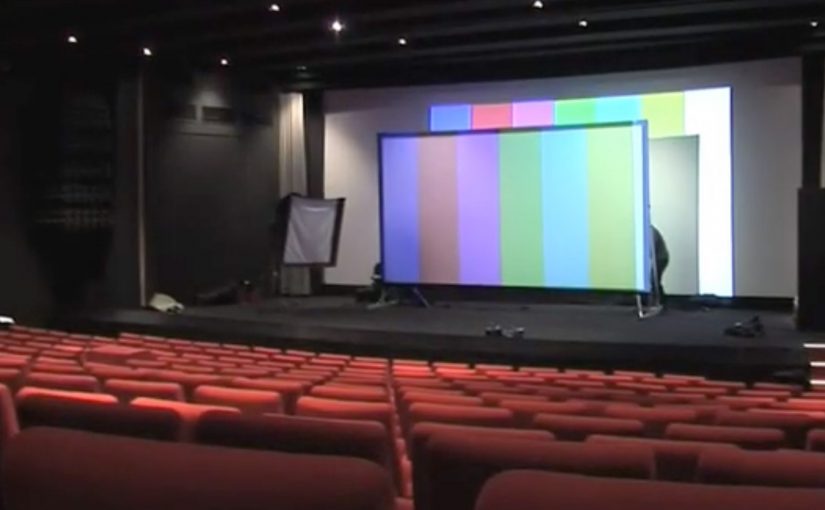
So they came up with the first cinema commercial that does not use a directly visible logo. During an exciting Superbike commercial they illuminated the BMW logo with a harmless photo flash onto the audience’s eyes. When the audience was asked to close their eyes at the end of the ad, they were surprised to see the BMW logo as an after image. An after-image is a short-lived imprint that remains visible when you close your eyes after a bright flash.

The real question is how to make the brand mark feel like part of the entertainment instead of an interruption.

In consumer marketing for high-involvement products like motorcycles, cinema is a rare environment where you can orchestrate a shared, sensory moment at scale.

People who visited the movie shows were fascinated by this innovative performance. BMW Motorrad got a lot of positive feedback, especially excited comments on various biker blogs. Even film critics wrote about the event in their reviews. And of course there were several reports on TV.

At the pre-season opening of BMW Motorrad a significant number of younger people asked for information material about Ruben Xaus and his Superbike, the BMW S 1000 RR. The S 1000 RR then went on to be sold out till September 2010. A huge success in midst of a declining bike market.

Why this works

This is stronger than conventional logo-first advertising because the flash-driven after-image turns a passive viewing moment into a physical experience, and that surprise is what makes the branding stick.

Extractable takeaway: If you can design a single sensory moment that only works in one context, the experience carries the brand further than repetitive on-screen logo exposure.

  • The stunt is the branding. The logo is not “shown”. It is experienced, and that experience is hard to forget.
  • Perfect context. Cinema is built for attention and darkness. Both amplify an after-image effect.
  • Talk value is baked in. People leave the room with a story they can only explain by reenacting it.

Borrow the after-image pattern

  • Design a physical moment. Aim for a simple mechanic that the audience feels, not just sees.
  • Make the logo the reward. Let branding appear as the punchline of the experience, not as wallpaper throughout.
  • Engineer retellability. Build an effect people can only explain by reenacting it, so word of mouth carries the message.

A few fast answers before you act

What did BMW Motorrad do in this cinema activation?

They used a controlled photo-flash to create a BMW logo after-image in viewers’ vision during a Superbike-themed commercial, so the branding appeared when people closed their eyes.

Why is the “no visible logo” idea powerful?

Because the audience becomes the medium. The logo lives in their perception, which can feel more personal and more memorable than seeing it on screen.

What made it spread beyond the cinema?

The effect triggered strong word of mouth and coverage. People talked, bloggers reacted, critics mentioned it, and TV reported on it.

What is the reusable pattern for brands?

Create one clear sensory moment that is only possible in a specific context, then let that experience carry the brand into conversation afterwards.