
Andes Beer: The Teletransporter

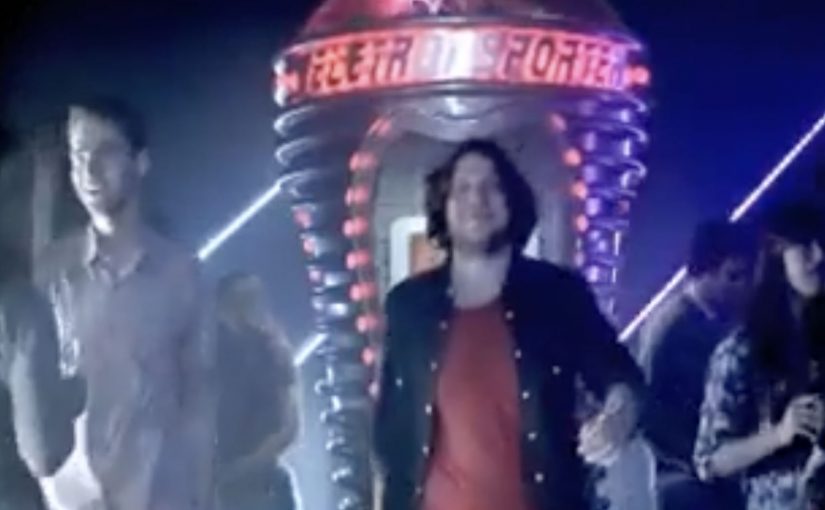
In order to get more men to the bars to drink beer, Andes, the leading beer in Mendoza, Argentina, goes ahead and creates the “Teletransporter”. It is a soundproof booth inside a bar that plays selectable ambient sound effects so a caller hears a believable environment.

The promise is cheeky. Men can stay out longer with friends without triggering the usual “where are you” friction at home.

A booth that lets you be “out” without leaving the bar

The mechanism is a soundproof booth placed inside bars. Step in when the phone rings, pick a believable background, and let the audio do the convincing. Traffic. Office ambience. Family situations. Anything that sounds like you are somewhere other than a bar.

In consumer beer marketing, the fastest path to more consumption is often removing a social friction that makes people leave early.

Why it lands, even with the obvious moral wobble

The idea works because it is built on a truth the audience recognizes instantly, and then turns that truth into a physical product-like solution. The “invention” format makes it feel playful rather than preachy, and the booth makes the benefit tangible.

Extractable takeaway: If your category depends on time spent in a context, design an intervention that reduces the one reason people exit early. Then turn that intervention into a visible, demo-able object so the story spreads without explanation.

The real question is whether you can turn a taboo insight into a playful, tangible demo without making the audience feel judged.

Brands should treat deception as the punchline, not the instruction, and walk away if the work cannot stay in obvious exaggeration.

That said, the premise depends on deception, and the tone matters. The execution frames it as a comic release valve rather than advice, which keeps the work in “bar joke” territory instead of “relationship handbook” territory.

How to borrow the Teletransporter move

The teletransporter is not only a film idea. It is a bar-side utility that creates a reason to stay for “one more,” and a reason to talk about Andes after the night ends.

  • Target the exit trigger. Identify the one social friction that makes people leave early, then design the smallest intervention that reduces it.
  • Make the benefit tangible. Turn the intervention into a visible, demo-able object in the venue so the story spreads without explanation.
  • Police the tone. Keep it firmly in playful exaggeration, or it can read as mean, misogynistic, or genuinely encouraging dishonesty.

A few fast answers before you act

What is the Andes Teletransporter?

It is a soundproof booth installed in bars that plays selectable ambient sound effects so callers hear a believable environment, making it easier for someone to take a call and claim they are not at the bar.

Why does this count as experiential marketing?

Because the core benefit is delivered through a real object in a real venue. The film is the amplification. The booth is the experience.

What is the key mechanism that makes it spread?

Instant retellability plus demonstration. People can explain it in one line, and the booth can be tried and recorded on the spot.

What makes the Teletransporter feel like a “product”?

It packages a familiar tension into a usable utility in the venue. A named object with a clear function is easier to try, film, and retell than a one-off joke.

What is the biggest brand risk in ideas like this?

Tone. If it feels mean, misogynistic, or genuinely encouraging dishonesty, it can backfire. The execution needs to stay firmly in playful exaggeration.
Hyundai A-League: Gift Wrapping Swindle

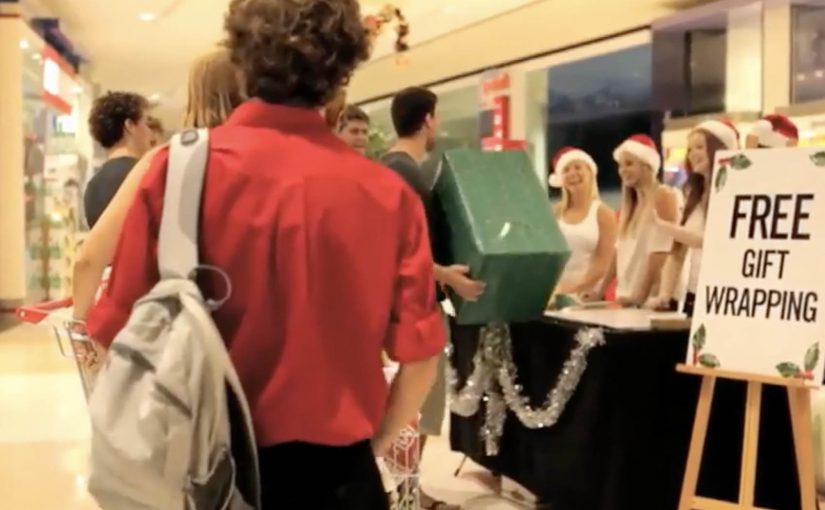
Getting people into a stadium rarely starts with sport. It starts with habit. Lowe in Sydney uses the pre-Christmas rush to put a match invitation into a moment people already care about, without needing another ticket ad.

A Christmas “service” that flips into promotion

The activation doesn’t fight for attention in a new media slot. It borrows an existing ritual, getting gifts ready, when people are already in a generous, social mindset and open to small surprises.

The smart part is the order of operations. It feels like help first, marketing second, which lowers resistance and makes the message easier to carry into conversation afterwards.

The reveal is the media

Once people opt in, the experience pivots. What looks like a straightforward offer becomes a playful con, and that pivot is the part people remember and retell.

That retelling is the distribution engine. It converts passive reach into a personal anecdote, and personal anecdotes are what move a friend group from “I saw something” to “we should go.”

In crowded sports and entertainment markets, attendance is often won at the everyday decision points where people choose what they will do with their next free evening.

The real question is whether you can turn an attendance ask into a story people want to retell, not just a message they notice.

Why the idea lands so well

The “swindle” framing does two jobs at once. Here, “swindle” simply means a playful bait-and-switch, the wrapping offer flips into a match invite. It creates tension and emotion in the moment, and it makes the participant feel involved, not targeted. The reaction is the content, and the retelling is the distribution.

Extractable takeaway: If you can attach your message to a real-world ritual that people already care about, you don’t need to “earn attention” from scratch. You simply redirect it, then give people a story they can repeat without you.

This is also listed in Effie Awards Australia reporting as a winner in the “Most Original Thinking” category, which fits the design: a small behavioural hack, not a big media buy.

What the league is really buying

The hidden win is not just awareness. It’s habit disruption. You take a non-football moment and reframe it as football-adjacent, then you push the idea of attending into a context where people are already planning social time around the holidays.

A ritual-first activation like this beats incremental ticket messaging because it recruits people’s social planning habits, not just their attention.

That’s how you move from “I saw an ad” to “we should go”. The campaign manufactures a nudge that feels organic because it is embedded inside a familiar activity.

Ritual-based attendance nudges to copy

  • Pick a ritual with built-in foot traffic: shopping, commuting, queues, checkouts, waiting rooms.
  • Make the reveal the message: the twist should be the reason people talk, not an extra layer you explain after.
  • Design for retelling: if the story can be repeated in one sentence, it will travel further than the experience itself.
  • Keep the CTA implicit: the best outcome is that people decide to act while they are still talking about what happened.

A few fast answers before you act

What is “The Great Christmas Gift Wrapping Swindle”?

It’s a holiday-season activation that turns gift wrapping into a surprise promotional stunt, engineered to spark conversation and drive attendance.

Why is gift wrapping a smart channel for sports marketing?

Because it’s a ritual people willingly engage with. The message travels physically with the gift, and the moment is social by default.

What makes this more effective than a standard ticket ad?

The participant becomes the messenger. A prank-style reveal produces a story, and stories outperform slogans when it comes to getting people to act.

What’s the main risk with prank mechanics?

If the reveal feels mean-spirited or wastes people’s time, you get backlash without benefit. The tone has to stay playful, and the participant has to feel “in on it” quickly.

How do you adapt the pattern outside sports?

Attach your offer to a real-world ritual in your category. Then design one clear twist that transforms the ritual into a story people want to repeat.

McDonald’s: Steaming Bus Shelter

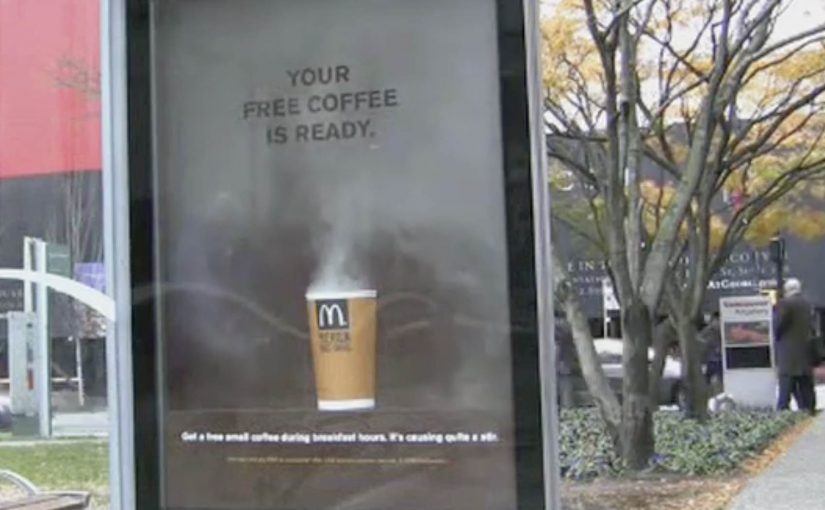
Over the last couple of months we have seen some innovative bus shelter ideas from Cadbury and Coca-Cola. Now McDonald’s joins in with a cup of coffee that looks like it is still breathing.

Steam that writes the message for you

Instead of printing “hot coffee” on the poster, the execution uses real-looking steam rising from the cup. As the steam drifts across the panel, a simple line appears and disappears, turning a static bus shelter into a time-based reveal.

Interactivity here is low-tech but real. The ad changes over time in front of you, without screens, taps, or instructions. That works because a behavior you can see in real time makes the product benefit feel proved rather than merely claimed.

In out-of-home advertising, the strongest work turns waiting time into a short, sensory experience that people understand in a glance.

Why this lands in the street

Steam is a credibility cue. It signals warmth, freshness, and immediacy. At a bus stop, that matters because you are standing still, watching your breath in the cold, and you have time for one small surprise that feels physical rather than “ad-like”. The reveal also creates a micro-rhythm. By micro-rhythm, the ad creates a simple pattern of pause, reveal, and reset that a passer-by can read in seconds. Nothing happens. Then it happens. That pacing earns a second look.

Extractable takeaway: If you can make the medium behave like the product, you reduce explanation to near zero. The environment becomes your proof point, and the call-to-action feels like the obvious next step.

What McDonald’s is really buying with this shelter

This is a promotion mechanic disguised as a moment of theatre. The shelter does three jobs at once: it dramatizes the heat of the coffee, it frames the offer as “ready now”, and it catches commuters at the exact time window when a breakfast purchase is plausible.

The real question is whether the shelter makes hot coffee feel immediately available in the exact moment a commuter might buy it.

It also borrows the social logic of street magic. When something unexpected happens in public, people point it out. That turns one paid placement into multiple conversations, and it does it without adding complexity for the passer-by.

What to steal for your next transit activation

  • Use a single sensory cue. One clear signal beats layered cleverness in a noisy street.
  • Build a reveal that loops. A repeating moment gives late arrivals a chance to see it.
  • Make the message readable mid-glance. Design for people who look up for two seconds, not twenty.
  • Time the call-to-action to the context. Commuters make different choices at 8am than at 8pm.
  • Let the placement do the targeting. Transit media already filters for routines. Do not overcomplicate the copy.

A few fast answers before you act

What makes this bus shelter execution “interactive”?

The panel changes in real time in front of the viewer. The steam effect creates a repeating reveal, so the message appears and disappears rather than sitting permanently on the poster.

Does this need digital screens to feel modern?

No. The “modern” part is the behavior. A physical effect that updates over time can feel as fresh as a screen when it is tightly connected to the product benefit.

What is the main marketing objective here?

To drive immediate trial during a breakfast window by making “hot coffee” feel tangible, and by framing the offer as available right now.

What is the biggest risk with executions like this?

If the effect is subtle, unreliable, or hard to see from a normal standing distance, the entire idea collapses. The reveal must be legible without effort.

When is a bus shelter the right medium for this kind of idea?

When your message benefits from a short looped demonstration, and when your audience is naturally paused. Transit environments provide both attention and repetition.