
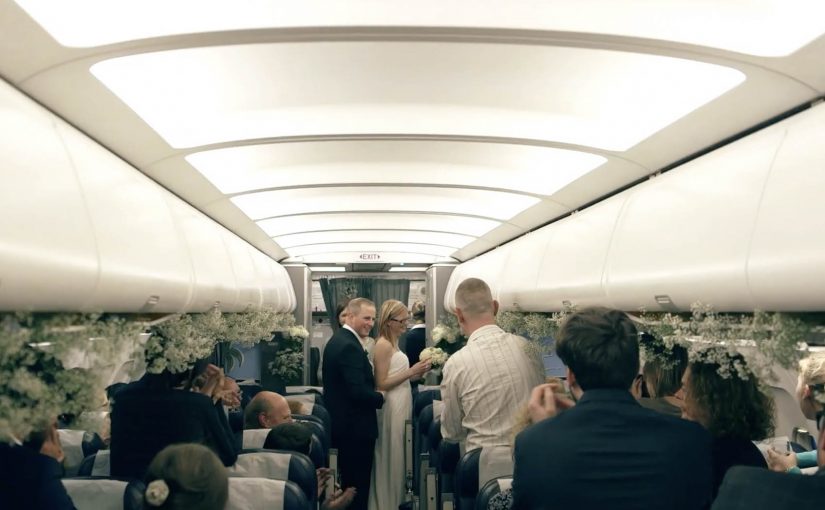
Thomas Cook: Surprise Wedding on a Plane

The secret to epic video marketing is to start with the smile of your audience, and then work back from there. In this stunt, Thomas Cook Travel Belgium does exactly that.

Thomas Cook asked fans on Facebook: if given the chance, would you marry your love on a plane. From the replies, one lucky fan was chosen and a surprise wedding was planned at cruising altitude, described as around 35,000 feet. The stunt was described as being funded by Thomas Cook, with the airline and family helping make it all come together. Here is the six-and-a-half minute video of how it unfolded.

How the story is engineered

The mechanism is a social prompt, meaning a simple public invitation for people to opt into the story, turned into a real-world payoff. A simple question creates a pool of willing participants. Selection creates stakes. Then a tightly planned surprise turns an ordinary flight into a once-in-a-lifetime moment. The camera simply follows the reveal, because the reveal is the content.

In travel marketing, surprise-led experiences that turn customers into protagonists can convert brand awareness into emotional preference.

The real question is how a simple social interaction becomes a moment people want to retell. This is smart brand storytelling because the experience is the ad, not a wrapper around it.

Why it lands

This works because it gives people a clean emotional arc in one sitting. A romantic setup. A public reveal. Genuine reactions. Then a resolution that feels earned because the participant initiated the story by saying “yes” in the first place.

Extractable takeaway: When you start with a simple audience prompt and pay it off with a real experience, you do not just “tell” a brand story. You manufacture a memory that participants and viewers will retell accurately.

What travel brands can borrow

  • Start with a low-friction question: make it easy for people to opt into the story with a simple response.
  • Design a single, clear payoff: one big moment beats five smaller surprises.
  • Let real reactions do the work: authenticity is the differentiator, not production polish.
  • Build in collaborators early: crew, family, and logistics must be part of the plan, not a last-minute add-on.
  • Keep the edit tight: preserve the emotional arc so the viewer gets the full journey without filler.

A few fast answers before you act

What is #FlightYes14?

It is Thomas Cook Belgium’s campaign framing for a surprise wedding staged on a flight, built from a fan prompt and captured as a shareable video story.

Why does a wedding work as travel marketing?

Because travel brands sell anticipation, emotion, and “big life moments”. A wedding is a concentrated version of that promise, and it creates instant viewer empathy.

What is the core mechanism behind the stunt?

A social prompt creates participation, a selection creates stakes, and a real-world surprise creates the payoff. The filming turns the payoff into distribution.

What makes this feel authentic rather than like an ad?

The participant’s reaction and the presence of real constraints. A plane is a real environment with real logistics, which makes the moment feel less like a set.

What is the main risk with this format?

Logistics and consent. If the surprise feels intrusive, staged, or poorly coordinated, the tone flips quickly. The planning has to protect the participant’s comfort and safety.
Coca-Cola Interactive Mini Bottles

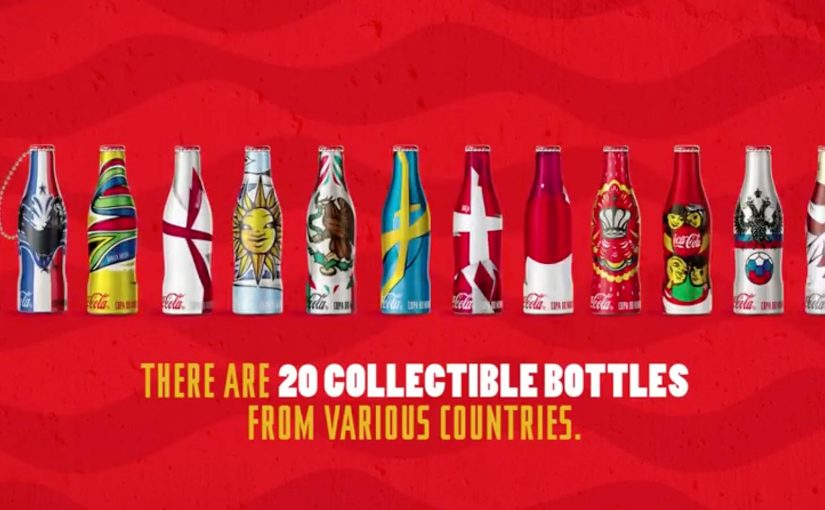
Coca-Cola has launched 20 special edition mini bottles to get fans around the world excited about the upcoming 2014 FIFA World Cup, which will take place in Brazil from June 12th to July 13th.

The bottles come wrapped in flags of countries that have hosted the World Cup previously. Argentina, Chile, Uruguay, Mexico, USA, England, Germany, Spain, France, Italy, Sweden, Switzerland, South Africa, Japan and South Korea. As well as the three upcoming host countries Brazil, Russia and Qatar. Plus two special Coca-Cola editions.

Coca-Cola fans can also create and send special messages and avatars to other bottle owners through Facebook and iPhone or Android apps. In addition, special markers on the bottles activate augmented reality animations when held up to a smartphone camera.

What makes these bottles more than packaging

This is a simple shift with big implications. The bottle is not only a container. It becomes a trigger. A collectible. And a social connector. This is smart brand design because it turns packaging into media without asking people to leave the product in their hand.

The real question is how to make a small physical object behave like media, participation, and social signal at the same time.

The flags do the first job. They make the bottles instantly recognizable and tradable. People have a reason to hunt for specific countries and compare what they found. The digital layer does the second job. By digital layer, this means the messages, avatars, and AR animations unlocked through the bottle. It turns ownership into participation, because the bottle now links to messages, avatars, and AR animations.

Why augmented reality fits this moment

AR works best when the behavior is natural. Here the behavior is already there. You hold the bottle in your hand. You point your phone at it. You get something back instantly. That is what makes the marker idea effective, because it adds a reward to an existing behavior instead of asking people to learn a new one.

Extractable takeaway: When the product already sits in someone’s hand, the strongest digital layer is the one that rewards curiosity in the moment rather than redirecting attention somewhere else.

In global brand portfolios, this matters because packaging that doubles as an activation point can scale engagement and give people a stronger reason to choose the brand at shelf without adding a separate physical touchpoint.

What to borrow from collectible packaging activations

  • Make the physical object the interface. The bottle is the entry point, not a poster, banner, or separate microsite.
  • Give fans something to collect and trade. Flags are a built-in collecting mechanic.
  • Add a social layer that only owners can unlock. Messaging and avatars make participation feel earned, not generic.
  • Use mobile as the bridge. iOS and Android apps turn “I saw it” into “I can activate it” immediately.

A few fast answers before you act

What are Coca-Cola Interactive Mini Bottles?

They are 20 special edition mini bottles designed to build excitement for the 2014 FIFA World Cup, using country-flag designs plus a digital interaction layer.

What is interactive about them?

Owners can send messages and avatars to other bottle owners via Facebook and iOS or Android apps. The bottles also include markers that trigger augmented reality animations through a smartphone camera.

Why use country flags on the bottles?

It creates instant collectability. People can look for specific countries, compare what they found, and feel part of a shared event build-up.

What is the role of augmented reality here?

AR turns the label into an activation point. Point your phone at the bottle, and the design becomes an animation experience rather than static packaging.

What is the main marketing idea worth copying?

Make the product itself the gateway to the experience. When the physical object triggers the digital layer, participation becomes effortless and more memorable.

Toyota: Try My Hybrid

Toyota in Norway is doing really well on loyalty and customer satisfaction, but it is struggling to recruit new customers.

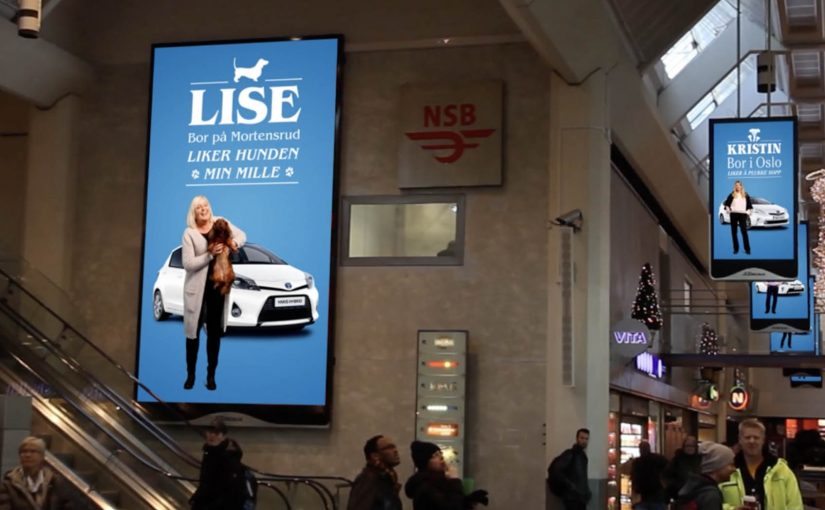
So instead of having salespeople persuading new buyers, Toyota lets satisfied Hybrid owners offer test drives to prospects. A web and mobile service makes it easy for owners. For no money. To let strangers, neighbours and friends, and friends of friends via Facebook test drive their Hybrid.

Turning owners into the dealership

The mechanic is simple and trust-led. That means the trust comes from the owner-host relationship rather than from Toyota’s sales script. Prospects find nearby Hybrid owners and request a test drive. Owners opt in, schedule, and host the drive. The conversation is the product, because it is grounded in lived experience rather than sales script.

In automotive marketing where trust is the bottleneck, peer-to-peer test drives can outperform sales-led persuasion.

Why it lands

It removes the two biggest barriers to a first drive. Social friction and credibility. The prospect gets a low-pressure introduction, and the owner gets to play the proud expert. That dynamic changes what the test drive feels like. It becomes a neighbourly recommendation, not a pitch. The social graph component also matters, because “friend of a friend” is often the sweet spot where curiosity meets safety.

Extractable takeaway: If your current customers are genuinely satisfied, build a structured way for them to host the first experience. Let trust carry the conversion, and let technology simply remove coordination friction.

What Toyota is really solving

This is an acquisition problem disguised as a community service. Toyota already has strong satisfaction. The real question is how that satisfaction becomes low-friction acquisition before a prospect ever enters a showroom. Toyota is right to treat owner advocacy as the front end of acquisition, not as a soft loyalty add-on. The challenge is that satisfaction does not automatically translate into new buyers at scale. This service turns satisfaction into a repeatable, measurable funnel step. Discovery, booking, drive, and then consideration. Without needing more showroom persuasion.

What brands can steal from Try My Hybrid

  • Make the first experience owner-led. Use real users as the proof layer.
  • Design for “near me”. Proximity is the simplest trust signal after reputation.
  • Use social adjacency carefully. Friends of friends can unlock trial without feeling like a cold lead.
  • Keep incentives optional. Pride and helpfulness can outperform cash when satisfaction is real.
  • Instrument the pipeline. Treat hosted trials as a trackable acquisition channel, not PR.

A few fast answers before you act

What is “Try My Hybrid” in one sentence?

A web and mobile service that lets prospective buyers book test drives with real Toyota Hybrid owners instead of salespeople.

Why does the owner-led test drive feel more persuasive?

Because it is grounded in lived experience. The host can answer questions with real usage context, which increases credibility and reduces sales resistance.

What makes the social layer important?

It helps prospects find a trustworthy host through proximity and social adjacency, which lowers hesitation versus a fully anonymous test drive.

What is the biggest operational risk?

Reliability and safety. If scheduling fails, hosts no-show, or the process feels risky, trust breaks and the program collapses.

How can a non-automotive brand apply the same model?

Turn your happiest customers into opt-in hosts for the first experience, then build a lightweight system to match prospects to hosts and remove coordination friction.