
Lexus Trace Your Road: life-sized racing game

To promote its new high-performance hybrid car, Lexus, together with Saatchi & Saatchi Italy, creates “Trace Your Road”, an experiential event featuring Formula 1 driver Jarno Trulli.

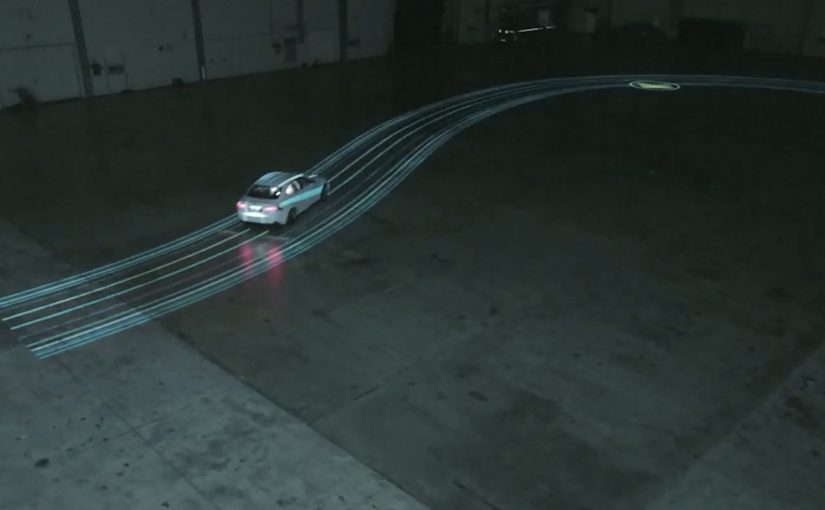
Ten Lexus fans are selected from hundreds of applicants on Lexus’ Facebook page. Each winner rides in the passenger seat of the hybrid while Trulli drives, and the passenger “draws” the course on an iPad. That path is projected onto the floor of an aircraft hangar using special projectors, while a custom high-resolution infrared (IR) camera system tracks the car’s position in real time.

How the experience works

The format is a life-sized driving game with the audience literally designing the track. The event flow is built around three moving parts.

  • Live track creation. The passenger traces a route on the iPad, creating spontaneous turns, straights, and corners.
  • Real-world projection. The route appears at scale on the hangar floor, so the “racetrack” becomes a physical space.
  • Real-time tracking. An IR camera system follows the car so penalties and scoring can be applied accurately.

What makes it competitive, not just cinematic

Trulli’s driving is put to the test as he attempts to follow the improvised paths at speed. Penalty points are given when the car goes outside the projected route or touches the hangar walls. The goal is to hit seven selected touch points in the quickest time, and the fan with the best score wins.

In automotive launches and premium brand marketing, turning a test drive into a participatory game makes performance feel experienced, not explained.

The real question is whether your launch makes the product truth the win condition, not just the headline.

Why it lands: performance becomes legible

Hybrid performance can be hard to dramatize without slipping into numbers. Because the passenger-designed route and visible penalty rules force precision, control and handling become legible without a spec sheet, while the story stays human through the passenger’s real-time choices and Trulli’s visible skill.

Extractable takeaway: When you can turn a product claim into a rule set with visible penalties, the audience understands it instantly and the content becomes inherently shareable.

What Lexus proves with “Trace Your Road”

The brand is not only saying “this car performs”. It is staging a situation where performance is the only way to succeed. This is a stronger way to market performance than listing specs, because it forces the car to prove itself under constraints. The experience also rewards participation: winners influence the outcome, spectators understand the rules instantly, and the filmed content has a clear narrative arc.

Make the claim playable: launch moves worth copying

  • Let the audience shape the challenge. When participants create the rules in real time, attention spikes because outcomes are unpredictable.
  • Translate product claims into constraints. Handling, control, and precision become visible when the environment punishes mistakes.
  • Build a scoring model people can explain. Simple penalties and a clear finish condition make the story travel.
  • Use tech as infrastructure, not the headline. Projection and tracking matter most when they disappear into the experience.

A few fast answers before you act

What is Lexus “Trace Your Road”?

It is an experiential event where a passenger draws a racetrack on a tablet and the route is projected onto a hangar floor, while Jarno Trulli drives a Lexus hybrid along that path in real time.

How is the racetrack created and shown?

The passenger traces the course on an iPad, and the design is projected at scale onto the floor using multiple projectors so the track becomes a physical space to drive in.

How does the system know if the car stayed on the route?

A custom high-resolution IR camera tracking system monitors the car’s position against the projected route so penalties can be applied when it leaves the path.

What makes this more than a one-off stunt?

The format produces repeatable rounds, clear scoring, and a strong spectator story, which makes it easy to capture as a campaign film and behind-the-scenes content.

What is the main lesson for experience design?

Make the product truth the win condition. When success requires the product’s strengths, the message feels demonstrated rather than claimed.
VW GTI Banner Race: Chase a Car Across the Web

Volkswagen Netherlands set out to launch the new GTI in a way that feels fast before anyone even touches the accelerator. The result is an online race staged inside banner advertising, but mapped onto the physical logic of the real world.

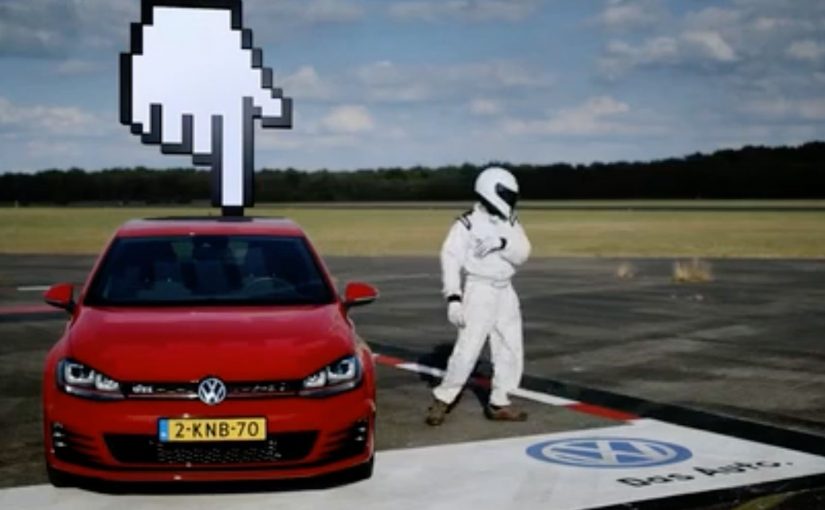
Four popular Dutch websites are painted as the runway of an airport, each banner space measuring 20 metres wide and 25 metres long. On race day, 13th September, participants chase the GTI as it speeds through the banner spaces of each site. The person fast enough to catch the new GTI wins the car in real life.

When banners stop being static and start behaving like space

The mechanism is a reframing of banner advertising. Instead of isolated rectangles, the banners become connected terrain. Each site represents a segment of runway. Movement between banners creates the illusion of distance, speed, and progression.

The GTI does not just appear. It moves. And because it moves, the user has a reason to stay alert, react quickly, and treat the banner as something to engage with rather than ignore.

In European automotive launches, turning passive media into an environment with rules is often the fastest way to earn attention without buying more impressions.

Why speed and scarcity do the heavy lifting

This works because it borrows from racing psychology. There is a single target. There is a clear win condition. And there is scarcity. Only one person catches the GTI. That tension transforms passive browsing into a moment of competition.

Extractable takeaway: When you can make a product trait playable, set one clear target, one win condition, and one scarce outcome so attention becomes a self-sustaining loop.

The prize is not symbolic. Winning the actual car anchors the experience in reality, which prevents the activation from feeling like a disposable digital trick.

The intent: make the GTI feel alive online

The business intent is to translate the GTI’s performance DNA into a digital format. Speed, responsiveness, and thrill are not explained. They are simulated. The banner becomes a proxy for the car’s character. By “performance DNA” here, I mean the cues of speed, responsiveness, and thrill that people associate with a GTI.

The real question is whether your launch media can make the product trait felt in the first five seconds, not just described.

This is a better pattern than static launch assets when the brand promise is motion, because the interaction does the persuasion.

At the same time, Volkswagen demonstrates that standard media formats can still surprise when they are treated as systems instead of slots.

Patterns to borrow from the GTI banner race

  • Rethink familiar formats. Banners can be environments, not just placements.
  • Design for motion. Movement creates attention where static assets fail.
  • Use a real reward. Tangible stakes raise commitment instantly.
  • Connect experiences. Linking multiple sites turns reach into narrative space.
  • Encode the product DNA. Let the interaction mirror what the product stands for.

A few fast answers before you act

What makes this GTI launch different from a normal banner campaign?

The banners are connected into a continuous race environment, turning advertising space into gameplay instead of static exposure.

Why use an online race to launch a car?

Because racing instantly communicates speed and performance, which are core to the GTI identity.

Does this work without the prize car?

The experience would still be novel, but the real-world reward dramatically increases urgency and participation.

What role do partner websites play?

They become part of the environment. Each site is a segment of the runway rather than just a host for an ad.

What is the main takeaway for digital launches?

When you turn media formats into systems with rules and progression, people stop skipping and start playing.

Coca-Cola Mini Me: 3D-Printed Mini Figurines

After Volkswagen, Coca-Cola is the next brand to tap the 3D printing trend.

For the launch of its new mini bottles in Israel, Coca-Cola with their agency Gefem Team came up with a campaign that allowed anyone to create 3D mini figurines of themselves. To get one in real life, users had to work a bit.

So first users created the minis using a mobile app. Then they had to keep them happy by feeding it and taking care of its needs.

There was even a virtual supermarket within the app that you could visit to buy your groceries for your mini self.

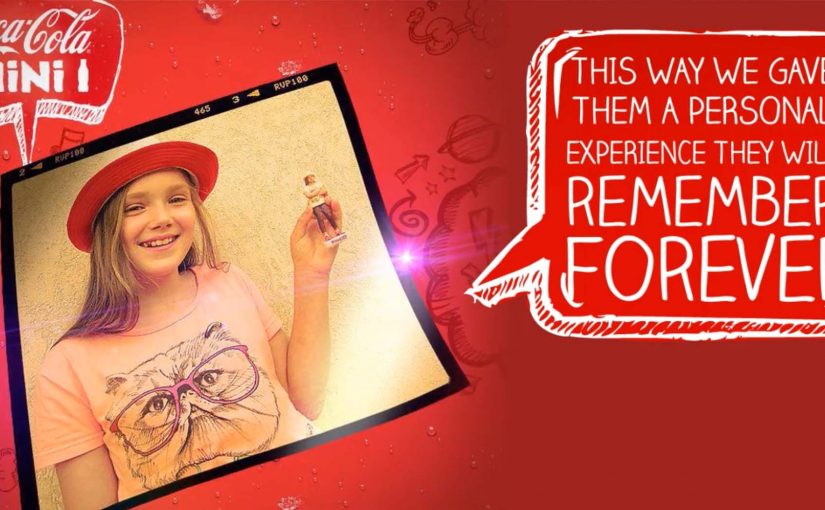
Those who successfully participated were then invited to the 3D printing lab inside Coca-Cola’s factory in Israel, where they received the mini versions of themselves.

Why this is more than a 3D-printing stunt

The 3D print is the reward, not the whole experience. The real engine is the progression loop, meaning a sequence of small repeat actions that earn a bigger payoff. This is smart campaign design because it makes the physical output feel earned, not handed out. The real question is whether your campaign creates a loop people will return to before you ask them to share anything.

Extractable takeaway: Gate a physical prize behind repeat micro-actions and it stops feeling like a giveaway. It becomes a trophy with a simple story: “I earned this.”

  • Personal creation. You do not receive a generic giveaway. You create “you”.
  • Ongoing engagement. Feeding and caring builds repeated interactions over time.
  • Escalation to the physical world. The factory lab visit turns digital participation into a memorable moment.

The virtual care loop makes the prize feel earned

The app mechanic is intentionally effortful. You have to keep the mini happy. You have to manage its needs. Even the virtual supermarket reinforces routine and “ownership”.

That matters because it shifts the figurine from a freebie into a trophy. Something you earned by participating.

In consumer brands that run digital-to-physical activations, effortful repeat interaction is often what turns novelty into recall.

Why the factory lab invitation is a smart finale

Bringing people into a Coca-Cola factory adds legitimacy and drama. It also creates a content moment. A physical place, a “lab”, and a 3D print reveal that people can photograph and share.

  1. Access as a reward. The invitation itself feels exclusive.
  2. Proof of innovation. The brand demonstrates capability in a tangible way.
  3. Memory value. The experience becomes a story, not just a product launch.

What to take from this if you build digital-to-physical campaigns

  1. Make the reward personal. Personal outputs are more meaningful and more shareable.
  2. Use a progression loop. Repeated small actions can outperform a single big interaction.
  3. Finish with a real-world moment. Physical experiences create stronger recall than purely digital stunts.
  4. Let the brand environment play a role. A factory lab gives credibility and theatre without feeling fake.

A few fast answers before you act

What is Coca-Cola “Mini Me”?

It is a campaign in Israel where users created a virtual mini-self in a mobile app, cared for it over time, and then received a 3D-printed figurine version after qualifying.

How did users qualify to get a real figurine?

They created the mini using the app and kept it happy by feeding it and taking care of its needs, including buying items in a virtual supermarket.

Where did the 3D printing happen?

Qualified participants were invited to a 3D printing lab inside Coca-Cola’s factory in Israel, where they received their mini figurines.

Why include a virtual care mechanic?

It creates repeat engagement and makes the physical reward feel earned rather than given away.

What is the transferable lesson for campaign design?

If you combine personal creation with a progression loop and a physical payoff, you can turn a product launch into a longer-lasting experience.