
Chrome: Super Sync Sports

Chrome: Super Sync Sports

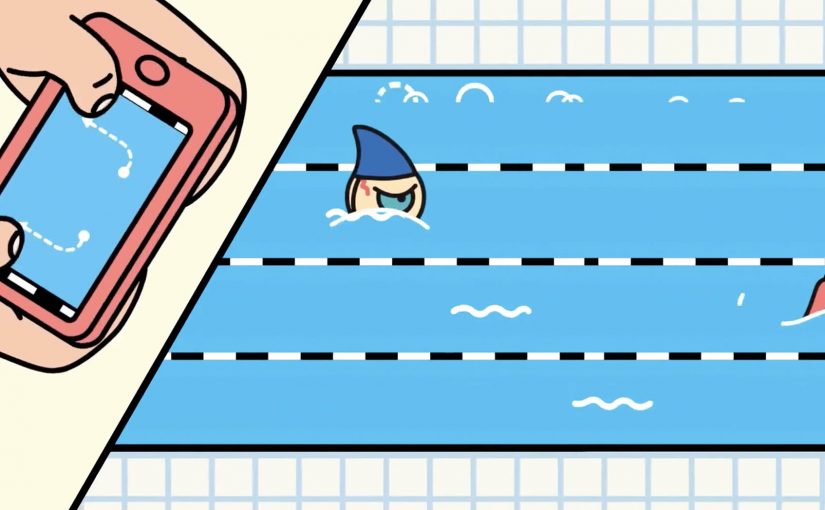
Google has recently released their latest Chrome Experiment called “Super Sync Sports” which allows players to convert their mobile phones and tablets into a remote control for their desktop browser.

To give it a spin visit www.chrome.com/supersyncsports/, choose a game i.e. running, swimming or cycling and then follow the instructions to sync your mobile phone. Once the sync is complete you can then play your way to victory, while the game plays out on your desktop.

What “super sync” really means in practice

The core mechanic is simple. Your desktop browser becomes the shared “big screen” for the race, while each phone or tablet becomes a personal input surface. Instead of mirroring the desktop, the mobile device acts like a controller and streams gestures to the browser in real time.

This is a classic second-screen pattern. A shared display for feedback, plus personal devices for control. It is a small idea with a lot of leverage when the onboarding is frictionless.

In digital marketing and product teams, multi-device web interactions are a repeatable way to turn passive screens into participatory experiences.

Why it lands (even when it is “just a game”)

It also makes a quiet point about distribution. The browser is the platform, so the “controller” is something people already have in-hand. That matters if you are designing for living rooms, events, retail floors, or any moment where downloads and logins kill momentum.

Extractable takeaway: When you want participation, put the rich visual feedback on a shared screen and keep input on personal devices. This lowers setup friction, supports groups naturally, and makes interaction feel immediate without specialized hardware.

The tech stack is the message

What will be interesting to see is how this type of interaction and technology is finally leveraged. The experience is described as being built on HTML5-era capabilities such as WebSockets for live synchronization, plus Canvas and CSS3 for rendering and motion. For brands, the value here is the interaction model, not the sports theme. The real lesson is not the specific APIs. It is the end-to-end pattern of low-latency input, shared feedback, and lightweight pairing.

The real question is whether you are building a one-off demo or a repeatable interaction model that people can join with the device already in their hand.

What to steal for brand experiences

  • Pairing flow: Use a short, forgiving pairing step (code on the big screen, quick join on the phone) and get to interaction fast.
  • Shared spectacle, private control: Keep the crowd watching one shared output, while each participant has a private “control lane” on their device.
  • Competition as UI: A leaderboard (even a lightweight one) can turn a demo into a repeatable loop.
  • Design for latency: Prefer simple, discrete gestures that still “feel” athletic even with imperfect connectivity.
  • Make it modular: The same controller concept can drive product configurators, quizzes, sampling stations, or event installations.

A few fast answers before you act

What is Super Sync Sports?

It is a Chrome Experiment that lets you run a sports game on a desktop browser while using a phone or tablet as the controller.

Why use a phone as the controller instead of the desktop keyboard?

It reduces the learning curve, supports multiplayer easily, and makes the interaction feel more physical. Touch gestures can map naturally to “run”, “swim”, and “cycle” without extra hardware.

What makes this pattern useful beyond games?

The same multi-device approach can turn any shared screen into a participatory surface. Think demos, audience voting, retail activations, guided experiences, or interactive storytelling where people control outcomes from their own device.

Which technologies are doing the heavy lifting?

The experience is described as using WebSockets for real-time synchronization, and Canvas and CSS3 for visuals and animation, all running in the browser.

What is the biggest risk if a brand tries this pattern?

Onboarding and latency. If pairing takes too long or input feels delayed, the magic disappears. The best executions keep the join flow short and the interaction vocabulary simple.
Bing: Decode JAY-Z

Bing: Decode JAY-Z

In a market dominated by Google, Bing wants to feel like a modern choice, and a younger audience is the fastest route to relevance. So it partners with JAY-Z for the launch of his book Decoded.

A book launch that shows up in the real world first

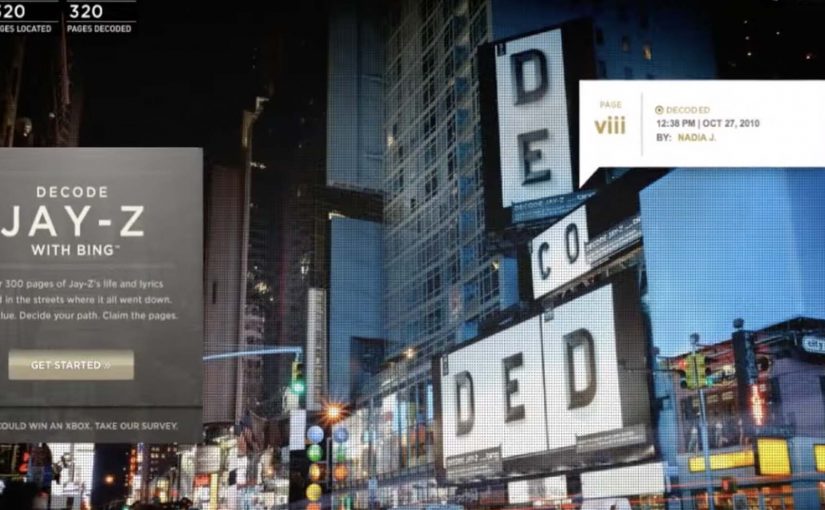
Instead of revealing the book in one place, pages are unveiled in locations referenced on those pages: a Gucci jacket, a restaurant, a hotel pool, a pool table, a car, a bus stop, and a subway. The stunt turns reading into a hunt, and turns “promotion” into something you can physically stumble into.

How the decode game works

Bing ties the physical reveals to an integrated game where fans assemble the book digitally using Bing Search and Bing Maps. Clues to page locations are released daily across Facebook, Twitter, and radio, pushing fans back into search behavior and map-based navigation as part of the entertainment.

In consumer search platforms, discovery mechanics that bridge real-world locations and digital navigation can turn a launch into participation.

Why it lands with a younger audience

The mechanics reward curiosity, speed, collaboration, and social proof. Finding a page is a story you can post. Decoding a clue is a micro-win. Watching the book come together feels like progress you helped create, not content that was simply handed to you. That works because each clue forces a Search and Maps action, so the product becomes the route to the reward.

Extractable takeaway: If you want a younger audience to adopt a utility product, tie progress to repeatable micro-wins that are easy to share.

The business intent hiding in plain sight

For Bing, the goal is not only buzz around Decoded. It is repeated usage of Search and Maps in a context where using the tools feels like play, not a utility task. The partnership borrows cultural gravity from JAY-Z, then converts it into product interaction.

The real question is whether your launch can force repeat product actions, not just cultural attention.

This is stronger than a celebrity endorsement, because it makes Search and Maps the game board instead of the backdrop.

Steal the decode launch mechanics

  • Make the “content” unlockable. People value what they have to discover, not what they are merely shown.
  • Anchor digital behavior to a physical trigger. Real locations make clues feel concrete and worth chasing.
  • Ship a daily cadence. Drip-fed clues keep attention warm without demanding long sessions.
  • Design for sharing as proof-of-work. Proof-of-work here means a visible signal that you did the effort, not just consumed the content.

A few fast answers before you act

What is “Decode JAY-Z” in one line?

A scavenger-hunt book launch where pages appear in real places, and fans use Bing Search and Bing Maps to find and assemble the book digitally.

What are the key mechanics?

Location-based page reveals, daily clues distributed through social and radio, and a digital assembly experience built around search and maps.

Why does this work better than a standard launch?

It converts passive awareness into repeat actions, and each action produces a shareable win that keeps the loop going.

What is the transferable takeaway for product marketing?

If your product is a tool (search, maps, utility apps), embed it inside a game where using the tool is the fun, not the homework.

What should you measure to know it worked?

Track repeat usage of the specific features you embedded in the game (search queries, map actions, and return visits), not only reach or mentions.

Coca-Cola Hilltop Mobile Ad

Coca-Cola Hilltop Mobile Ad

In March I had written about Google’s advertising experiment where they set out to re-imagine and remake some of the most iconic ad campaigns from the 1960’s and 1970’s with today’s technology.

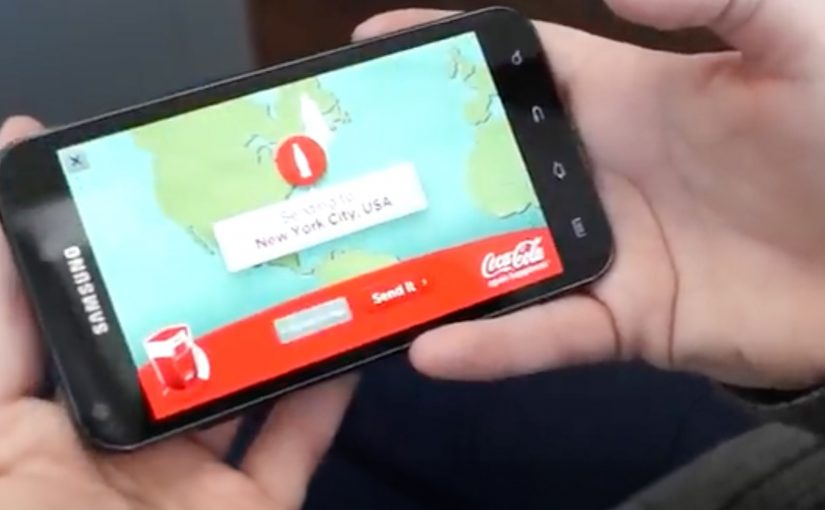
During these experiments the iconic Coca-Cola “Hilltop” ad campaign was re-imagined. Fulfilling the promise of the original ad, special vending machines were created that allowed users to instantly send a Coke around the globe to unsuspecting recipients.

Now the whole experience has been taken onto mobile and can be experienced through the Google AdMob network, across iOS and Android devices. Viewers can now truly ‘Buy the World a Coke’ with just a few taps on their mobile phones.

What changes when “Hilltop” moves to mobile

The original re-imagining leaned into physical surprise. A vending machine became a global gifting interface. Moving that same promise into an AdMob-delivered mobile experience changes the distribution model completely. Instead of waiting for someone to encounter a special machine, the interaction can show up wherever people already spend time on their phones.

That is the real upgrade here. Not just “mobile as a smaller screen,” but mobile as a friction-reducer for participation. A few taps can replicate the core gesture. Sending a Coke to someone else. Without requiring a specific location, a specific moment, or a special install. It works because mobile removes the location and setup barriers that made the vending-machine version memorable but limited.

In global brand portfolios, the scalable opportunity is turning a famous campaign promise into a simple action people can complete wherever they are.

The real question is not whether a classic ad can be remade for mobile, but whether its core promise becomes easier to act on.

Why this is more than a nostalgic remake

Remaking a classic can easily turn into pure tribute. The stronger move here is not the tribute. It is the translation of the original promise into a faster, more repeatable action. What keeps this one relevant is that it tries to honor the original promise with a modern mechanic. Here, the mechanic is the simple user action itself: send a Coke to someone else in a few taps.

Extractable takeaway: If you want a campaign to travel, design one action that people can complete quickly and understand instantly, then let the story emerge from participation rather than explanation.

What to borrow for your next mobile campaign

If you are planning mobile work right now, this points to a few practical moves:

  • Design for one clear action. In this case, sending a Coke. Everything else is supporting detail.
  • Make sharing native to the mechanic. Gifting is inherently social and inherently repeatable.
  • Use mobile distribution for scale. An ad network can turn a niche experience into a widely reachable one, without relying on a single physical activation.

A few fast answers before you act

What is the Coca-Cola Hilltop Mobile Ad?

It is a mobile version of the re-imagined “Hilltop” campaign experience, delivered through Google’s AdMob network across iOS and Android devices.

How does this relate to Google’s advertising experiment?

It extends the re-imagining of iconic 1960’s and 1970’s campaigns, taking the Coca-Cola “Hilltop” concept from the experiment into a mobile execution.

What was the original re-imagined mechanic?

Special vending machines were created that allowed users to instantly send a Coke around the globe to unsuspecting recipients.

What is the key user promise in the mobile version?

That viewers can “Buy the World a Coke” with just a few taps on their mobile phones.

Why is the mobile move important?

It shifts the experience from a location-based activation to scalable distribution. Participation becomes possible anywhere, not only where a special vending machine exists.