
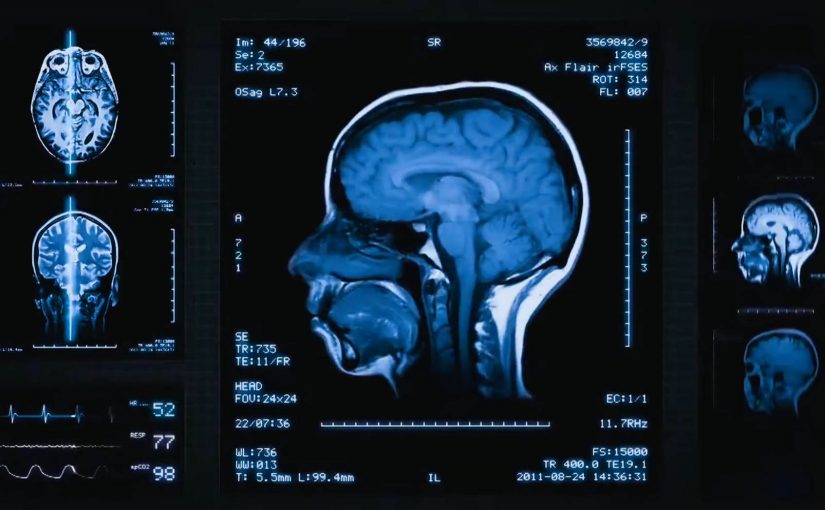
Durex UK: Dual Screen Ads

When the “real” ad plays on your second screen

People watch TV with a phone in hand. Durex UK used that habit to turn a standard broadcast spot into an interactive experience. Here, the “second screen” is the phone or tablet used alongside the main TV or computer screen.

Last year, Durex UK created a new way for viewers to interact with its TV ad. Viewers who used the Durex Explore mobile app while watching the ad on their TV or computer got a steamy alternative on their second screen.

How the dual-screen mechanic worked

The mechanism was straightforward. The broadcast spot acted as the trigger, and the Durex Explore app delivered an alternative experience on the viewer’s phone or tablet.

That split matters. The TV carried the mainstream version. The second screen carried the more private, more personal layer, where the viewer could engage without turning the living room into a shared moment.

In UK brand communications, second-screen behavior is already the norm.

The real question is whether you can separate a public broadcast layer from a private opt-in layer without breaking the story.

Why it lands in real viewing contexts

This works because it respects how people actually consume media.

Extractable takeaway: If your message has a public-safe version and a private version, keep the broadcast layer mainstream and let the personal device deliver the private layer only after an explicit opt-in.

Phones are personal. TV is social. By moving the steamy content to the second screen, Durex created a “permissioned” experience. By “permissioned,” I mean nothing intimate appears unless the viewer explicitly chooses it, on their own device. Because the broadcast spot only triggers the moment and the app carries the alternative layer, the viewer can opt in privately without turning a shared room into a shared moment.

It also rewards attention. Instead of asking viewers to tolerate an ad, it gives them a reason to participate.

The business intent behind extending TV and radio through an app

The intent is to convert passive reach into active engagement, while keeping the broadcast execution broadly acceptable. This is a smart pattern when you need mass reach but the payoff has to stay private.

Then, on Valentine’s Day this year, Durex UK repeated the same idea via radio. They released a steamy radio spot that also used the Durex Explore app to provide listeners with a similar steamy video experience on their smartphone or tablet.

That is the strategic move. One app. Multiple channels. A consistent interaction model that travels across TV, computer viewing, radio, and mobile.

Second-screen tactics you can reuse

  • Use the second screen for the private layer. Put the content that needs discretion on the personal device.
  • Make participation optional and clear. The viewer should feel in control of switching modes.
  • Design one mechanic that scales across channels. If the app is the interface, TV and radio can both become entry points.
  • Reward attention with a different experience. The second-screen payoff must feel meaningfully distinct from the broadcast spot.

A few fast answers before you act

What did Durex UK do with the Explore app?

They used it to deliver an alternative, steamy second-screen experience for viewers watching a TV ad, and later for listeners hearing a radio spot.

What is the core mechanism?

A broadcast ad acts as the trigger. The mobile app provides the alternative content on a phone or tablet.

Why is second screen a good fit for this category?

Because it keeps intimate content on a personal device, while the broadcast remains suitable for shared environments.

What business goal does this support?

Turning broadcast reach into measurable engagement and creating a repeatable interaction layer that works across channels.

What is the main takeaway for marketers?

If your message has a “public” and “private” version, broadcast the public layer and let the second screen deliver the private layer by choice.
fiftyfifty: Frozen Cinema

A cinema in Germany is set to a brutal 8°C. The audience starts to shiver, then notices blankets placed on the seats. A short film begins, and homeless people on screen comment on the “cold cinema experience”. For them, 8°C is described as cozy.

That contrast is the reality check. It turns “winter hardship” from an abstract idea into a physical sensation you cannot ignore, even if only for a few minutes.

How the donation loop is built

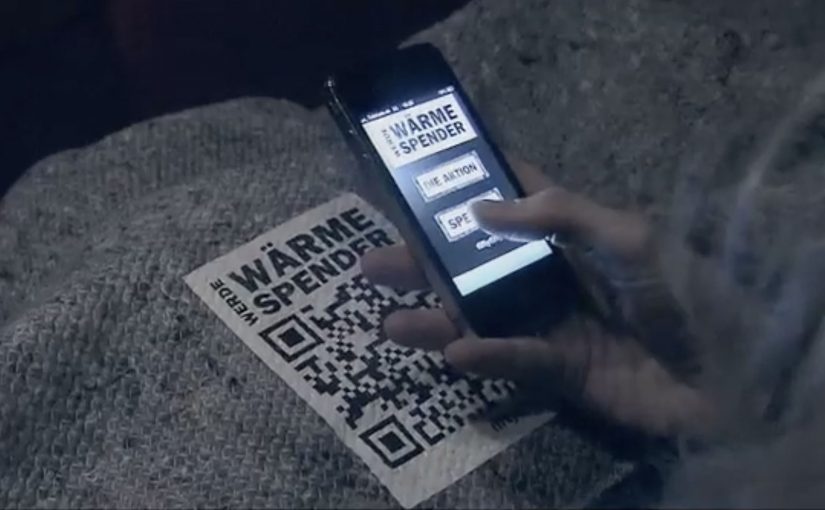
The mechanism is tightly engineered. Lower the temperature. Hand out blankets. Add QR codes to the blankets so the audience can donate instantly while the emotional context is still fresh. Here, the donation loop means a felt trigger, an instant prompt, and a friction-light way to give before the moment fades. The cold primes empathy. The QR code removes friction. That sequence works because the physical cue creates urgency and the QR code captures intent before it cools.

In European urban environments where most people only glimpse homelessness in passing, empathy campaigns land harder when they translate a daily reality into a shared, felt moment.

The real question is how to turn sympathy into immediate action before comfort returns and attention drifts.

Why it lands

This works because it is not just a message. It is a sensory demo. The audience experiences discomfort, then immediately hears the perspective of people who live with worse, for longer, with no quick “rewarm” button.

Extractable takeaway: If your cause depends on empathy, build one controlled, temporary experience that lets people feel a fraction of the problem, then put the simplest possible action in their hands while they still care.

What to reuse in empathy activations

  • Use the environment as media. A small physical change can do more than a big headline.
  • Pair feeling with explanation. The “why” must arrive before people rationalize the discomfort away.
  • Make the action immediate. Donations work best when there is no extra search, form, or delay.
  • Keep it respectful. The goal is recognition and support, not spectacle.

A few fast answers before you act

What is “Frozen Cinema”?

It is a charity awareness and donation activation that chills a cinema to 8°C and uses a short film plus QR-coded blankets to trigger immediate donations for homeless support.

What is the core mechanism?

Physical discomfort creates attention. Context from homeless voices creates meaning. QR codes on blankets remove friction so people can donate on the spot.

Why does the temperature change matter?

It turns an intellectual topic into a bodily experience. That shift makes the message harder to dismiss and easier to remember.

Why put the QR code on the blanket?

It places the donation action inside the experience itself, so people do not have to search for the next step after the emotional moment has passed.

What is the most reusable lesson?

When you need action, design a moment that people can feel, then make the response path effortless and immediate.

Happy Holiday Videos 2012: Agency Stunts

Welcome back. Hope everyone had a great holiday season. Now for a great start to 2013.

Taking off from my last post, here are a series of holiday action videos created by ad agencies around the world in their lead up to Christmas 2012. By “holiday action videos,” I mean greetings built around a simple interaction or trigger with a visible payoff.

Holiday greetings that behave like products

The mechanism across this set is consistent. Use the “holiday card” moment as permission to ship something people can experience, not just watch. A hacked player, a tweet-triggered donation, a synchronized “orchestra,” a physical gag product.

In global agency culture, the holiday card is a low-risk moment to test interactive mechanics and craft that can later show up in bigger client work.

Why this format keeps working

These pieces earn attention because they trade greeting-card sentiment for an observable action. The real question is whether your greeting demonstrates a capability people can experience, not just a sentiment they can scroll past. You should treat the holiday card as a tiny product launch, not a branded message. The viewer is not only receiving wishes. They are triggering something, learning something, or being surprised by a mechanism that is simple enough to retell.

Extractable takeaway: If you want something to travel during peak-season noise, design a one-step interaction with a visible payoff, and make the payoff describable in a single sentence. That is retellability, meaning a friend can summarize it in one sentence.

Maurice Lévy’s Digital Wishes by Publicis Groupe

Maurice Lévy, the chairman and chief executive of Publicis Groupe, traditionally records a holiday greeting-card video. This year, through a special deal with YouTube, Publicis modified the function buttons of the video player and embed tricks into what seems like another long, boring address by an ad industry veteran.

TwinterWonderland by 360i

To celebrate the arrival of the holiday season and provide assistance to those affected by Hurricane Sandy, 360i wanted to do something big. For every #TwinterWonderland tweet they received, 360i donated $5 to an aid organization helping with the post-Sandy cleanup effort.

25th Anniversary Holiday CompuCard by TBWA\TORONTO

To celebrate their 25th anniversary, TBWA\TORONTO brought in their digital expert from 1988, who then, through an e-card, tried to capture the spirit of their past along with their digital future.

Buzzed Buzzer by Havas Worldwide Chicago

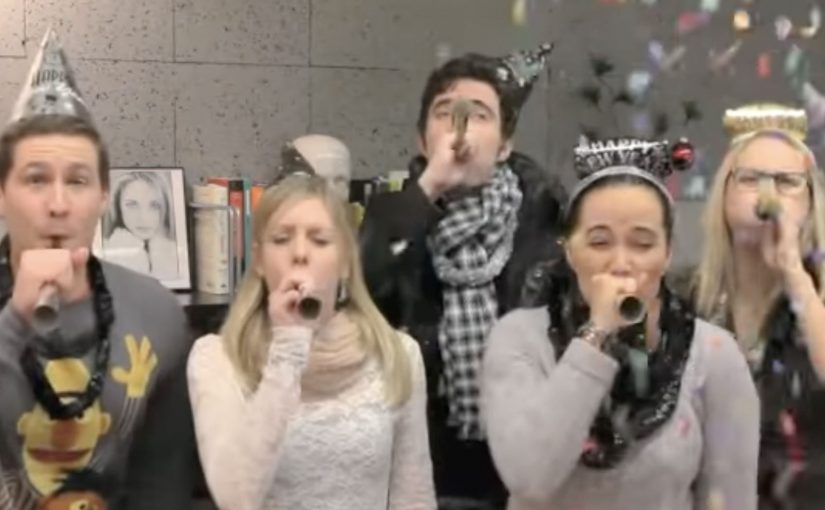
The first New Years Eve noise maker that only works when you’re drunk.

Christmas carol played on food by FullSIX Spain

To wish happy new year to customers and friends, FullSIX transformed typical Spanish Christmas food into a carol-playing piano.

Click here to watch video on the AdsSpot website.

The Snow Machine by Weapon7

Passers-by were invited to Tweet #snow to @thesnowmachine Twitter account. For every tweet received, the machine gave ten seconds of snow flurry. The event ran all day, was seen by thousands of people and generated over one thousand tweets.

Stealable patterns for next year’s greeting

  • Give the audience one trigger. One hashtag, one button, one simple mechanic.
  • Make the payoff visible. Something changes immediately, on-screen or in the real world.
  • Design for retellability. If the idea cannot be summarized in one sentence, it will not spread.
  • Let craft do the selling. Use the holiday excuse to demonstrate capability, not just sentiment.

A few fast answers before you act

What makes “holiday action videos” different from normal holiday ads?

They are built around a visible action or interaction. The greeting is the excuse. The mechanism is what people experience, talk about, and share.

Why do agencies use holiday cards as a playground for experimentation?

The stakes are lower and the audience is receptive, so it is easier to try unusual formats, technical tricks, and interactive mechanics that would be harder to justify elsewhere.

What is the common mechanism across the strongest examples?

One clear trigger and one clear payoff. A hacked player that surprises you, a tweet that causes a donation, a simple “instrument” that performs when activated.

How do you keep it from feeling like a gimmick?

Anchor the interaction in a human reward. Delight, generosity, togetherness, or a simple shared joke. Then keep friction low so the idea survives first contact.

How do you test retellability before you publish?

Ask someone outside the project to explain the idea back to you after a 10-second description. If they cannot say the trigger and payoff in one sentence, simplify the mechanic.