
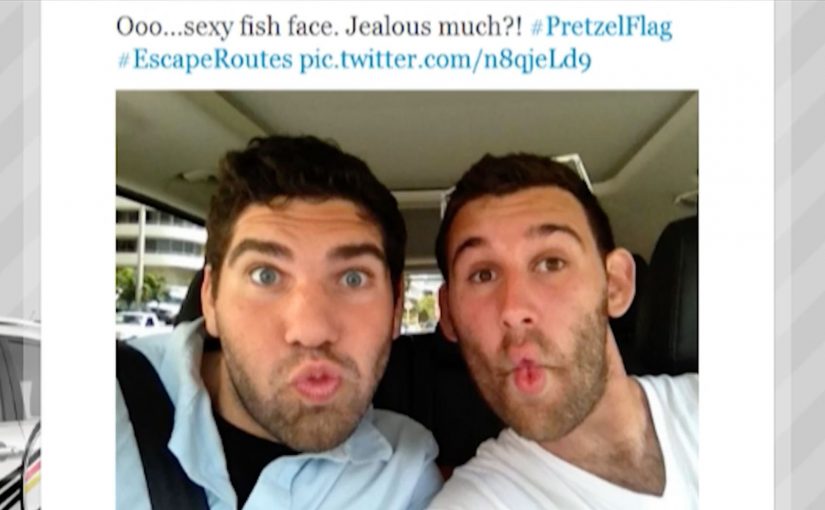
Ford Escape Routes

Ford Escape Routes

Ford wanted to launch the new Escape in a way that would give people something they had never experienced before in branded entertainment. Billed as an industry first, Ford took the small screen to the second screen by combining TV with social media and mini-gameplay to create a prime time Social TV show called Escape Routes. Here, “second screen” means a synchronized phone, tablet, or laptop layer that runs alongside the broadcast.

Six teams took on daredevil stunts while enlisting online fans as Virtual Teammates (VTMs), whose real-time support helped determine who crossed the finish line each week. Viewers did not just watch. They participated, recruited, chatted, and played along, with the online layer shaping outcomes and amplifying the show’s moments.

How the mechanic works

Escape Routes is structured like a competitive reality series. The TV episode delivers the narrative and the physical challenge. The second screen delivers the leverage. Fans act as VTMs and influence teams through live participation, social activity, and interactive challenges running alongside the broadcast.

The “branded” part is not only the vehicle on screen. The product story gets embedded into the stunts, the travel, and the weekly goals, so the car becomes the enabling tool inside the format, not a separate ad break.

In mass-market automotive launches, Social TV formats can convert broadcast reach into participation, and participation into measurable signals of demand.

The real question is whether the second screen can change what happens on TV, not just what people do while watching.

This kind of format is worth building only when those contributions are visible, time-boxed, and tied to the episode’s stakes.

Why it lands

It gives people viewer control without asking them to leave the entertainment. Participation is optional, but the invitation is clear and time-boxed. If you want to help your team, you can. If you want to just watch the show, you still get a complete experience.

Extractable takeaway: Second-screen launches win when the extra layer stays inside the story and gives people a named role with consequences they can see.

It also creates a natural social engine. Teams are selected and rewarded for building a following, so they have an incentive to mobilize fans every week. That turns the audience into a distribution channel, not a passive rating.

What the brand is really buying

The business intent is pre-launch momentum at scale. A primetime run delivers reach. The second-screen layer delivers engagement, social lift, and a sustained reason to talk about the Escape over multiple weeks.

Ford’s own reporting at the time described the social buzz as exceeding benchmarks, including a reported 1,033% increase in @FordEscape Twitter followers and a 50% increase in Facebook Likes.

Later trade coverage around awards credited Escape Routes with broader volume metrics across the run, including 7.65 million viewers, 64 million Facebook impressions, more than 65,000 Facebook Likes, and 3.4 million incremental user-generated video views, alongside the claim that it boosted share of voice in the small SUV segment with large-scale social activity.

Steal this reach plus action pattern

  • Design a format where the audience can matter. If participation cannot change anything, it will not sustain across weeks.
  • Make the second screen additive, not distracting. Keep actions short, timed, and tied to moments people already care about.
  • Give participants a role name. “Virtual Teammates” is a simple identity hook that makes participation feel legitimate.
  • Build weekly arcs. Multi-episode structure creates repeat engagement and compounding social momentum.

A few fast answers before you act

What is a Social TV show in marketing terms?

A Social TV show is a broadcast format that is designed to be experienced with a second screen, where social participation and interactive actions are part of the content loop, not a separate campaign layer.

What does “second screen” mean here?

It means the viewer uses a phone, tablet, or laptop while watching TV, and that device provides live interactions like voting, mini-games, chats, or challenges that are synchronized to the broadcast.

Why do “virtual teammate” mechanics work?

They turn spectators into contributors. Helping a team win creates emotional investment, repeat behavior, and social recruiting, because your participation has a clear purpose.

What is the biggest failure mode of second-screen activations?

Over-complexity. If the interaction takes too long, needs too much explanation, or competes with the main story, people drop it and the second screen becomes noise.

What metrics matter beyond views?

Registration and repeat participation per episode, share of voice during airtime windows, audience conversion into followers or opted-in communities, and any downstream indicators tied to shopping intent.
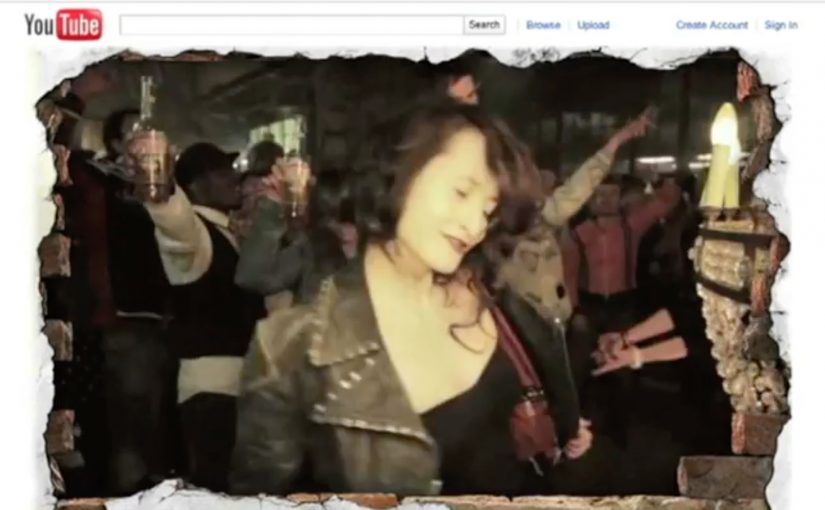
Desperados: YouTube Takeover

Desperados: YouTube Takeover

A takeover that pulls social identity into the video

In digital video marketing, the most ambitious takeovers do not just run before content. They try to become the experience people came for. Here, a “takeover” is an interactive branded viewing layer, not just a pre-roll slot. Desperados’ execution is a clean example of that intent.

Here is a pretty cool and ambitious YouTube takeover. It is one of the first ones I have seen that also integrates the Facebook Connect functionality as part of the experience.

How Desperados built the takeover experience

The YouTube campaign was created by Dufresne Corrigan Scarlett and MediaMonks for beer brand Desperados.

The takeover let you interact with the story as it unfolded and also let you bring your Facebook friends into the party by pulling in photos on the fly.

In European FMCG video marketing, social identity layers only earn their keep when they turn an ad unit into a shared moment.

Why bringing friends into the story changes attention

Standard video asks for passive watching. This approach creates viewer control and personal stakes because pulling in familiar faces turns a generic narrative into social self-recognition. The real question is whether your experience can borrow the viewer’s social world without making the login step feel like the main event.

Extractable takeaway: If you can make the story reflect the viewer’s real relationships, attention stops being rented and starts being owned, which makes staying and sharing feel functional rather than promotional.

The business intent behind the social layer

The intent is to move beyond reach and toward participation.

By using Facebook Connect and on-the-fly photos, the campaign tried to turn viewers into co-owners of the experience. That increases time spent, lifts recall, and creates a natural reason to invite others, because the party becomes better when your people are in it. Brands should add this kind of social layer only when it materially changes what the viewer sees and does next, otherwise the friction is wasted.

Steal the pattern for social-identity takeovers

  • Make interaction serve the story. Viewer control works when it changes what happens next, not when it is a gimmick.
  • Personalization is strongest when it is social. Pulling in friends can create instant relevance and emotion.
  • Design the invite loop into the experience. If friends improve the outcome, sharing becomes functional, not promotional.
  • Choose the platform feature that matches the idea. When identity is the hook, social login becomes a creative tool.

To experience it yourself visit: www.youtube.com/desperados.


A few fast answers before you act

What was the Desperados YouTube takeover?

An interactive YouTube campaign that integrated Facebook Connect so viewers could bring friends’ photos into the unfolding story.

What was the core mechanism?

Viewer control within the takeover experience, paired with a social login layer that pulled in photos dynamically during playback.

Why does Facebook Connect matter in this context?

It makes the experience personal and social. When the content includes your friends, it feels more relevant and more worth sharing.

What business goal did this support?

Increasing time spent and participation by turning a brand film into an experience that feels co-created and socially expandable.

What is the main takeaway for brands?

If you want people to stay and share, give them control and a way to bring their world into the story.

Renault Espace: iPad 360° View

Renault Espace: iPad 360° View

The Renault Espace is a large MPV from French car-maker Renault. With a new iPad app, Renault gives users an onboard view of the Espace like never before.

The application is a 360 degree interactive video. All you need to do is tilt your iPad and explore different angles as if you were right there.

A virtual showroom that behaves like your head

The mechanism is refreshingly direct. The app uses the iPad’s motion sensors to map physical movement to viewpoint changes inside the car. Instead of tapping through static photos, you “look around” by moving the device. It is a smart use of motion sensing because it keeps the interface invisible and the focus on the cabin.

In automotive consideration journeys, anything that increases spatial understanding of the interior helps bridge the gap between online browsing and a test drive.

Why it lands

Interior experience is one of the hardest things to communicate in standard car marketing. This solves that by letting the user control perspective. It also creates a calmer kind of interactivity. No menus, no instructions, no friction. Just tilt and explore.

Extractable takeaway: When your product has a strong spatial component, give people viewer control over perspective. It builds confidence faster than adding more copy.

What Renault is really trying to achieve

The real question is whether this kind of “tilt to explore” experience reduces uncertainty enough to make a showroom visit feel worth it.

This is a digital test-sit, a lightweight simulation of sitting in the cabin so you can judge layout and comfort before a showroom visit. It is designed to make the Espace feel accessible before a showroom visit, and to reduce uncertainty about cabin layout, visibility, and perceived comfort. Done well, it also keeps attention longer than a typical brochure flow.

Steal this for spatial product demos

  • Use motion as navigation. If the device supports it, motion control can feel more natural than UI controls.
  • Keep the interaction single-mode. One behaviour. Tilt to look. That simplicity is the feature.
  • Prioritise the interior. For family vehicles, cabin experience often sells more than exterior styling.
  • Let curiosity drive. Give users freedom to explore, rather than forcing a predetermined tour.
  • Make it fast to load. Interactive video dies when buffering becomes the dominant experience.

A few fast answers before you act

What is this Renault Espace iPad app in one sentence?

It is an iPad experience that uses a 360 degree interactive onboard video so users can tilt the device to explore the Espace interior from different angles.

Why use 360 video instead of a standard photo gallery?

Because it communicates space and layout more effectively. Users can look where they want, which reduces uncertainty faster than scrolling images.

What makes “tilt to explore” feel intuitive?

It mirrors how people look around in real life. Physical movement maps directly to viewpoint changes, so interaction feels natural.

What is the main execution risk?

Performance. If motion tracking feels laggy, or the video quality is poor, users will abandon quickly and the experience will feel like a gimmick.

What should you measure if you ship this type of experience?

Time spent, percentage of users who explore multiple viewpoints, completion rate, repeat sessions, and whether it correlates with test-drive requests or dealer inquiries.