
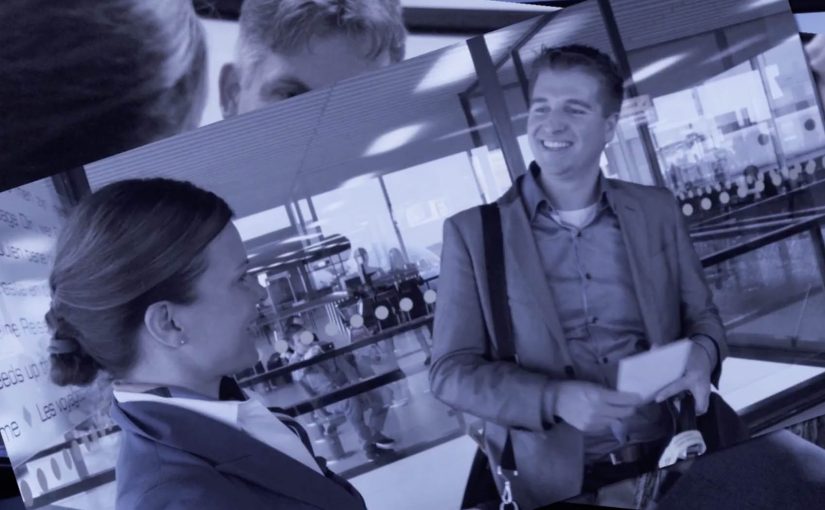
KLM: Surprise

KLM launched a social media customer engagement idea that starts with a simple observation: waiting to board is boring, and “price messages” do not help anyone in that moment. So the brand looks for passengers who check in on Foursquare for flights or tweet about waiting to board a KLM service, then surprises a few of them to see how happiness spreads.

From check-in signal to gate-side surprise

The mechanic is straightforward. Someone publicly signals they are flying KLM or waiting at the gate. The team selects a passenger, scans what that person has publicly shared across social profiles, and chooses a small, relevant gift. Then they hand-deliver it at the airport gates.

In airline customer experience, social signals can be converted into small, high-salience service moments that strengthen loyalty without changing the core product.

Why this beats generic “engagement”

Many brands greet customers after a check-in, and that is already a best practice on location platforms. KLM Surprise goes further because it moves from acknowledgement to action. Because the team delivers the surprise at the gate while the passenger is waiting, the gesture lands as relief, not advertising. The passenger gets something real, in real time, in the same physical context where frustration often accumulates.

Extractable takeaway: When you can act on an intent signal in the same moment and place it was expressed, the interaction reads as service and earns talk value without needing a big reward.

The real question is whether public intent signals can trigger timely, human service moments that customers will retell.

Brands should treat public social signals as service triggers, not engagement bait.

The personal touch is the product

The gift is intentionally small. The point is that it is specific. That specificity tells the passenger the brand paid attention, not that the brand spent money. It also turns the interaction into a shareable story because it feels improbable. Someone noticed me. Someone acted on it. Someone found me.

What the brand is really testing

Beyond the feel-good moment, this functions as a live experiment in social CRM: can public signals help identify passengers worth surprising, and can a human-scale intervention create disproportionate talk value? Here, “social CRM” means using public social signals to choose and personalize service actions for known customers. The campaign also quietly reframes “social media” as a service channel, not only a marketing channel.

Stealable moves from KLM Surprise

  • Trigger on clear intent signals. Check-ins and “waiting to board” posts are unambiguous moments where help or delight is welcome.
  • Keep the benefit small but specific. Relevance beats value. A perfect small gift travels further than a generic large one.
  • Deliver in the same context as the pain. Airport gates are where waiting is felt. That is why the gesture matters.
  • Make it operationally repeatable. A lightweight process and a small budget lets the idea run more than once without becoming theatre.

A few fast answers before you act

What is KLM Surprise in one line?

A real-time airport activation where KLM monitors public check-ins and tweets, selects passengers, then delivers small personalized gifts at the gate.

Why does it work better than simply replying on social?

Because it converts acknowledgement into action in the physical world, creating a stronger memory and a more shareable story.

Is the gift the main value?

No. The main value is the signal of attention and timing: “you were noticed” and “it happened right now when waiting felt longest”.

What is the transferable lesson for other brands?

Use public intent signals to trigger small, context-relevant service moments that are easy to repeat and easy for customers to retell.

What needs to be true to run this more than once?

A lightweight workflow for monitoring signals, selecting passengers, choosing small relevant gifts, and delivering them at the gate, plus a modest budget and clear staffing ownership.
KLM: Suitcase Art Project

How do you communicate attractive prices when people are bored of tactical campaigns and ignore yet another “deal” message? KLM answers that by making the price story behave like culture instead of advertising.

Turning fares into a city-wide art moment

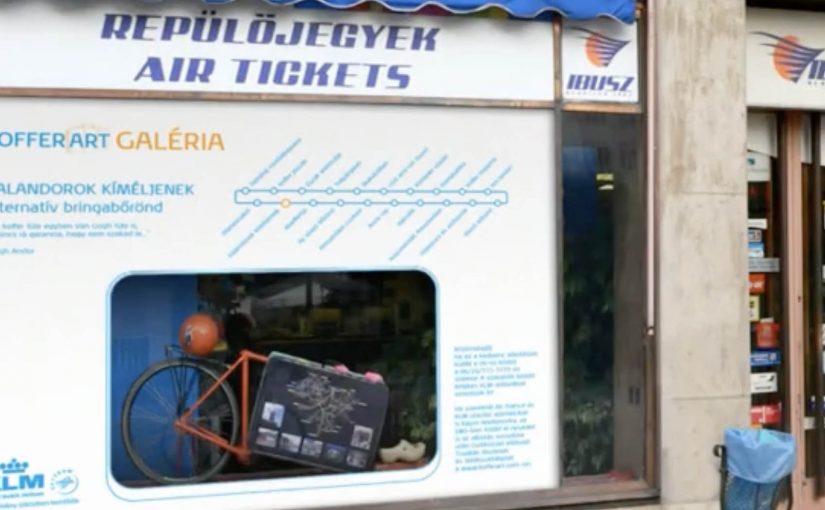
KLM and Leo Burnett Budapest invite Hungary’s most talented young artists to create artworks inspired by KLM destinations, then place those works around the city so the environment itself becomes an urban gallery. The result is described as a tactical campaign that people treat like an event.

The mechanism: destination inspiration, public display, social talk value

Mechanically, the work shifts “price communication” into a set of visual anchors that are easier to notice, photograph, and discuss than conventional fare banners. Instead of asking audiences to care about numbers first, it earns attention through craft, then lets the brand and destinations ride that attention. Because the visual anchors are built to be noticed and shared, the offer benefits from social talk value instead of competing for banner attention.

In European travel marketing, reframing a tactical offer as a public experience can restore attention without changing the offer itself.

Why it breaks through when tactical work gets ignored

Most price-led creative competes in the same visual language: small type, disclaimers, urgency cues. Art flips the hierarchy. It gives people a reason to stop that is not the price, then makes the price message feel like a discovery rather than an interruption. This is a stronger play than trying to out-urgency every other fare banner.

Extractable takeaway: When your message is tactical by nature, earn the first second with something people would choose to notice, then let the offer land as the payoff.

What KLM is really buying

The business intent is not only incremental ticket consideration. It is mental availability. By mental availability, I mean being the brand that comes to mind in a destination or booking moment without needing a hard sell. KLM shows up as a brand that puts something into the city, not just a brand that takes attention out of it. That association can make the next tactical message feel less disposable.

The real question is whether your next “deal” message can earn attention before it asks for action.

Steal this when deal messages get ignored

  • Wrap the tactical truth in a non-tactical container. Put the deal inside a format people would choose to engage with.
  • Design for public visibility. If it looks good in the street, it travels further online with less paid support.
  • Use craft to earn the first second. Attention is the gate. Price can come second.
  • Make the brand additive. The activation should feel like it contributes to the audience’s day, not like it interrupts it.

A few fast answers before you act

What is the Suitcase Art Project in one line?

A fare communication idea that uses destination-inspired artworks displayed across the city, turning a tactical message into a cultural moment people want to notice and share.

What problem is it solving for KLM?

Banner blindness and fatigue around price-led messaging. It creates attention through art first, then lets the offer benefit from that attention.

Why does “art in public space” help price communication?

Because it changes the viewer’s mindset from “being sold to” into “discovering something”. That shift makes the message more memorable and less ignorable.

What is the most transferable principle?

If your message is inherently tactical, change the format and context so people approach it with curiosity instead of resistance.

What can you do if you cannot run a city-wide activation?

Use the same pattern at a smaller scale. Create one distinctive artifact people would still choose to photograph or share, then let the offer ride the attention that artifact earns.

KLM: Economy Comfort

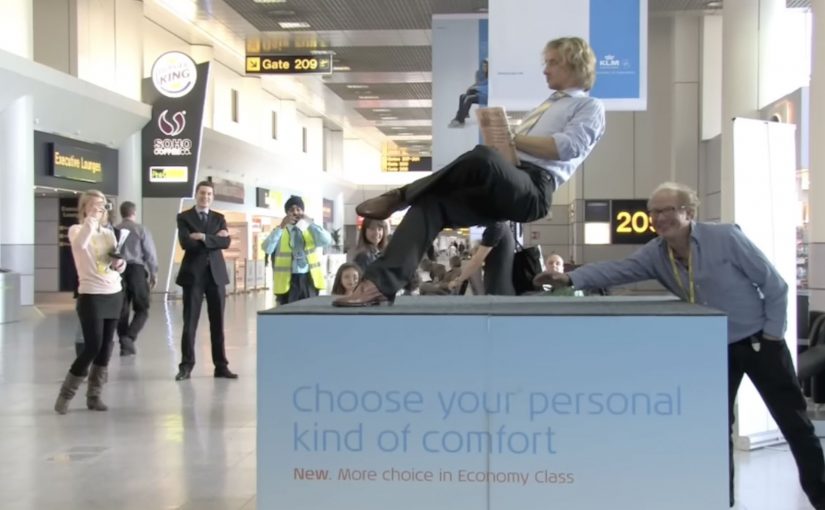
Dutch ad agency Rapp Amstelveen has magician Ramana appear in a European airport, performing his levitation trick to advertise KLM’s comfortable Economy Comfort seats.

A comfort claim made physical

The execution picks a familiar magic trope. Levitation. And places it in a high-friction environment where comfort actually matters. Airports. Waiting. Stress. The stunt is easy to understand even without copy, and the metaphor does the selling: this seat makes the journey feel lighter.

How the mechanism earns attention

Mechanically, it works because it is a live interruption, meaning a real-world moment people witness in person, that behaves like entertainment first and advertising second. People stop because something unusual is happening, then the brand message arrives as the explanation for the spectacle.

In travel and airline marketing, making an abstract benefit feel tangible is often more persuasive than repeating feature lists.

In European travel brands, context-led demonstrations often outperform abstract comfort claims.

Why it lands in an airport context

The location is the multiplier. In an airport, audiences are already thinking about space, fatigue, and the next few hours of their life. A “comfort” message is not a concept. It is an immediate desire. That makes the metaphor feel relevant rather than random.

Extractable takeaway: When the promise is comfort, place the proof where discomfort is already top of mind, so the message lands as a relief, not a claim.

What KLM is really buying with a stunt like this

Beyond awareness, the intent is memorability for a paid upgrade. Economy Comfort is the kind of product that can disappear into pricing tables. A public demonstration gives it a story. The real question is whether your upgrade has a story people will repeat after they leave the airport. And stories travel further than seat specs.

Steal this move for paid upgrades

  • Use a single, legible metaphor. If the audience can “get it” in one second, you win the next ten.
  • Stage it where the benefit is felt. Context turns a claim into a reminder of a real pain point.
  • Let entertainment open the door. Make the first moment about curiosity. Make the second moment about the brand.
  • Turn a feature into a story. Especially for upgrades and add-ons that otherwise live in fine print.

A few fast answers before you act

What is the core idea behind KLM Economy Comfort?

A live levitation stunt in an airport used as a physical metaphor for a more comfortable flight experience.

Why use a magician for a seat upgrade?

Because comfort is hard to “prove” in an ad. A simple spectacle makes the promise feel immediate and memorable.

What role does the airport setting play?

It is where people are already primed to care about comfort, waiting, and travel fatigue. The message meets them at peak relevance.

What is the transferable lesson?

When your benefit is abstract, demonstrate it with a single visual metaphor, in the environment where the benefit matters most.

How can you adapt this if you cannot do a live stunt?

Use a single visual metaphor you can demonstrate in the place where the benefit is felt, then let the brand message arrive as the explanation.