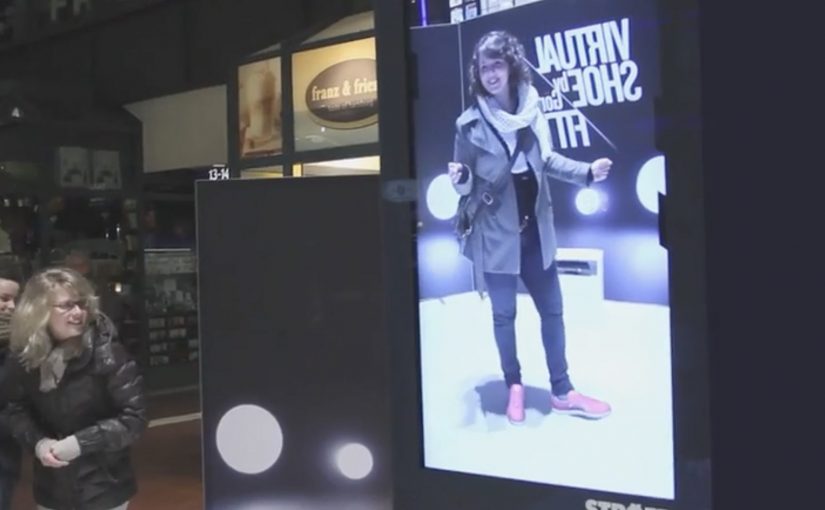
As part of its global “Open Happiness” campaign, Coca-Cola has set up interactive vending machines in various parts of the world. In Singapore, consumers could hug for a Coke. In Korea, they could dance for a Coke.
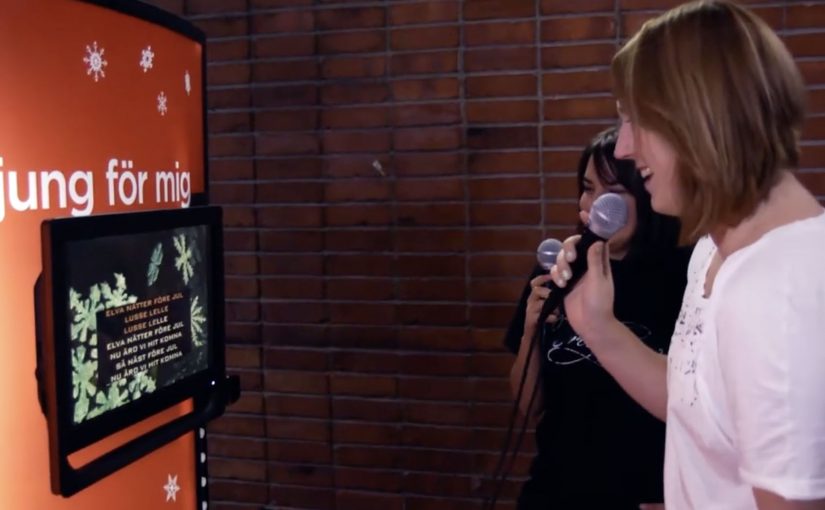
And now in Stockholm they can sing for a Coke. The vending machine has been placed at the Royal Institute of Technology with the sign “Sing For Me” in the front.
When sampling becomes a public performance
The mechanism is simple: the machine replaces money with a human gesture. That “gesture for reward” model means the action itself becomes the price of entry. Dance moves in one market. A song in another. The reward is immediate, and the moment is automatically social because other people can see it. That swap works because it turns a private purchase into a visible act, giving the crowd a reason to watch, react, and join in.
In global FMCG sampling and brand experience work, “gesture for reward” machines turn distribution into participation by design.
The real question is whether the action is easy enough to trigger participation without making people shut down in public. The smart part of this format is not the free Coke, but the public behavior it creates around the sample.
Why it lands
This works because it makes the brand promise legible without explanation. A vending machine is normally transactional and forgettable. A performance-triggered machine is a small event, and the crowd reaction becomes part of the product. The setting helps too. A campus is full of friends, cameras, and people willing to try a slightly silly thing in public.
Extractable takeaway: If you swap payment for a simple public action, you turn sampling into a story people can witness, film, and retell. That social proof travels farther than the product ever could on its own.
The machine is one of a number of Happiness Machines Coca-Cola has deployed around the world since 2009.
What to borrow from performance sampling
- Pick one obvious trigger: the instruction must be understood in one glance.
- Make the reward instant: the dispense moment is the emotional payoff.
- Design for bystanders: the format should recruit a crowd naturally.
- Localize the gesture: keep the same principle, but choose a culturally comfortable action.
- Capture reactions: real laughs and hesitation are the proof that the idea works.
A few fast answers before you act
What is the “Sing For Me” machine?
It is a Coca-Cola vending machine that dispenses a free Coke when people sing to it, turning a product handout into a public, participatory moment.
Why does “sing for a Coke” work as a mechanic?
Singing is visible and socially contagious. Once one person does it, others gather, react, and often try it themselves.
How is this connected to the broader “Happiness Machine” idea?
It follows the same pattern: replace payment with a feel-good interaction, then let real reactions become the distribution layer.
Where does this format work best?
High-footfall environments with social density, like campuses, events, malls, and transit hubs, where bystanders quickly become an audience.
What is the biggest risk with performance-for-reward activations?
If the action feels embarrassing or culturally off, participation drops. The trigger must feel playful, safe, and easy to attempt in public.