
Magnum Pleasure Hunt 2: bigger, bolder sequel

Magnum Pleasure Hunt 2: bigger, bolder sequel

Last year, to launch the all new Magnum Temptation Hazelnut ice-cream, Swedish agencies Lowe Brindfors and B-Reel created an advergame, a branded game built to promote a product, called “Magnum Pleasure Hunt Across The Internet”. In the game, players are taken across 20 well known websites as they collect Bon Bons, the special ingredient of the Magnum Temptation Hazelnut ice-cream.

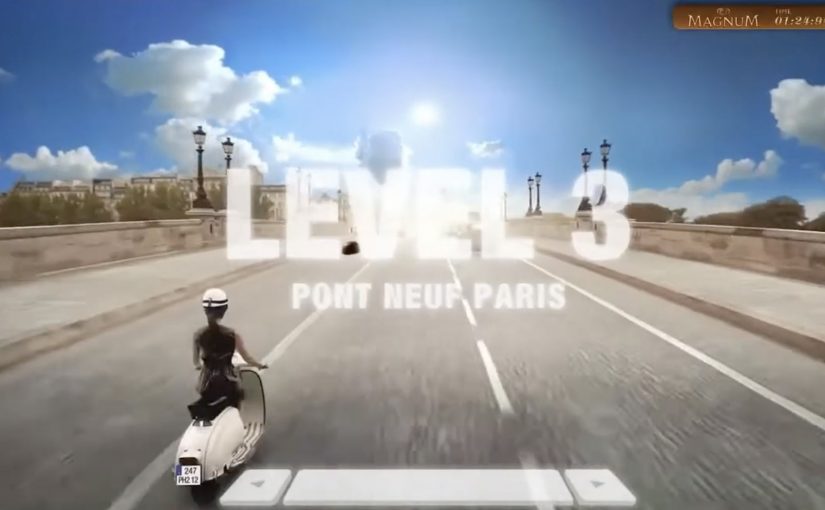
Since the game did exceedingly well, Magnum and team came up with round 2, enhanced with 3D graphics. This time players were taken on a run in New York, made to fly over Paris, and surf the waves in Rio De Janeiro, using a map and street-view style interface as the playground.

What changes from round 1 to round 2

The first game is a browser-bending sprint that treats the wider internet as a set of levels. The sequel shifts the same chase mechanic into city environments, with more depth, more spectacle, and clearer “set pieces” you can remember after one play.

In global FMCG brand launches, advergames like this work when they turn “a product promise” into a simple, replayable challenge people can explain in one sentence.

The real question is whether your sequel escalates the world without changing the one rule people already learned.

  • Round 1: web-hopping levels and Bon Bons as the core collectible.
  • Round 2: city-based runs plus a stronger 3D feel for movement, obstacles, and momentum.

Why it lands: it feels like discovery, not advertising

This is not a microsite you click once and forget. It is designed as a time-and-score loop. You play again to improve your route, your timing, and your collection count, and that repeat play is where the brand association gets built. It also matches Magnum’s “pleasure seeking” positioning with a mechanic that is literally a hunt. Because the loop rewards replay with visible improvement, the hunt association gets reinforced without asking the player to read a product pitch.

Extractable takeaway: When the brand promise is an action verb, make that verb the gameplay loop, and make replay the fastest way to feel the promise again.

The smart brand logic behind the Bon Bons

Bon Bons are a neat choice because they let the product story travel inside the gameplay. You are not only collecting points. You are collecting the “ingredient” that makes the new variant feel specific, even if you never read a product description.

I think it is a great follow up to the first version. Magnum Pleasure Hunt 2 could be experienced at www.pleasurehunt2.mymagnum.com.

Sequel campaign rules worth copying

  • Keep the core rule the same. Sequel energy comes from familiarity, then escalation.
  • Upgrade the world, not the instructions. New environments create novelty without re-teaching the game.
  • Build signature moments. New York, Paris, and Rio act like memorable chapters, not just backgrounds.
  • Make it easy to share a result. If the outcome is a score or time, people instantly understand what “good” looks like.

A few fast answers before you act

What is Magnum Pleasure Hunt?

It is a branded advergame where players chase and collect Magnum Bon Bons, originally by racing across well known websites as game levels.

What is different about Magnum Pleasure Hunt 2?

The sequel moves the action into city environments, adds a more cinematic 3D feel, and turns New York, Paris, and Rio into distinct stages of the chase.

Why does the “hunt” mechanic fit the Magnum brand?

Because it translates the idea of “pleasure seeking” into a simple action loop. Keep moving, keep collecting, keep chasing the next reward.

What makes an advergame replayable enough to matter?

Clear scoring, short rounds, and visible improvement. If players can beat their own time or score, they come back.

What is one practical takeaway for marketers?

If you plan a sequel, keep the rules familiar and escalate the world. That is how you get “new” without losing the audience you already earned.
Amnesty International: Sound of Amnesty

Amnesty International: Sound of Amnesty

This year, charity and human rights organization Amnesty International France turns its signatures petition drive at www.marathondessignatures.com into a musical “hymn to freedom” with Paris-based agency La Chose.

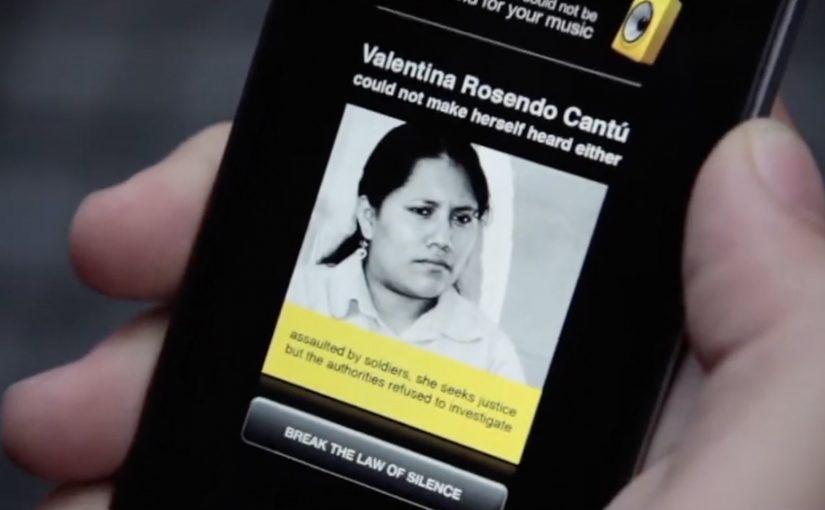
The campaign behaves like a normal petition drive, with one twist: every digital signature releases the next note of an exclusively written song, “The Sound of Amnesty”. To push the idea further, Shazam is used as a distribution channel. When Shazam fails to recognise a song, the app displays a call-to-action message alongside a case story, including: “Valentina Rosendo Cantu could not make herself heard either. Assaulted by soldiers, she asked for justice but the authorities refused to investigate”.

Why the “next note” mechanic works

Most petitions are emotionally important but mechanically flat: sign, share, done. Here, the signature becomes a trigger with immediate feedback. The song becomes a living progress indicator, and every participant can feel they are adding something tangible, not just adding their name to a counter. Because each signature produces an instant, shared “next note” payoff, participation feels consequential, which makes repeat shares and completion more likely.

This is a stronger petition pattern than a static signature counter because it turns support into a felt moment of progress.

Why Shazam is the clever amplifier

Shazam normally appears when you are already paying attention to music. By placing the petition inside the “recognition failed” moment, meaning when the app cannot match a track, the campaign catches people at a point of curiosity and mild frustration. The message reframes that friction as a metaphor for unheard voices, then gives users something concrete to do.

Extractable takeaway: Borrow an existing attention ritual, then use the moment’s friction to make the cause legible and the next action immediate.

In digital petition drives, tying each signature to a shared artifact that literally progresses can turn passive support into collective anticipation.

The real question is whether your petition makes progress feel personal, or just counts people.

Results and escalation

Reportedly, the campaign collected 150,000 signatures, described as a 500% increase from the previous year. The track was also produced on CD and sent to Amnesty’s targeted authorities, turning digital participation into a physical advocacy artifact.

Patterns to copy in petition drives

  • Give every action an immediate consequence. “You unlocked the next note” beats “thanks for signing”.
  • Use an existing habit. Hijacking a familiar moment inside a popular app can outperform building a new destination experience.
  • Make progress audible or visible. A petition counter is abstract. A song evolving over time is memorable.
  • Connect the mechanic to the meaning. The “not recognised” moment mirrors the core human-rights theme: not being heard.

A few fast answers before you act

What is “The Sound of Amnesty” in one line?

A petition drive where each signature unlocks the next note of an original song, turning advocacy into a progressively revealed “hymn to freedom”.

How is Shazam used in the campaign?

When Shazam cannot recognise a song, it displays an Amnesty message and invitation to sign, using the failure moment as a metaphor for silenced voices.

Why does the “unlock the next note” mechanic increase participation?

It adds instant feedback and a shared sense of progress, making signatures feel like contributions to a collective outcome.

Do you need Shazam to replicate the pattern?

No. The transferable move is to piggyback on an existing user habit and turn an ordinary support action into a small, satisfying reveal that people want to share.

What is the most transferable lesson?

If you want more signatures, do not only ask for support. Turn the act of signing into a small experience people can feel and share.

Volkswagen virtual Golf Cabriolet app

Volkswagen virtual Golf Cabriolet app

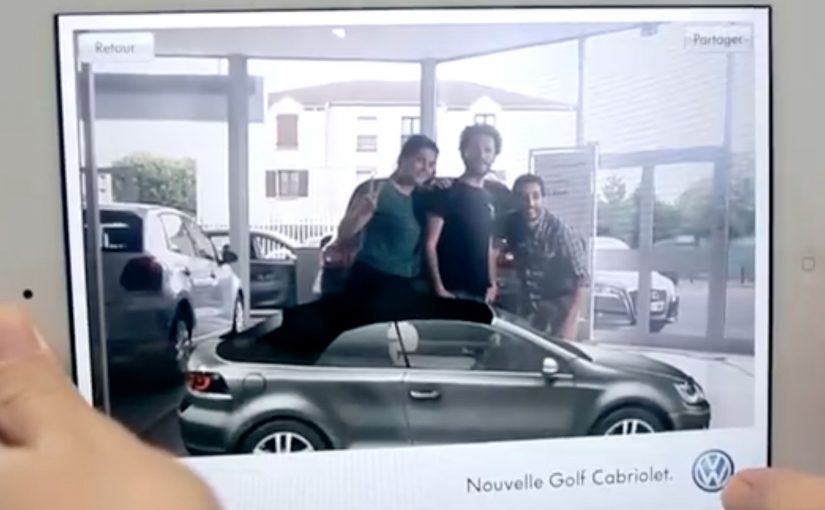
The Golf Cabriolet is back after 9 years of absence, since production was stopped in 2002. Volkswagen together with Paris based agency ‘Agency.V.’ have come up with the worlds first augmented reality car showroom app for the iPad2, iPhone and Android. Here, augmented reality means using the phone or tablet screen as a lightweight showroom for a virtual version of the car.

The app lets you explore the vehicle and play with it’s features like opening the soft-top roof, rotating the car, checking the vehicle’s details, changing the body colour or the style of the rims. You can even take a picture of yourself with the virtual car and share each step of this experience through your social networks.

Why this is a useful AR showroom idea

This is a clean, practical use of augmented reality. It gives people a way to “handle” the car without needing a dealership visit. The experience stays focused on the things people actually want to try first. The roof open and close. The rotation. The color and rim changes. Because the app turns the screen into a hands-on showroom, the product feels easier to explore and share.

Extractable takeaway: AR product demos work best when they compress first-touch exploration into a few obvious actions people already want to try.

In car marketing, that shifts the first product interaction from the dealership to the viewer’s own screen.

What Volkswagen is really demonstrating here

The business intent is not to recreate the full dealership experience. It is to move the first high-interest product interaction into a portable format people can control, personalize, and share.

The real question is whether that kind of lightweight showroom removes enough friction to make early product interest feel immediate and worth passing on.

What to take from this if you are building AR product demos

  1. Prototype “touch” moments first. Opening, rotating, and quick configuration are the behaviors people expect before they care about specs.
  2. Keep the interaction set small and obvious. A few high-intent controls beat a feature dump in early-stage AR.
  3. Make sharing a natural outcome of exploration. A photo-with-the-product moment is a low-friction distribution mechanic.
  4. Use AR to remove the dealership barrier. The value is access and play, not realism for its own sake.

A few fast answers before you act

What is the Volkswagen virtual Golf Cabriolet app?

An augmented reality car showroom app for iPad2, iPhone and Android that lets people explore and customize the Golf Cabriolet.

What can you do inside the app?

Open the soft-top roof, rotate the car, check details, change body colour, change rim styles, and take a photo with the virtual car to share socially.

Who created it with Volkswagen?

Paris based agency ‘Agency.V.’.

Why is this a useful AR showroom idea?

It brings the core product exploration moments onto a personal screen, so people can interact with the car before any dealership visit.

Where could people download it?

From the French iTunes Store for iPhone and iPad 2, and from the Android market for Android devices.