
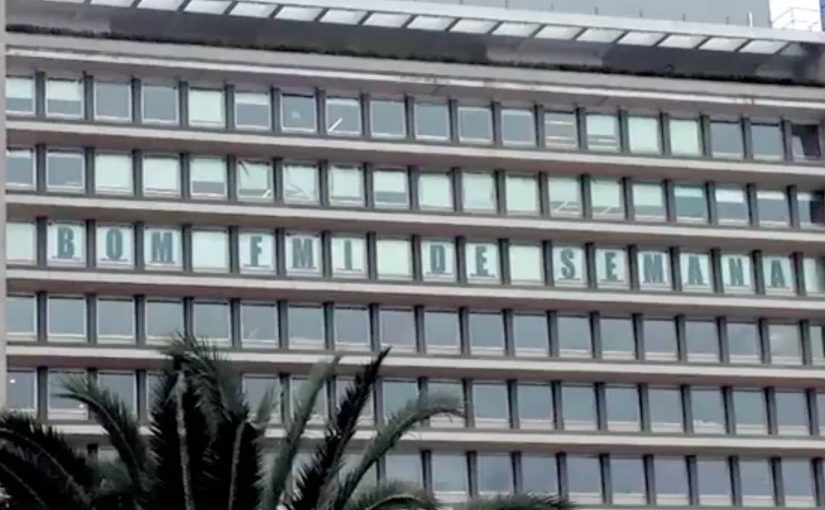
TBWA Lisbon: Windows become Twitter billboard

TBWA was the last agency to move to Lisbon’s advertising district. With their top competitors already there, they decided to showcase their creativity by turning 19 windows of their office into a 36m long Twitter billboard.

The stunt is simple in concept and bold in execution. The office becomes the medium. Instead of hiding behind a reception desk and a logo, the agency uses its own facade as a live publishing surface for the public street.

Turning an address into a live channel

The mechanism is real-time social content made physical. Tweets appear across the windows, transforming an office building into a public conversation layer. It is not “social amplification” in the usual sense. It is a direct translation from a digital feed into a street-level display.

In dense urban environments, public-facing digital surfaces work best when they make participation visible, immediate, and shared by everyone on the street.

The real question is whether your brand can turn participation into a public signal, not just another message people scroll past.

The video does not explain exactly how people were encouraged to send in their tweets, but it does show the breadth of what people shared. Tweets touch politics, taxes, Europe, Merkel’s visit, and more. That range matters because it signals that the billboard is not a branded script. It behaves like a live civic wall, meaning an open public message board where anyone can add a line and everyone on the street sees it.

Why it lands in an ad district full of competitors

When agencies cluster, sameness is the enemy. This activation works because it creates a visible signature at the point of competition. People do not have to be invited inside to experience TBWA. The building itself is performing in public, and the audience can participate without crossing a threshold.

Extractable takeaway: In a competitive cluster, your best differentiator is a street-level interface that makes participation visible to everyone nearby.

It also carries a little risk. Real-time public messages can be messy. That tension is part of the attention engine. It feels alive because it is not perfectly controlled.

The intent: differentiate through public participation

The business intent is positioning. TBWA is signalling modernity, openness, and confidence in real-time ideas. The agency is also using the street as a distribution channel to generate talk, foot traffic, and press interest.

A live, participatory facade is a stronger differentiator here than another logo on glass, because people can experience the idea without being invited in.

And it worked. In the end, all the window tweeting created quite a stir in the local media.

Practical moves from the Twitter window billboard

  • Use your own real estate. If you have a facade, treat it as media, not architecture.
  • Make digital physical. The jump from screen to street creates instant novelty.
  • Design for participation. People engage more when they can see themselves appear in public space.
  • Accept a little mess. Real-time content feels credible because it is not overly polished.
  • Build for earned media. A visible public installation gives journalists something to film, not just to quote.

A few fast answers before you act

What is the TBWA Lisbon Twitter billboard?

It is a facade activation that turned 19 office windows into a 36m long display showing tweets in public, effectively making the building a live billboard.

Why does turning tweets into a window display work?

Because it makes online conversation visible in a shared physical space, which creates surprise, participation, and social proof.

How did it create attention beyond the street?

The visibility and real-time nature made it easy for people and local media to capture and share, turning a building into a story.

Is this more about branding or engagement?

Both. The engagement mechanic is participation, but the branding outcome is differentiation and positioning in a competitive district.

What is the key takeaway for agencies and brands?

If you want to stand out locally, build a public interface that lets people contribute and be seen. It creates talk faster than self-promotion.
Samsung Live Human Outdoor: Billboard caricature

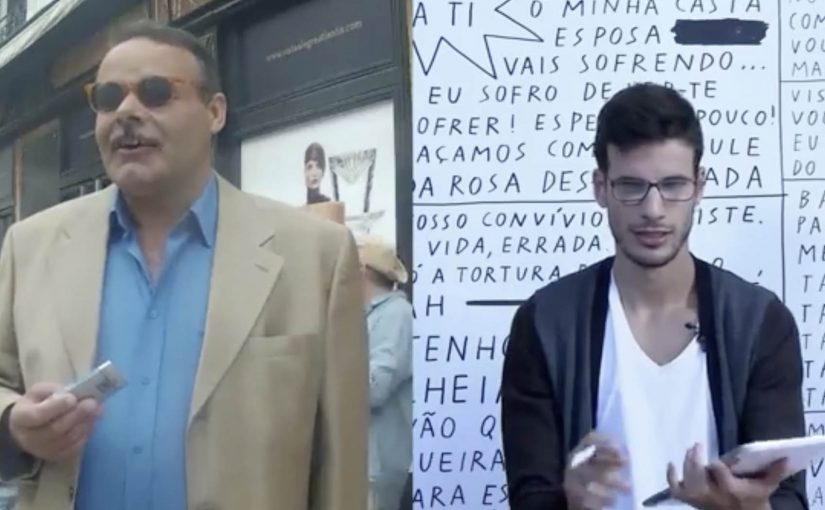
With the new Samsung Note 10.1, caricature artists can now go digital. To highlight this feature and raise awareness about the tablet, Samsung puts a real caricature artist “into” an outdoor billboard experience and has him draw live caricatures of passers-by. The finished drawings are then put on the Samsung Portugal Facebook page.

A live billboard that behaves like a street-portrait stand

The mechanism is simple. People stop. They watch themselves being drawn in real time. The artist works digitally using the Note 10.1, and the billboard becomes a public canvas that makes the device’s creative promise visible from across the street.

In consumer electronics marketing, live demos in public spaces work when the product capability is undeniable without any explanation.

Why it lands: you do not “see a feature,” you experience it

This is not a spec sheet. The real question is whether your launch turns a capability into a moment people actively want, or just a message they tolerate. The device becomes the instrument of a familiar craft, and the outcome is something people actually want. A caricature is personal, fast, and inherently shareable, which makes the crowd effect, the people who stop to watch, do the distribution work.

Extractable takeaway: If your live demo produces a personal artifact on the spot, proof travels further because people share the outcome, not your claims.

What Samsung is really achieving

  • Proof at full scale. A drawing tool is hard to dramatize in a 30-second spot. On a billboard, the proof is the show.
  • A reason to stop. The promise is not “look at our tablet.” The promise is “get drawn.”
  • A built-in content pipeline. The Facebook posting turns a one-off street moment into a browsable gallery.

What to steal for your next live product demonstration

  • Choose an outcome people value. A personal artifact beats a generic demo every time.
  • Make the capability visible from distance. If it only works up close, most of the street never understands it.
  • Close the loop digitally. Give people a clear place to find “their” result after the moment ends.
  • Let the crowd be the media. A live, public performance naturally draws more viewers than static outdoor.

A few fast answers before you act

What is Samsung Live Human Outdoor?

It is an outdoor activation where a caricature artist draws passers-by live using the Samsung Note 10.1, with finished sketches published to Samsung Portugal’s Facebook gallery.

What product feature is being demonstrated?

The ability to create digital drawings naturally and quickly on a tablet, associated with pen-based input and creative apps.

Why use caricatures instead of a standard product demo?

Because the outcome is personal and entertaining, which makes people stop, watch, and share, while the product capability is being demonstrated in plain sight.

What makes this “live communication” rather than outdoor advertising?

The billboard is not only a display. It is a real-time performance and interaction, with the public influencing the content through participation.

What is the main lesson for experiential product launches?

Turn a feature into a moment people want. If the experience creates a valued takeaway, attention becomes voluntary and sustained.

Turismo de Portugal: Cobblestone QR Codes

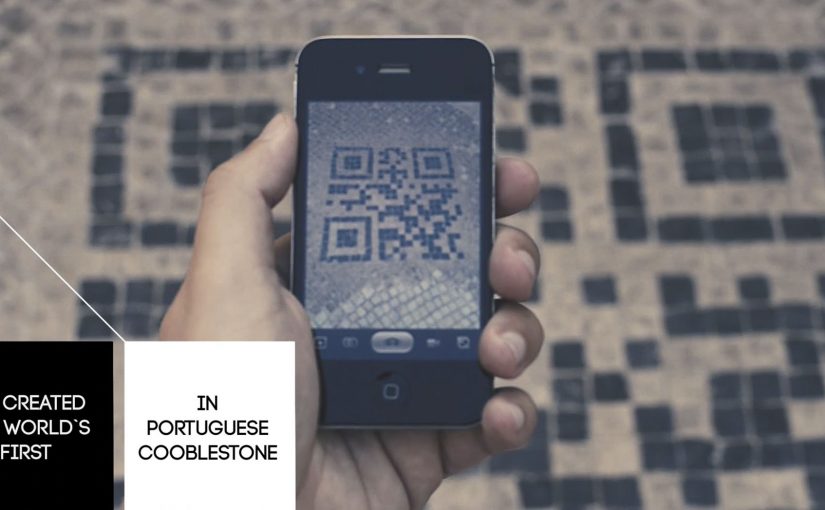
To get into the minds of tourists, Turismo de Portugal decides to fuse QR code technology with Portugal’s historical cobblestone tradition. The result is described as the first QR code made from Portuguese cobblestones.

The first QR code is embedded into the city ground in Lisbon, followed by an installation in Barcelona. Reported write-ups describe the campaign as successful enough to spark plans for similar cobblestone QR codes in other cities such as Berlin, Paris, Tokyo, New York, Vienna, Goa, Lima, and Oslo.

When street craft becomes the interface

The mechanism is simple. A familiar tourist behavior, looking down at the street and looking for cues, is turned into a scan trigger. The QR code is physically “native” to the place because it is built using the same black-and-white stone patterns people already associate with Portuguese streets, especially in historic areas like Chiado.

In destination marketing and city tourism promotion, bridging physical street culture to mobile content is a reliable way to convert foot traffic into deeper engagement. Destination brands should treat the street as the interface, not just the backdrop.

In European destination marketing, the most scalable activations turn street-level cues into a clear mobile doorway.

Why this lands with visitors

It does two jobs at once. It signals “authentic Lisbon” through material and craft, and it gives the tourist an immediate next step through their phone. The real question is how you turn a place’s own cues into a frictionless next step without making it feel like advertising. Unlike a poster or a billboard, the code is part of the ground people are already walking on, so discovery feels like finding something, not being targeted.

Extractable takeaway: If you want mobile interaction in public space, embed the call-to-action into something the place already owns. Local texture first, technology second. The scan should feel inevitable, not imported.

What to steal for your own place-based activations

  • Make the trigger belong to the environment. Use local materials, patterns, or rituals so the interaction feels contextual.
  • Design for tourist attention spans. The best street interactions reward a 5-second decision, not a long explanation.
  • Use “discovery” as the media buy. When people feel they found it, they are more likely to scan, share, and talk about it.
  • Plan for maintenance and legibility. Outdoor codes live or die based on wear, lighting, contrast, and camera-readability.

A few fast answers before you act

What is the Cobblestone QR idea in one sentence?

A QR code built into the street using Portuguese cobblestones, so tourists can scan a piece of the city itself to access content.

Why does making a QR code “physical” matter?

Because it turns a generic tech behavior into a place-specific experience. The scan feels like interacting with Lisbon, not with a random sign.

What makes this different from putting a QR code on a poster?

Placement and meaning. A poster is rented space. A street pattern is owned space. The medium carries authenticity before the message even loads.

What should the QR code open to?

A fast-loading mobile page that confirms you are in the right place and offers one clear next step. If the page feels generic or slow, the “found it” magic disappears.

What is the biggest execution risk?

If the code is hard to scan or the content behind it is weak, the novelty collapses. The physical build earns attention. The mobile experience must repay it.