
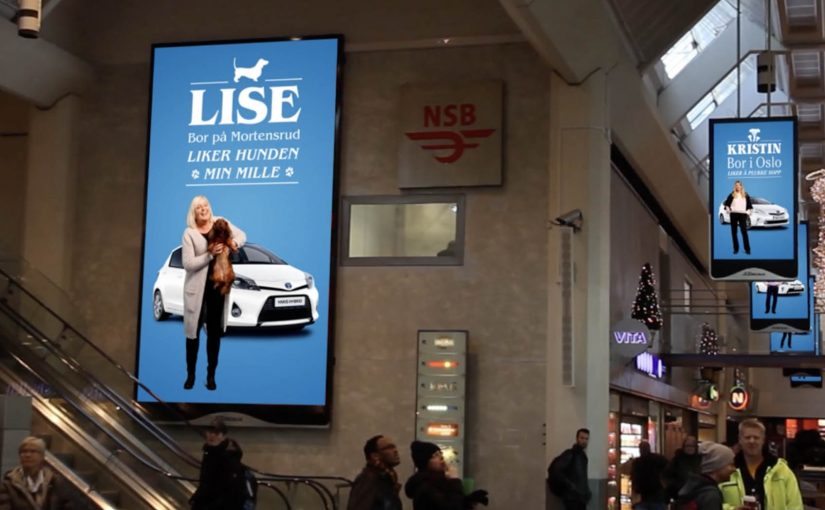
Toyota: Try My Hybrid

Toyota in Norway is doing really well on loyalty and customer satisfaction, but it is struggling to recruit new customers.

So instead of having salespeople persuading new buyers, Toyota lets satisfied Hybrid owners offer test drives to prospects. A web and mobile service makes it easy for owners. For no money. To let strangers, neighbours and friends, and friends of friends via Facebook test drive their Hybrid.

Turning owners into the dealership

The mechanic is simple and trust-led. That means the trust comes from the owner-host relationship rather than from Toyota’s sales script. Prospects find nearby Hybrid owners and request a test drive. Owners opt in, schedule, and host the drive. The conversation is the product, because it is grounded in lived experience rather than sales script.

In automotive marketing where trust is the bottleneck, peer-to-peer test drives can outperform sales-led persuasion.

Why it lands

It removes the two biggest barriers to a first drive. Social friction and credibility. The prospect gets a low-pressure introduction, and the owner gets to play the proud expert. That dynamic changes what the test drive feels like. It becomes a neighbourly recommendation, not a pitch. The social graph component also matters, because “friend of a friend” is often the sweet spot where curiosity meets safety.

Extractable takeaway: If your current customers are genuinely satisfied, build a structured way for them to host the first experience. Let trust carry the conversion, and let technology simply remove coordination friction.

What Toyota is really solving

This is an acquisition problem disguised as a community service. Toyota already has strong satisfaction. The real question is how that satisfaction becomes low-friction acquisition before a prospect ever enters a showroom. Toyota is right to treat owner advocacy as the front end of acquisition, not as a soft loyalty add-on. The challenge is that satisfaction does not automatically translate into new buyers at scale. This service turns satisfaction into a repeatable, measurable funnel step. Discovery, booking, drive, and then consideration. Without needing more showroom persuasion.

What brands can steal from Try My Hybrid

  • Make the first experience owner-led. Use real users as the proof layer.
  • Design for “near me”. Proximity is the simplest trust signal after reputation.
  • Use social adjacency carefully. Friends of friends can unlock trial without feeling like a cold lead.
  • Keep incentives optional. Pride and helpfulness can outperform cash when satisfaction is real.
  • Instrument the pipeline. Treat hosted trials as a trackable acquisition channel, not PR.

A few fast answers before you act

What is “Try My Hybrid” in one sentence?

A web and mobile service that lets prospective buyers book test drives with real Toyota Hybrid owners instead of salespeople.

Why does the owner-led test drive feel more persuasive?

Because it is grounded in lived experience. The host can answer questions with real usage context, which increases credibility and reduces sales resistance.

What makes the social layer important?

It helps prospects find a trustworthy host through proximity and social adjacency, which lowers hesitation versus a fully anonymous test drive.

What is the biggest operational risk?

Reliability and safety. If scheduling fails, hosts no-show, or the process feels risky, trust breaks and the program collapses.

How can a non-automotive brand apply the same model?

Turn your happiest customers into opt-in hosts for the first experience, then build a lightweight system to match prospects to hosts and remove coordination friction.
Lexus Trace Your Road: life-sized racing game

To promote its new high-performance hybrid car, Lexus, together with Saatchi & Saatchi Italy, creates “Trace Your Road”, an experiential event featuring Formula 1 driver Jarno Trulli.

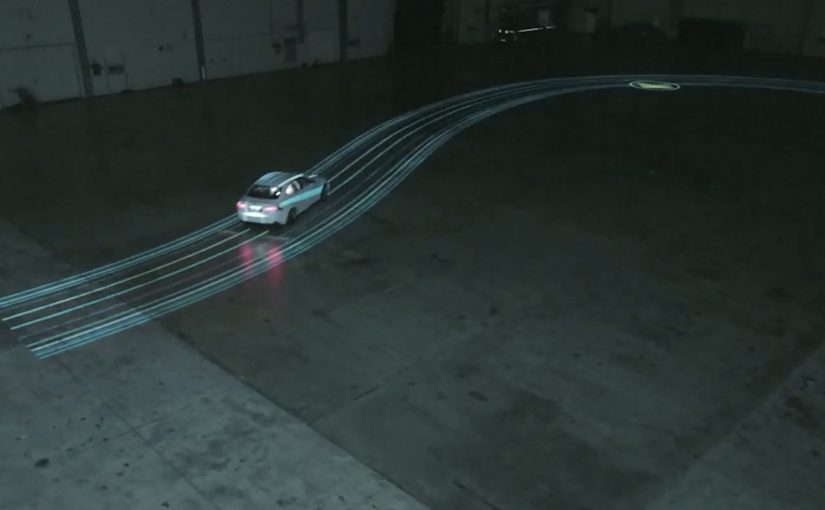
Ten Lexus fans are selected from hundreds of applicants on Lexus’ Facebook page. Each winner rides in the passenger seat of the hybrid while Trulli drives, and the passenger “draws” the course on an iPad. That path is projected onto the floor of an aircraft hangar using special projectors, while a custom high-resolution infrared (IR) camera system tracks the car’s position in real time.

How the experience works

The format is a life-sized driving game with the audience literally designing the track. The event flow is built around three moving parts.

  • Live track creation. The passenger traces a route on the iPad, creating spontaneous turns, straights, and corners.
  • Real-world projection. The route appears at scale on the hangar floor, so the “racetrack” becomes a physical space.
  • Real-time tracking. An IR camera system follows the car so penalties and scoring can be applied accurately.

What makes it competitive, not just cinematic

Trulli’s driving is put to the test as he attempts to follow the improvised paths at speed. Penalty points are given when the car goes outside the projected route or touches the hangar walls. The goal is to hit seven selected touch points in the quickest time, and the fan with the best score wins.

In automotive launches and premium brand marketing, turning a test drive into a participatory game makes performance feel experienced, not explained.

The real question is whether your launch makes the product truth the win condition, not just the headline.

Why it lands: performance becomes legible

Hybrid performance can be hard to dramatize without slipping into numbers. Because the passenger-designed route and visible penalty rules force precision, control and handling become legible without a spec sheet, while the story stays human through the passenger’s real-time choices and Trulli’s visible skill.

Extractable takeaway: When you can turn a product claim into a rule set with visible penalties, the audience understands it instantly and the content becomes inherently shareable.

What Lexus proves with “Trace Your Road”

The brand is not only saying “this car performs”. It is staging a situation where performance is the only way to succeed. This is a stronger way to market performance than listing specs, because it forces the car to prove itself under constraints. The experience also rewards participation: winners influence the outcome, spectators understand the rules instantly, and the filmed content has a clear narrative arc.

Make the claim playable: launch moves worth copying

  • Let the audience shape the challenge. When participants create the rules in real time, attention spikes because outcomes are unpredictable.
  • Translate product claims into constraints. Handling, control, and precision become visible when the environment punishes mistakes.
  • Build a scoring model people can explain. Simple penalties and a clear finish condition make the story travel.
  • Use tech as infrastructure, not the headline. Projection and tracking matter most when they disappear into the experience.

A few fast answers before you act

What is Lexus “Trace Your Road”?

It is an experiential event where a passenger draws a racetrack on a tablet and the route is projected onto a hangar floor, while Jarno Trulli drives a Lexus hybrid along that path in real time.

How is the racetrack created and shown?

The passenger traces the course on an iPad, and the design is projected at scale onto the floor using multiple projectors so the track becomes a physical space to drive in.

How does the system know if the car stayed on the route?

A custom high-resolution IR camera tracking system monitors the car’s position against the projected route so penalties can be applied when it leaves the path.

What makes this more than a one-off stunt?

The format produces repeatable rounds, clear scoring, and a strong spectator story, which makes it easy to capture as a campaign film and behind-the-scenes content.

What is the main lesson for experience design?

Make the product truth the win condition. When success requires the product’s strengths, the message feels demonstrated rather than claimed.

Meat Pack: Hijack

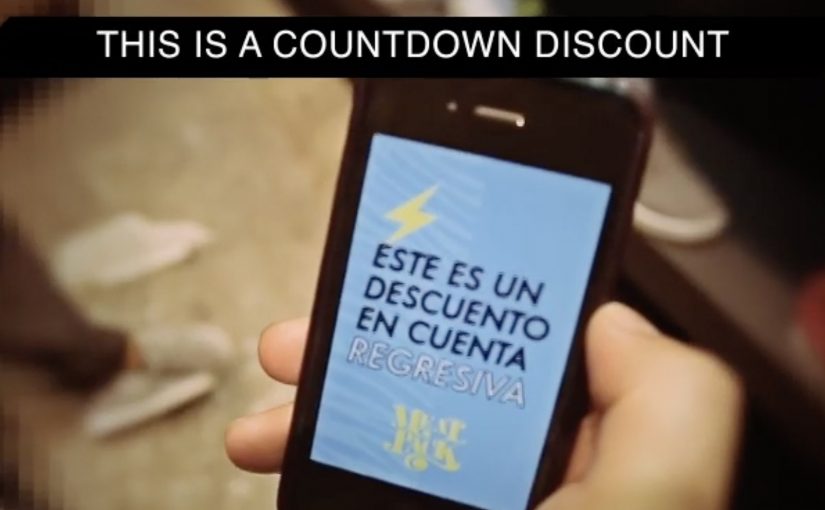
You walk into a competitor’s store to browse shoes. Your phone buzzes. Meat Pack offers you a discount that starts at 99%, then drops by 1% every second. If you want the deal, you have to move.

For a new discount promotion, Meat Pack, a shoe store in Guatemala known for an edgy, irreverent style, created Hijack, described as a GPS-based enhancement to their official smartphone app. Each time a customer entered the official store of one of the brands sold at Meat Pack, the app triggered a promotional message with a countdown offer. The discount started high and decreased every second, then the countdown stopped when the customer reached Meat Pack’s store.

Definition tightening: This is geofencing. A mobile app uses location signals to detect when you enter a defined physical area, then triggers a message based on that location event.

Turning a discount into a race

The mechanism is deliberately ruthless. The offer is so large it interrupts whatever you were doing, and the time pressure converts curiosity into action. The “best possible price” is available only at the exact moment your intent is hottest, while you are literally standing inside a competitor’s store.

In dense urban retail environments where shoppers compare options across nearby stores, location-triggered pricing can create an immediate switching incentive precisely at the point of decision.

Why it lands

It lands because it is a clean behavioural hack. The discount is not just a number. It is a ticking loss. Every second you hesitate, you feel the deal slipping away, which makes running across the street feel rational. The campaign also bakes in bragging rights by reportedly posting successful redemptions to Facebook, turning individual wins into social proof.

Extractable takeaway: If you want people to switch behaviours fast, combine a dramatic incentive with a visible countdown that makes hesitation feel expensive, then make the “next step” unmissable and immediate.

The business intent behind the provocation

This is conquesting with teeth. It aims to convert high-intent foot traffic that is already shopping the category, and to do it at the moment a competitor is paying the cost of acquisition. Reported results from the period describe hundreds of customers being “hijacked” and discounted inventory selling through quickly.

This is smart conquesting, but it only works when the store is close enough for the sprint to feel real. The real question is whether the route from trigger to redemption is short enough to make switching feel instant.

What this retail ambush gets right

  • Trigger at the true decision point. Not at home. Not later. At the shelf moment.
  • Make the offer legible in one second. “99% now, dropping” beats a paragraph of terms.
  • Use urgency with a real rule. A countdown works when it actually changes the outcome.
  • Design the route. If people cannot act quickly in real geography, the mechanic collapses.
  • Handle social sharing carefully. If you auto-post, consent and control decide whether it feels fun or creepy.

A few fast answers before you act

What is Meat Pack “Hijack”?

A location-triggered promotion inside Meat Pack’s app that detects when customers enter competitor brand stores, then offers a discount that decreases by 1% every second until the customer reaches Meat Pack.

What is the core mechanism?

Geofencing triggers an offer at the competitor location. A countdown reduces the discount each second. The timer stops when the shopper reaches Meat Pack, turning the offer into a physical sprint.

Why is the countdown so important?

It converts interest into movement. The value loss is visible and immediate, so delaying feels like paying extra.

What are the biggest risks in copying this?

Customer trust and permission. Location tracking and social posting require clear opt-in. Poor transparency turns a clever mechanic into backlash.

What kind of business does this fit best?

Retailers with nearby competitors, fast redemption, and inventory they can afford to discount aggressively for short bursts.