
Samsung: Galaxy 11

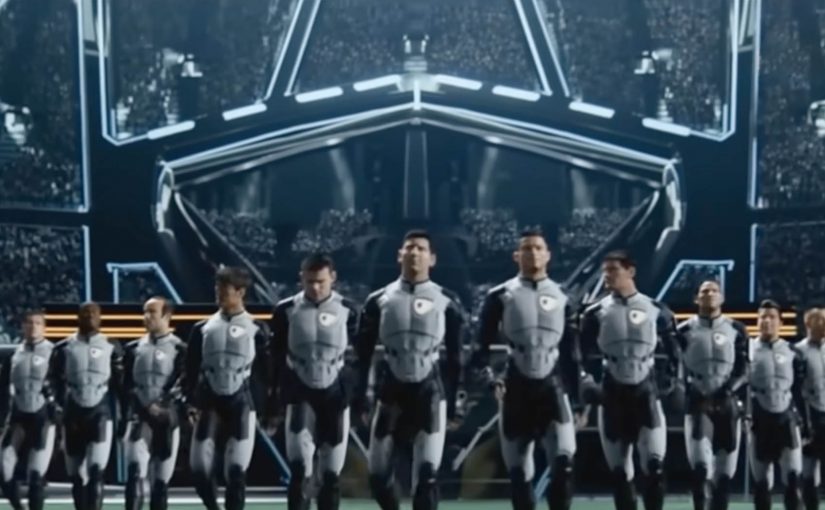
Samsung, to promote its new Galaxy S5 smartphone during the 2014 World Cup, created a 13 minute animated film (split in 2 parts) featuring some of the world’s greatest footballers on a mission to save Earth from an alien race called Hurakan.

To save Earth from total annihilation, the human footballers dubbed the “Galaxy 11” get into a winner take all football match with the alien race. In the film, the Galaxy 11 are seen using various Samsung Galaxy devices to face off against the horned creatures, who have a penchant for flips and fancy kicks.

How this sells without stopping the story

The real question is whether your brand can earn minutes of attention without pausing the story to sell.

This works when the product has a credible job inside the plot, because that makes every appearance feel like story logic instead of an interruption.

In global consumer brands, World Cup season is one of the few windows where audiences will engage with branded entertainment if the story earns it.

Why this format works for a World Cup moment

A World Cup moment is crowded with highlight reels and second-screen noise. A self-contained animated story gives viewers a reason to stay, because they want to see how the match resolves.

Extractable takeaway: When attention is scarce, trade a single claim for a simple plot. Conflict, goal, showdown. Then let your product earn screen time by being useful to the characters.

  • It is built for attention. A 13 minute animated story gives Samsung room to create a world, not just a product claim.
  • The product is part of the mission. Galaxy devices show up as tools the team uses, so the placement feels “in-world” rather than bolted on.
  • It scales globally. Football, sci-fi stakes, and animation travel across markets without heavy explanation.

What to learn from “Galaxy 11”

If you want people to stay with a brand story for more than a few seconds, give them a narrative engine. Here, a narrative engine means a repeatable conflict-goal-showdown loop that keeps scenes moving. A clear enemy, a clear goal, and a clear showdown. Then let the product play a credible role inside that story, instead of pausing the story to sell.

  • Start with stakes, not specs. Establish the enemy and the win condition before the product shows up.
  • Give the product a job. Make the device a capability the characters rely on inside the plot.
  • Keep the structure simple. Enemy, goal, showdown. Then end with a clear resolution.

A few fast answers before you act

What is Samsung “Galaxy 11”?

It is a two-part animated film created for the 2014 World Cup that puts elite footballers into a “save Earth” match against an alien team called Hurakan, while featuring Samsung Galaxy devices in the story.

How long is the film?

It runs about 13 minutes in total and is split into two parts.

How do Samsung Galaxy devices fit into the film?

The Galaxy devices are shown as tools the team uses during the mission, so the product appears through action rather than through a conventional pitch.

Why use animation for a World Cup campaign?

Animation makes it easier to build a shared “in-world” story and let it travel across markets, because the stakes and visuals are easy to understand.

What is the transferable pattern for brands?

Build a short, high-stakes story with a simple structure. Then integrate the product as a believable capability inside the plot.

Samsung Display: Display Centric World

A near-future that blends text and screens

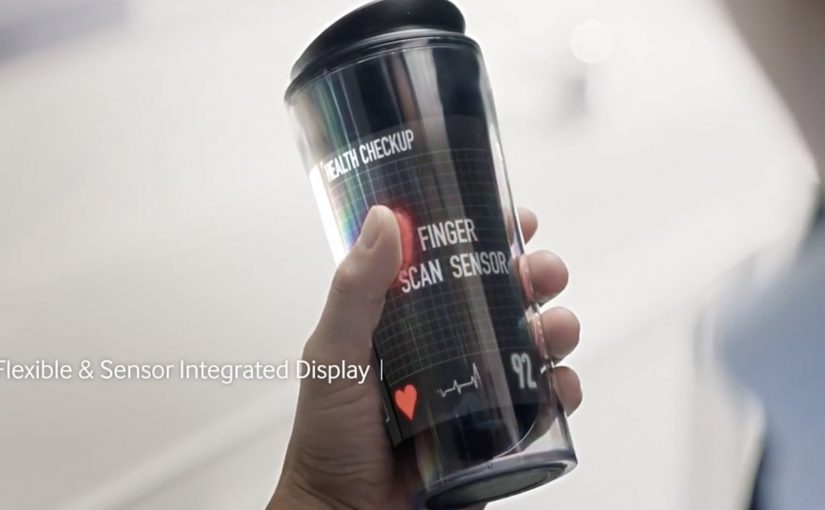
Text, video, audio and several other interaction types become a common part of media. Everything blends between the visual and the textual and back again. We are surrounded with multi-touch media that uses highly engineered displays and companion technologies.

Samsung Display created the video below to share its vision of the future and to show how its panels could be implemented across consumer and enterprise markets.

What the film is really selling

The premise is not “better screens.” The premise is “more surfaces become screens.” Here, a display-centric world means a world where screens become the default surface for access, guidance, and collaboration across daily tasks. The film repeatedly puts interactive display surfaces into everyday moments. Cafés, classrooms, retail, commuting, and healthcare all become scenarios where information appears in place, on demand, and in the exact format that fits the situation.

Samsung Display originally presented this concept film as part of its Analyst Day 2013 narrative. The message is clear. When displays get thinner, lighter, and more flexible, the interface stops being a device and starts being the environment.

In consumer electronics and enterprise IT, display surfaces are becoming the default interface between data, services, and people.

Why it lands

Vision films work when they turn a technology roadmap into felt moments. Here, the “wow” is not a single gadget. It is the continuity of interaction. You move between surfaces without re-learning the interface, and information follows you in a way that feels natural rather than like a series of app launches. It works because repeated interaction across familiar settings makes the future feel less like a prototype and more like a habit.

Extractable takeaway: The fastest way to make an emerging technology believable is to show the same interaction pattern repeated across multiple contexts, until it reads like an everyday habit.

The hidden dependencies behind a display-centric world

A world full of screens implies a stack of enabling layers that the film only hints at. Sensors to understand context. Identity and handoff to move work between surfaces. Content designed for glance, touch, and collaborative viewing. And a trust model that makes people comfortable when “the room” is also an interface.

The real question is what workflows get simpler when the display is no longer tied to a single endpoint. If you watch it as an enterprise leader, that is where the real productivity story starts.

What to borrow from Samsung’s interface vision

  • Prototype interactions, not products. A single interaction pattern shown in five contexts communicates strategy better than five unrelated gadgets.
  • Make “handoff” the hero. The magic is continuity. Show how content moves between surfaces and people without friction.
  • Design for groups, not just individuals. Many enterprise use cases are collaborative. Surfaces that support shared viewing and shared input are the point.
  • Pressure-test trust. If your interface becomes ambient, you need explicit cues for privacy, control, and intent.

A few fast answers before you act

What is “Display Centric World” by Samsung Display?

It is a concept film that imagines a near-future where interactive displays are embedded into many everyday surfaces, making screens a pervasive interface rather than a single device.

What is the core idea the film communicates?

That as display tech becomes thinner, lighter, and more flexible, the interface shifts from dedicated hardware to the surrounding environment, with consistent multi-touch interaction across contexts.

Why do these “future vision” videos matter for brands and enterprises?

They translate a technology roadmap into concrete usage scenarios, which helps teams align on what to build, what to partner for, and what behaviors they are trying to create.

What are the key dependencies a display-centric world requires?

Context sensing, identity and handoff, content designed for multiple viewing distances and collaboration, and a trust model that makes ambient interfaces feel safe and controllable.

What is the most transferable lesson for product teams?

Build and communicate around repeatable interaction patterns and seamless handoffs. Products change quickly, but interaction habits scale across devices and surfaces.

Samsung Live Human Outdoor: Billboard caricature

With the new Samsung Note 10.1, caricature artists can now go digital. To highlight this feature and raise awareness about the tablet, Samsung puts a real caricature artist “into” an outdoor billboard experience and has him draw live caricatures of passers-by. The finished drawings are then put on the Samsung Portugal Facebook page.

A live billboard that behaves like a street-portrait stand

The mechanism is simple. People stop. They watch themselves being drawn in real time. The artist works digitally using the Note 10.1, and the billboard becomes a public canvas that makes the device’s creative promise visible from across the street.

In consumer electronics marketing, live demos in public spaces work when the product capability is undeniable without any explanation.

Why it lands: you do not “see a feature,” you experience it

This is not a spec sheet. The real question is whether your launch turns a capability into a moment people actively want, or just a message they tolerate. The device becomes the instrument of a familiar craft, and the outcome is something people actually want. A caricature is personal, fast, and inherently shareable, which makes the crowd effect, the people who stop to watch, do the distribution work.

Extractable takeaway: If your live demo produces a personal artifact on the spot, proof travels further because people share the outcome, not your claims.

What Samsung is really achieving

  • Proof at full scale. A drawing tool is hard to dramatize in a 30-second spot. On a billboard, the proof is the show.
  • A reason to stop. The promise is not “look at our tablet.” The promise is “get drawn.”
  • A built-in content pipeline. The Facebook posting turns a one-off street moment into a browsable gallery.

What to steal for your next live product demonstration

  • Choose an outcome people value. A personal artifact beats a generic demo every time.
  • Make the capability visible from distance. If it only works up close, most of the street never understands it.
  • Close the loop digitally. Give people a clear place to find “their” result after the moment ends.
  • Let the crowd be the media. A live, public performance naturally draws more viewers than static outdoor.

A few fast answers before you act

What is Samsung Live Human Outdoor?

It is an outdoor activation where a caricature artist draws passers-by live using the Samsung Note 10.1, with finished sketches published to Samsung Portugal’s Facebook gallery.

What product feature is being demonstrated?

The ability to create digital drawings naturally and quickly on a tablet, associated with pen-based input and creative apps.

Why use caricatures instead of a standard product demo?

Because the outcome is personal and entertaining, which makes people stop, watch, and share, while the product capability is being demonstrated in plain sight.

What makes this “live communication” rather than outdoor advertising?

The billboard is not only a display. It is a real-time performance and interaction, with the public influencing the content through participation.

What is the main lesson for experiential product launches?

Turn a feature into a moment people want. If the experience creates a valued takeaway, attention becomes voluntary and sustained.