
VGT: Fur iAd that bleeds when you swipe

VGT (an association combating animal factories), working with Austrian agency Demner, Merlicek & Bergmann, created an iAd, an interactive tablet ad unit, for the iPad edition of DATUM magazine.

The iAd shows a young woman wearing a fur coat. When the iPad user tries to continue browsing with the familiar finger-wipe movement, each swipe leaves a blood stain on the fur. The more you try, the more blood appears, turning a simple “next page” gesture into the message.

A navigation gesture that becomes the accusation

The clever part is that nothing “extra” is required from the user. No quiz. No mini game. No new behaviour. The iAd hijacks the most natural behaviour on the device. Swiping to move on. That is why it feels so sticky. The ad does not ask for attention. It punishes avoidance.

The mechanism: friction by design

Most advertising tries to reduce friction. This does the opposite. It introduces deliberate friction at the exact moment the audience normally exits. That choice forces a small pause, and that pause is where the ethical point lands. For tablet units, this kind of purposeful friction beats bolt-on interactivity that can be ignored.

In tablet-first media environments, gesture-based interactivity can turn a standard placement into a moral confrontation.

The real question is whether your interaction makes the viewer complicit, or merely entertained.

Why it lands even if you dislike shock tactics

This is not shock for spectacle. It is shock attached to an action the viewer chooses. You create the stains. That’s what makes the experience uncomfortable in a more personal way than a static image could. It also matches the medium. The iPad is intimate. It’s held close.

Extractable takeaway: When touch is the medium, tie consequence to a habitual gesture so the argument is felt in the hand, not just read on the screen.

How to borrow this for tablet units

  • Exploit a native gesture. Swipe, pinch, tap, drag. If the gesture is already habitual, the learning curve disappears.
  • Make the interaction mean something. The response should be the argument, not just a visual flourish.
  • Use friction sparingly and intentionally. Only add resistance when the resistance is the point.
  • Design for instant comprehension. The first swipe should explain the whole idea.
  • Earn the discomfort. If you push people emotionally, the payoff must be clarity, not confusion.

A few fast answers before you act

What is the VGT iAd concept in one sentence?

An iPad iAd that prevents an easy page swipe by leaving blood stains on a fur coat every time you try to move on.

Why use the swipe gesture instead of a video or a static image?

Because swiping is an action the user performs. When the consequence appears immediately, the viewer feels involved rather than merely informed.

Is this an example of “interactive storytelling” or “interactive persuasion”?

Both. The story is minimal, but the persuasion is embodied. The interaction itself carries the moral logic.

When does this kind of tactic backfire?

When the shock feels disconnected from the cause, when the friction blocks people without a clear point, or when the execution reads as manipulation rather than meaning.

What is the simplest way to apply this pattern ethically?

Use a familiar gesture, create an immediate consequence tied to the message, and ensure the user can still exit once the point is delivered.
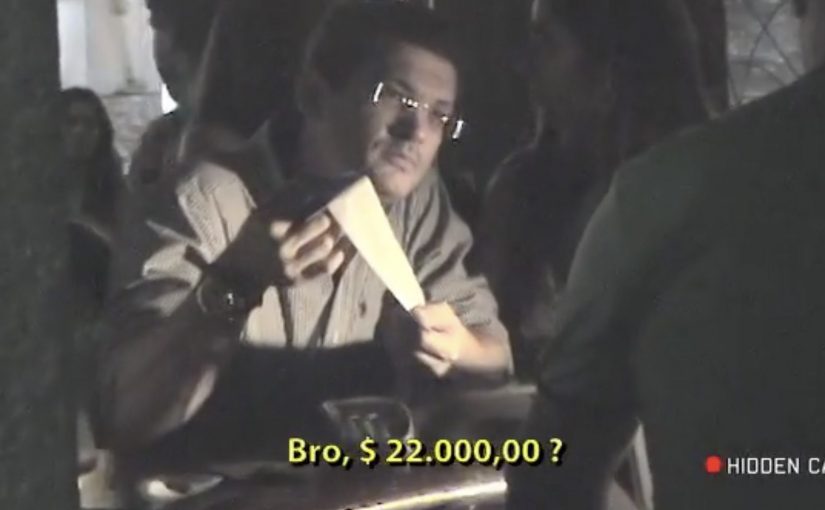
Bar Aurora & Boteco Ferraz: $73,000 Bar Tab

At Bar Aurora and Boteco Ferraz, the bar tab can land like a punch. A normal night out suddenly totals $73,000.

The number is deliberately absurd. Instead of “just” charging for drinks, the receipt is designed to confront patrons with the kinds of costs that a drunk-driving crash can trigger, described as an itemized ledger of consequences rather than a generic warning.

Ogilvy Brasil (São Paulo) ties the message to the moment that matters most. Right after the drinking. Right before the decision to drive.

A receipt that speaks at the exact decision point

The mechanism is simple and brutal. Take a familiar ritual, the bar tab, and turn it into a personalized “cost statement” that patrons cannot ignore because it arrives inside a context they trust and understand. It works because the receipt arrives as a trusted artifact at the exact moment the choice is being made.

That timing does most of the work. The message is not competing with the rest of the day’s noise. It shows up when someone is already weighing options like “I’m fine” versus “I should take a taxi.”

In public-interest and brand-led behavior-change work, point-of-decision interventions outperform broad awareness because they collide with behavior, not intentions.

Here, a point-of-decision intervention is a prompt delivered at the moment someone is deciding what to do next.

The real question is whether you can make the consequence feel immediate enough to change the drive-or-taxi decision.

Why the anger matters more than the poster

People get annoyed because the interruption feels personal. That emotion spike is useful. It snaps the brain out of autopilot, forces a re-check, and reframes the “big deal” as a concrete, financial, immediate-looking problem.

Extractable takeaway: If the risky behavior feels like a small, private choice, make the consequence feel like a concrete, personal ledger entry that appears at the decision point. Reduce abstract harm into a format the audience already treats as “real.”

Done well, this does not need moralizing language. The receipt format does the persuasion quietly. It turns “don’t do this” into “here is what this can cost you, in a language you already understand.”

What the bar gets out of it

This is cause work that also behaves like brand building. It positions the venue as the place that looks after customers beyond the last drink, and it gives staff a socially acceptable reason to start a safer-ride conversation without sounding preachy.

It also travels. The idea is easy to retell, easy to film, and built for word-of-mouth because the “$73,000” moment is inherently shareable.

Patterns to reuse from the $73,000 tab

  • Move the consequence into the present tense. Don’t explain risk. Render it.
  • Use a trusted artifact. Receipts, tickets, confirmations, packaging, dashboards. Anything the audience already believes.
  • Interrupt without humiliating. Aim for friction and reflection, not public shaming.
  • Design for the handoff. The moment should naturally lead to a safer alternative (taxi, ride-share, designated driver) without needing a speech.

A few fast answers before you act

What is the “$73,000 Bar Tab” idea?

It is an anti drink-driving activation where patrons receive a dramatically inflated bar tab that reframes a “small” choice as a high-cost outcome, using the receipt format to make the warning feel concrete.

Why use a bar tab instead of a standard awareness ad?

A bar tab arrives at the point of decision, when a person is actively choosing what to do next. That timing creates immediate relevance and forces the brain out of autopilot in a way a poster rarely can.

What is the key mechanism that makes it persuasive?

Format plus timing. The message is delivered inside a familiar, trusted artifact, at the exact moment the audience is weighing whether they are “okay to drive.”

How can brands adapt this pattern without backlash?

Keep the intervention private, keep the tone factual, and pair it with an obvious safer alternative. The goal is reflection and route change, not punishment.

What should the moment lead to immediately?

Build in an easy handoff to the safer choice, so the “pause” turns into action, like taking a taxi, using ride-share, or calling a designated driver.

Raining Polar Bears: Shock Against Short-Haul

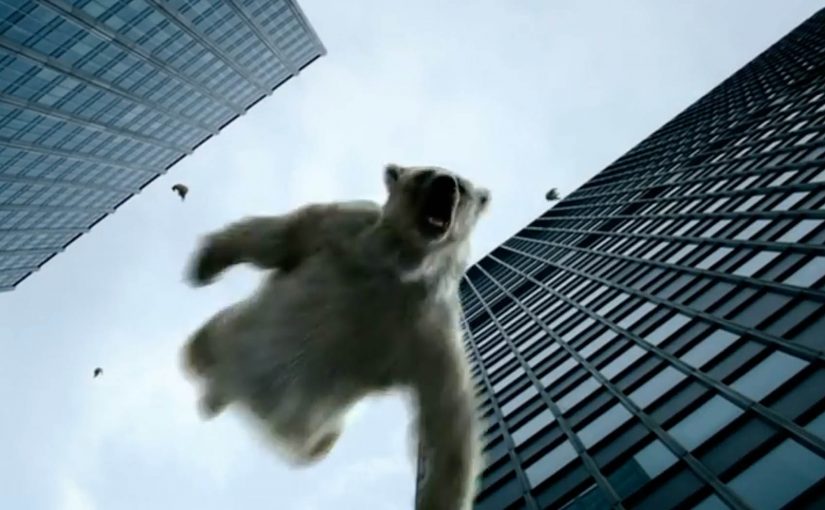
A shocking ad with a brutal message: every short haul flight you take emits four hundred kilogrammes of carbon dioxide. The equivalent weight of an adult polar bear.

This is the promotional film from anti-aviation expansion campaigners Plane Stupid.

It is a hard-hitting piece of communication because it skips the abstract science and goes straight for a physical, imaginable consequence. You cannot “feel” four hundred kilograms of CO₂. But you can picture a polar bear’s mass, and you can picture it falling. The metaphor is deliberately uncomfortable.

A metaphor designed to make emissions feel heavy

The mechanism is simple: translate an invisible output into a visible burden. By mapping a single flight to a single, concrete weight, the campaign turns “carbon” into something that feels measurable and personal. The viewer is pushed to connect a routine choice with an outsized consequence. This works because a weight-based image is easier to remember and retell than an abstract emissions number.

In European organisations where sustainability goals collide with travel habits, this kind of metaphor is used to make the trade-off feel immediate.

In behavior-change communication, metaphors work best when they translate an invisible impact into a concrete, repeatable image people can easily retell.

Why this kind of brutality gets attention

Shock tactics work when they force a moment of interruption. They create a jolt that breaks autopilot. In this case, the jolt is not gore or fear for its own sake. It is moral discomfort. The message implies complicity. It suggests that “small” flights are not small at all when you translate them into a consequence you can carry in your head. Used sparingly and paired with a believable alternative, shock can be a legitimate behaviour-change lever; used without one, it is counterproductive.

Extractable takeaway: If you need to shift norms, convert impact into one vivid unit people can repeat from memory, then make the next step feel doable.

But there is a trade-off. If the audience feels judged or helpless, they can disengage. The campaign therefore depends on whether the viewer sees a plausible alternative, like rail, coach, fewer trips, or simply resisting the idea that every short hop is “normal”. Here, an off-ramp means a clear, doable alternative the viewer can choose instead of flying. Without an off-ramp, shock can become noise.

The real intent: change what feels acceptable

The business intent here is public pressure. Plane Stupid campaigns against aviation expansion. To do that, it needs cultural permission to tighten constraints: fewer runway projects, fewer short-haul routes, and a stronger argument that alternatives should win. The film is a lever to make policy positions feel socially justified.

The real question is whether you can make “short haul” feel unacceptable without making the audience tune out.

What to borrow from this shock metaphor

  • Make the invisible visible. Translate abstract impact into a physical metaphor that is easy to repeat.
  • Anchor to a single action. “One short-haul flight” is specific. It removes debate about averages and totals.
  • Choose a symbol that carries meaning. The polar bear arrives pre-loaded with climate context, for better or worse.
  • Plan the off-ramp. If you want behaviour shift, pair the shock with credible alternatives people can act on.
  • Measure backlash, not just reach. Shock optimizes attention. Track whether it also produces avoidance.

A few fast answers before you act

What is “Raining Polar Bears” trying to say?

It argues that short-haul flights have a disproportionately high carbon cost. It makes that cost feel tangible by equating one flight’s emissions to the weight of an adult polar bear.

Why use a polar bear in a climate campaign?

Because it is an instantly recognized symbol of climate impact. It compresses a complex topic into a single image people remember and retell.

Do shock tactics actually change behaviour?

Sometimes. They can disrupt complacency and create attention. They can also trigger defensiveness if people feel accused or see no realistic alternatives.

How do you make a shock campaign more effective?

Pair the emotional jolt with a clear path to action, and ensure the audience believes the alternative is doable. Without that, the message can be dismissed as moralizing.

What is the practical takeaway for marketers and communicators?

If you want to shift norms, translate impact into something concrete, memorable, and repeatable. Then make the next step obvious so attention converts into action.