
One Small Tweet: A Virtual Voyage to the Moon

One Small Tweet: A Virtual Voyage to the Moon

A tribute that turns participation into progress

Neil Armstrong was the astronaut who took one small step for man and one giant leap for mankind. He was also the man who delivered on John F. Kennedy’s promise to be first to the lunar surface.

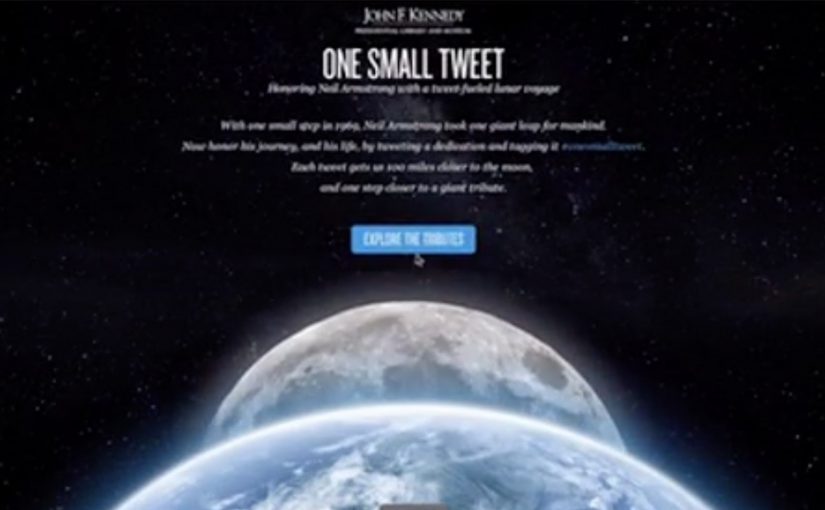
Neil passed away in August 2012. To honor his life, The Martin Agency created “One Small Tweet”. A roughly 238,900-mile virtual voyage to the moon powered by tweets written by admirers around the world.

Click here to watch the case video on the AdsSpot website.

How One Small Tweet works

People posted tributes tagged with #onesmalltweet. Those tweets were aggregated on www.onesmalltweet.com and used as “fuel” for the trip. Each tweet advanced the voyage by 100 miles, so the memorial was something you could watch move forward, one contribution at a time.

In cultural-institution storytelling, social participation becomes meaningful when individual contributions stack into a visible collective outcome.

Why it lands

The idea avoids the usual problem with online tributes. They are heartfelt but static. Here, the tribute has motion and a shared goal, which gives people a reason to join even if they do not know what to say at length. The real question is how to make remembrance feel collective instead of archival. This is a stronger tribute format than a static condolence wall. This works because every tweet visibly moves the same journey, turning private tribute into shared momentum. That progress mechanic, a visible journey meter that advances with each tweet, also makes the scale of remembrance legible. You can see the crowd forming, not just assume it exists.

Extractable takeaway: When you need mass participation, give people a simple action and attach it to a public progress measure. The progress becomes the story people return to and share.

What it teaches about social mechanics

  • Make the unit of contribution small. A tweet is low effort, so participation friction stays low.
  • Make accumulation visible. A journey meter turns separate tributes into one collective narrative.
  • Anchor the mechanic in meaning. The moon distance is not random. It is the symbolism that makes “100 miles per tweet” feel earned.
  • Design for global inclusion. Hashtags travel across borders faster than platform-specific formats.

A few fast answers before you act

What is “One Small Tweet”?

It is a tribute campaign that used tweets tagged #onesmalltweet to power a virtual journey to the moon, turning individual messages into visible collective progress.

How did tweets move the voyage forward?

Each tweet was treated as fuel. The mechanic advanced the trip by 100 miles per tweet, creating a progress narrative people could follow.

Why does a progress mechanic help participation?

It makes contributions feel consequential and connected. People can see their action add to something larger than a single post.

What’s the transferable pattern for other campaigns?

Use a small, easy action. Aggregate it in one place. Show cumulative progress in a way that reinforces the campaign meaning.

What is the main risk with this approach?

If the progress representation is unclear or updates feel unreliable, participation drops. The experience has to feel responsive and real.
Happy Holiday Videos 2012: Agency Stunts

Happy Holiday Videos 2012: Agency Stunts

Welcome back. Hope everyone had a great holiday season. Now for a great start to 2013.

Taking off from my last post, here are a series of holiday action videos created by ad agencies around the world in their lead up to Christmas 2012. By “holiday action videos,” I mean greetings built around a simple interaction or trigger with a visible payoff.

Holiday greetings that behave like products

The mechanism across this set is consistent. Use the “holiday card” moment as permission to ship something people can experience, not just watch. A hacked player, a tweet-triggered donation, a synchronized “orchestra,” a physical gag product.

In global agency culture, the holiday card is a low-risk moment to test interactive mechanics and craft that can later show up in bigger client work.

Why this format keeps working

These pieces earn attention because they trade greeting-card sentiment for an observable action. The real question is whether your greeting demonstrates a capability people can experience, not just a sentiment they can scroll past. You should treat the holiday card as a tiny product launch, not a branded message. The viewer is not only receiving wishes. They are triggering something, learning something, or being surprised by a mechanism that is simple enough to retell.

Extractable takeaway: If you want something to travel during peak-season noise, design a one-step interaction with a visible payoff, and make the payoff describable in a single sentence. That is retellability, meaning a friend can summarize it in one sentence.

Maurice Lévy’s Digital Wishes by Publicis Groupe

Maurice Lévy, the chairman and chief executive of Publicis Groupe, traditionally records a holiday greeting-card video. This year, through a special deal with YouTube, Publicis modified the function buttons of the video player and embed tricks into what seems like another long, boring address by an ad industry veteran.

TwinterWonderland by 360i

To celebrate the arrival of the holiday season and provide assistance to those affected by Hurricane Sandy, 360i wanted to do something big. For every #TwinterWonderland tweet they received, 360i donated $5 to an aid organization helping with the post-Sandy cleanup effort.

25th Anniversary Holiday CompuCard by TBWA\TORONTO

To celebrate their 25th anniversary, TBWA\TORONTO brought in their digital expert from 1988, who then, through an e-card, tried to capture the spirit of their past along with their digital future.

Buzzed Buzzer by Havas Worldwide Chicago

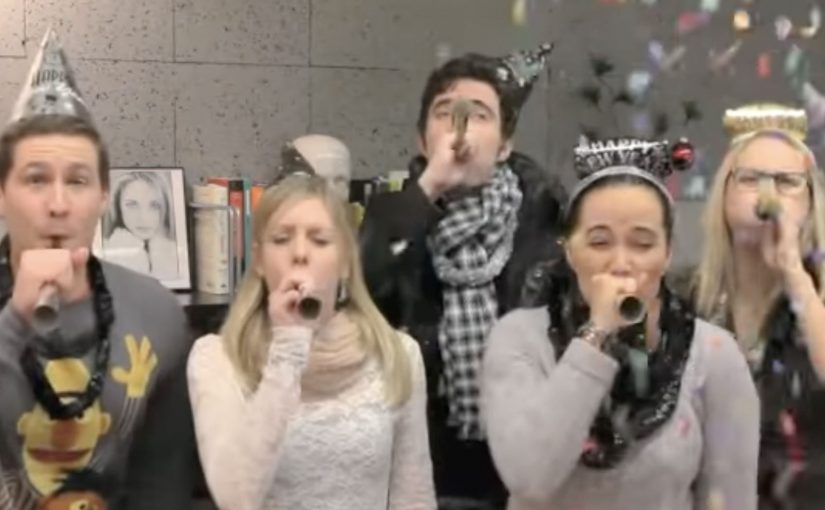
The first New Years Eve noise maker that only works when you’re drunk.

Christmas carol played on food by FullSIX Spain

To wish happy new year to customers and friends, FullSIX transformed typical Spanish Christmas food into a carol-playing piano.

Click here to watch video on the AdsSpot website.

The Snow Machine by Weapon7

Passers-by were invited to Tweet #snow to @thesnowmachine Twitter account. For every tweet received, the machine gave ten seconds of snow flurry. The event ran all day, was seen by thousands of people and generated over one thousand tweets.

Stealable patterns for next year’s greeting

  • Give the audience one trigger. One hashtag, one button, one simple mechanic.
  • Make the payoff visible. Something changes immediately, on-screen or in the real world.
  • Design for retellability. If the idea cannot be summarized in one sentence, it will not spread.
  • Let craft do the selling. Use the holiday excuse to demonstrate capability, not just sentiment.

A few fast answers before you act

What makes “holiday action videos” different from normal holiday ads?

They are built around a visible action or interaction. The greeting is the excuse. The mechanism is what people experience, talk about, and share.

Why do agencies use holiday cards as a playground for experimentation?

The stakes are lower and the audience is receptive, so it is easier to try unusual formats, technical tricks, and interactive mechanics that would be harder to justify elsewhere.

What is the common mechanism across the strongest examples?

One clear trigger and one clear payoff. A hacked player that surprises you, a tweet that causes a donation, a simple “instrument” that performs when activated.

How do you keep it from feeling like a gimmick?

Anchor the interaction in a human reward. Delight, generosity, togetherness, or a simple shared joke. Then keep friction low so the idea survives first contact.

How do you test retellability before you publish?

Ask someone outside the project to explain the idea back to you after a 10-second description. If they cannot say the trigger and payoff in one sentence, simplify the mechanic.

Volkswagen #Polowers: Tweet-Powered Race

Volkswagen #Polowers: Tweet-Powered Race

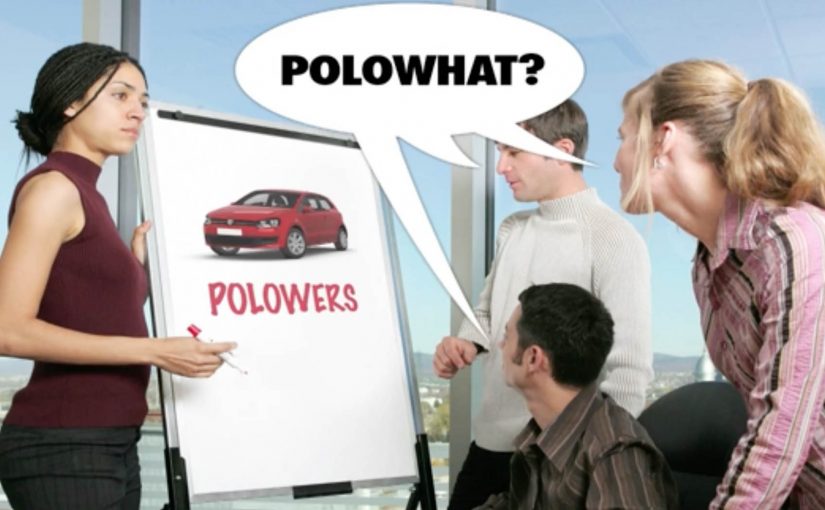
Volkswagen Polo is one of the most desired cars amongst the youth of Spain. To make a big entry DDB Spain created a Tweet based race that would make VW Polo the most trending topic on Twitter for that day.

A special hashtag #Polowers was created in order to give a name to the VW Polo Followers. Then to generate conversation amongst the Polowers a race was setup where each tweet took the follower to the first position. In this context, a tweet-based race means every tweet with the #Polowers hashtag updates a live leaderboard.

The real question is: how do you turn a low-effort social action into sustained participation during a short launch window?

This is a smart mechanic because it turns public rank into the content people return to influence.

When the Polo stopped at one of the 5 designated stops, the follower in the first position at that time would win a prize, iPad, Denon Ceol music system, Leica D-Lux 5 camera, VW Bike and eventually the grand prize VW Polo itself.

In terms of results, the campaign generated more than 150,000 tweets in 8 hours after launching, at a rate of 5 tweets per second and reached more than 10% of Twitter’s total audience in Spain. It also became the leading Top 10 trending topic and generated a record breaking amount of traffic to Polo’s product section on Volkswagen.es.

Last year Mercedes-Benz had created a tweet based race that had real life cars fueled by tweets. Check out that campaign here.

Why this mechanic works

This is a clean real-time loop. Tweeting is the action. Rank is the feedback. Prizes are the incentive. The “race” gives people a reason to keep going, because every new tweet can change the leader. Because rank shifts are immediate and visible, people keep tweeting to defend or steal the top spot.

Extractable takeaway: If you make the user action measurable and publicly visible in real time, participation grows because people can see their impact instantly.

  • Identity creates belonging. #Polowers turns followers into a named group.
  • Progress is instant. One tweet changes position immediately.
  • Time pressure drives volume. Five stops create multiple “now” moments.
  • Reward cadence sustains momentum. Smaller prizes build toward the grand prize.

In European launch campaigns that need fast, time-boxed social momentum, a live leaderboard loop like this helps convert attention into repeat action inside a single mechanic.

What to take from this if you run social campaigns

  1. Design a loop that explains itself. If the rule fits in one sentence, participation scales.
  2. Make the scoreboard the content. Rankings create a story people want to influence.
  3. Use milestones. Stops and deadlines create peaks instead of a flat timeline.
  4. Measure beyond buzz. Here the campaign also drove traffic to the Polo product section, not just tweets.

A few fast answers before you act

What was Volkswagen #Polowers?

It was a tweet-based race in Spain where participants used the #Polowers hashtag, and tweeting moved them into first position in a live competition for prizes and a chance to win a VW Polo.

How did the prize mechanic work?

When the Polo stopped at one of five designated stops, the follower in first position at that moment won a prize. The grand prize was a VW Polo.

What were the reported results?

More than 150,000 tweets in 8 hours, around 5 tweets per second, reaching more than 10% of Twitter’s total audience in Spain, plus Top 10 trending status and record traffic to Volkswagen.es Polo pages.

Why did the hashtag matter?

#Polowers gave the community a name and made participation visible, searchable, and easy to join.

What is the transferable lesson?

If you turn a simple action into a live competition with clear milestones and meaningful rewards, social participation can compound quickly.