
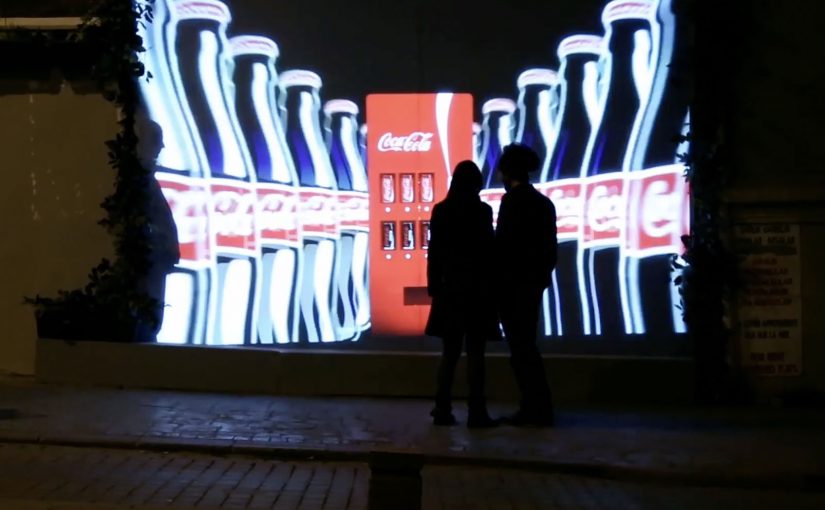
Coca-Cola Turkey: Invisible Vending Machine

Since the time I started writing this blog, I have come across many innovative vending machines. Some I featured right here on Ramble.

Now to add to this collection, here is an invisible vending machine from Coca-Cola Turkey that becomes visible only when couples walk by. The machine was created specially for Valentine’s Day (last week) and was installed in Istanbul to spread happiness Coca-Cola style.

A vending machine you cannot see until the right moment

The trick is the reveal. What looks like a normal stretch of wall becomes a vending interface only when two people approach together. That instant transformation creates a micro-scene, and the micro-scene pulls in everyone nearby.

In consumer brand activations, public installations work best when the interaction is obvious, fast, and shareable without instruction.

How the interaction is described to play out

  • Invisible by default. The unit blends into the wall and does not present itself as a machine.
  • Couples trigger the reveal. When two people pass together, the interface lights up and becomes visible.
  • Personal moment, not just a dispense. In coverage at the time, the machine asks for names and then produces two personalised cans.

Why it lands

This is not “another vending machine story”. It is a street-level surprise that creates a small, romantic spotlight for a couple, and a quick bit of theatre for everyone else. The invisibility is not a gimmick. It is a pacing device that makes the reveal feel like a reward. The real question is whether the experience creates a transformation that bystanders can explain in one sentence.

Extractable takeaway: If you want people to stop, watch, and retell an activation, build a visible transformation into the experience. A before-and-after moment is easier to share than a static stunt.

What Coca-Cola gets out of the Valentine framing

Valentine’s Day provides the social permission for public sweetness, names, and sentiment. For the brand, it is a clean link back to togetherness and “sharing happiness”, while turning a sample into a story people can repeat without being prompted.

Retail theatre patterns worth borrowing

By “retail theatre” I mean designing a retail moment as a small piece of live, shareable experience, not just a dispense or transaction.

  • Hide the interface until it matters. Visibility can be part of the reward, not just a prerequisite.
  • Keep the trigger legible. People should understand why it happened in one glance, or they will not mimic it.
  • Design for bystanders. The couple is the participant. The crowd is the media channel.
  • Personalise lightly. Names, messages, or small custom outputs feel intimate without needing heavy data.

A few fast answers before you act

What is the “invisible vending machine” concept?

A vending machine that stays hidden until a couple approaches, then reveals itself and delivers a Valentine-themed Coca-Cola moment.

Why make the machine “invisible” at all?

It creates a sharp reveal, and that reveal is the shareable payload. People remember transformations more than static installations.

What is the simplest way to replicate the effect?

Use a clear proximity trigger plus lighting and screen content that turns on instantly, and ensure the “why it appeared” is immediately understandable.

What is the biggest execution risk?

If the trigger is inconsistent or unclear, people will not repeat the behaviour and the crowd will not form. Reliability matters more than complexity.

What should you measure beyond views?

Dwell time, participation rate per hour, bystander clustering, social mentions generated on site, and any lift in nearby sales during the activation window.
Sony: The Bottled Walkman

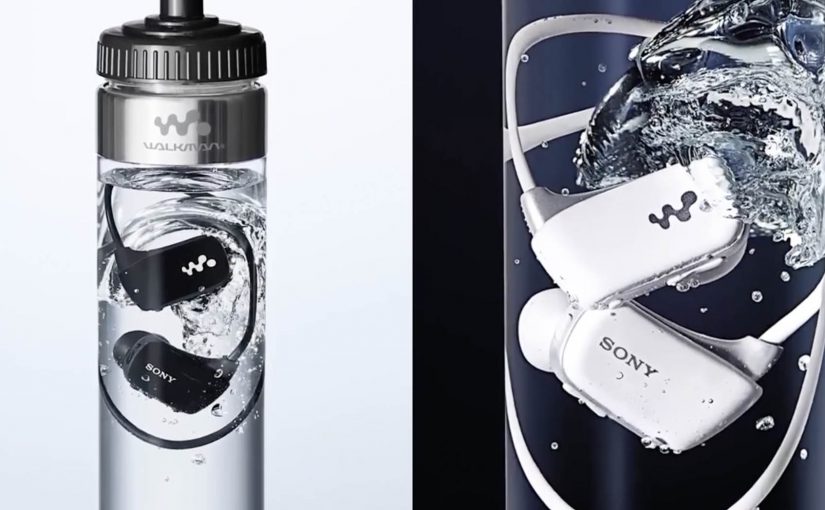
To promote Sony’s NWZ-W270 MP3 waterproof Walkman, DraftFCB Auckland packaged it inside bottles full of water. The bottles were then placed in special vending machines at pools and gyms across New Zealand.

The idea turns packaging into proof. The product sits submerged in plain sight, so the waterproof benefit is demonstrated before you even consider buying it.

Packaging that performs the demo

The mechanism is as literal as it is effective. Take a promise that people doubt. “Waterproof”. Then make the product live inside the condition that normally destroys electronics. The bottle becomes both display unit and credibility device. Here, a credibility device means packaging that makes the claim feel true before any copy has to explain it. That works because the same object that holds the product also removes the shopper’s main doubt at the point of purchase, and the vending machine puts it exactly where the need is strongest.

In consumer electronics marketing, the fastest way to overcome skepticism is to replace explanation with visible proof at the point of decision.

Why it lands

It works because it collapses three steps into one moment. Awareness, belief, and purchase happen in the same place, with the same object. Instead of asking people to trust a spec, the packaging forces a simple conclusion. If it can sit in water all day, it can survive your swim or workout.

Extractable takeaway: When your key benefit is hard to believe, design a retail experience where the product is shown living inside the benefit. Let the environment do the persuading, then make purchase frictionless.

What Sony is really optimizing

The real question is how to make a doubtful product claim feel true before a shopper has to trust the copy.

The vending placement is not just a media choice. It is distribution strategy. Pools and gyms are the exact contexts where “waterproof audio” feels immediately relevant, and where a vending machine purchase is already normalized as an impulse decision.

What to steal from the retail proof

  • Make the proof the packaging. If the box can demonstrate the claim, you do not need to over-argue it.
  • Sell where the benefit matters most. Context does half the persuasion if the product solves a live problem.
  • Reduce steps to purchase. Vending machines convert curiosity into action while attention is still high.
  • Keep the message one-beat simple. One look should be enough to understand the point.

A few fast answers before you act

What is “The Bottled Walkman”?

It is a Sony retail and packaging activation where the NWZ-W270 waterproof Walkman is sold sealed inside a bottle filled with water to demonstrate the product’s core benefit instantly.

Why use vending machines at pools and gyms?

Because that is where the waterproof use case is most obvious, and where a quick, impulse-style purchase fits the setting.

What problem does this solve versus a standard box on a shelf?

It removes doubt. The customer sees the product surviving in water before they ever read a claim.

Is this more “packaging innovation” or “experiential marketing”?

It is both. The packaging is the experience, and the experience is built to drive retail conversion.

How can another brand apply the same principle?

Identify the most doubted benefit, then engineer a display or pack that lets the product visibly live inside that benefit in the buying moment.

Coca-Cola: The Sing For Me Machine

As part of its global “Open Happiness” campaign, Coca-Cola has set up interactive vending machines in various parts of the world. In Singapore, consumers could hug for a Coke. In Korea, they could dance for a Coke.

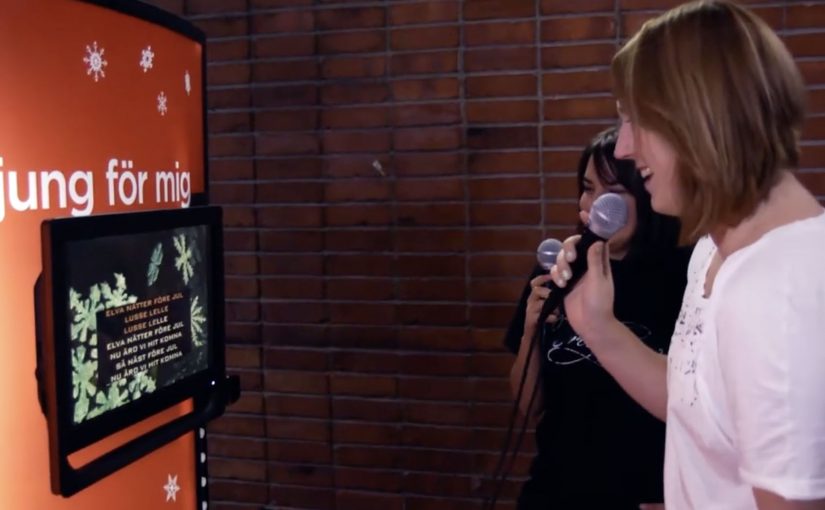
And now in Stockholm they can sing for a Coke. The vending machine has been placed at the Royal Institute of Technology with the sign “Sing For Me” in the front.

When sampling becomes a public performance

The mechanism is simple: the machine replaces money with a human gesture. That “gesture for reward” model means the action itself becomes the price of entry. Dance moves in one market. A song in another. The reward is immediate, and the moment is automatically social because other people can see it. That swap works because it turns a private purchase into a visible act, giving the crowd a reason to watch, react, and join in.

In global FMCG sampling and brand experience work, “gesture for reward” machines turn distribution into participation by design.

The real question is whether the action is easy enough to trigger participation without making people shut down in public. The smart part of this format is not the free Coke, but the public behavior it creates around the sample.

Why it lands

This works because it makes the brand promise legible without explanation. A vending machine is normally transactional and forgettable. A performance-triggered machine is a small event, and the crowd reaction becomes part of the product. The setting helps too. A campus is full of friends, cameras, and people willing to try a slightly silly thing in public.

Extractable takeaway: If you swap payment for a simple public action, you turn sampling into a story people can witness, film, and retell. That social proof travels farther than the product ever could on its own.

The machine is one of a number of Happiness Machines Coca-Cola has deployed around the world since 2009.

What to borrow from performance sampling

  • Pick one obvious trigger: the instruction must be understood in one glance.
  • Make the reward instant: the dispense moment is the emotional payoff.
  • Design for bystanders: the format should recruit a crowd naturally.
  • Localize the gesture: keep the same principle, but choose a culturally comfortable action.
  • Capture reactions: real laughs and hesitation are the proof that the idea works.

A few fast answers before you act

What is the “Sing For Me” machine?

It is a Coca-Cola vending machine that dispenses a free Coke when people sing to it, turning a product handout into a public, participatory moment.

Why does “sing for a Coke” work as a mechanic?

Singing is visible and socially contagious. Once one person does it, others gather, react, and often try it themselves.

How is this connected to the broader “Happiness Machine” idea?

It follows the same pattern: replace payment with a feel-good interaction, then let real reactions become the distribution layer.

Where does this format work best?

High-footfall environments with social density, like campuses, events, malls, and transit hubs, where bystanders quickly become an audience.

What is the biggest risk with performance-for-reward activations?

If the action feels embarrassing or culturally off, participation drops. The trigger must feel playful, safe, and easy to attempt in public.