
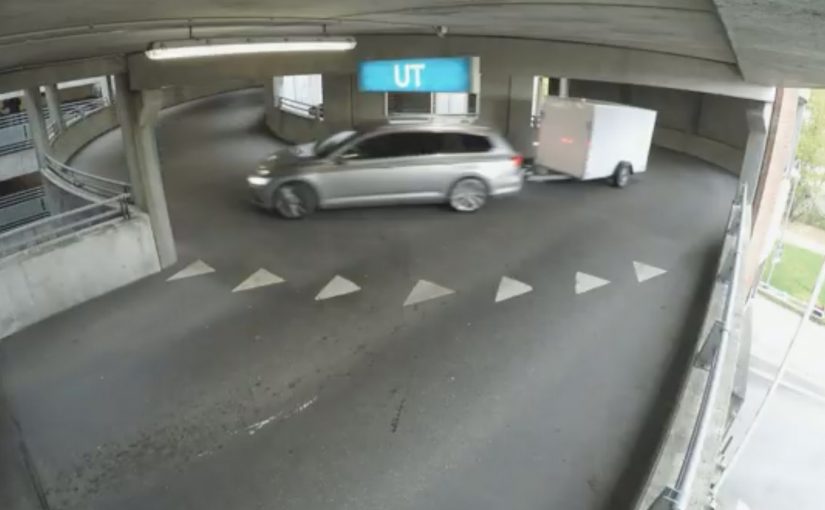
Volkswagen Trailer Assist

The Trailer Assist feature allows Volkswagen cars to park semi-autonomously using the rear backup camera. To promote this feature in Norway, Volkswagen created a stunt where a driver appeared to back up his car and trailer at high speed through parking lots, roundabouts and intersections.

The film looks impossible on purpose. The “trailer” was built as a disguised driving rig, with a stunt driver inside. One-way transparent plexi glass (and film) kept visibility possible for the driver in the rig, while still selling the illusion from the outside.

What Trailer Assist is actually solving

Reversing with a trailer is where confidence collapses for many drivers. The steering feels counter-intuitive, small corrections compound fast, and stress makes it worse. Trailer Assist flips that experience by turning the job into a simpler “direction setting” task, while the system handles the tricky part of guiding the trailer’s path using the rear camera. By “direction setting,” the driver chooses where the trailer should go rather than constantly counter-steering every correction.

Why the stunt works as marketing

In automotive marketing, driver-assist features are easier to remember when the audience feels the pain before it hears the specification. Because the stunt externalizes the panic of trailer reversing at an exaggerated scale, viewers immediately understand why assistance matters before the feature is explained. This is smart feature marketing because it dramatizes the user problem first and the technology second.

Extractable takeaway: When a feature reduces a known stress point, dramatize the stress first so the assistance feels necessary rather than technical.

What Volkswagen is really demonstrating here

The real question is whether Volkswagen can turn a hidden driver-assist feature into a capability buyers instantly understand and remember. Volkswagen is not selling autonomous driving here. It is selling confidence at the exact moment many drivers feel least competent.

What to steal for tech-feature storytelling

  • Start with a strong visual proof. If the benefit is hard to explain, make it easy to see.
  • Use exaggeration to earn attention, then anchor in reality. The stunt pulls people in. The feature explanation keeps it credible.
  • Pick a scenario your audience already fears. Trailer reversing is a universal stress test.

A few fast answers before you act

What is Volkswagen Trailer Assist?

A driver-assist feature that helps manoeuvre a trailer while reversing using the rear camera, reducing the counter-intuitive steering challenge.

What did Volkswagen do in Norway to promote it?

They staged a stunt that made it look like a Volkswagen reversed a trailer at very high speed through real-world driving situations.

How did they create the illusion?

A disguised trailer rig with a hidden stunt driver inside made the movement possible while keeping the “reverse drive” effect believable from the outside.

Why was plexi glass part of the setup?

One-way transparent plexi glass (and film) allowed the driver in the rig to see out while keeping the illusion intact for onlookers and camera angles.

What is the key takeaway for marketers?

When a feature is hard to appreciate in a static demo, create a single dramatic scenario that forces attention, then connect it back to the everyday value.
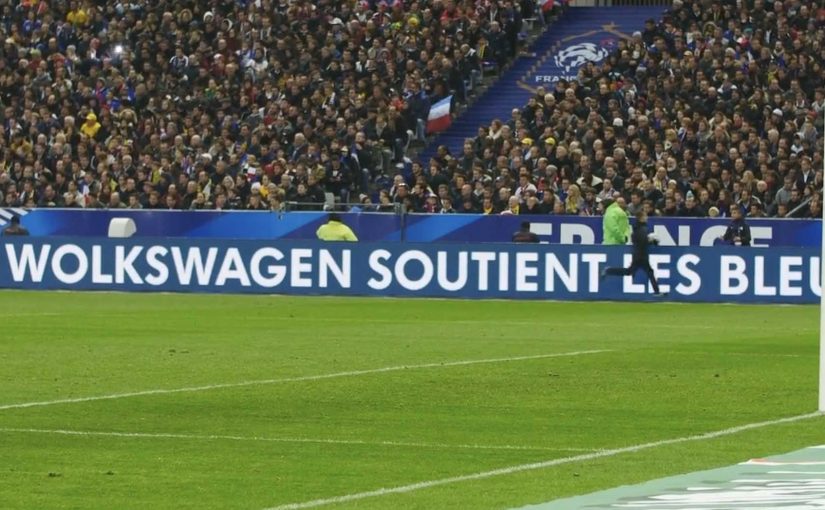
Volkswagen: Wolkswagen

During a France vs Brazil football match in Paris, the LED boards around the pitch display a brand name that looks wrong. “Wolkswagen.”

Volkswagen leans into a simple human impulse. People love being the first to notice a mistake. So the campaign plants one at maximum scale and lets the crowd do what it always does. Point it out, correct it, and spread it.

The mechanism is the typo itself. A deliberate misspelling placed where 80,000 spectators and millions of TV viewers will see it, creating a wave of “they got it wrong” conversations that carries the real message. Volkswagen is present, watching, and ready to announce itself as a major partner of French football.

The psychology of a “correctable” brand moment

This works because correcting a visible public error lets people display attention and share the fix. Here, a “correctable” moment means a public cue that looks wrong but is safe and easy for the audience to fix. Noticing a typo feels like competence. Sharing it feels like helping others notice. The stunt converts that impulse into earned distribution, and it does it without asking anyone to watch a film or click a banner.

Extractable takeaway: If you want mass attention in a high-noise moment, design a safe, obvious “error” people can correct in public, then attach your actual announcement to the moment they point out and share the correction.

In live sports broadcasts, audiences are primed to scan for anomalies, and correcting them is a social reflex that spreads faster than the original message.

What the partnership announcement is really buying

The stated goal is awareness of a new relationship with French football. This is stronger than a standard sponsorship reveal because the audience helps distribute the news. The real question is how to make a routine partnership announcement impossible to ignore. The deeper goal is memorability. Sponsorship news is usually forgettable. A planted mistake is sticky, because people remember the moment they noticed it.

What to steal from this stadium-board stunt

  • Use one unmistakable deviation. The “wrongness” must be instantly readable from far away.
  • Make the correction harmless. The audience should feel clever, not manipulated or misled.
  • Deploy where attention is already concentrated. Stadium boards and live broadcast moments amplify small creative moves.
  • Ensure the reveal is clean. The moment must resolve quickly into the intended message, or it stays a gimmick.

A few fast answers before you act

What is the Wolkswagen idea?

A live stadium-board stunt that intentionally misspells “Volkswagen” as “Wolkswagen” to trigger public correction and attention, then uses that attention to support a football partnership announcement.

Why does an intentional typo generate more attention than a normal logo placement?

Because it activates a correction reflex. People engage to point out the “mistake,” and that engagement becomes the distribution channel.

What makes this feel like a live moment instead of an ad?

Placement and timing. It appears inside the live match environment, where audiences treat what they see as real-time context, not preplanned messaging.

What is the main risk with this pattern?

If the audience believes the brand genuinely made an error, the story can turn into ridicule. The execution needs a clear resolution so it reads as deliberate.

When should you use a “deliberate mistake” stunt?

When you have a time-bound announcement, a high-attention venue, and a brand that can credibly play with perception without damaging trust.

Super Bowl 2014 Ads

Super Bowl Sunday is the mecca of television advertising year after year. Advertisers on this day have a golden opportunity to create valuable brand buzz and recognition through astronomically priced 30 second television spots. By brand buzz, I mean people repeating your brand name or distinctive cue unprompted in the hours and days after the game.

After watching over 60 ads that use both time-tested and unconventional strategies to attract attention, I have come up with my most entertaining list.

I start with one that immediately sets the tone for why Super Bowl ads matter. Big emotion. High memorability. Then I round it out with a mix of humour, characters, and simple ideas executed with confidence.

How I picked these ten

I looked for spots that make one clear choice, emotion, humour, or a character you can describe in a sentence, then execute it cleanly enough that you remember the brand, not just the joke.

In global consumer brands and agencies, Super Bowl work is a stress test for whether a brand can earn attention and stay memorable in a single crowded media moment.

Why these spots stick

When a spot commits to one simple idea and pays it off with a clear emotional or comedic beat, it becomes easy to retell, and retellability is what turns a 30 second moment into memorability.

Extractable takeaway: If people cannot retell your ad in one sentence, they will not carry your brand name with it.

The real question is which parts of a 30 second story people still remember when the game is over and the next morning is crowded with other brands.

I lean toward ads that trade clever complexity for a single, confident idea that stays attached to the brand at the moment you remember.

Budweiser: Puppy Love


Volkswagen: Wings


Dannon Oikos Greek Yogurt: The Spill


Bud Light: Ian Up For Whatever


Heinz: If you are happy


Kia K900: The Truth


Hyundai Genesis: Dad’s Sixth Sense


Duracell: Trust Your Power


Doritos: Time Machine


M&M’S: Delivery

What to borrow for your next brief

  • Choose one main beat. Pick emotion, humour, or character first, then let everything else serve that choice.
  • Make the brand part of the payoff. Ensure the remembered moment still carries the brand name or distinctive cue.
  • Keep it retellable. If the premise cannot be repeated in one sentence, it will not travel beyond game night.
  • Use characters as memory hooks. A simple, consistent character or device can do more work than extra plot.
  • Execute with confidence. Simple ideas win when they are committed to, not over-explained.

A few fast answers before you act

What is this post?

A curated list of my most entertaining Super Bowl 2014 ads, selected after watching over 60 spots.

How many ads are on the list?

Ten.

Which brands are included?

Budweiser, Volkswagen, Dannon Oikos, Bud Light, Heinz, Kia, Hyundai, Duracell, Doritos, and M&M’S.

How should I use this list?

As a fast reference for what stands out on the biggest advertising day of the year. Then use it to compare how different brands earn attention through emotion, humour, and memorable ideas.