
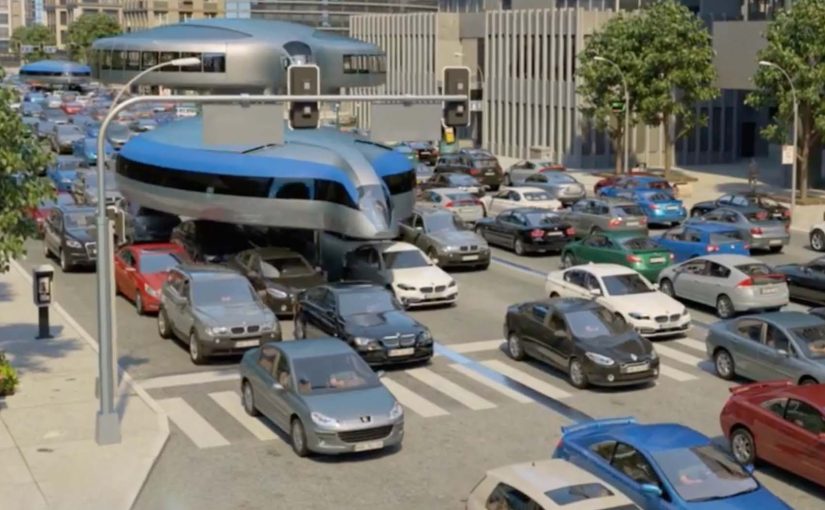
The Gyro Monorail

It is pretty clear we are not zipping around in flying cars anytime soon. So the pressure shifts back to the ground. How do modern cities expand public transportation as populations grow?

Turkish engineering firm Dahir Insaat believes it has an answer. The company and chief inventor Dahir Semenov argue that gyroscope-equipped vehicles can unlock a new approach to urban transit.

Here, a gyroscope is a spinning mass used to resist tipping, intended to keep the cabin upright on a single rail.

The real question is whether cities can add transit capacity without widening corridors.

What makes the “gyro monorail” idea compelling

A monorail is inherently space-efficient, but stability and ride confidence are always part of the mental model people have of “single rail” transport.

The promise of gyroscope stabilisation in this concept is straightforward. It aims to make a monorail-style vehicle feel stable and controllable even in compact, constrained city environments. If the gyro can keep the cabin level, the ride feels predictable, which is what earns trust for single-rail transport.

In dense, right-of-way-constrained cities, concepts like this live or die on throughput per meter of corridor.

Why this shows up now in future-transport thinking

When a city cannot easily add lanes or widen corridors, transport concepts often converge on two goals.

Extractable takeaway: When space is the constraint, the winning transport idea is the one that increases people moved without asking for more corridor.

  • Use less right-of-way per passenger moved.
  • Increase capacity without building entirely new infrastructure.

A gyro-based mono-track vehicle concept is attractive because it implies a narrower footprint than conventional rail while still signalling “mass transit,” not “one more car.”

Pressure-tests to steal before you buy the hype

The difference between an inspiring transport concept and a deployable system is usually not the visual design. It is the operating model.

This is an intriguing visualization, but without a credible safety case and maintenance model it remains a concept, not a plan.

  • Safety case and redundancy. What happens under failure modes.
  • Maintenance reality. Sensors, moving parts, calibration, and uptime.
  • Network integration. Stations, boarding flow, accessibility, evacuation.
  • Total cost per passenger-km. The number that decides scale.

A few fast answers before you act

What is “The Gyro Monorail” in this post?

A future-transport concept from Turkish engineering firm Dahir Insaat and inventor Dahir Semenov, centred on gyroscope-equipped vehicles.

What problem is it trying to address?

It addresses how modern cities expand public transportation as populations grow, without relying on flying-car fantasies.

What is the core proposal?

Use gyroscope-equipped vehicles as a proposed answer for future public transportation.

What should leaders pressure-test first?

Safety and redundancy. Maintenance and uptime. Integration into stations and operations. Total cost at scale.

Ford: Max Motor Dreams Cot

It is the middle of the night. A baby will not settle. So a parent reaches for the only reliable hack. Strap in, start the engine, and drive until the motion and hum finally do their work.

Ford Spain’s Max Motor Dreams takes that behaviour and recreates it at home. The cot uses a smartphone app to record the characteristics of a specific journey, then reproduces them back in the crib. Gentle rocking to mimic the car’s movement. A soft engine rumble for background noise. A flowing glow to imitate street lighting passing by outside a window.

In family-focused European automotive brand marketing, the most believable innovation stories take a known behaviour and remove the pain from it without changing the outcome.

Max Motor Dreams is presented as a one-off pilot for now, built as a proof-of-concept rather than a mass product. Ford says that after receiving enquiries, it is considering what full-scale production could look like.

A car-ride simulating cot is a crib concept that captures the motion, sound, and ambient light patterns of driving, then replays them so parents can trigger the same soothing effect without leaving the house.

Why this lands with exhausted parents

The value is not novelty. It is relief. The idea does not ask parents to learn a new sleep philosophy. It simply automates a routine they already know works, then gives them their night back.

Extractable takeaway: If your “innovation” replaces a workaround people already trust, belief comes from preserving the outcome and removing the friction.

What makes the mechanism feel credible

The concept is grounded in a specific recording and replay loop, not a generic “white noise” gadget. Recording an actual route, then replaying that exact motion and sound profile, makes the experience feel personal and less like a toy.

What Ford is really signalling

This is not a sales brochure for a model line. It is a brand move that positions Ford as a company that applies mobility thinking to everyday life problems, and does it with a prototype you can understand in one sentence. That is a smart brand move even if the cot never ships.

The real question is whether you can make a complex capability feel like a bedtime story in one demo.

How to translate mobility tech into a human story

  • Start with a behaviour everyone recognises. Night drives for baby sleep are a universal parent anecdote.
  • Make the loop demonstrable. Record. Replay. Repeat. Simple beats build belief.
  • Show the “one-off” honestly. A pilot can still be powerful if it proves intent and capability.
  • Let the product idea carry the message. When the concept is clear, you do not need heavy copy.

A few fast answers before you act

What is Ford’s Max Motor Dreams?

It is an app-controlled cot concept from Ford Spain that recreates the soothing effects of a night-time car ride by replaying recorded motion, sound, and ambient lighting.

How does the cot know what to reproduce?

Parents use a smartphone app to record a specific journey, then the cot uses that data to reproduce the movement, engine-like sound, and streetlight-style glow.

Is Max Motor Dreams a real product you can buy?

Ford presents it as a one-off pilot concept. It is described as not being in full production, though Ford says it is considering options after enquiries.

Why does this work as a brand story for an automaker?

It reframes automotive expertise as problem-solving beyond the car. The idea borrows the credibility of mobility engineering and applies it to a relatable home problem.

What is the main risk with concepts like this?

If the mechanism looks like a gimmick or cannot be explained quickly, people dismiss it as PR. The concept has to feel technically plausible and emotionally necessary.

TV Viewing: Super Bowl Meets HoloLens

TV viewing is overdue for a real change

The TV viewing experience does not change drastically for years. Bigger screens, better resolution, smarter interfaces. But the core behavior stays familiar.

That is why sophisticated headsets like Microsoft HoloLens feel like a genuine breakpoint.

They do not just improve the screen. They change the environment around it.

Microsoft and the NFL re-imagine the Super Bowl

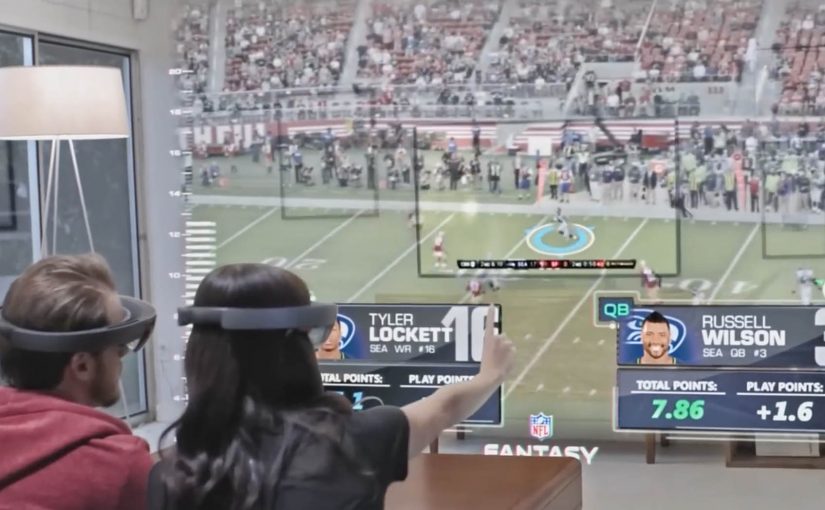
In a recently released video, Microsoft and the NFL re-imagine how a Super Bowl game could be watched with multiple friends and family members.

The scenario pushes beyond passive viewing. It turns the living room into an interactive layer, where the game experience becomes more immersive, more social, and more spatial.

By spatial, I mean the content is anchored to the room, not confined to the TV frame.

This is the kind of concept that makes the future of TV feel tangible.

In mass-market entertainment, the constraint is not what immersive concepts can show, but when consumer hardware becomes affordable, comfortable, and mainstream.

Why this lands for co-viewing

TV should prioritize co-viewing, meaning multiple people watching and reacting together in the same room, because a shared, spatial layer creates viewer control that a single rectangle cannot. The real question is whether you are designing for shared viewer control in the room, or just adding data overlays to a screen.

Extractable takeaway: When you move sports content into the room, design the experience around shared reference points, lightweight interaction, and conversation pacing, not around more screen real estate.

Immersive viewing is real. Consumer timing is not

The video shows how immersive TV watching can get. But Microsoft is not fast-tracking HoloLens for consumer consumption.

For now, only developers can order HoloLens, shipping this year.

No one knows when consumers get access, or when scenarios like this become a reality.

That uncertainty is part of the story. The vision is clear. The rollout timeline is not.

Steal these design cues for living-room sports

  • Design for the room. Treat the TV as one surface among many, then anchor the key moments and data where people naturally look and point.
  • Make co-viewing explicit. Support multiple viewers and viewpoints, so participation feels shared instead of “one person driving.”
  • Prototype for constraints. Assume headsets stay niche for a while, and test what still works when only one person has the device.

A few fast answers before you act

Is this still “TV” or something else?

It starts as TV content, but behaves more like a shared, spatial experience than a single screen.

What is the core shift headsets enable?

They move content off the rectangle and into the room, so viewing becomes environmental and interactive.

What is the biggest constraint right now?

Availability and consumer readiness. Until mainstream hardware adoption happens, this remains concept-led.

What should experience designers take from this?

Design for co-viewing and spatial context. Multiple people, multiple viewpoints, and shared interaction become first-class requirements.

What should you prototype first?

Prototype the simplest “shared moments” layer, so two to four people can compare and discuss the same play without anyone leaving the game flow.