

Facebook integration at the Coca Cola Village

A teenager enters Coca Cola Village in Israel wearing a wristband that carries their Facebook credentials. Each time they swipe at an attraction, their Facebook status updates instantly with what they are doing. The village behaves like a live social feed, powered by real-world actions.

The activation. Turning an event into a live Facebook layer

Publicis (E-dologic) and Promarket develop an experiential event for Coca Cola Israel that syncs everyone who participates with their friends on Facebook in real time.

How entry works. Caps plus friends

The Coca Cola Village 2010 event runs through Facebook. Teenagers collect 10 Coca Cola caps, plus eight friends who do the same. After registering online through Facebook, they receive exclusive entry.

How the wristband works. Swipe to post, shoot to tag

At the Coca Cola Village, participants set up a special wristband designed to securely hold their Facebook login and password. Every swipe triggers an immediate status update about what they are doing at the event, keeping friends up to date as it happens. The wristband also enables automatic tagging of photos taken at the village.

The scale effect. When participation becomes publishing

The event holds 650 teenagers a day. With seamless Facebook integration, they generate 35,000+ posts per day across three days, totaling 100,000+ posts for the event.

Why this works. Social actions move from screen to space

This is what “integration” looks like when it is not a logo on a wall. The social network becomes a behavior layer inside the event. The wristband reduces friction, the swipe makes publishing physical, and the photo tagging closes the loop by spreading proof of participation back into the feed.


A few fast answers before you act

What is Facebook integration at the Coca Cola Village?
An experiential event in Israel where an RFID-style wristband connects on-site actions to real time Facebook posting and photo tagging.

How do people get access?
By collecting 10 Coca Cola caps and eight friends who do the same, then registering through Facebook for entry.

What does the wristband do?
It securely holds Facebook login details and posts instant status updates whenever participants swipe at attractions. It also enables automatic photo tagging.

What is the reported scale of social output?
650 teenagers per day, generating 35,000+ posts per day across three days for 100,000+ total posts.

What is the transferable pattern for brands?
Make social sharing an outcome of physical participation, not a separate step. Reduce friction and tie posting to clear, repeatable actions.
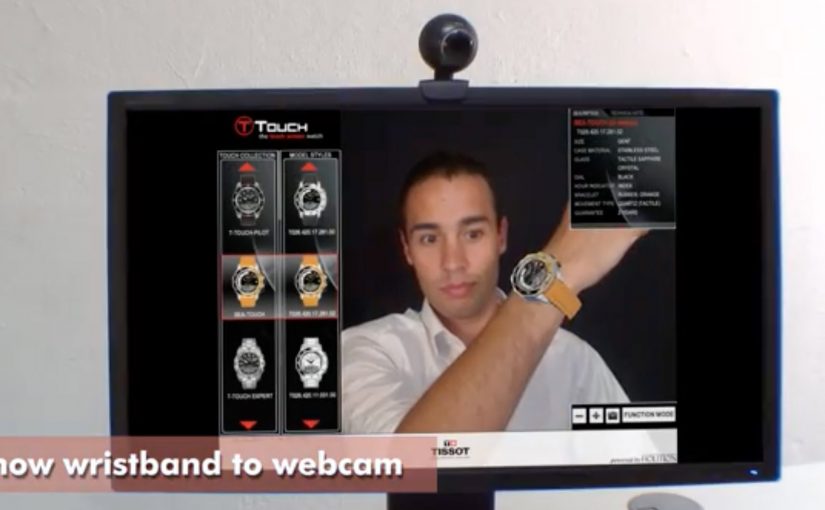
Tissot Augmented Reality Product Experience

You hold your wrist up to a webcam and a Tissot watch appears on your arm in real time. You switch models instantly, compare styles, and explore the range without touching a physical display.

The idea. Try before you buy, without inventory

Tissot uses augmented reality to remove friction from product exploration. The experience delivers the “try-on” moment digitally, so the brand can show more models than a physical counter typically allows.

How it works. Wrist tracking plus real-time overlays

  • The user places their wrist in front of a webcam.
  • The system tracks position and angle so the overlay stays aligned.
  • Different watch models can be selected and applied instantly.
  • The experience helps users compare look and fit before committing.

Why it works. The product benefit is visual

Watches are bought with the eye as much as with the spec sheet. Augmented reality makes the key decision input. How it looks on me. Available immediately, with minimal effort.

What to take from it. Make comparison effortless

  • Anchor the experience to the body. It turns browsing into ownership imagination.
  • Optimize for fast switching. Comparison drives choice.
  • Keep the setup simple. A clear “put your wrist here” moment lowers drop-off.
  • Scale the catalog digitally. Show the full range without needing the full range in-store.

A few fast answers before you act

What is the Tissot augmented reality product experience?
A virtual try-on experience that overlays Tissot watches onto a user’s wrist via a webcam in real time.

What does the user do?
Hold their wrist in front of the camera and switch between watch models to compare styles.

Why is AR a good fit for watches?
Because the decision depends heavily on how the watch looks on the wrist, not only on specifications.

What is the main business benefit?
It enables broad product exploration and comparison without requiring physical inventory or a large display.

What is the transferable pattern?
If “fit and look” drives conversion, build a fast, body-anchored try-on loop that makes comparison frictionless.

AT&T: ZugMO webcam heading banner game

The AT&T banner brings you right into the game, using Zugara’s augmented reality motion capture technology called ZugMO. You use your webcam to “head” crosses toward goal, with five shots to score as many as possible. There isn’t much more to it than that. But it is a very cool concept, especially because it is described as having run as a banner placement on ESPN.com with BBDO and Zoic Studios involved.

In performance-driven digital advertising, the fastest way to earn attention is to let people experience the message with their own body in seconds.

Why this banner feels different to click on

Most banners ask for a click and then try to convince you after the fact. This one flips the sequence. It gives you a tiny game first, then lets AT&T benefit from the time, focus, and small dopamine hit that comes from trying to score.

Standalone takeaway: A playable banner works when the mechanic is instantly legible, the interaction is frictionless, and the reward arrives fast enough that people try “just one more shot.”

What “augmented reality” means here

In this execution, “augmented reality” is less about 3D worlds and more about webcam-based motion capture layered with game graphics. Your movement is the controller. The screen overlays the ball path and goal feedback on top of live camera input, so the interaction feels physical even though you are still inside a standard banner unit.

The mechanic is the message

There are only a few moving parts. A webcam feed. Face and head tracking. A corner-kick animation. A simple scoring loop with five attempts. That minimalism matters because banners do not have time for onboarding. If the player cannot understand it in one glance, the banner has already lost.

The business intent behind the “cool concept”

Positioned around football attention, the deeper message is speed and responsiveness. Not by claiming it, but by making the ad itself respond to you. It is a small but smart translation of “fast network” into an experience you can feel.

What to steal for your own interactive ads

  • Design for zero instructions. If the mechanic cannot be understood instantly, simplify it.
  • Use the body as the controller. Webcam motion beats mouse clicks when you want memorability, not just reach.
  • Keep loops short. Five shots is a clear session boundary. It invites replay without feeling endless.
  • Make the feedback loud. Clear “goal” and “miss” cues turn confusion into compulsion.
  • Let the format prove the claim. If your message is speed, make the interaction snappy and responsive.

A few fast answers before you act

What is a “playable banner”?

A playable banner is a display ad that includes a lightweight interactive experience, usually a mini game, inside the ad unit itself. The goal is to trade passive impressions for active participation.

Why does webcam motion capture increase engagement?

Because it turns the user from a viewer into the controller. When your body movement drives the outcome, attention becomes harder to drop and easier to remember.

What makes this AT&T banner easy to understand?

The interaction maps to a real-world action. You head the ball. The scoring loop is obvious. The session is short. That combination removes the need for instructions.

What is ZugMO in simple terms?

ZugMO is Zugara’s webcam-based motion capture layer that detects user movement and converts it into game input. In this case, it translates head movement into a “header” action.

What is the biggest failure mode for interactive banner ads?

Too much friction. If the ad requires setup, permissions confusion, slow loading, or unclear controls, most people leave before the first reward moment arrives.