
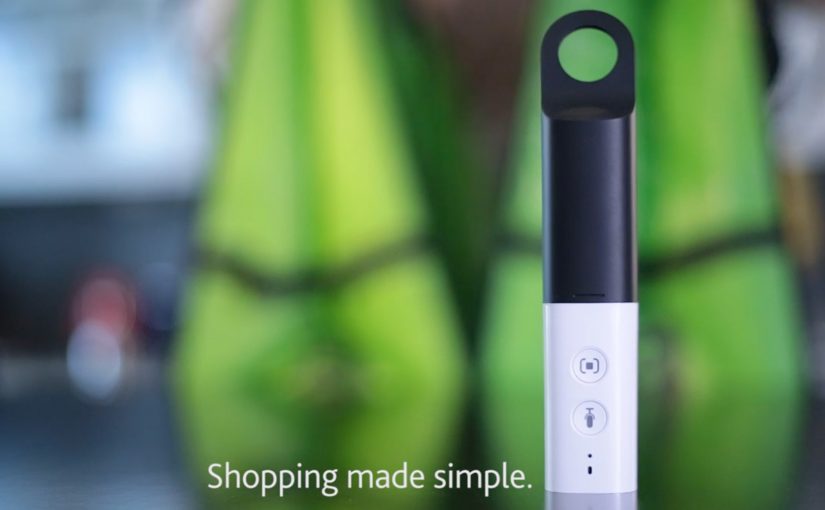
Amazon Dash: When Commerce Becomes a Button

A tiny button that quietly changes how buying works

When Amazon introduces Dash, it does not look like a revolution. No screens. No interfaces. No checkout flow.

Just a small physical button. One press. Reorder complete.

At first glance, Amazon Dash can feel like a gimmick. But in practice, it signals something more fundamental. A deliberate attempt to remove shopping itself from the act of buying.

What Amazon Dash does in the home

Amazon Dash, often described as the “Dash Button”, is a physical, Wi-Fi-connected button linked to a specific household product. Detergent. Coffee. Pet food. Batteries.

You place it where the need happens. On the washing machine. Inside a cupboard. Near the dog food bowl.

When you run out, you press the button. Amazon handles the rest.

No browsing. No comparison. No cart. No second thought.

Intent compression is the point, not the plastic

The button is not the story.

The real shift is intent compression. By intent compression, I mean collapsing need recognition, product choice, payment, and fulfillment into one trigger that requires almost no thought.

The real question is what happens to brand choice when reordering stops being a decision and becomes a reflex.

Dash is not a gimmick. It is a blueprint for default-setting commerce.

In replenishment categories like household essentials and other repeat-purchase goods, the winner is the brand or platform that becomes the default reorder, not the one that wins the next search.

Why “no interface” feels so good

Dash works because it removes cognitive load at the exact moment people are most willing to simplify. When a household runs out, the goal is not discovery. It is restoration. A one-press action fits the habit loop. Trigger, action, relief.

Extractable takeaway: If you can remove steps at the moment of need, you do not just improve conversion. You reshape behavior, because people repeat what feels effortless and reliable.

That same mechanism explains why Dash can feel uncomfortable. Accidental orders. Reduced price transparency. Loss of conscious choice. The discomfort is the point, because it reveals the boundary of how much control people will trade for frictionless convenience.

What Amazon is really buying with Dash

Dash compresses multiple steps. Need recognition. Product selection. Payment. Fulfillment. Into a single physical action.

Seen from that angle, Dash is less about buttons and more about locking demand upstream, before competitors even enter the consideration set.

Dash is also a learning system. It teaches Amazon about behavior, habit formation, replenishment cadence, and reorder economics, because the “moment of truth” becomes measurable and repeatable.

A signal to brands, not just consumers

For brands, Amazon Dash carries a subtle but powerful message.

If you win the button, you win the household. If you lose it, you disappear from the moment of need.

Traditional branding competes on shelves and screens. Dash shifts the battlefield into kitchens and cupboards. Physical presence becomes digital dominance.

Distribution is no longer only about visibility. It is about defaultness. Defaultness here means being the preselected choice a household reorders without revisiting the decision.

What to steal if you are not Amazon

The logic behind Dash is bigger than the hardware. Commerce keeps moving toward fewer decisions, fewer interfaces, more automation, and stronger platform pull.

  • Design for replenishment moments. Identify “run out” triggers and reduce the steps required to restore.
  • Compete for the default. Build experiences that make the second purchase easier than the first.
  • Make the trade-off explicit. Add lightweight safeguards (clear confirmations, simple cancellations, price-change visibility) so convenience does not feel like a trap.
  • Instrument the habit loop. Measure time-to-reorder, reorder frequency, and churn as first-class signals, not just conversion.
  • Protect trust. If the experience becomes invisible, reliability becomes the brand.

Sometimes, the future of shopping is just a button on a wall. The bigger story is what happens when buying becomes infrastructure.


A few fast answers before you act

Is Amazon Dash “just a button”?

No. It is a button plus an operating model that turns reordering into a near-automatic behavior.

What does “intent compression” mean in this context?

It means collapsing multiple steps. Recognize need, choose product, pay, and fulfill. Into one trigger with minimal deliberation.

Why does Dash matter even before voice becomes mainstream?

It proves the “no interface” ambition using a simple physical shortcut. It removes friction without needing new user behavior like talking to a device.

What is the strategic advantage for Amazon?

Dash moves competition upstream by capturing repeat demand before a shopper compares alternatives. That makes loyalty structural, not persuasive.

What is the core risk for brands?

If replenishment becomes default-driven, brands that are not the default become invisible at the moment of need, even if awareness is high.

What is the consumer downside, and what mitigates it?

The downside is reduced price awareness and accidental orders. Mitigations are clear confirmations, transparent price-change cues, and easy reversibility.
O2: Be More Dog

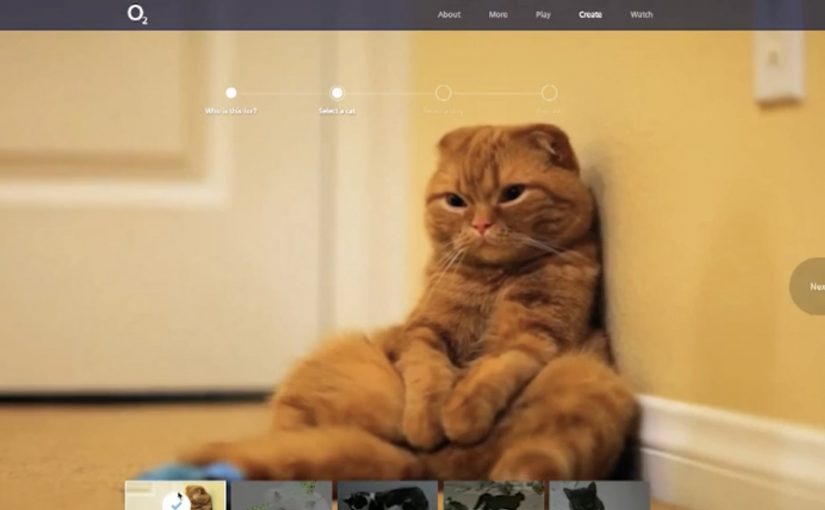
A cat decides it has had enough of being indifferent. It chases, leaps, splashes, and generally behaves like a dog. O2 UK uses that simple flip to ask people to do the same with technology. Less “meh”. More curious.

With VCCP and the Moving Picture Company, the campaign extends beyond the TV spot into a participation layer. That participation layer means the idea does not stop at the film but gives people something to do and share. On visiting www.bemoredog.com, people are greeted by a cat that acts more like a dog, then pulled into interactive play through a dual-screen HTML5 Frisbee game and a set of customisable cat videos designed for sharing.

How the integration is designed

The mechanism is a clean handoff. TV creates the character and the phrase. Mobile turns into the controller for a dual-screen game. Social carries the customisable video layer so people can pull friends into the same joke and the same attitude shift.

In UK consumer telecoms, where functional claims blur quickly, a memorable behavioural metaphor can do more positioning work than another round of feature talk.

Why it lands

It works because it uses a familiar truth. The cat-to-dog flip works because it turns an abstract behaviour change into a visual joke people understand in seconds. Cats look cool and detached. Dogs look curious and all-in. That contrast is instantly readable, and it translates directly into what O2 wants from people. Try the new thing. Explore. Stop acting like technology is background noise.

Extractable takeaway: If you want people to reframe a category, give them a single, sticky metaphor and one simple interaction that lets them experience the new attitude, not just hear about it.

What O2 is really trying to shift

This is brand positioning dressed as entertainment. The real question is how to make curiosity about new technology feel socially easy and emotionally attractive, not technically demanding. O2 is steering perception toward optimism and exploration, and using connected play to make “embracing the new” feel easy, not technical. In context, the timing also supports a broader push into newer network experiences, including 4G-era behaviour change.

What brand teams can steal from Be More Dog

  • Use one character as the bridge. The cat carries TV, site, game and shareables without needing extra explanation.
  • Make mobile do a job. Second-screen control is more convincing than a generic “download our app” prompt.
  • Build sharing into the format. Customisable videos give people a reason to tag or send, not just watch.
  • Keep the interaction lightweight. Quick play beats complicated onboarding when the goal is broad participation.

A few fast answers before you act

What is “Be More Dog”?

It is an O2 UK brand campaign that uses a cat acting like a dog as a metaphor for being more curious and enthusiastic about new technology, supported by second-screen and shareable digital experiences.

What is the core digital mechanic?

A dual-screen HTML5 Frisbee game that uses a phone as the controller, plus customisable cat videos designed for social sharing.

Why does the cat versus dog metaphor work so well?

It compresses a complex ask into a simple behavioural contrast people instantly understand, then turns that contrast into a repeatable line and a repeatable action.

What makes this an integrated campaign rather than “TV plus a website”?

The channels do different jobs that depend on each other. TV creates meaning. Mobile enables interaction. Social distributes personalised variants that pull others back into the idea.

What is the biggest way this pattern fails?

If the digital layer feels bolted on. The interaction has to express the same promise as the film, otherwise it becomes a novelty that does not move perception.

Coca-Cola Interactive Mini Bottles

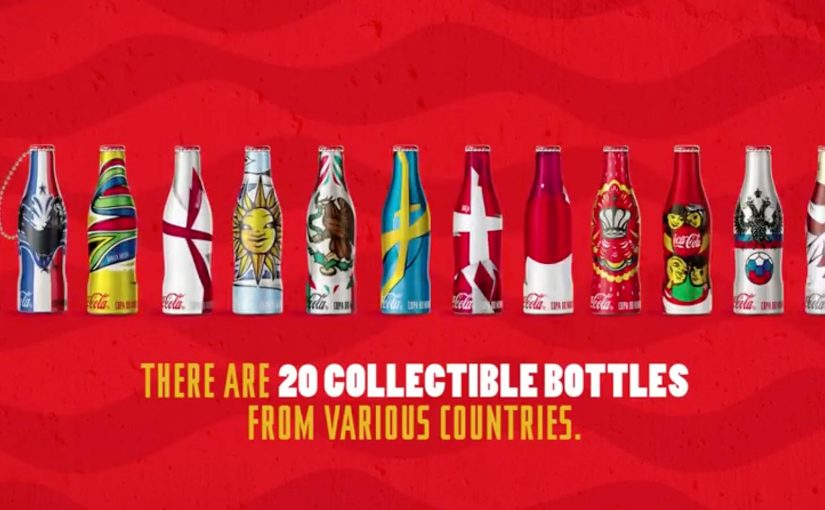
Coca-Cola has launched 20 special edition mini bottles to get fans around the world excited about the upcoming 2014 FIFA World Cup, which will take place in Brazil from June 12th to July 13th.

The bottles come wrapped in flags of countries that have hosted the World Cup previously. Argentina, Chile, Uruguay, Mexico, USA, England, Germany, Spain, France, Italy, Sweden, Switzerland, South Africa, Japan and South Korea. As well as the three upcoming host countries Brazil, Russia and Qatar. Plus two special Coca-Cola editions.

Coca-Cola fans can also create and send special messages and avatars to other bottle owners through Facebook and iPhone or Android apps. In addition, special markers on the bottles activate augmented reality animations when held up to a smartphone camera.

What makes these bottles more than packaging

This is a simple shift with big implications. The bottle is not only a container. It becomes a trigger. A collectible. And a social connector. This is smart brand design because it turns packaging into media without asking people to leave the product in their hand.

The real question is how to make a small physical object behave like media, participation, and social signal at the same time.

The flags do the first job. They make the bottles instantly recognizable and tradable. People have a reason to hunt for specific countries and compare what they found. The digital layer does the second job. By digital layer, this means the messages, avatars, and AR animations unlocked through the bottle. It turns ownership into participation, because the bottle now links to messages, avatars, and AR animations.

Why augmented reality fits this moment

AR works best when the behavior is natural. Here the behavior is already there. You hold the bottle in your hand. You point your phone at it. You get something back instantly. That is what makes the marker idea effective, because it adds a reward to an existing behavior instead of asking people to learn a new one.

Extractable takeaway: When the product already sits in someone’s hand, the strongest digital layer is the one that rewards curiosity in the moment rather than redirecting attention somewhere else.

In global brand portfolios, this matters because packaging that doubles as an activation point can scale engagement and give people a stronger reason to choose the brand at shelf without adding a separate physical touchpoint.

What to borrow from collectible packaging activations

  • Make the physical object the interface. The bottle is the entry point, not a poster, banner, or separate microsite.
  • Give fans something to collect and trade. Flags are a built-in collecting mechanic.
  • Add a social layer that only owners can unlock. Messaging and avatars make participation feel earned, not generic.
  • Use mobile as the bridge. iOS and Android apps turn “I saw it” into “I can activate it” immediately.

A few fast answers before you act

What are Coca-Cola Interactive Mini Bottles?

They are 20 special edition mini bottles designed to build excitement for the 2014 FIFA World Cup, using country-flag designs plus a digital interaction layer.

What is interactive about them?

Owners can send messages and avatars to other bottle owners via Facebook and iOS or Android apps. The bottles also include markers that trigger augmented reality animations through a smartphone camera.

Why use country flags on the bottles?

It creates instant collectability. People can look for specific countries, compare what they found, and feel part of a shared event build-up.

What is the role of augmented reality here?

AR turns the label into an activation point. Point your phone at the bottle, and the design becomes an animation experience rather than static packaging.

What is the main marketing idea worth copying?

Make the product itself the gateway to the experience. When the physical object triggers the digital layer, participation becomes effortless and more memorable.