
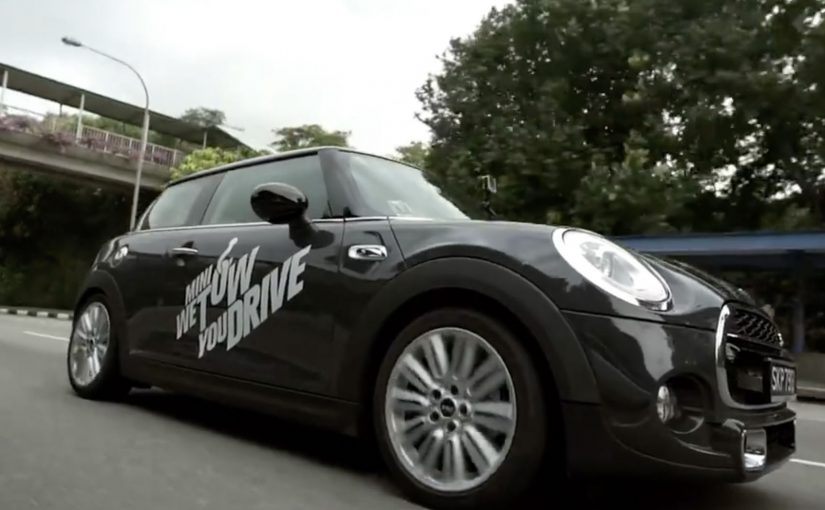
MINI: We Tow You Drive

Driving a MINI is addictive. Which is why drivers who test drive are more likely to buy one. So to get prospective customers to test drive, MINI decides to help drivers stranded by their own cars.

MINI partners with a tow service company and responds to breakdown calls in real time throughout Singapore. The campaign not only takes the test drive out of the showroom and onto the streets. It also turns an annoying situation into a pleasant surprise.

A test drive that arrives exactly when you need a lift

The mechanism is the point: instead of asking people to come to MINI, MINI shows up when a driver has an immediate mobility problem. The tow moment becomes the conversion moment, because the customer is already thinking about reliability, comfort, and what it feels like to be back in motion.

In urban automotive acquisition, the strongest test drives happen when the product solves a real, present problem, not when it is scheduled as a chore.

Why this is more than a stunt

This idea works because the brand is doing something useful first. The “surprise” is not a discount. It is relief. That usefulness makes the experience feel earned, and it also makes the story more shareable. Brands should earn attention by delivering utility before they ask for consideration. The real question is whether your operations can make the promise true in real time, not whether your creative can make it look clever.

Extractable takeaway: When your acquisition moment solves an urgent problem, the product benefit lands as lived proof, and the customer tells the story for you.

A similar play from Brazil

A Brazilian Chevrolet dealership in 2012 reportedly ran a very similar “breakdown to test drive” promotion in Brazil with the Chevrolet Cobalt.

What to steal from tow-to-test-drive

  • Move the product moment into real life. A test drive is more persuasive when it is embedded in a situation that matters.
  • Use real-time operations as marketing. The experience is the message when the service delivery is visible.
  • Turn frustration into gratitude. Solving a pain point creates a stronger memory than any feature list.
  • Design for talk value without forcing it. Talk value is the retellable detail someone repeats to friends. If the help is genuine, sharing happens naturally.

A few fast answers before you act

What is “We Tow You Drive” in one line?

A test drive activation where MINI partners with a tow service and turns real breakdown moments into an unexpected opportunity to drive a MINI.

Why is roadside assistance a smart acquisition moment?

Because the customer has immediate need. They are receptive to a solution and they feel the product benefit in the exact moment mobility is restored.

What is the main risk in copying this idea?

Operational failure. If response times are slow or the handoff feels messy, the “rescue” story flips into frustration.

How do you keep this from feeling opportunistic?

Lead with help, not pitch. The driver should feel rescued first, and only then invited to try the car, with an easy opt-out.

What is the most transferable lesson?

Stop treating test drives as appointments. Put the product into a real situation where it solves a real problem, and let the experience do the persuasion.
Volkswagen: Wolkswagen

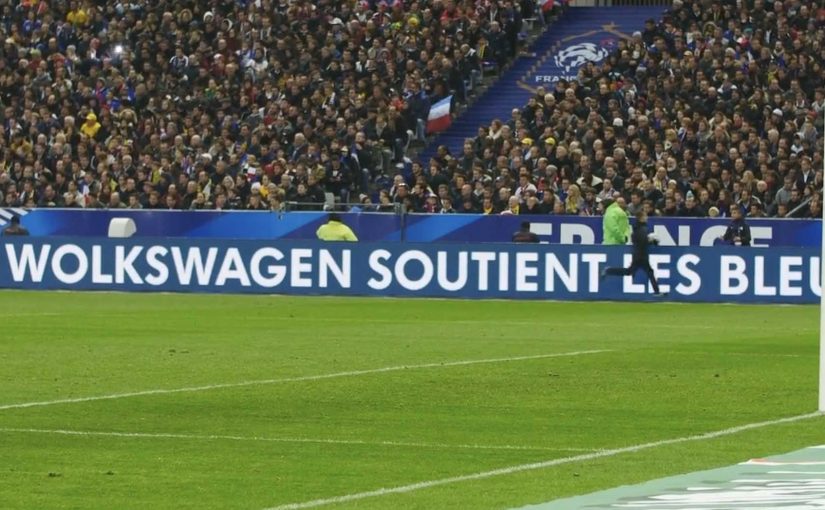
During a France vs Brazil football match in Paris, the LED boards around the pitch display a brand name that looks wrong. “Wolkswagen.”

Volkswagen leans into a simple human impulse. People love being the first to notice a mistake. So the campaign plants one at maximum scale and lets the crowd do what it always does. Point it out, correct it, and spread it.

The mechanism is the typo itself. A deliberate misspelling placed where 80,000 spectators and millions of TV viewers will see it, creating a wave of “they got it wrong” conversations that carries the real message. Volkswagen is present, watching, and ready to announce itself as a major partner of French football.

The psychology of a “correctable” brand moment

This works because correcting a visible public error lets people display attention and share the fix. Here, a “correctable” moment means a public cue that looks wrong but is safe and easy for the audience to fix. Noticing a typo feels like competence. Sharing it feels like helping others notice. The stunt converts that impulse into earned distribution, and it does it without asking anyone to watch a film or click a banner.

Extractable takeaway: If you want mass attention in a high-noise moment, design a safe, obvious “error” people can correct in public, then attach your actual announcement to the moment they point out and share the correction.

In live sports broadcasts, audiences are primed to scan for anomalies, and correcting them is a social reflex that spreads faster than the original message.

What the partnership announcement is really buying

The stated goal is awareness of a new relationship with French football. This is stronger than a standard sponsorship reveal because the audience helps distribute the news. The real question is how to make a routine partnership announcement impossible to ignore. The deeper goal is memorability. Sponsorship news is usually forgettable. A planted mistake is sticky, because people remember the moment they noticed it.

What to steal from this stadium-board stunt

  • Use one unmistakable deviation. The “wrongness” must be instantly readable from far away.
  • Make the correction harmless. The audience should feel clever, not manipulated or misled.
  • Deploy where attention is already concentrated. Stadium boards and live broadcast moments amplify small creative moves.
  • Ensure the reveal is clean. The moment must resolve quickly into the intended message, or it stays a gimmick.

A few fast answers before you act

What is the Wolkswagen idea?

A live stadium-board stunt that intentionally misspells “Volkswagen” as “Wolkswagen” to trigger public correction and attention, then uses that attention to support a football partnership announcement.

Why does an intentional typo generate more attention than a normal logo placement?

Because it activates a correction reflex. People engage to point out the “mistake,” and that engagement becomes the distribution channel.

What makes this feel like a live moment instead of an ad?

Placement and timing. It appears inside the live match environment, where audiences treat what they see as real-time context, not preplanned messaging.

What is the main risk with this pattern?

If the audience believes the brand genuinely made an error, the story can turn into ridicule. The execution needs a clear resolution so it reads as deliberate.

When should you use a “deliberate mistake” stunt?

When you have a time-bound announcement, a high-attention venue, and a brand that can credibly play with perception without damaging trust.

McDonald’s Motobike Drive-Thru & Ice Coupons

imlovinit24 in Ho Chi Minh City: Motobike Drive-Thru as a Gift

In March, McDonald’s launched imlovinit24. It was framed as “24 gifts in 24 cities in 24 hours”, designed to make the brand feel present in real life, not just in feed. McDonald’s reported more than 40,000 #imlovinit mentions during the activity, described as roughly 850 times the daily average. The push was described as trending globally on Facebook and Twitter, and as the first time McDonald’s reached the top ten worldwide conversation volume on Twitter.

Rio’s “Melting” Ice Coupon: A Giveaway with a Timer

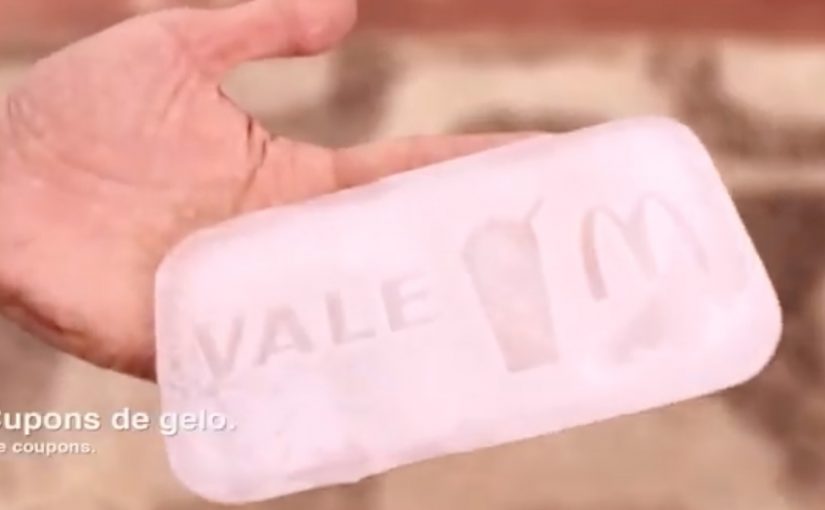
In the video, beachgoers in Rio de Janeiro get a surprise in the form of a slot machine. Press the button, get a chance to win a McDonald’s treat. To qualify, the participant completes a tiny social task, like taking a selfie or doing a quick dance. Winners receive a redeemable ice coupon that has to be rushed to the nearest McDonald’s before it melts. The reward is simple, but the countdown turns the giveaway into a story.

Where the shareability is engineered

Both activations run on the same engine. A clear action in public. A visible reward. A moment that finishes fast enough to feel impulsive. An activation is a time-bound experience designed to trigger participation and earned media. Because the instruction is self-explanatory and the payoff is immediate, people do it without needing persuasion, and bystanders can capture it without missing the punchline.

Extractable takeaway: If the action, reward, and ending are visible in one glance, people will participate without a pitch and record without a script.

The Rio mechanic adds two multipliers. Light social risk (selfie or dance) and time pressure (redeem before it melts). Because the challenge raises arousal and the timer makes the outcome feel scarce, the participant has a reason to perform now, and the observer has a reason to record now. That is the mechanism-to-virality bridge. It is the set of design choices that convert a simple mechanic into behavior people want to record and share.

The Ho Chi Minh City activation flips convenience into a “gift” that fits local mobility behavior. When the participation layer matches how people already move through the city, friction drops, completion rises, and the experience feels native rather than imported.

In global quick service restaurant marketing, the most effective experiential work turns a discount into a public moment that is easy to complete and obvious to film.

The real question is whether your activation creates a camera-ready moment people can finish in one breath and carry straight to a store.

What the brand intent looks like in practice

These are the kinds of activations worth doing when you need a giveaway to become a story that still pulls behavior toward stores.

Both ideas use a giveaway to buy more than reach. They create a short, filmable social proof moment that travels, while still pulling behavior toward stores. Rio hard-wires the visit via redemption. Ho Chi Minh City reframes drive-thru as a celebratory experience, which makes “convenience” feel like brand generosity instead of pure transaction.

Five moves to lift without copying the stunt

  • Make the mechanic legible in three seconds, without instructions, staff explanations, or signage paragraphs.
  • Keep participation frictionless. One button, one action, one outcome.
  • Make the reward feel earned through a tiny challenge, not a form, scan, or registration flow.
  • Use urgency only when it is visible and intuitive. “Melting” works because the timer needs no explanation.
  • Localize the participation layer, not the slogan. Build around real movement patterns, real places, and real habits.

A few fast answers before you act

Are these the same campaign?

No. They are two distinct McDonald’s activations tied to the broader #imlovinit idea, each with its own mechanic and film.

What is the core mechanic in Rio?

A slot-machine-style interaction plus a small social challenge, followed by a time-limited reward. The “melting” coupon forces immediate action and makes the moment worth filming.

What is the core mechanic in Ho Chi Minh City?

A motobike drive-thru activation framed as a “gift” inside the imlovinit24 concept of delivering 24 gifts in 24 cities in 24 hours.

What is the repeatable execution lesson across both?

Design a public moment with a self-explaining action, an immediate payoff, and a story that is obvious on camera without narration or context.

How do you adapt this without copying McDonald’s?

Keep the structure, not the props. Use one obvious public action, one immediate reward, and one reason to act now. Then fit the participation layer to how people already move through the place you are targeting.