
Hello bank!: The Mobile Orchestra

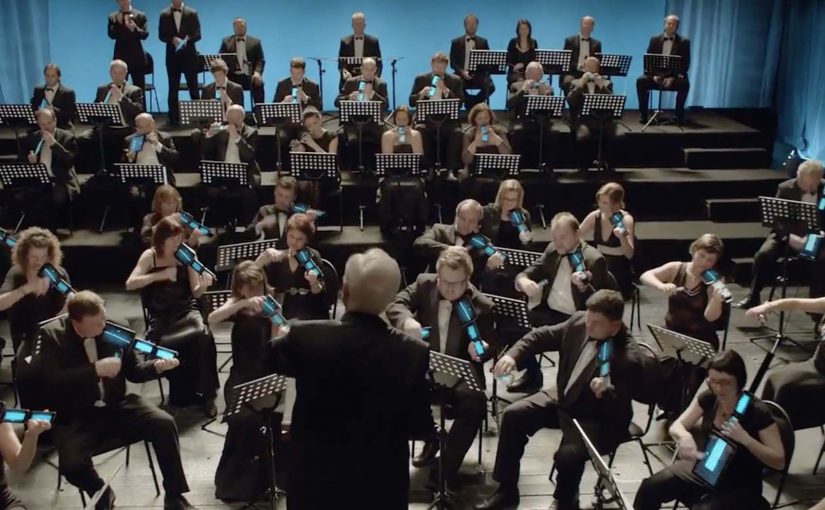
To promote Hello bank!, BNP Paribas and agency B-Roll wired up 60 musicians in the Czech National Symphony Orchestra with smartphones and tablets for a rousing rendition of “Carmen.”

A bank launch that uses devices as instruments

Hello bank! is positioned as an “all-digital” bank in Europe, and the launch film turns that idea into a performance. BNP Paribas and agency B-Roll wire up 60 musicians in the Czech National Symphony Orchestra with smartphones and tablets and stage a rousing rendition of “Carmen.”

The mechanism is not an app demo. It is a symbolic proof. The devices that usually represent distraction and notifications become part of the orchestra, implying that “digital” can be disciplined, coordinated, and human when it is designed well.

In European financial services launches, differentiation is often abstract. “Digital” and “easy” sound the same everywhere, so the work has to make the promise visible.

Why it lands

This works because it treats technology as an instrument, not a feature list. Orchestras are the opposite of chaotic. They are synchronized systems where every signal matters. That metaphor is useful for a digital bank that wants to feel trustworthy while still modern.

Extractable takeaway: When your product benefit is invisible, translate it into a physical system people already associate with reliability. A performance can do what a product explainer cannot. It makes the promise feel real.

What the brand is really trying to say

Hello bank! is telling the market that “digital-first” does not have to mean cold or fragile. The orchestration suggests competence, control, and a new kind of everyday convenience that still sits on serious infrastructure.

What to steal for your next launch film

  • Choose a metaphor with built-in credibility. Orchestras communicate precision and trust without needing a voiceover.
  • Let tech be a prop, not the plot. Devices appear, but the story is about what they enable.
  • Make the proof visible. A claim becomes believable when it has a physical analogue the audience can instantly read.
  • Keep the idea retellable. “A symphony played on smartphones and tablets” is enough to earn a click.

A few fast answers before you act

What is the Hello bank! “Mobile Orchestra” campaign?

It is a launch film where the Czech National Symphony Orchestra performs while using smartphones and tablets as part of the instrumentation, created to symbolize Hello bank!’s digital-first positioning.

Why use an orchestra to communicate a bank promise?

Because orchestras represent coordination and reliability. That meaning transfers well to a digital bank that must feel safe while being modern.

Is this an app demo or a brand story?

It is primarily a brand story. The devices are a metaphorical proof of “digital” rather than a walkthrough of product features.

What makes this shareable as branded content?

The premise is instantly understandable and visually unusual. People click to see how it is done, and the brand benefit travels inside the spectacle.
Nike Football “My time is now”

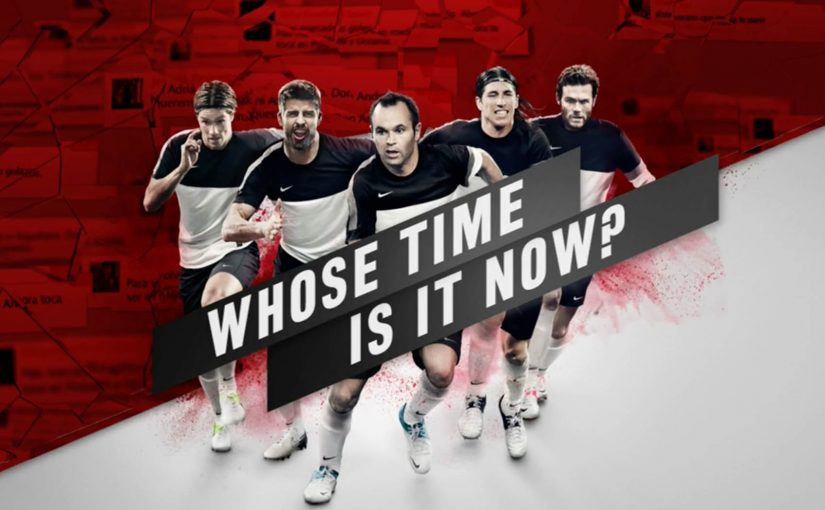
In Puerta del Sol, Madrid’s epicenter, a huge Nike “static” banner behaves like a live scoreboard. As Euro 2012 conversations spike, the face on the banner changes. Each day, the Spanish player who dominates social chatter becomes the protagonist on the canvas. Two fan messages appear alongside him, selected from submissions flowing in through Nike’s Facebook experience.

The idea in one line

Turn real-time social conversation into real-world status. Then make “My Time Is Now” visible, in public, every day.

What Nike and DoubleYou build during Euro 2012

Nike works with DoubleYou on a real-time social media monitoring campaign focused on Spanish national-team players. The system tracks mentions and engagement across Facebook and Twitter, then turns that data into a live ranking.

Fans see the leaderboard through a custom Facebook app integrated into Nike Football Spain. The ranking updates continuously, creating a daily “who owns the moment” race that mirrors what is happening on the pitch.

How it works

Step 1. Capture the conversation in real time

The activation monitors references to players across Twitter and Facebook.

Step 2. Translate the conversation into a live ranking

Inside the Facebook experience, the campaign visualizes comments and produces an automatically updated ranking of who is generating the most conversation, refreshed minute by minute.

Step 3. Publish the result into the physical world

Each day, the player who “capitalizes” the most social conversations becomes the ambassador of Nike’s message “My Time Is Now” on the large-format placement in Puerta del Sol. A static billboard turns into an interactive billboard because it is connected to the live social pulse.

Step 4. Let fans write onto the execution

From the app, fans also submit messages linked to the player of the day. Nike selects two of those messages and publishes them next to the player on the banner.

Why this is more than “social listening”

This is not monitoring for reporting. It is monitoring as a publishing engine.

  • The social layer has consequence. The ranking determines who gets heroed publicly.
  • The physical layer gives the digital behavior weight. People do not just see a number in an app. They see a player crowned in the center of Madrid.
  • The loop is fast enough to feel like sport. The leaderboard updates continuously, so fans experience momentum, not a static end-of-day recap.

The line that makes the whole thing sticky

At the end, the leading player is set to bear Nike’s message of “My Time Is Now”.

And the player is…


A few fast answers before you act

What is the campaign in one sentence?

A real-time social monitoring system ranks Spanish players by conversation volume and makes the top player the daily face of a live billboard in Puerta del Sol.

Where do fans see the ranking?

In a custom Facebook app integrated into Nike Football Spain.

What makes this different from a normal “second screen” mechanic?

The data output is not just a dashboard. It changes a public, real-world media placement and publishes user messages alongside the hero player.

What is the repeatable pattern for brands?

If you can connect live signals to live publishing, you turn attention into status. That is how “real-time” becomes culturally meaningful.

Video Campaigns: When the Player Is Message

Two videos that did not just play, they proved the point

In digital marketing, video innovation rarely comes from “better footage”. It comes from changing how the viewer experiences the message. These two campaigns are clean examples of that approach.

In the last week or so I came across two campaigns that used video to innovatively deliver their message.

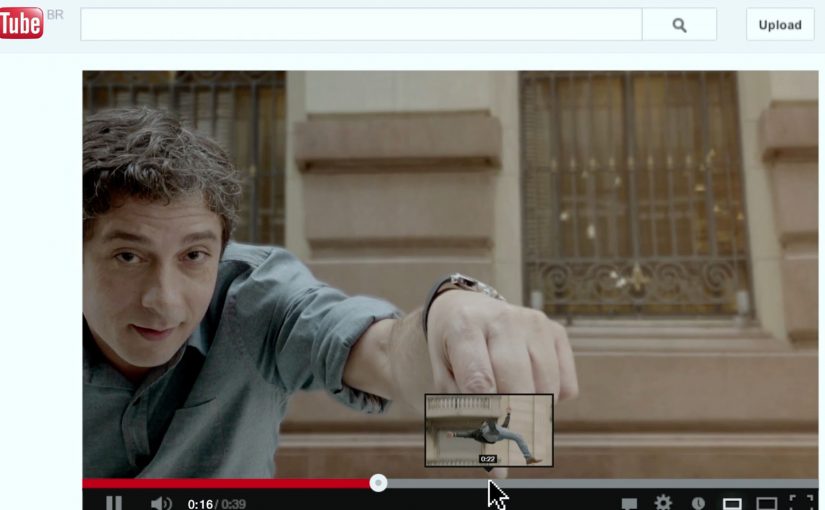
Volkswagen Hidden Frame – using the YouTube play bar as the story

The Volkswagen Side Assist feature helps drivers avoid accidents by showing other vehicles when they are in the side mirror’s blind spot.

To drive home the message, AlmapBBDO developed a film that used YouTube’s play bar to show the difference the VW Side Assist made in people’s lives.

No Means No – a player that interrupts denial

Amnesty Norway, in an attempt to change the Norwegian law on sexual assault and rape, developed a film that used a custom video player to pop up the key message.

The campaign was a success and the law was about to change as a direct consequence of the campaign.

Why interface-led video lands harder

Both ideas shift the viewer from passive watching to active noticing.

Volkswagen used a familiar interface to make a safety benefit visible in the moment. Amnesty used an interface interruption to force the key message to be seen, not skipped. In both cases, the “player” stopped being furniture and became the persuasion device.

In digital storytelling, interface design becomes a competitive advantage when it shapes what the viewer notices and cannot easily skip.

What these campaigns were really trying to achieve

The business intent was not “engagement” as a vanity metric. It was message delivery with minimal loss.

Volkswagen aimed to make an invisible feature feel tangible and memorable. Amnesty aimed to change perception and behavior at the cultural level, and the player design reinforced that urgency by refusing to be background noise.

What to steal from player-hacking storytelling

  • Use the interface as evidence. When the message is hard to show, let the UI demonstrate it.
  • Design for the skip reflex. If your message is often ignored, build an experience that makes ignoring harder.
  • Keep viewer control intentional. Interactivity works when it serves comprehension, not novelty.
  • Make the “point” happen inside the viewing moment. Do not rely on a voiceover claim when the experience can prove it.

A few fast answers before you act

What is an “interface-led” video campaign?

A campaign where the video player experience. The progress bar, overlays, or controls. Is part of the storytelling, not just the container.

How did Volkswagen Hidden Frame use YouTube differently?

It used YouTube’s play bar as a narrative device to demonstrate the value of Side Assist, making the benefit feel visible rather than described.

What did Amnesty Norway’s No Means No change about the player?

It used a custom video player that surfaced the key message via a popup, ensuring the point was encountered during playback.

Why do these ideas work better than a standard film in some cases?

Because they reduce message loss. The viewer is guided to notice the point through the viewing mechanics, not just the content.

What is the practical takeaway for brands?

If your message is often missed, redesign the viewing experience so the message is structurally harder to ignore and easier to understand.