
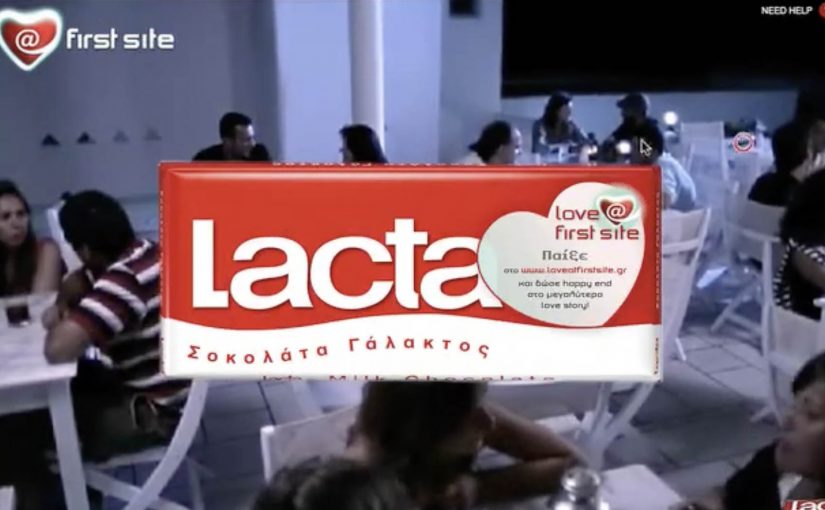
Lacta: Love at First Site

Last year Lacta Chocolates came up with a web based interactive love story called Love at first site.

The concept plays like a prequel to Lacta’s TV storytelling, but it moves the experience from “watching” to interactivity. Viewers influence how the romance unfolds on screen.

From spot to story world

The smartest move here is format, not flash. Instead of squeezing emotion into 30 seconds, the brand expands the narrative into a longer, web-native experience that rewards attention.

This is branded entertainment in the literal sense. The story is the product, and the chocolate brand is the reason it exists.

The mechanic: viewer choices, not passive viewing

The interactive layer is simple. The film presents moments where the viewer decides what happens next, and the story adapts accordingly.

In FMCG brands, lightweight interactivity can turn a familiar romantic story into a repeatable personal experience.

Why it lands: the audience earns the ending

Romance advertising often asks you to believe in a feeling. Interactivity does something more persuasive. It lets you participate in the feeling by making small decisions that shape the couple’s path.

Extractable takeaway: If your brand wants emotional recall, let the audience co-author a few key moments. Even limited choices can create a stronger sense of ownership than a perfectly produced linear film.

What the brand is really buying

This kind of execution buys time and attention, but it also buys intent. People who choose to play are signaling they want to stay with the story. That’s a different relationship than a forced impression in a TV break.

The real question is whether this marks the beginning of a new form of branded entertainment. Kudos to OgilvyOne Athens.

What to steal for your own interactive story

  • Start with a narrative hook: if the story is weak, interactivity will not save it.
  • Keep choices meaningful: fewer choices with clear consequences beat many shallow clicks.
  • Make the first interaction fast: reduce friction so curiosity turns into participation.
  • Design for replay: structure the story so a second run reveals something new.
  • Measure beyond views: completion rate, replay rate, and branch distribution tell you if the story actually works.

A few fast answers before you act

What is “Love at First Site” in one sentence?

It is a web-based interactive love story where viewers make choices that influence how the film’s story unfolds.

Why does interactivity matter for branded entertainment?

Because it turns attention into participation. Even small decisions create a feeling of ownership that improves recall and word-of-mouth.

How do you keep interactive films from feeling gimmicky?

Make the story strong without interactivity, then use choices at emotionally important moments where outcomes feel clearly different.

What should you measure to judge success?

Completion rate, average time spent, replay rate, and how many people explore multiple paths. Those metrics indicate engagement, not just reach.

What is the main risk with this format?

Friction. If the first interaction is slow or confusing, people drop out before the story earns their attention.
Coca-Cola: Expedition 206 Social Media Tour

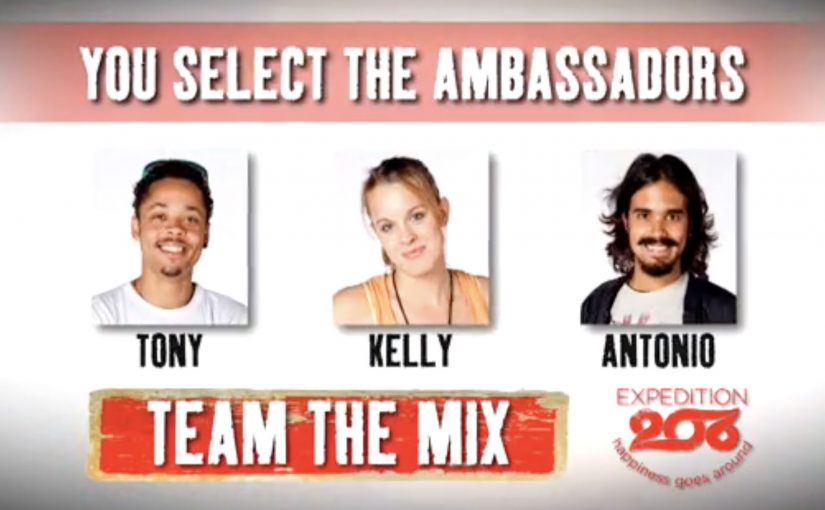
In a first-of-its-kind undertaking, Coca-Cola is using a social media driven travel campaign to tap regular people as “Happiness Ambassadors”. The idea is to have them travel through 2010 and document the entire quest via blog posts, tweets, YouTube videos, TwitPics (quick photo updates), and other social media updates.

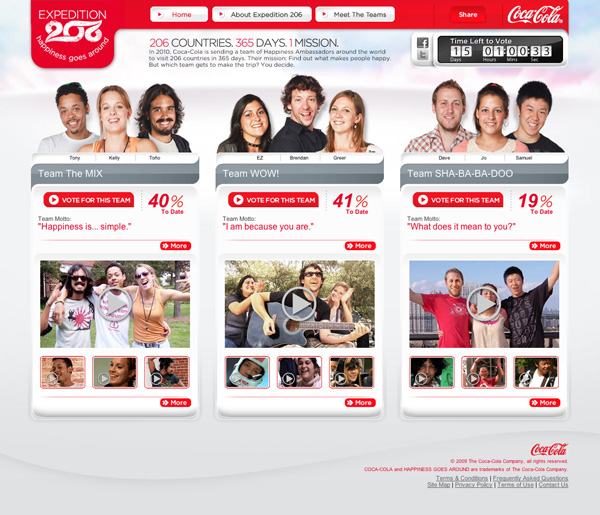
Currently there is a contest in progress to shortlist the brand ambassadors. Their mission is to find happiness in the 206 different countries that sell Coca-Cola products around the world.

Coca Cola Expedition 206

The winning three-person team will begin their journey on January 1, 2010 and attempt to travel more than 150,000 miles in 365 days, visiting each of the 206 countries where Coca-Cola is sold. Their duty is to engage with local denizens and uncover what makes them happy. After that, they are to share their experiences online and complete tasks in each country as determined by online voters.

How the campaign is built

The mechanism is a clean loop: run an online selection process, send a small team into the world, and let the content trail become the campaign. The “media plan” is the itinerary. The “creative unit” is whatever the ambassadors publish that day. Because the itinerary forces daily encounters and updates, the campaign keeps generating fresh moments without needing a new ad concept each week.

In global FMCG marketing, social content performs best when it is tethered to a real-world mission that naturally generates stories.

The real question is how you design a mission that keeps producing episodes, while giving the audience lightweight control over what happens next.

Why it lands

This structure works because it turns a travel log into an episodic program, and the audience input keeps the next update relevant.

Extractable takeaway. Social media campaigns stay watchable when you design an ongoing mission with built-in episodes, then let audiences influence the next episode through lightweight participation like voting and challenges.

  • It turns reach into participation. People are not only consuming updates. They are voting, shaping tasks, and effectively co-authoring the journey.
  • It scales across formats without forcing a single channel. Blog for depth, tweets for pulse, video for emotion, and photos for proof. Each piece can travel on its own while still pointing back to the expedition.
  • It makes “happiness” concrete. Instead of treating happiness as an abstract brand word, it is framed as something you can go find, ask about, and document country by country.

Borrowable moves

  • Make the content agenda unavoidable. If the team must travel and meet people anyway, the story supply is baked in.
  • Use audience input as fuel, not a gimmick. Let voting shape tasks that create better moments, not just vanity engagement.
  • Define the “job” clearly. A simple role title like “Happiness Ambassador” makes the concept easy to repeat and easy to explain.

A few fast answers before you act

What is Expedition 206?

A Coca-Cola project that selects a small team to travel during 2010, visiting markets where Coca-Cola is sold and documenting what people say makes them happy.

Why “206”?

It refers to the number of countries and territories the campaign aims to cover, aligned to Coca-Cola’s global footprint.

What role does social media play here?

It is both the documentation layer and the distribution layer. The journey produces content. The content keeps the campaign alive between milestones.

Why add voter-determined tasks?

It converts passive following into participation and gives the audience a reason to return, because they can influence what happens next.

What makes this different from sending influencers on a trip?

The structure is more like a year-long episodic program with a mission and audience input, rather than a short sponsored travel series.