
Kellogg’s Tweet Shop: Pay with a tweet

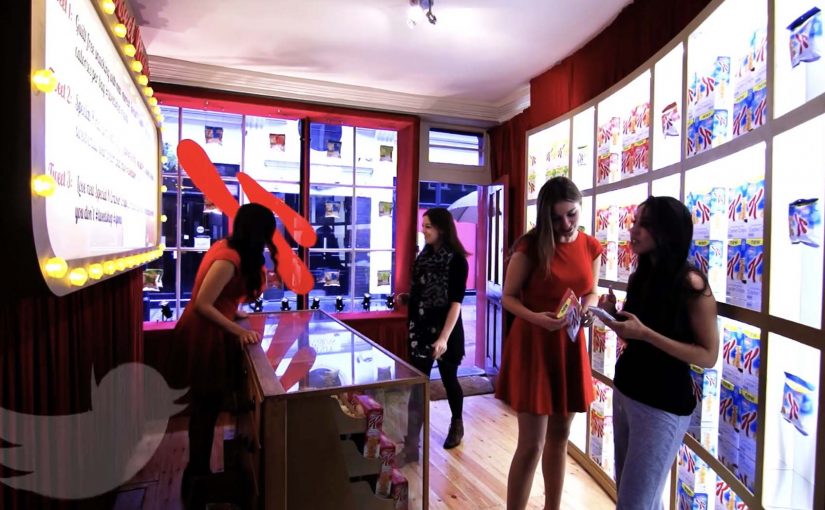
Last month in London, Kelloggs setup a pop up store where passers-by who walked in could try the low calorie snacks and then post a review on Twitter. “Special K girls” in red dresses who manned the store, checked each customer’s tweet before handing over a packet of Special K Cracker crisps.

How the Tweet Shop turns sampling into distribution

The mechanic is deliberately lightweight. Walk in, try the product, then publish a short reaction on Twitter before you leave. Staff verify the tweet on the spot, then you get a pack to take away.

A “pay with a tweet” activation is a pop-up retail format where the transaction is a public social post rather than money, converting product sampling into earned reach and searchable social proof.

In global FMCG marketing, this kind of social-to-sample loop, where a public post unlocks a take-away sample, works when the “payment” is fast, public, and directly tied to a tangible reward.

Why it lands: the tweet is both receipt and recommendation

Most sampling disappears into a bag with no trace. Here, the brand creates a visible record of trial. Each tweet acts like a receipt that confirms participation, and a micro-endorsement that other people can stumble on later.

Extractable takeaway: When you turn trial into a public trace and close the reward immediately, posting feels like participation, not payment.

The real question is whether the post feels like a fair exchange for the product, not a forced endorsement.

The red-dress staffing is not just costume. It makes the interaction unmistakably “Special K” in photos, which helps the moment travel beyond the store.

This is a smart trade only when you can keep the ask lightweight and the reward immediate.

What Kellogg’s is buying with “social currency”

  • Frictionless trial. People try a new product with zero financial risk.
  • Instant word of mouth. Reactions publish in real time, while the experience is still fresh.
  • Searchable proof. A hashtag-based trail can cluster impressions and sentiment in one place.
  • High street theatre. A pop-up adds “I was there” energy that a standard promo rarely achieves.

Design rules for your next “pay with a post” idea

  • Make the ask specific. Tell people exactly what to post and keep it short enough to do without thinking.
  • Verify fast. The handover moment should feel immediate, or it stops being fun.
  • Reward honesty. If you only want praise, people feel manipulated. If you invite real reactions, the format feels fair.
  • Design the store for photos. If the space is not camera-ready, you waste the free distribution you just created.

A few fast answers before you act

What is the “Tweet Shop” concept in simple terms?

It is a pop-up shop where people receive a product after posting a tweet about their experience, with staff checking the post before the handover.

Why would a brand accept tweets instead of money?

Because a public post can create awareness and credibility at scale, while the product cost stays predictable and controlled.

What makes this different from a normal free sample?

The sample creates a visible social trace. Each person who tries it leaves behind a shareable review that others can discover.

What is the biggest risk with “pay with a tweet” activations?

If the ask feels forced or takes too long, people opt out. If the experience is not worth sharing, the format collapses into awkward bribery.

How do you judge whether this worked?

Track trial volume, unique posts, sentiment, and whether conversation continues after the pop-up closes, not just during the event.
Kraft Mac & Cheese: Dinner, Not Art iPad App

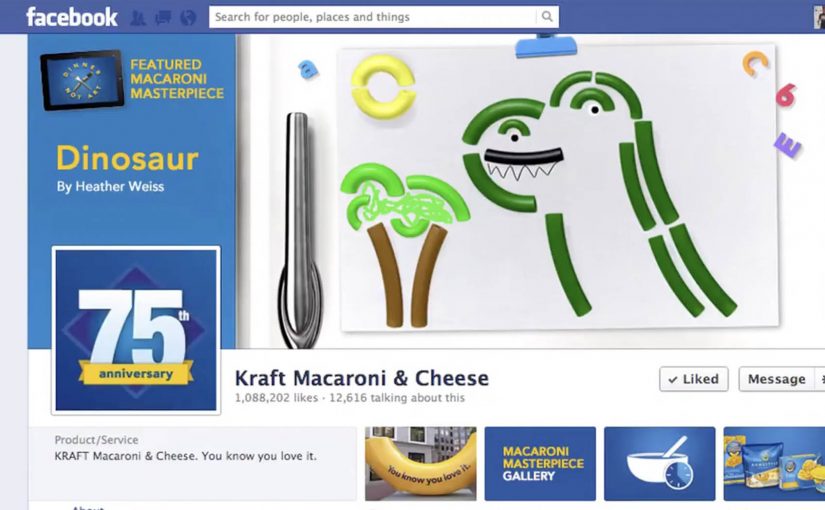
Kids the world over use Kraft’s macaroni noodles to create macaroni art. To stop wastage of its noodles, Kraft along with ad agency CP+B came up with an iPad app that allowed kids to create digital macaroni art.

The special ‘Dinner, Not Art’ app also donated 10 noodles to ‘Feeding America’ for every noodle used in the kids digital art, capped at 110 million noodles. The donation program is said to run till 31.12.2012. So if you would like to participate then head over to www.DinnerNotArt.com.

When “waste” becomes a UI problem

The cultural truth is simple. Kids love gluing macaroni to paper, and the brand ends up underwriting a craft habit that has nothing to do with dinner. Dinner, Not Art flips that behavior into a digital substitute, while keeping the kid-driven creativity intact.

The mechanics behind Dinner, Not Art

The app recreates macaroni art as a touch-first canvas. Kids place noodles, shape the picture, and finish a piece without using a single real noodle.

That substitution works because it preserves the same make-and-place ritual for the child while removing the product waste that makes the original behavior frustrating for parents.

The participation loop is quantified. Each digital noodle used is described as triggering a real-noodle donation to Feeding America, with a stated cap of 110 million noodles, and a program end date described as 31.12.2012.

In global FMCG organizations, utility-style brand apps work best when the interaction directly expresses the brand’s point of view, and produces a measurable counter in the real world.

Why this lands with parents and kids

The line “Dinner, Not Art” works because it is a gentle reprimand wrapped in play. Kids still get to make something. Parents get a reason to say “yes” without the cleanup and the waste, and the brand gets to reframe its product as food, not craft material.

Extractable takeaway: If you are trying to stop a behavior, do not only scold it. Offer a substitute that preserves the fun, then attach a visible benefit to every use.

What Kraft is really buying with this

The real question is whether a food brand can redirect a familiar household behavior without stripping out the fun that made it popular in the first place.

This is brand positioning with a conversion path. It reinforces that the product belongs on the table, creates positive family-time association, and uses the donation mechanic to make engagement feel purposeful rather than promotional.

What brand teams can borrow from Dinner, Not Art

  • Replace the waste, not the impulse. Keep the same creative behavior, move it to a medium that does not consume product.
  • Make the counter tangible. Tie each action to a simple unit that people instantly understand, like noodles donated per noodle used.
  • Cap with intention. A cap can protect budgets while still sounding meaningful, as long as the unit story stays clear.
  • Use a line that can parent-proof the idea. If the tagline helps a parent justify participation, adoption gets easier.

A few fast answers before you act

What is the Dinner, Not Art app?

It is an iPad app from Kraft and CP+B that lets kids create digital macaroni art, positioned as a way to avoid wasting real macaroni noodles on crafts.

How does the donation mechanic work?

The campaign is described as donating 10 real noodles to Feeding America for every digital noodle used in a child’s artwork, with a stated cap of 110 million noodles.

Why does this tactic fit the Kraft Mac & Cheese category?

Because it tackles a real behavior linked to the product, while reinforcing the intended usage. The experience says “this belongs at dinner,” without killing the creativity kids want.

What makes this more than a donation promotion?

It changes a product-adjacent behavior, makes the benefit visible per action, and ties the brand message to how the experience actually works.

What should other brands copy from this pattern?

Pick one wasteful or off-brand usage behavior, create a satisfying digital substitute, and connect every interaction to a simple, counted real-world outcome.

Bing: Decode JAY-Z

In a market dominated by Google, Bing wants to feel like a modern choice, and a younger audience is the fastest route to relevance. So it partners with JAY-Z for the launch of his book Decoded.

A book launch that shows up in the real world first

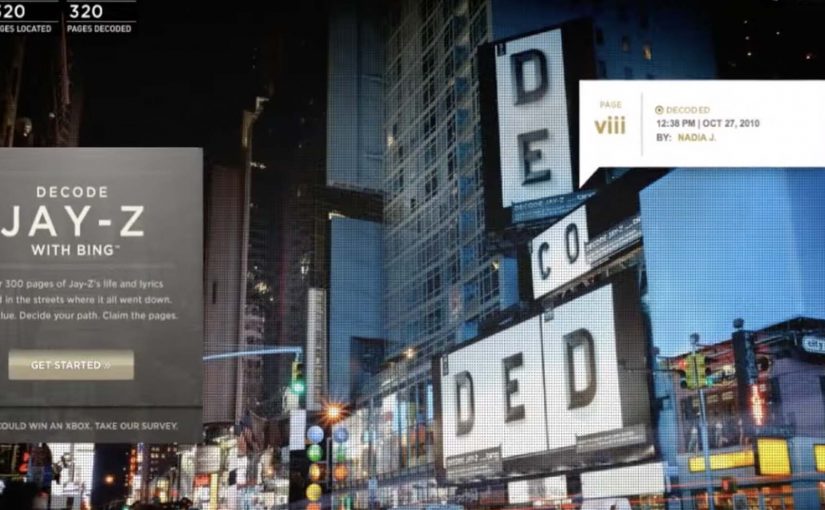
Instead of revealing the book in one place, pages are unveiled in locations referenced on those pages: a Gucci jacket, a restaurant, a hotel pool, a pool table, a car, a bus stop, and a subway. The stunt turns reading into a hunt, and turns “promotion” into something you can physically stumble into.

How the decode game works

Bing ties the physical reveals to an integrated game where fans assemble the book digitally using Bing Search and Bing Maps. Clues to page locations are released daily across Facebook, Twitter, and radio, pushing fans back into search behavior and map-based navigation as part of the entertainment.

In consumer search platforms, discovery mechanics that bridge real-world locations and digital navigation can turn a launch into participation.

Why it lands with a younger audience

The mechanics reward curiosity, speed, collaboration, and social proof. Finding a page is a story you can post. Decoding a clue is a micro-win. Watching the book come together feels like progress you helped create, not content that was simply handed to you. That works because each clue forces a Search and Maps action, so the product becomes the route to the reward.

Extractable takeaway: If you want a younger audience to adopt a utility product, tie progress to repeatable micro-wins that are easy to share.

The business intent hiding in plain sight

For Bing, the goal is not only buzz around Decoded. It is repeated usage of Search and Maps in a context where using the tools feels like play, not a utility task. The partnership borrows cultural gravity from JAY-Z, then converts it into product interaction.

The real question is whether your launch can force repeat product actions, not just cultural attention.

This is stronger than a celebrity endorsement, because it makes Search and Maps the game board instead of the backdrop.

Steal the decode launch mechanics

  • Make the “content” unlockable. People value what they have to discover, not what they are merely shown.
  • Anchor digital behavior to a physical trigger. Real locations make clues feel concrete and worth chasing.
  • Ship a daily cadence. Drip-fed clues keep attention warm without demanding long sessions.
  • Design for sharing as proof-of-work. Proof-of-work here means a visible signal that you did the effort, not just consumed the content.

A few fast answers before you act

What is “Decode JAY-Z” in one line?

A scavenger-hunt book launch where pages appear in real places, and fans use Bing Search and Bing Maps to find and assemble the book digitally.

What are the key mechanics?

Location-based page reveals, daily clues distributed through social and radio, and a digital assembly experience built around search and maps.

Why does this work better than a standard launch?

It converts passive awareness into repeat actions, and each action produces a shareable win that keeps the loop going.

What is the transferable takeaway for product marketing?

If your product is a tool (search, maps, utility apps), embed it inside a game where using the tool is the fun, not the homework.

What should you measure to know it worked?

Track repeat usage of the specific features you embedded in the game (search queries, map actions, and return visits), not only reach or mentions.