
Volkswagen: Wolkswagen

Volkswagen: Wolkswagen

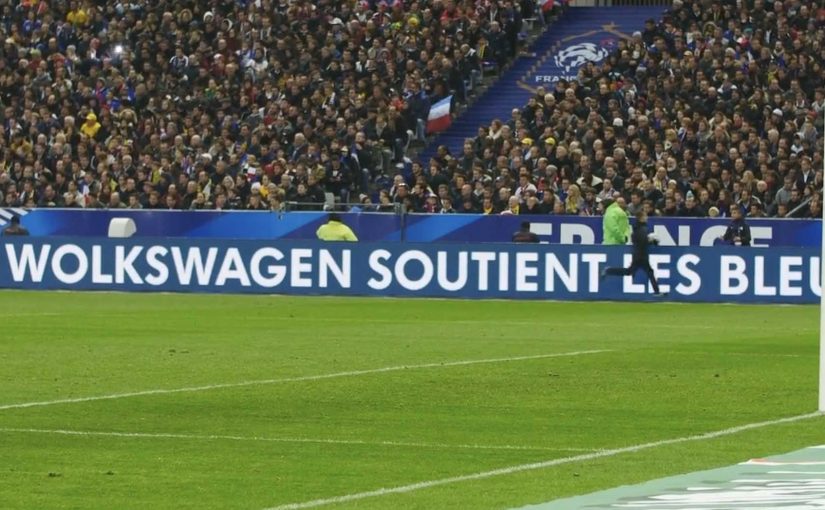
During a France vs Brazil football match in Paris, the LED boards around the pitch display a brand name that looks wrong. “Wolkswagen.”

Volkswagen leans into a simple human impulse. People love being the first to notice a mistake. So the campaign plants one at maximum scale and lets the crowd do what it always does. Point it out, correct it, and spread it.

The mechanism is the typo itself. A deliberate misspelling placed where 80,000 spectators and millions of TV viewers will see it, creating a wave of “they got it wrong” conversations that carries the real message. Volkswagen is present, watching, and ready to announce itself as a major partner of French football.

The psychology of a “correctable” brand moment

This works because correcting a visible public error lets people display attention and share the fix. Here, a “correctable” moment means a public cue that looks wrong but is safe and easy for the audience to fix. Noticing a typo feels like competence. Sharing it feels like helping others notice. The stunt converts that impulse into earned distribution, and it does it without asking anyone to watch a film or click a banner.

Extractable takeaway: If you want mass attention in a high-noise moment, design a safe, obvious “error” people can correct in public, then attach your actual announcement to the moment they point out and share the correction.

In live sports broadcasts, audiences are primed to scan for anomalies, and correcting them is a social reflex that spreads faster than the original message.

What the partnership announcement is really buying

The stated goal is awareness of a new relationship with French football. This is stronger than a standard sponsorship reveal because the audience helps distribute the news. The real question is how to make a routine partnership announcement impossible to ignore. The deeper goal is memorability. Sponsorship news is usually forgettable. A planted mistake is sticky, because people remember the moment they noticed it.

What to steal from this stadium-board stunt

  • Use one unmistakable deviation. The “wrongness” must be instantly readable from far away.
  • Make the correction harmless. The audience should feel clever, not manipulated or misled.
  • Deploy where attention is already concentrated. Stadium boards and live broadcast moments amplify small creative moves.
  • Ensure the reveal is clean. The moment must resolve quickly into the intended message, or it stays a gimmick.

A few fast answers before you act

What is the Wolkswagen idea?

A live stadium-board stunt that intentionally misspells “Volkswagen” as “Wolkswagen” to trigger public correction and attention, then uses that attention to support a football partnership announcement.

Why does an intentional typo generate more attention than a normal logo placement?

Because it activates a correction reflex. People engage to point out the “mistake,” and that engagement becomes the distribution channel.

What makes this feel like a live moment instead of an ad?

Placement and timing. It appears inside the live match environment, where audiences treat what they see as real-time context, not preplanned messaging.

What is the main risk with this pattern?

If the audience believes the brand genuinely made an error, the story can turn into ridicule. The execution needs a clear resolution so it reads as deliberate.

When should you use a “deliberate mistake” stunt?

When you have a time-bound announcement, a high-attention venue, and a brand that can credibly play with perception without damaging trust.
Honda – The Other Side

Honda – The Other Side

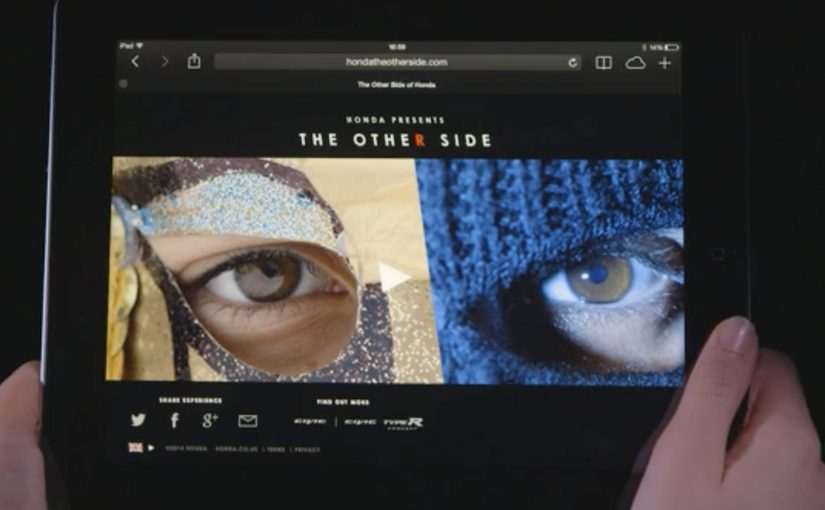
Car brands are always trying to show that their cars have different sides to their personalities, sporty vs reliable, safe vs cool, etc. What makes Honda’s latest effort unique is its YouTube video. By simply holding down the “R” key on the keyboard, the viewer can instantly switch between two different videos.

To execute this innovation, Wieden & Kennedy London had to create two storylines, one of an easygoing Dad doing the school run and the second as an undercover cop posing as a getaway driver. Both of which were then expertly mirrored with contrasting style and tone. The interactive experience was then put together by Stinkdigital at Honda’s YouTube Channel.

Why the mechanic matters more than the novelty

The “hold R to switch” idea is a simple interaction mechanic, meaning the viewer action changes how the story is revealed, but it changes how you watch. You are not just viewing a story. You are actively comparing two versions of the same moment, in real time.

Extractable takeaway: When a brand claim depends on contrast, the strongest format is often one that lets the audience trigger the comparison for themselves.

The real question is whether the interaction makes the brand point clearer, not whether the tech looks clever.

  • One scene, two meanings. The mirrored structure makes contrast instantly legible.
  • Viewer control. You control the cut, which increases attention and repeat viewing.
  • Storytelling as product proof. Different “sides” of a car become a narrative device, not a claim.

Execution discipline: mirrored scenes, opposite tone

This only worked because the two storylines were designed to align. Timing, framing, and beats had to match so the switch felt seamless, not like two unrelated edits.

The payoff is that contrast becomes the hero. Calm family routine vs high-pressure escape. The same underlying vehicle context. Two different emotional reads.

In digital brand storytelling, interactive mechanics only earn their place when they make the positioning easier to grasp, not harder.

The business intent is clear: turn Honda’s “different sides” message into a felt comparison, so the format demonstrates the proposition instead of leaving copy to explain it.

What to take from this if you build interactive brand content

  1. Make the interaction explain itself. If the mechanic needs instructions, you lose momentum.
  2. Design for replay. The best interactive films reward going back and re-watching with intent.
  3. Let structure carry the message. When the format proves the point, you do not need heavy-handed copy.
  4. Keep the tech invisible. Viewers remember the feeling of control and contrast, not the implementation details.

A few fast answers before you act

What is Honda “The Other Side”?

It is an interactive film experience where viewers can switch between two parallel storylines by holding down the “R” key.

What are the two storylines?

One follows an easygoing Dad doing the school run. The other follows an undercover cop posing as a getaway driver, with both narratives mirrored scene-by-scene.

Why is the “hold R to switch” mechanic effective?

It gives the viewer control and makes the contrast immediate. That active comparison increases attention, engagement, and replays.

Who created the work?

Wieden & Kennedy London created the two mirrored storylines, and Stinkdigital put the interactive experience together on Honda’s YouTube Channel.

What is the transferable lesson for digital teams?

If you can express your message through an interaction that is instantly understandable, the format itself becomes the persuasion.

EA SPORTS: Madden NFL 15 GIFERATOR

EA SPORTS: Madden NFL 15 GIFERATOR

To launch their new game Madden NFL 15, EA Sports wanted to connect with young, football-obsessed fans and grow its association with the real world NFL. Since the average football fan was watching the game with their smartphone in hand, EA teamed up with Google to allow sport fans to provoke rivals from the comfort of their own sofa and bring trash talk into the 21st century.

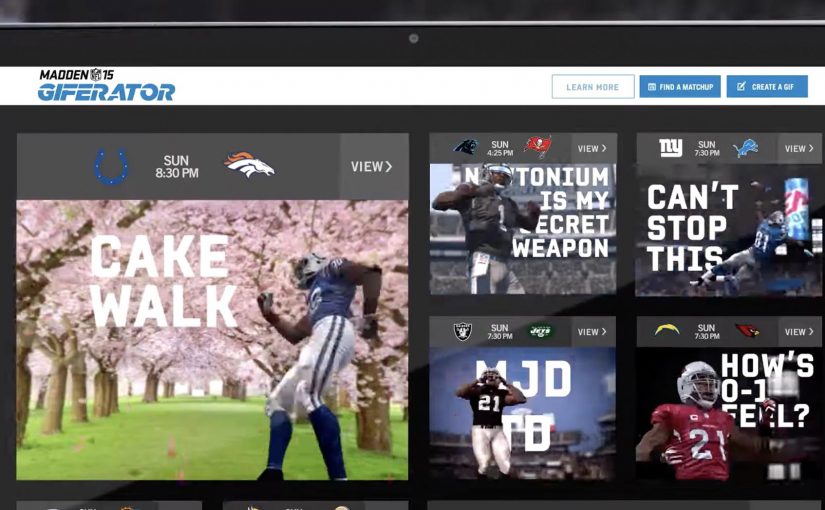
Using pioneering technology, live NFL data was fused with Madden 15 game footage to generate GIF highlights for every single game. All of this was delivered via real-time ads across sports websites and apps. As a result there was an ever growing collection of GIFs that football fans could simply take, edit and share to shove in the face of their rivals.

How the GIFERATOR works

The mechanic is a real-time trigger loop. As live NFL moments happen, a data signal maps those moments to a library of Madden NFL 15 visuals, headlines, and team-specific ingredients. The system then assembles a ready-to-share GIF that matches what fans are watching, right when the emotion spike is highest.

In sports marketing, second-screen behavior turns live moments into shareable social currency.

Why it lands

The creative idea is not “GIFs”. It is timing plus relevance. Because the asset shows up while the emotion spike is still live, it feels native to the fan conversation instead of delayed brand content. When fans are already checking stats, group chats, and social feeds mid-game, you meet them where their thumbs already are. The format just happens to be the internet’s fastest unit of trash talk.

Extractable takeaway: If you can translate a live moment into a personalized, ready-to-share asset within the same minute, you convert attention into participation, and participation into distribution.

Where the real value sits

The real question is how to make a boxed game feel as live, social, and rivalry-ready as the sport it simulates.

This is also a credibility move. By fusing live NFL action with Madden footage, the game positions itself as culturally current, not just a boxed product. It borrows the emotional heat of real games and channels it into the Madden universe, play after play.

What second-screen marketers should steal

  • Build a trigger map: define which live signals create which assets, and keep the mapping simple enough to scale all season.
  • Design for viewer control: let people tweak copy or choose variants, so the output feels like “mine”, not “an ad”.
  • Win the second screen: deliver creative where fans already browse during live events, not only on your owned channels.
  • Make rivalry the editor: structure content around opponents, not around generic brand lines, so sharing feels inevitable.
  • Ship a content engine, not a one-off: the compounding library is the advantage, because it stays fresh week after week.

A few fast answers before you act

What is the Madden GIFERATOR?

It is a real-time GIF creation system that generates Madden NFL 15-themed GIFs that match what is happening in live NFL games, designed for instant sharing and trash talk.

Why does “real-time” matter here?

Because it catches fans during peak emotion. The closer the asset appears to the live moment, the more it feels like part of the conversation instead of an interruption.

What is the core pattern to reuse?

Use live signals to automatically assemble relevant, lightweight assets, then distribute them on the channels people naturally use while watching.

Is this mainly a social campaign or an ad campaign?

Both. The distribution is described as real-time advertising across sports sites and apps, while the product experience is built for fans to edit and share the output socially.

What is the biggest execution risk?

Relevance drift. If the mapping from live moments to generated assets feels off, or if the output arrives too late, it stops feeling “in the game” and becomes just another banner.