Vodafone Buffer Busters

The Buffer Busters are the new Ghost Busters from Vodafone Germany. The telecom giant has launched an augmented reality mobile application that transforms German cities into a video game arena!

Starting from the brief “Vodafone is the fastest mobile network in Germany”, ad agency North Kingdom Stockholm has created a digital story revolving around so-called Buffer Monsters that represent everything slow in our everyday surroundings.

Users who play the game have to capture these monsters by using their iPhone or Android smart phones. When 50 monsters have been captured, the user needs to visit a near by Vodafone Store to dump them and continue playing. The best Buffer Busters will win a lifetime plan from Vodafone! 😎

The TVC supporting the initiative is also very well done…

Volkswagen virtual Golf Cabriolet app

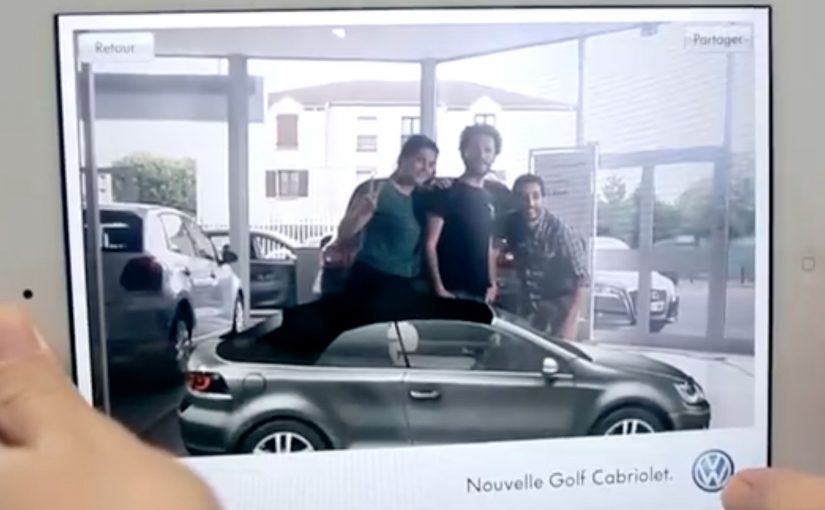
The Golf Cabriolet is back after 9 years of absence, since production was stopped in 2002. Volkswagen together with Paris based agency ‘Agency.V.’ have come up with the worlds first augmented reality car showroom app for the iPad2, iPhone and Android.

The app lets you explore the vehicle and play with it’s features like opening the soft-top roof, rotating the car, checking the vehicle’s details, changing the body colour or the style of the rims. You can even take a picture of yourself with the virtual car and share each step of this experience through your social networks.

Why this is a useful AR showroom idea

This is a clean, practical use of augmented reality. It gives people a way to “handle” the car without needing a dealership visit. The experience stays focused on the things people actually want to try first. The roof open and close. The rotation. The color and rim changes. And it makes the moment shareable by design, so the showroom can travel through social networks.


A few fast answers before you act

What is the Volkswagen virtual Golf Cabriolet app?
An augmented reality car showroom app for iPad2, iPhone and Android that lets people explore and customize the Golf Cabriolet.

What can you do inside the app?
Open the soft-top roof, rotate the car, check details, change body colour, change rim styles, and take a photo with the virtual car to share socially.

Who created it with Volkswagen?
Paris based agency ‘Agency.V.’.

Where could people download it?
From the French iTunes Store for iPhone and iPad 2, and from the Android market for Android devices.

Google Goggles: Translate Text in Photos

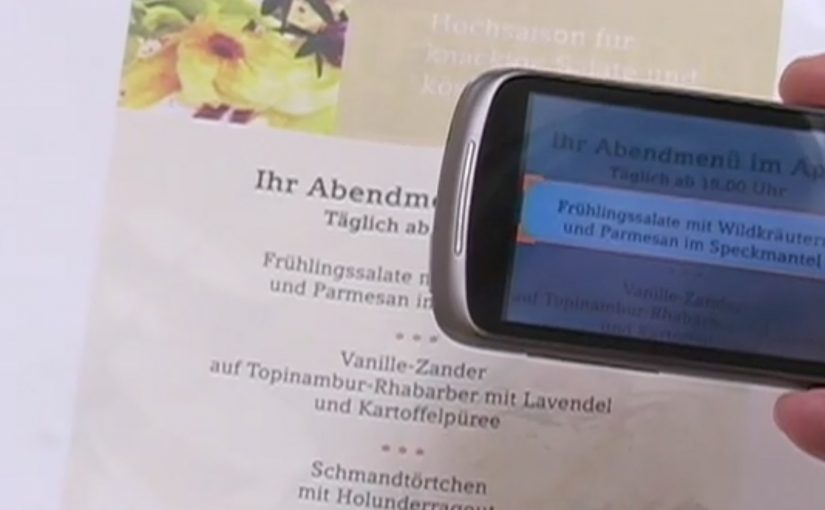
A user takes a photo of text with an Android device, and Google Goggles translates the text in the photo in a fraction of a second. It uses Google’s machine translation plus image recognition to add a useful layer of context on top of what the camera sees. Right now, it supports German-to-English translations.

What Google Goggles is really doing here

This is not “just translation.” It is camera-based understanding. The app recognises text inside an image, then runs it through machine translation so the result appears immediately as usable meaning.

In everyday travel and commerce, camera-first translation removes friction at the exact moment that text blocks action.

Why this matters in everyday moments

If the camera becomes a translator, a lot of friction disappears in situations where text blocks action. Think menus, signs, instructions, tickets, posters, and product labels. The moment you can translate what you see, the environment becomes more navigable.

The constraint that limits the experience today

Language coverage determines usefulness. At the moment the feature only supports German-to-English, which is a strong proof point but still a narrow slice of what people want in real life.

The obvious next step

I can’t wait to see the day when Google comes up with a real-time voice translation device. At that point, we will never need to learn another language.


A few fast answers before you act

What does Google Goggles do in this example?

It translates text inside a photo taken from an Android device, using machine translation and image recognition.

How fast is the translation described to be?

It translates the text in a fraction of a second.

Which language pair is supported right now?

German-to-English.

What is the bigger idea behind this feature?

An additional layer of useful context on top of what the camera sees.

What next-step capability is called out?

Real-time voice translation.