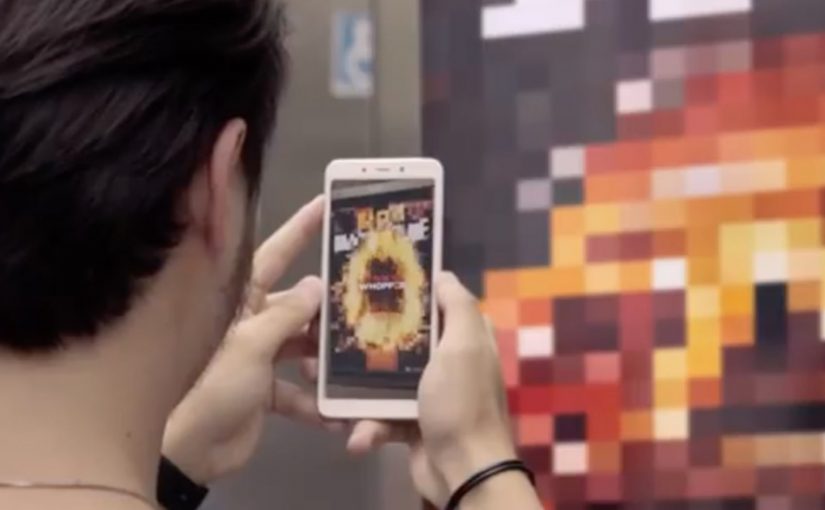
In Brazil, Burger King and ad agency David SP use augmented reality to “burn” competitors’ ads through consumers’ mobile phones. The reward is simple and immediate. Participate, and you earn a free Whopper.
Burger King expects to give away 500,000 Whoppers through the promotion, pushing more people to use Burger King Express, the service that lets customers pre-order food for pickup.
How “Burn that Ad” works
The mechanic turns rival advertising into a trigger. Here, the mechanic is one simple action that immediately returns a coupon reward. You point your phone at a competitor’s ad, the experience “burns” it in AR, and the payoff is a Whopper coupon. It is a direct, product-first incentive tied to a single action.
In quick-service restaurants, where choice is made in seconds, immediate incentives can shift behaviour faster than storytelling.
Why the reward is the strategy
This is not a brand-film play. It is a behavioural exchange. The AR effect is decoration. The engine is the immediate product reward tied to one action. The real question is whether your mechanic creates an immediate, low-friction exchange that makes a new behaviour worth trying. Because the reward is immediate and tied to one action, the AR burn becomes a conversion trigger rather than a gimmick. The customer does something specific in the moment, and Burger King pays them back with something they value immediately. That makes participation scalable beyond the novelty of AR.
Extractable takeaway: If you want people to adopt a new operational path, design a one-step exchange where the reward is immediate, tangible, and triggered by a single action.
The operational goal: Burger King Express
The giveaway is not only about footfall. It is designed to drive adoption of pre-order pickup via Burger King Express. The campaign builds a reason to try the service, not just the product.
What to steal
- Make competitors the trigger: Turn a competitor’s presence into your acquisition trigger, without relying on complicated steps.
- Keep it low-friction: Keep the action simple and the reward tangible.
- Scale an operational behaviour: Link the incentive to an operational behaviour you want to scale, such as pickup pre-order adoption.
A few fast answers before you act
What is “Burn that Ad”?
A Burger King Brazil promotion that uses augmented reality to “burn” competitors’ ads on mobile phones and reward participants with a free Whopper.
What is the incentive?
A free Whopper, delivered via the promotion’s reward mechanic.
How many Whoppers does Burger King plan to give away?
500,000.
What is Burger King Express?
A Burger King service that lets customers pre-order food for pickup.
What business behaviour does it push beyond the giveaway?
Using Burger King Express to pre-order food for pickup.