
Coca-Cola Light: The Return of Love in Brazil

A relaunch built on memory. And a ritual

In 2009 Coca-Cola Light was taken out of the Brazilian market. But even after its five year absence, 99% of Brazilians still had the brand in their minds.

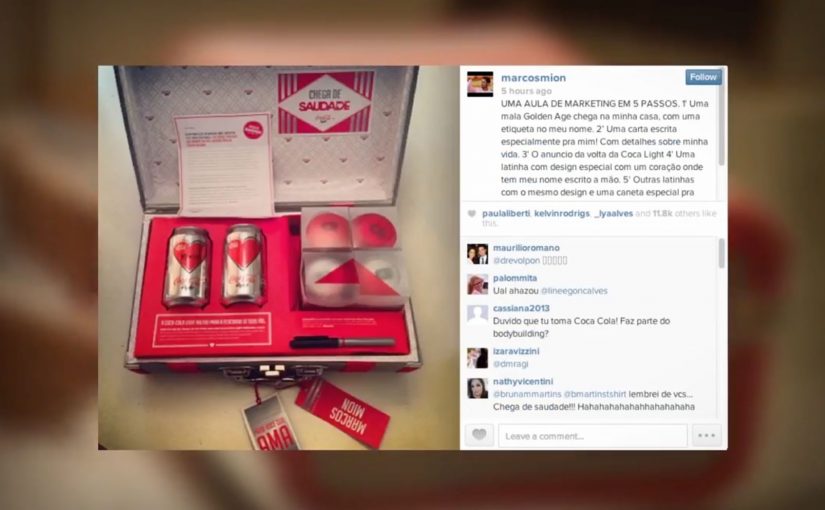
So for their 2014 relaunch they identified 150 influencers that were also real Coca-Cola Light lovers. Here, “influencers” means people with an audience and social credibility who already loved the product. Then a special handmade suitcase was delivered to each one of them. The suitcase contained a personal letter with the relaunch news and a ritual to send Coca-Cola Light cans to special friends with their names handwritten on it. Here, “ritual” means a simple, repeatable set of steps that makes the sharing happen. The results:

The move: turn influencers into messengers, not media

The suitcase is not “merch.” It is a delivery mechanism for a story and a behavior. For relaunches, believers telling believers beats paid amplification. The influencer receives the relaunch news. Then immediately passes it on, name-by-name, to people who matter to them.

In consumer brands with high mental availability, relaunches win when you turn memory into a concrete, shareable action.

The real question is whether your relaunch can ship with a behavior fans can perform immediately, not just a message they can repeat.

Why this feels like love, not marketing

Handwritten names shift the tone. You are not forwarding an ad. You are sending a personal gift with someone’s identity on it. Because the act is one-to-one and named, the relaunch travels through trust and attention, not through reach.

Extractable takeaway: If you want people to carry your message, give them a named, one-to-one action they would feel proud to do, not a generic post they would feel obliged to share.

The relaunch job-to-be-done

Restart conversation and consumption fast by activating people who already love the brand, and giving them a simple way to recruit other “special friends” into the comeback.

Steal this play

  • When a brand returns, start with believers. Then give them a repeatable sharing ritual.
  • Use personalization as the transmission fuel. Names beat slogans.
  • Package the behavior, not just the product. The “how to share” should be inside the box.

A few fast answers before you act

What did Coca-Cola Light do for the 2014 relaunch in Brazil?

They identified 150 influencers who were genuine Coca-Cola Light lovers and delivered handmade suitcases containing a personal letter and a sharing ritual.

What was inside the suitcase?

A personal letter announcing the relaunch and a ritual for sending Coca-Cola Light cans to special friends with names handwritten on the cans.

Why use handwritten names?

It turns distribution into a personal gesture. The relaunch message travels as a named gift rather than a generic announcement.

What is the core mechanic behind the campaign?

Activate true fans first, then convert them into one-to-one distributors by giving them a simple ritual to pass the product on to friends.
Coca-Cola Interactive Mini Bottles

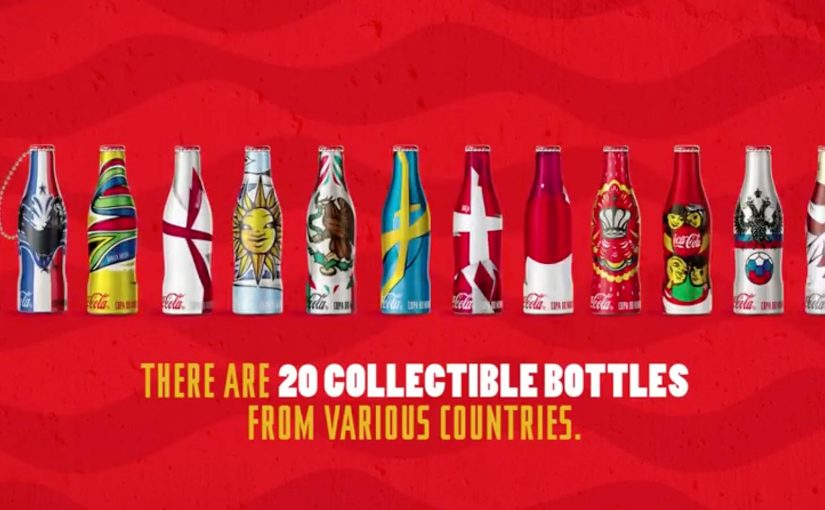
Coca-Cola has launched 20 special edition mini bottles to get fans around the world excited about the upcoming 2014 FIFA World Cup, which will take place in Brazil from June 12th to July 13th.

The bottles come wrapped in flags of countries that have hosted the World Cup previously. Argentina, Chile, Uruguay, Mexico, USA, England, Germany, Spain, France, Italy, Sweden, Switzerland, South Africa, Japan and South Korea. As well as the three upcoming host countries Brazil, Russia and Qatar. Plus two special Coca-Cola editions.

Coca-Cola fans can also create and send special messages and avatars to other bottle owners through Facebook and iPhone or Android apps. In addition, special markers on the bottles activate augmented reality animations when held up to a smartphone camera.

What makes these bottles more than packaging

This is a simple shift with big implications. The bottle is not only a container. It becomes a trigger. A collectible. And a social connector. This is smart brand design because it turns packaging into media without asking people to leave the product in their hand.

The real question is how to make a small physical object behave like media, participation, and social signal at the same time.

The flags do the first job. They make the bottles instantly recognizable and tradable. People have a reason to hunt for specific countries and compare what they found. The digital layer does the second job. By digital layer, this means the messages, avatars, and AR animations unlocked through the bottle. It turns ownership into participation, because the bottle now links to messages, avatars, and AR animations.

Why augmented reality fits this moment

AR works best when the behavior is natural. Here the behavior is already there. You hold the bottle in your hand. You point your phone at it. You get something back instantly. That is what makes the marker idea effective, because it adds a reward to an existing behavior instead of asking people to learn a new one.

Extractable takeaway: When the product already sits in someone’s hand, the strongest digital layer is the one that rewards curiosity in the moment rather than redirecting attention somewhere else.

In global brand portfolios, this matters because packaging that doubles as an activation point can scale engagement and give people a stronger reason to choose the brand at shelf without adding a separate physical touchpoint.

What to borrow from collectible packaging activations

  • Make the physical object the interface. The bottle is the entry point, not a poster, banner, or separate microsite.
  • Give fans something to collect and trade. Flags are a built-in collecting mechanic.
  • Add a social layer that only owners can unlock. Messaging and avatars make participation feel earned, not generic.
  • Use mobile as the bridge. iOS and Android apps turn “I saw it” into “I can activate it” immediately.

A few fast answers before you act

What are Coca-Cola Interactive Mini Bottles?

They are 20 special edition mini bottles designed to build excitement for the 2014 FIFA World Cup, using country-flag designs plus a digital interaction layer.

What is interactive about them?

Owners can send messages and avatars to other bottle owners via Facebook and iOS or Android apps. The bottles also include markers that trigger augmented reality animations through a smartphone camera.

Why use country flags on the bottles?

It creates instant collectability. People can look for specific countries, compare what they found, and feel part of a shared event build-up.

What is the role of augmented reality here?

AR turns the label into an activation point. Point your phone at the bottle, and the design becomes an animation experience rather than static packaging.

What is the main marketing idea worth copying?

Make the product itself the gateway to the experience. When the physical object triggers the digital layer, participation becomes effortless and more memorable.

Coca-Cola: FM Magazine Amplifier

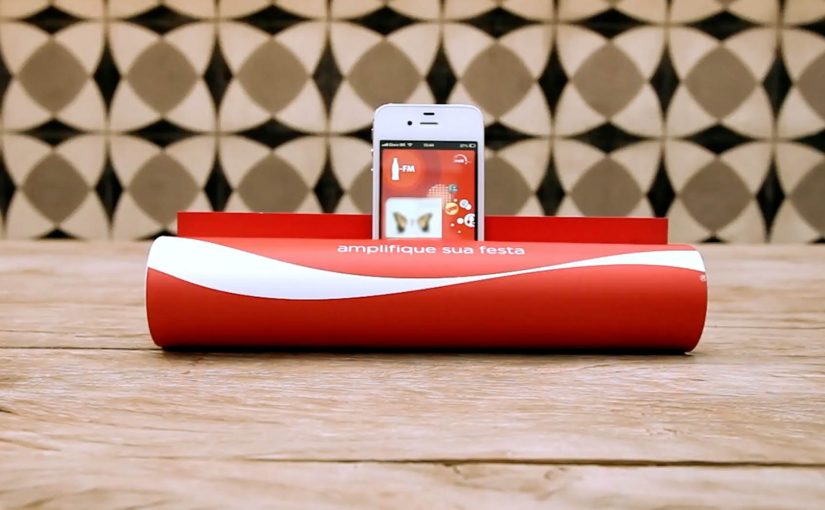
Coca-Cola to promote its FM app in Brazil allowed readers of the Capricho magazine to simply roll up the magazine and transform it into a portable amplifier for their iPhones. All the readers had to do was insert the iPhone into the spot indicated and tune into the Coca-Cola FM application. By “portable amplifier” here, I mean passive acoustic amplification from rolled paper, not electronics.

Why this is clever

The idea turns print into a functional accessory. No electronics. No QR-code dependency. Just smart physical design that rewards curiosity and makes the app the natural next step. Because the rolled magazine forms a simple acoustic horn, it directs the phone’s speaker output and makes the sound feel louder right away.

Extractable takeaway: When a piece of media becomes a working object, the “ad” turns into a demo and the digital step feels inevitable.

  • One simple action. Roll the magazine, insert the iPhone, hit play.
  • Instant utility. Louder sound is a real, immediate benefit.
  • Media becomes product. The magazine is not only a channel. It is the device.

In global consumer brands, analog-to-mobile bridges like this help when you need an obvious path into an app without adding new tech.

What to learn from it

This is a strong reminder that “mobile activation” does not always need a screen-first mechanic. When you can create a physical trigger that is obvious and satisfying, you reduce friction and increase shareability. People demonstrate it to others because it is surprising, and because it works.

The real question is how to make the next mobile step feel like a continuation of what people are already doing in the moment.

The strongest activations put physical utility first and let the app be the immediate follow-on.

  • Start with utility. Give people a benefit they can feel instantly, then invite the app as the next step.
  • Design one obvious move. Keep the interaction to a single action people can copy and demonstrate.
  • Make it easy to show. If it reliably “works”, people will hand it to someone else and replay the moment.

A few fast answers before you act

What is the Coca-Cola FM Magazine Amplifier?

It is a Capricho magazine execution in Brazil designed to be rolled into a tube that passively amplifies iPhone audio, used to promote the Coca-Cola FM app.

Why does a paper amplifier work at all?

The rolled shape acts like a simple acoustic horn, directing and concentrating the phone’s speaker output so it sounds louder.

What makes this effective as an app promotion?

The app is not advertised as a feature list. It is experienced. The physical utility creates a reason to open the app immediately.

What is the transferable pattern?

Turn media into a usable object, then connect that object to a single, obvious mobile behavior that completes the experience.